Plucked from Obscurity
Share
Tonight in London, the Liberated Film Club welcomes the Otolith Group and Light Industry to the Close-Up Film Centre, while the Institute of Contemporary Arts and Divided Publishing present Frantz Fanon: Black Skin, White Masks (1996) followed by a conversation between director Isaac Julien and Françoise Vergès. Over the weekend, Cinema Mentiré will roll out Salome, Salome, Salome, a program of “three radically different queer incarnations of the biblical princess across Brazil, Mexico, and the UK.” André Antônio’s Salomé (2024) screens tomorrow, followed by Ken Russell’s Salome’s Last Dance (1988) on Saturday and Teo Hernández’s Salomé (1976) on Sunday.
New York’s Spectacle Theater is presenting a rare screening of Michael Jacobs’s Audience of One (2007) this evening. The doc chronicles Pastor Richard Gazowsky’s attempt to make a biblical epic, Gravity: Shadow of Joseph, which J. Hoberman noted in the Village Voice was “worthy of the hubristic monuments detailed in Stuart Klawans’s Film Follies—except that those lunatic extravaganzas, ‘filmmaking pushed beyond all rational limits,’ actually got made. In three years, Jacobs reveals, Gazowsky has completed only two shots (but what shots—if only we could see them!) and is being sued by the city of San Francisco. Still, he perseveres: ‘God doesn’t change his mind.’”
Some Nostalgic Place: The Films of Isao Takahata opens tonight in Berkeley, and from tomorrow through August 4, the free streaming platform Le Cinéma Club will present a Summer Music Festival, beginning with Nicolas Roeg and Peter Neals’s Glastonbury Fayre (1972), a “time capsule of the hippie experiment replete with frenzied dancing, mud-bathing, and sun meditations.”
On September 1, the day before Venice opens, the festival will premiere a new restoration of Tinto Brass’s Deadly Sweet (1967), a pop thriller shot in London and starring Jean-Louis Trintignant and Ewa Aulin. Venice will announce its lineup on July 23, and Locarno will announce its lineup next Thursday. Karlovy Vary, in the meantime, opens tomorrow.
We begin this week’s round of highlights with a couple of sad goodbyes:
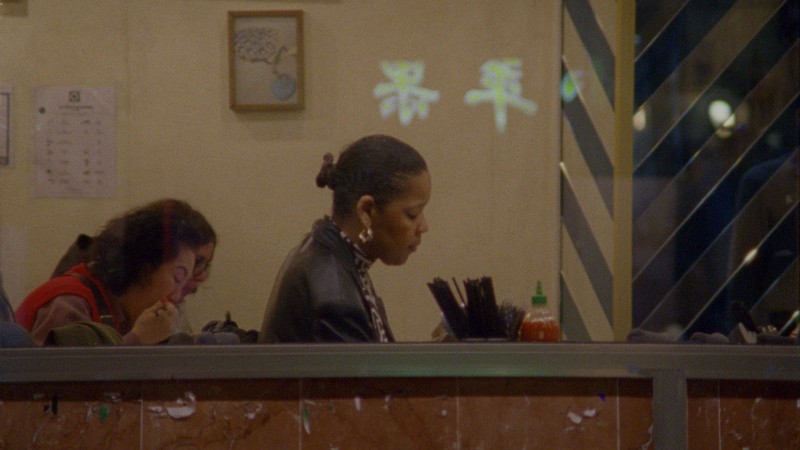
- On the final episode of Slate’s Culture Gabfest, Stephen Metcalf, Dana Stevens, and Julia Turner revisit the first topic they discussed in their inaugural outing, Jason Reitman’s Juno (2007), and one of the many questions raised is whether such an ultimately winning little comedy could be made in 2026—and if so, would it have to be taffy-pulled out into a streaming series? Last Friday, 4Columns wrapped up an outstanding run of nearly ten years. In her farewell review, Melissa Anderson observes that both Jack Hazan’s A Bigger Splash (1973), featuring the late David Hockney at a crucial turning point in his life, and Lucio Castro’s Drunken Noodles (2025) advance “the idea that erotic energy, constantly waxing and waning, is itself a mystical power, drawing from and feeding into other invisible currents.” Reverse Shot is running Ricky D’Ambrose’s brief but rich conversation with Castro.
- One of the films opening the Museum of Modern Art series Immigrant Nation: People in Transit tomorrow evening will be Alice Guy Blaché’s Making an American Citizen (1912), a comedy about a Russian learning four lessons in his newly adopted country. For MoMA’s Magazine, curatorial assistant Francisco Valente briskly traces the life of Guy, who in the early twentieth century was “one of the most talented and prolific filmmakers in the world—and likely the only woman director in the industry. She was also one of the few people to have attended the first-ever film screening, when Auguste and Louis Lumière showed their one-minute-long Workers Leaving the Lumière Factory on March 22, 1895, to a select crowd of Parisian inventors and industrialists. Louis Gaumont was also in attendance, an experience that led him to transition from a business selling photographic equipment to what became one of the world's largest film production and distribution companies. About that day, Guy, then Gaumont’s personal secretary, would write: ‘I was bitten by the demon of cinema.’”
- “A man is driven crazy by a woman who is compelled, by real or purported supernatural forces, to play a male-scripted role.” Writing for Notebook, Katherine Kadue points out that this premise propels Alfred Hitchcock’s Vertigo (1958); more than a few films by Brian De Palma, Park Chan-wook, and Christian Petzold; and most recently, Curry Barker’s debut feature and smash hit Obsession. “Whether or not Barker has ever seen Vertigo,” writes Kadue, “it seems as though he’s made a confusing wish to become Hitchcock and Madeleine at once: possessed by his cinematic ancestor’s spirit, compelled to repeat his thematic itinerary in a trance.” On an entirely different note, Obsession has prompted John Kidwell to ask at In Review Online: “If face-smashing has graduated from trope to cliché, why do filmmakers keep resorting to it?”
- “Video art has a bad rep,” writes Kathy Ou in the Brooklyn Rail as she takes in moving-image work on view in New Humans: Memories of the Future, the exhibition that’s opened the New Museum’s expanded building. “Dispersed throughout the massive exhibition featuring over seven hundred objects across three floors, the videos, most of which were given the proper treatment of a full wall projection in a dimly lit room with seats, felt like necessary reprieves in the grand experience of the show.” The new BR also features A. M. Gittlitz on the role Howard Beale’s “mad as hell” outburst in Sidney Lumet and Paddy Chayefsky’s Network (1976) plays in the history of the New York Mets. And Weiting Liu talks with Kent Jones about Late Fame (2025). When Jones read Samy Burch’s screenplay, “I immediately connected to something from my years writing criticism: the impulse to rescue buried geniuses—to champion good work that had been destined for obscurity.”
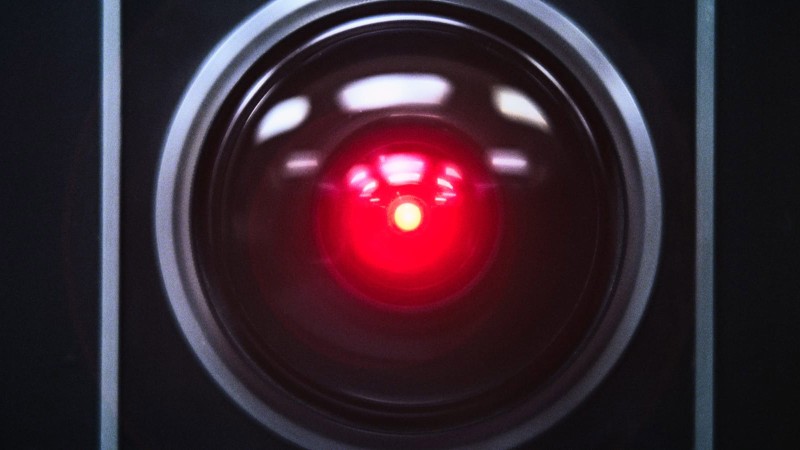
- The Prisoner (1967), starring Patrick McGoohan as a British intelligence agent whisked off to a disturbingly idyllic Village, is “still pretty outré for 2026,” writes Brian Tallerico at the A.V. Club, “which explains why the single-season show has been a secret handshake among multiple generations of the hip and in-the-know, who understand The Prisoner’s essential place in TV history—whether or not they’ve actually seen it. Futilely remade by AMC, parodied by The Simpsons, and name-dropped by the ‘professional appreciators’ of High Fidelity, it has seen its legacy grow as more and more acclaimed series adopted its artful and elliptical ways. The surreal new reality of Pluribus, the trapped survivors of Lost, and even the existential dread of Twin Peaks owe a debt to the show’s general refusal to explain nearly anything.” The complete series is now up on the Criterion Channel, and it’s “immediately fun and thematically ahead of its time.”
Don’t miss out on your Daily briefing! Subscribe to the RSS feed.