Spectres, Devils, and Bad Blood
Share
Saturday will mark 250 years since the birth of our nation, and while IndieCollect and IFC Center celebrate the independent spirit that revitalized American cinema in the 1980s, the Brooklyn Academy of Music has found a different story to tell. “America is a haunted place,” write the programmers. “Born out of the horrors of colonial genocide and chattel slavery, the brutal reality of this country’s history has manifested itself through legends, witches, demons, and hidden places.” BAM’s thirteen-film series Spectres, Devils, and Bad Blood in the Old America will open this evening and run through July 9.
In terms of historical chronology, the story begins with the great and powerful singer and activist Paul Robeson making his on-screen debut in Oscar Micheaux’s independently produced Body and Soul (1925), “and the only word to describe his screen presence is ‘blazing,’” wrote New York Times critic Stephen Holden in 2000. Robeson plays an escaped convict who passes himself off as Reverend Isaiah T. Jenkins, “a traditional hissable villain who drinks, gambles, steals, lusts, and uses his man-of-the-cloth status to destroy a forlorn young woman named Isabelle (Mercedes Gilbert).”
Body and Soul is “critical of the Black church, and that’s something that’s been sustained in subsequent eras of Black art,” notes filmmaker A. V. Rockwell (A Thousand and One). “It’s fascinating to see the kernels of that critique during a time when our voice and point of view were so greatly stifled.” Micheaux is “the best example of what it means to get your stories out into the world by any means necessary.”
D. W. Griffith’s first sound film and second-to-last feature, Abraham Lincoln (1930), “bears scant resemblance to the silent monuments on which his reputation is founded,” wrote Jaime N. Christley for Slant in 2012. Starring Walter Huston as the sixteenth president, the film “stands as one of Griffith’s greatest achievements. His compositions are subtly intricate, modest at first glance, surprising and complex on closer inspection . . . Both a ‘creaky’ talkie and, paradoxically, anything but, the film seems unhinged from what Hollywood was doing in 1930: It exists in the Venn diagram overlap between the visual expressiveness of the silent era and the as-yet-unmastered sync-sound technology, and its attendant awkwardness. Neither mode is rejected; Griffith has room for both.”
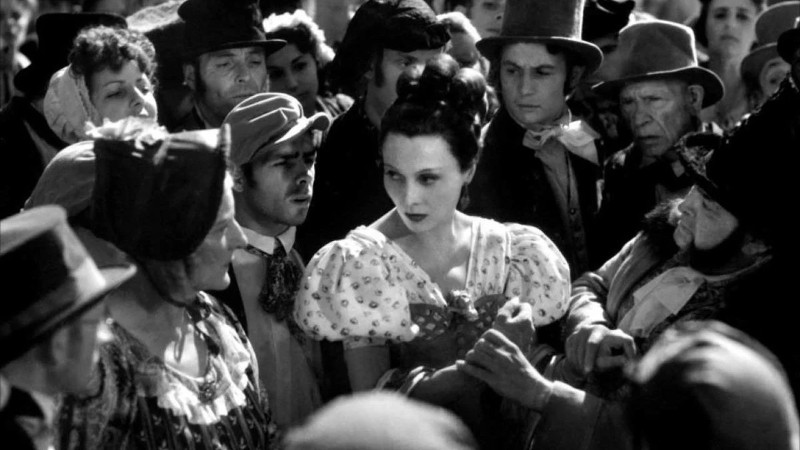
Huston stars in William Dieterle’s All That Money Can Buy (a.k.a. The Devil and Daniel Webster, 1941) as Mr. Scratch, the top-ranking demon of the underworld who reappears before an exceedingly wealthy man who once made an ill-considered deal when he was a poor farmer. Seven years on, Mr. Scratch has come to collect.
All That Money Can Buy is “a hallucinatory tour de force in which marvelous, evocative effects, and extraordinary performances combine on-screen in ways sophisticated and sometimes not,” wrote Tom Piazza in 2003. “Out of this mix comes a fascinating allegory, filmed on the eve of the United States’ entry into World War II, of a society gone mad with materialism, a premonition of the opportunities and dangers awaiting the nation as it recovered from the Great Depression.”
Tod Browning’s Freaks (1932) is “an unsentimental yet compassionate view of a world belonging to show business as surely as Broadway hoofers did,” writes Farran Smith Nehme. “The so-called freaks of the film function as a family, distrustful of outsiders, protective of their own—just how protective being something you don’t want to find out the hard way.”
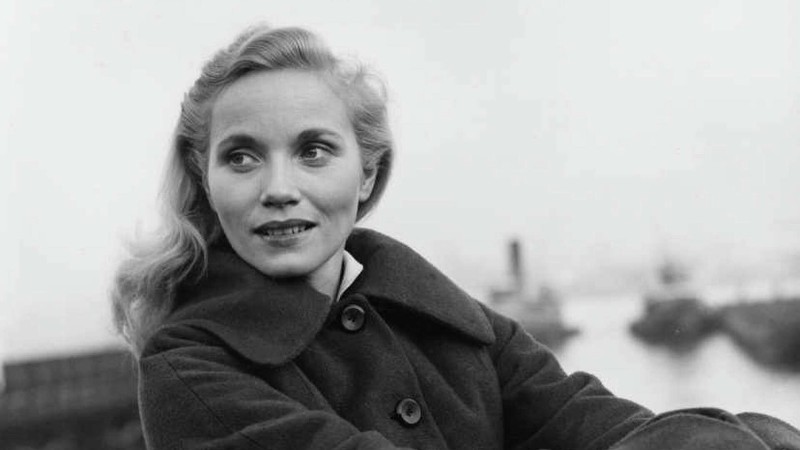
In Frank Borzage’s Moonrise (1948), Danny (Dane Clark) has been bullied all his life for being the son of a man tried and convicted of murder. One night, Danny snaps and kills his cruelest tormenter. “Noir, in which protagonists are typically trapped by fate and/or predestination, scarcely comes more despairing,” writes Philip Kemp. “And knowing Borzage’s attachment to the theme of redemption through love, it’s hard to imagine how the tussle of style and content will play out. All the more so since throughout most of the film its protagonist, Danny, seems stubbornly determined to reject love and any redemption it might bring him. Yet as we’ll see, Borzage does finally succeed in reconciling these competing forces, in this, his final masterpiece.”
Of all one-and-done directorial outings, Charles Laughton’s The Night of the Hunter (1955) is widely recognized as one of best—if not the best. It’s also “among the greatest horror movies ever made, and perhaps, of that select company, the most irreducibly American in spirit,” wrote Terrence Rafferty in 2010. “It’s about those venerable American subjects fear, sex, money, and religion, and for the beleaguered children who are its heroes, salvation comes at the end of a long, drifting journey down a river: our old native idea of finding the way to someplace better.”
In his first starring role, Christopher Plummer plays Walt, a conservationist facing off against a gang of poachers led by Cottonmouth (Burl Ives) in Wind Across the Everglades (1958). Toward the end of the production, director Nicholas Ray was fired and shooed away from the editing table by screenwriter Budd Schulberg, but Ray had left his mark. “Ray’s masterful use of color and mystical sense of equality between the antagonists (also evident in Rebel Without a Cause and Bitter Victory) are made all the more piquant here by his feeling for folklore and outlaw ethics as well as his cadenced mise-en-scène,” wrote Jonathan Rosenbaum in the Chicago Reader. “The result is somewhat choppy (one gets a sense of subplots being truncated), yet the film builds to a powerful encounter between Plummer and Ives, and Ray’s personal touches are unmistakable.”
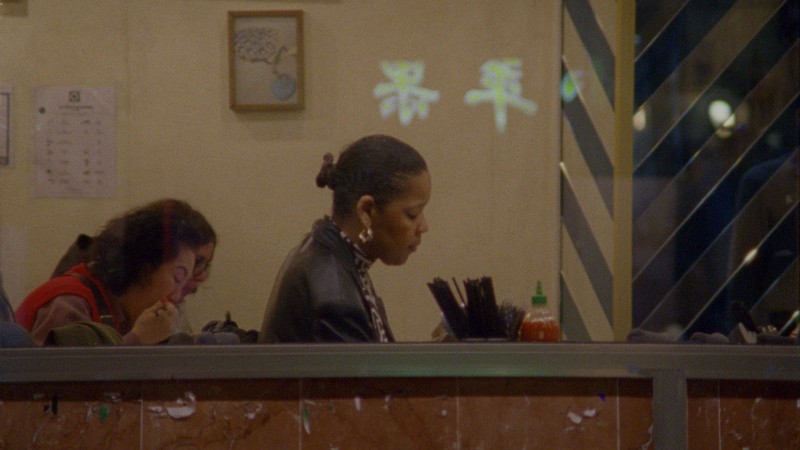
Danny Glover stars in Charles Burnett’s To Sleep with Anger (1990) as an old friend of a middle-class family in South Central Los Angeles. He drops by, steps in, and stays. The film is shot through with “allusions to Black folkloric and oral storytelling traditions of the Old South,” writes Ashley Clark. “Being from the South,” Burnett told Clark in a 2016 Film Comment interview, “my mother and grandma had these superstitions . . . Some people they wouldn’t even let in the house. They would sense this bad karma about people. A lot of this stuff I considered at one time kind of silly and ‘country,’ but as I grew up . . . I began to change my mind and respect them.”
Julie Dash’s Daughters of the Dust (1991) is “a film of visionary power conceived with a passion for pure research,” wrote Greg Tate in the Village Voice in 1991. “Ostensibly about a Gullah family whose younger generation are making plans to leave their ancestral islands for mainland U.S.A. at the crest of the twentieth century, Daughters is also an interrogation of Black America’s cleft soul, split between the quest for modernity and a hunger for the replenishment of roots.”
Candyman (1992) stars Virginia Madsen as a grad student working on a thesis about urban legends. Writing for Slant, Eric Henderson finds that director Bernard Rose’s “dizzy romanticism (shades of Spike Lee’s Jungle Fever) is juxtaposed against a cold, Cronenbergian dystopia to create Candyman’s uniquely baroque use of modern urban blight, subtle political undercurrents, and hints of fallen woman melodrama. The filmmaker creates a startlingly effective shocker that gains power upon further, sleepless-night reflection.”
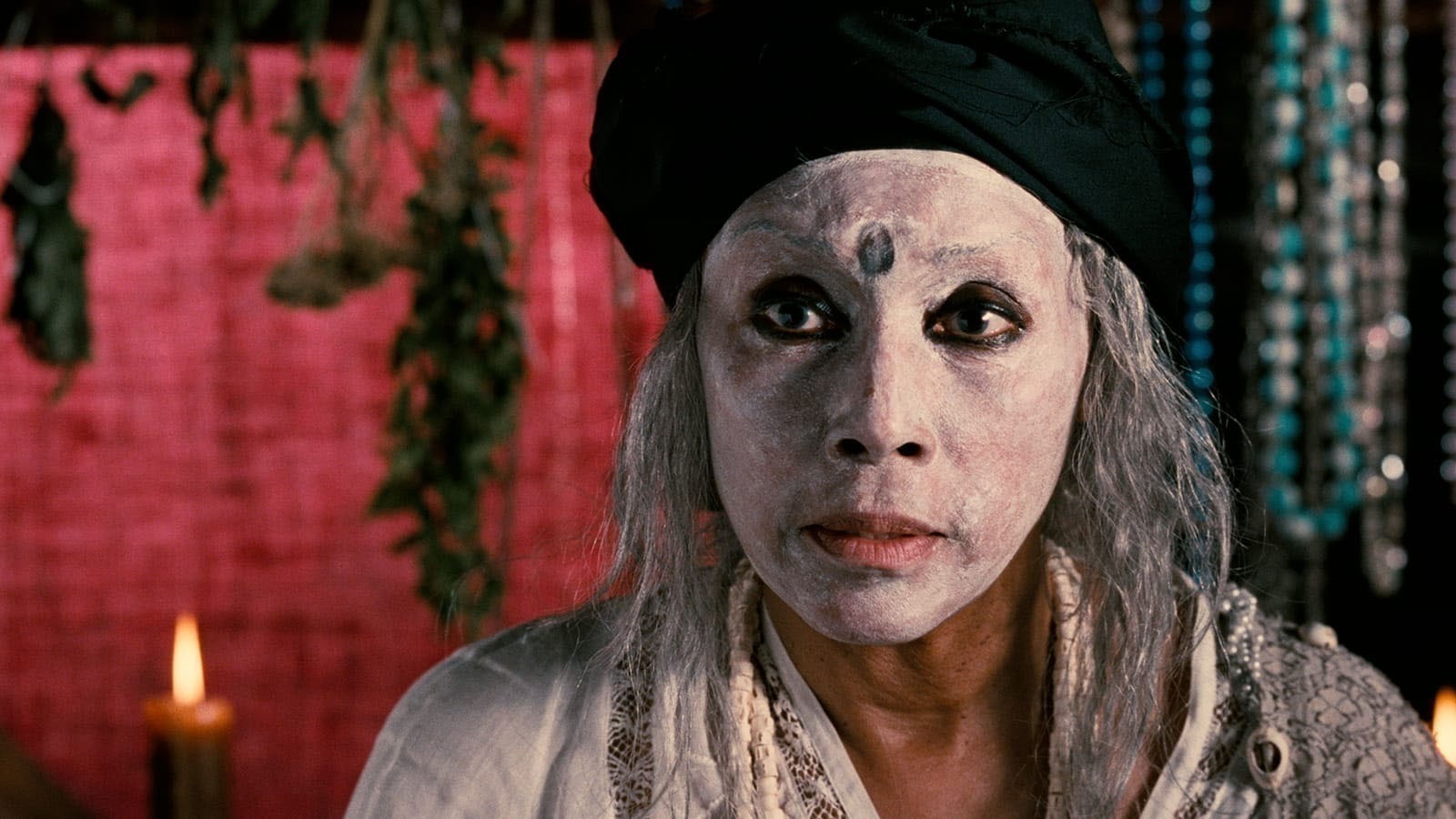
Set in 1962 Louisiana, Kasi Lemmons’s Eve’s Bayou (1997) focuses on the Batistes, “a bourgeois Black Creole family who are descendants of Eve, a formerly enslaved woman, and Jean Paul Batiste, the military general who freed her,” as Kara Keeling wrote a few years ago. Lemmons advances “a critique of the patriarchal order, by valorizing the experiences, the ways of knowing, and the desires of Black women and girls . . . Her narrative poses questions that still resonate today, about gender and gender roles, bourgeois family norms, sexuality, sexual violence, and memory—and its form offers responses to those questions.”
BAM’s timeline leads to two horror movies whose fresh and innovative approaches to the genre led to phenomenal box-office success. Daniel Myrick and Eduardo Sánchez’s The Blair Witch Project (1999) “was not the first film of its kind, nor was it necessarily the most technically accomplished,” wrote Nicholas Russell for Reverse Shot in 2023. “That it forever altered the cinematic language of found footage by tying a genre that had been largely connected to cinema vérité and psychological explorations—such as Shirley Clarke’s The Connection (1961) and Robert Jan Westdjik’s Little Sister (1995)—to horror, is a shift its filmmakers couldn’t have anticipated. And yet it makes sense that found footage became one of horror’s best-realized materials, rendering the otherworldly and terrible as believable, plausible, real.”
Among the richest of the countless interviews with Ryan Coogler about Sinners (2025) is the one Franklin Leonard conducted for the Ankler in February. “The audience, myself included, has read this film as a lot of things,” Leonard told Coogler. “It’s an anti-capitalist treatise, a parable about cultural appropriation, and a meditation on the afterlife of slavery and Jim Crow.”
Don’t miss out on your Daily briefing! Subscribe to the RSS feed.