Rob Tregenza’s Fast
Share
“Shoot it fast and hard and beautiful like Ida Lupino shot Fast, Hard, and Beautiful.” As Rob Tregenza recalls it in his wide-ranging conversation with Nick Newman at the Film Stage, that was the advice his producer, Jean-Luc Godard, gave him as they set out to make Inside/Out (1997). Of course, that was nearly thirty years ago, so Tregenza’s slight misrecollection of the title of Lupino’s 1951 film Hard, Fast, and Beautiful is certainly understandable.
The point is, Tregenza more or less set that directive aside while making Inside/Out, but as he tells Newman, Godard’s edict came back to him full force as he began production on his sixth feature, Fast, which will see its world premiere this evening at the Museum of Modern Art in New York. MoMA, which launched Tregenza’s previous film, The Fishing Place, early last year, will screen Fast through Tuesday, the night that Acropolis Cinema will present Fast in Los Angeles with a prerecorded chat between Tregenza and Jonathan Rosenbaum.
On August 20, the LA screening series Mezzanine will present Tregenza’s debut feature, Talking to Strangers (1988), a film composed of nine thrillingly choreographed takes, each running around ten minutes. This was the film that caught Godard’s eye and led him to praise it as “remarkable and at times astonishing, that is, softly imbued with the marvelous.”
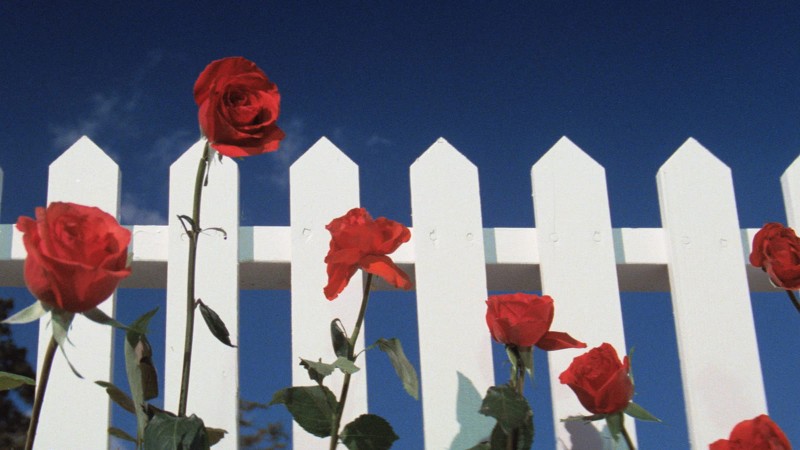
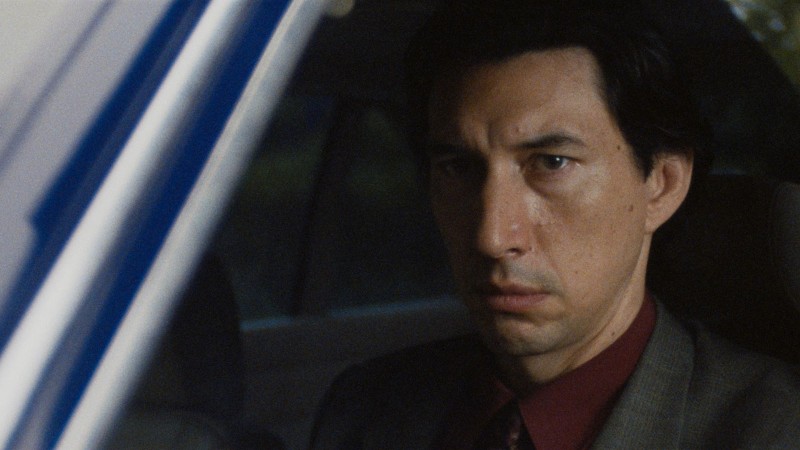
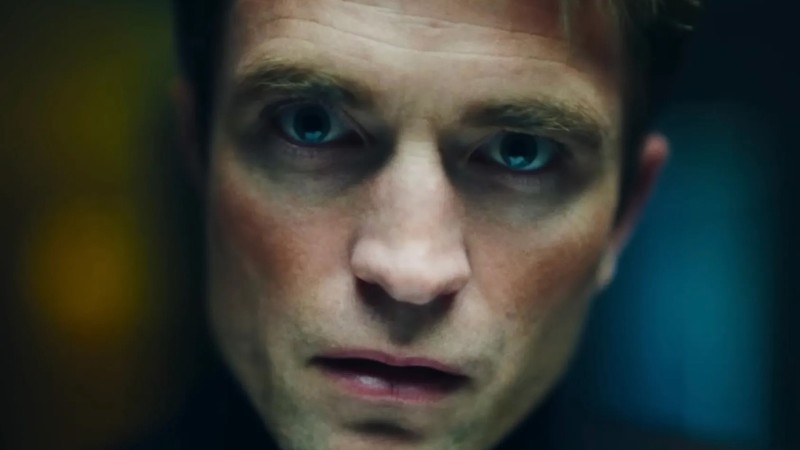
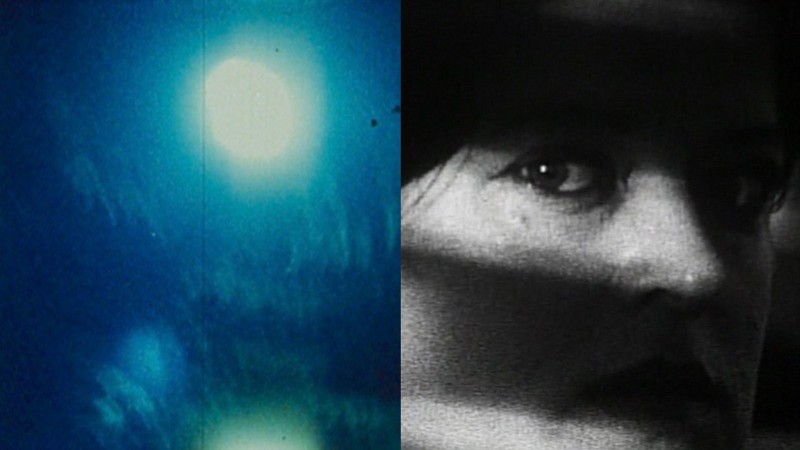
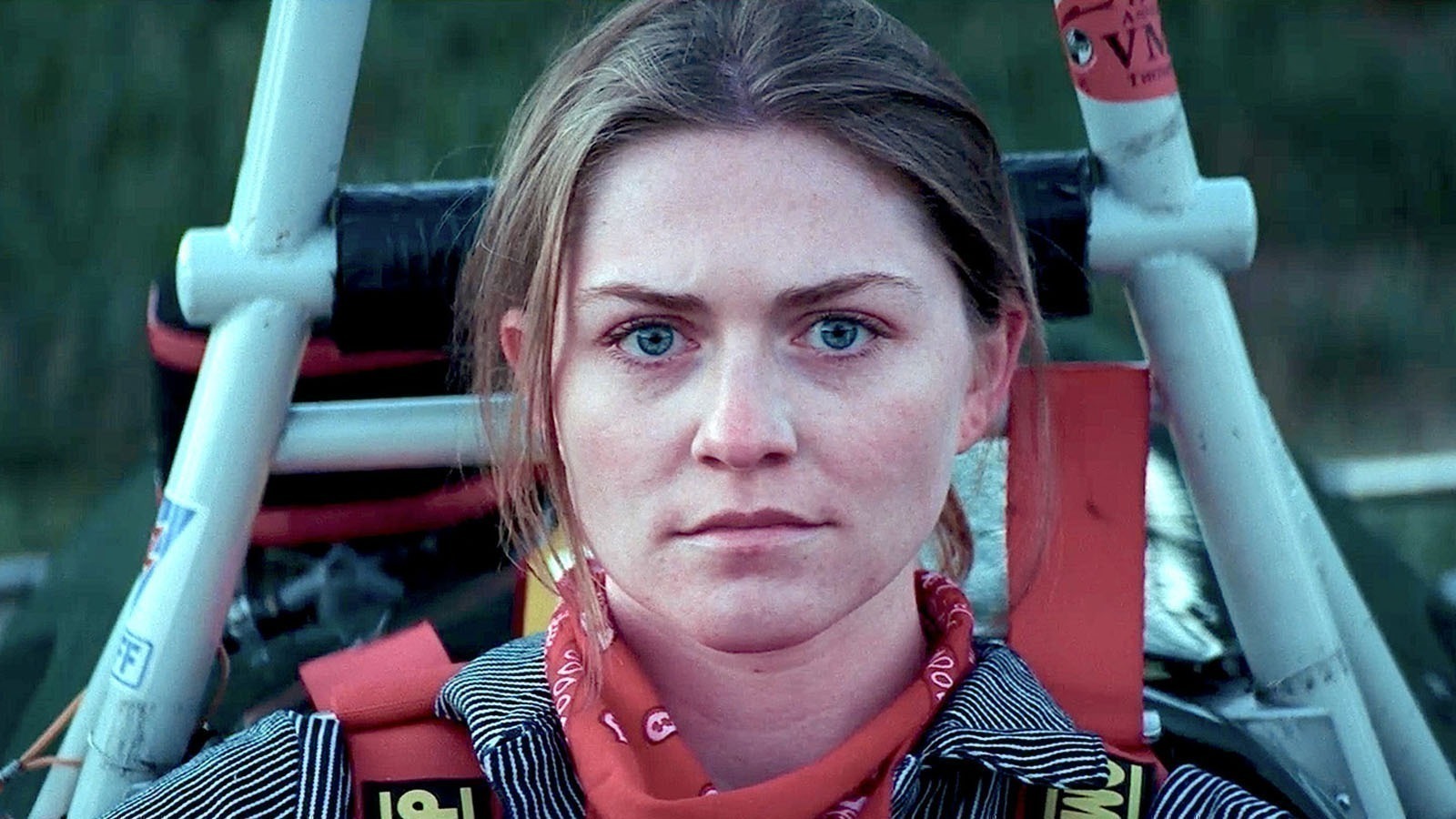
Madison Pankey stars in Fast as Sterling, a woman who has returned to her small town in Virginia, where she spots an old Lotus Formula 1 car and decides to get it up and racing again. She crosses paths with an old beau who has gone sour, reunites with a few relatives, and interacts with colorful locals in scenes—some in color and some in black and white—that alight here and there along a nonchronological timeline.
“There is not what we would typically consider a story in Fast, and each of its lengthy sequences maintains an almost maddening autonomy,” writes Michael Sicinski at In Review Online. “Fast operates as a kind of tone poem regarding a woman’s thwarted desires.” It’s “a film that, in many ways, is about the failure of things to coalesce, the inability to get a dream off the ground. Perhaps Fast is an attempt to produce artistic meaning without perfectionism, to embrace the muddle and the imperfect connections between things.”
Fast “dazzles the mind with the speed and spectrum of inner experience it evokes,” finds the New Yorker’s Richard Brody. Tregenza’s “technique puts key moments in a permanent present tense of suggestion, implication, and ambiguity. Unlike many intricate stories, there’s nothing puzzle-like about the complex drama of Fast: there’s nothing snippety or cut-to-fit about its expansive and extensive scenes. Rather, their time-switching variety and tone-shifting allusions suggest a trip through subjectivity—through Sterling’s inner life and through the collective memory of the town.”
“The fast part is: we shot the whole film in ten days,” Tregenza tells Newman. “We didn’t do any overtime, so there was no day that was more than twelve hours, ten to twelve hours max in ten days—so it had to be fast. And it had to be hard, meaning ‘difficult.’ The crane shots we were doing, the production value, the levels of it, and then cognitively, conceptually hard. I wanted it to be thought-provoking. And then I said, ‘This time, everything, if you can make it beautiful, make it beautiful. Don’t ignore—or if there’s an opportunity for beauty, do it.’”
Don’t miss out on your Daily briefing! Subscribe to the RSS feed.