Declaration of Independents!
Share
As the United States of America tumbles headlong into its semiquincentennial, three New York venues are offering a wide range of prompts for celebration and reflection in the form of three film series, all opening on Wednesday and running through July 9. We’ll take a look at the programs at the Brooklyn Academy of Music and Film at Lincoln Center tomorrow and Wednesday, but today our focus will be on Declaration of Independents!, a series of twenty films copresented by IndieCollect and IFC Center.
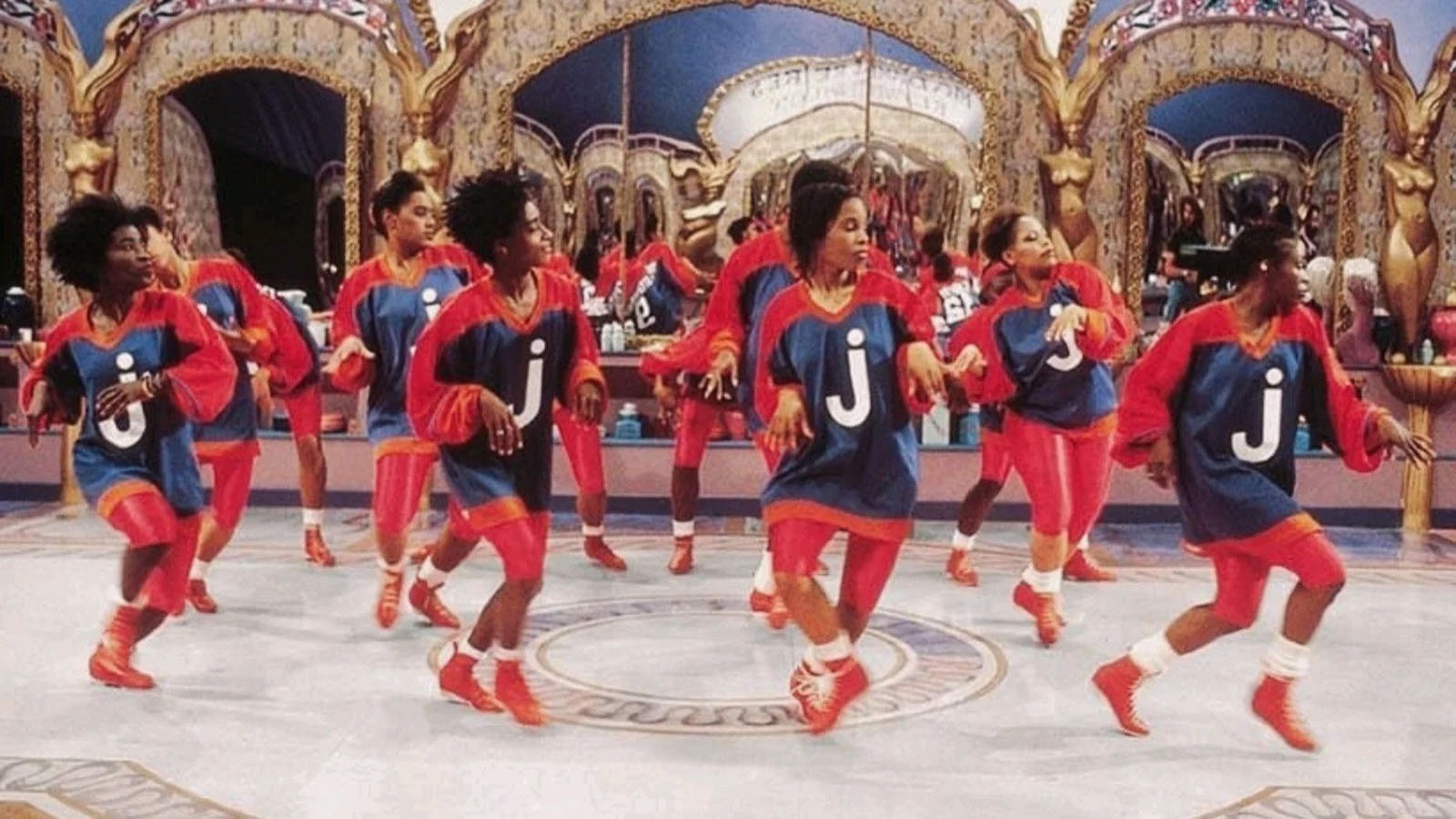
All twenty were made between 1979 and 1989, and at least one screening of most of them will feature personal appearances by an artist who has had a hand in their making. Ashley Clark, our curatorial director, will moderate a discussion with Spike Lee after Wednesday’s screening of School Daze (1988), a musical comedy featuring Giancarlo Esposito, Laurence Fishburne, Tisha Campbell, and Lee himself. We should note here that from July 8 through 22, the Melbourne Cinémathèque will present its own salute to the great director, By Any Means Necessary: Spike Lee, American Provocateur.
Charlie Ahearn is “the first filmmaker to fully bring hip-hop to the big screen,” notes Craig D. Lindsey, and on Thursday, Ahearn will take part in a Q&A following a screening of Wild Style (1983). Dominique Jenkins, daughter of director Horace Jenkins, will be on hand for Sunday’s presentation of Cane River (1982). Writing for the Baffler in 2020, A. S. Hamrah noted that “Jenkins combines an Americana sensibility reminiscent of King Vidor’s early 1930s films with a class consciousness unique in the film’s setting: African American red-clay Louisiana.”
On separate evenings, Lizzie Borden and Bette Gordon will talk about their 1983 films, Born in Flames and Variety. In her outstanding 2024 Notebook profile of Gordon, Saffron Maeve noted that the work of both women could conjure “the gritty anarcha-feminism” of the period. Before laying a cultural milestone in 1992 with Buffy the Vampire Slayer, Fran Rubel Kuzui made Tokyo Pop (1988), which the New York Times’ Walter Goodman called “a wedding of American and Japanese youth cultures as seen through a fun-house mirror.” Kuzui will be taking questions on Friday.
Producer and cowriter Manuel Arce will introduce the July 9 screening of El Súper (1979), the story of a Cuban exile who lands a job in New York as a superintendent of the building he lives in. Codirected by Orlando Jiménez Leal and the late Leon Ichaso and adapted from a play by Iván Acosta, El Súper “becomes an instance of perceiving the universal through the particular, and as a result, is a genuinely American film,” wrote Kevin Thomas in the Los Angeles Times.
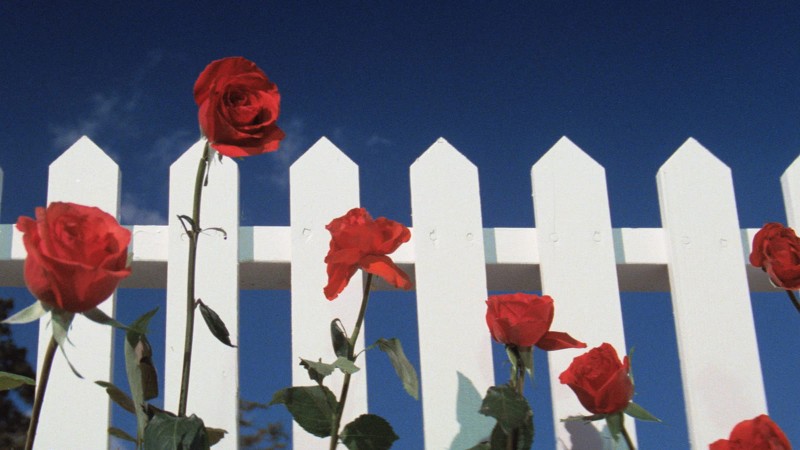
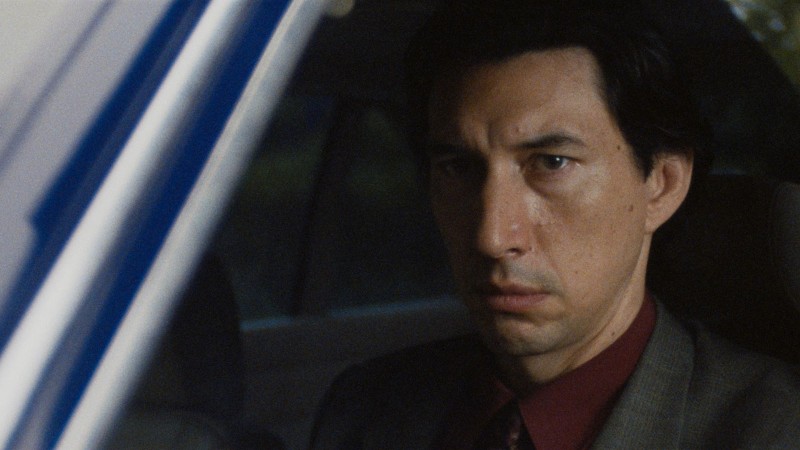
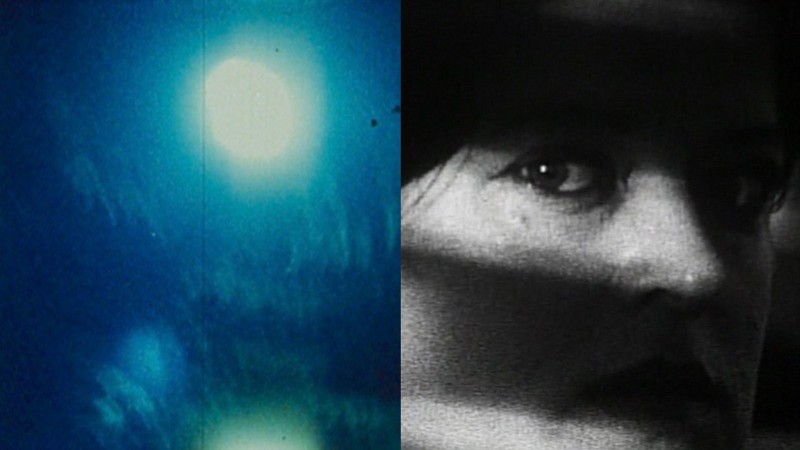
Along with new restorations of two documentaries—Jim Klein and Julia Reichert’s Seeing Red (1983) revisits the heyday of the American Communist Party and Paula De Koenigsberg and Lucy Winer’s Rate It X (1986) probes the sexist exploitation of women in American media and culture—the program also features such landmarks as Jim Jarmusch’s Permanent Vacation (1980), Kathleen Collins’s Losing Ground (1982), Wayne Wang’s Chan Is Missing (1982), Susan Seidelman’s Smithereens (1982), Joel and Ethan Coen’s Blood Simple (1984), Gus Van Sant’s Mala Noche (1985), Errol Morris’s The Thin Blue Line (1988), Michael Moore’s Roger & Me (1989), and Steven Soderbergh’s sex, lies, and videotape (1989).
The series will wrap with Jessie Maple’s Twice as Nice (1989), starring real-life twins Pamela and Paula McGee as sisters competing to become the first-draft pick in a women’s professional basketball league. Twice as Nice will screen with Aarin Burch’s newly restored Dreams of Passion (1989), a five-minute exploration of desire set in a dance studio.
More American Movies
Culture Wars!, the Museum of the Moving Image’s series of American films targeted by the religious right in the late 1980s and early ’90s, is on through July 11. And on Sunday, MoMI will wrap its series By the People, For the People: Real American Tales with an afternoon screening of Salt of the Earth (1956), which Jonathan Rosenbaum has called “the only major American independent feature made by communists. A fiction film about the strike by Mexican-American zinc miners in New Mexico against their Anglo management, informed by feminist attitudes that are quite uncharacteristic of this period, it was inspired by the blacklisting of director Herbert Biberman, screenwriter Michael Wilson (A Place in the Sun), producer and former screenwriter Paul Jarrico, and composer Sol Kaplan, among others. As Jarrico later reasoned, since they’d been drummed out of Hollywood for being subversives, they’d commit a ‘crime to fit the punishment’ by making a subversive film.”
Starting Friday, Film Forum will present a weeklong run of a new restoration of Ross McElwee’s classic documentary Sherman’s March (1986). Writing for the A.V. Club in 2020, Ignatiy Vishnevetsky noted that the film offers “less a trenchant perspective on life in the Reagan-era American South than a rambling series of droll observations that accumulate into something more compelling than a self-portrait.”
David Alvarado’s American Pachuco: The Legend of Luis Valdez, a portrait of the playwright, screenwriter, director, and actor best known for his 1979 play Zoot Suit and his 1987 film La Bamba, opens at Film Forum on July 17. “Timeliness is a poor metric for evaluating nonfiction,” writes Jake Cole at IndieWire, “and in most respects American Pachuco is a boilerplate American Masters–style overview of an artist’s life. But in a moment of revanchist white supremacy, Valdez’s lifelong thesis—that Chicano culture is not a sideshow of interlopers in America but an expression of identity that stretches back long before Anglos landed on these shores—and his undiminished assertion that Chicano art is as American as it gets is difficult not to find rousing and as defiant as it was in the 1960s.”
Universal Westerns, a series showcasing the impact of one Hollywood studio on the most American of genres, is on at the Museum of Modern Art through Friday. Then starting on Friday, Anthology Film Archives will present a summerlong two-part series of Experimental Westerns and Metrograph will spotlight the reach of American soft power with The Worldwide Western, a wide-ranging selection of films that apply a few durable templates to stories set around the globe.
On the other coast, patrons of the Los Angeles Filmforum can spend all day Sunday with Star Spangled to Death, a project begun in the mid-1950s and completed in 2004 by the late Ken Jacobs. “Call it cultural dumpster diving or bricolage,” wrote J. Hoberman in the New York Times earlier this year. “Throughout, Star Spangled marshals painful evidence of institutionalized racism, military mobilization, and instrumentalized piety. Jacobs, however, is a master filmmaker whose dynamic compositions continuously delight the eye and whose use of montage can be laugh out loud funny.”
Don’t miss out on your Daily briefing! Subscribe to the RSS feed.