Enduring Portraits
Share
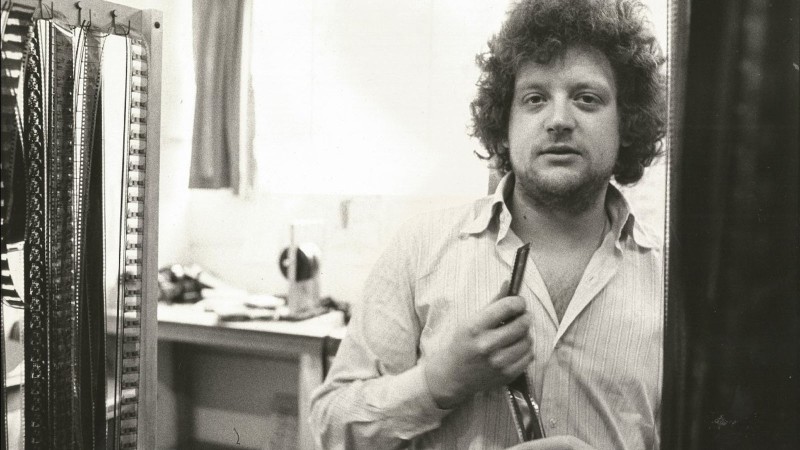
Gene Shalit, who delivered punny movie reviews on NBC’s Today Show from 1973 through 2010, passed away last week. He’d turned one hundred in March. “With his handlebar mustache, bushy hair, black horn-rimmed glasses, and extravagant bow ties, he was one of the nation’s most recognizable characters, a composite caricature of Groucho Marx, William Howard Taft, and a Jim Henson puppet,” writes Robert D. McFadden in the New York Times.
A few years into his gig at Today, Shalit hired his first full-time writer, Kurt Anderson, who would go on to write novels and nonfiction and cofounded Spy magazine. Shalit’s “smart no-brow approach to culture was a new thing on TV,” writes Anderson for Vulture. “He was a cultural omnivore, enjoying and celebrating high and low but distinguishing, often bluntly, between smart and stupid, good and bad. His reviews and their jokey wordplay were packed with all sorts of literary, musical, cinematic, and historical references . . . He was a TV performer with a signature shtick and look who was also entirely authentic, with a genuine eccentricity that viewers found endearing and fun. He was an unusually kind jester, radiating joie de vivre, infectiously happy to be here now.”
In festival news, Il Cinema Ritrovato, which opens on Saturday and runs through June 28, is introducing a new initiative. It’s called Extended, and it will offer those in Bologna a chance to sample this year’s fortieth edition from June 29 through July 5. Munich (June 26 through July 5) and Karlovy Vary (July 3 through 11) have unveiled their lineups, and in August, Asia Argento will receive a Lifetime Achievement Award in Locarno.
This week’s highlights:
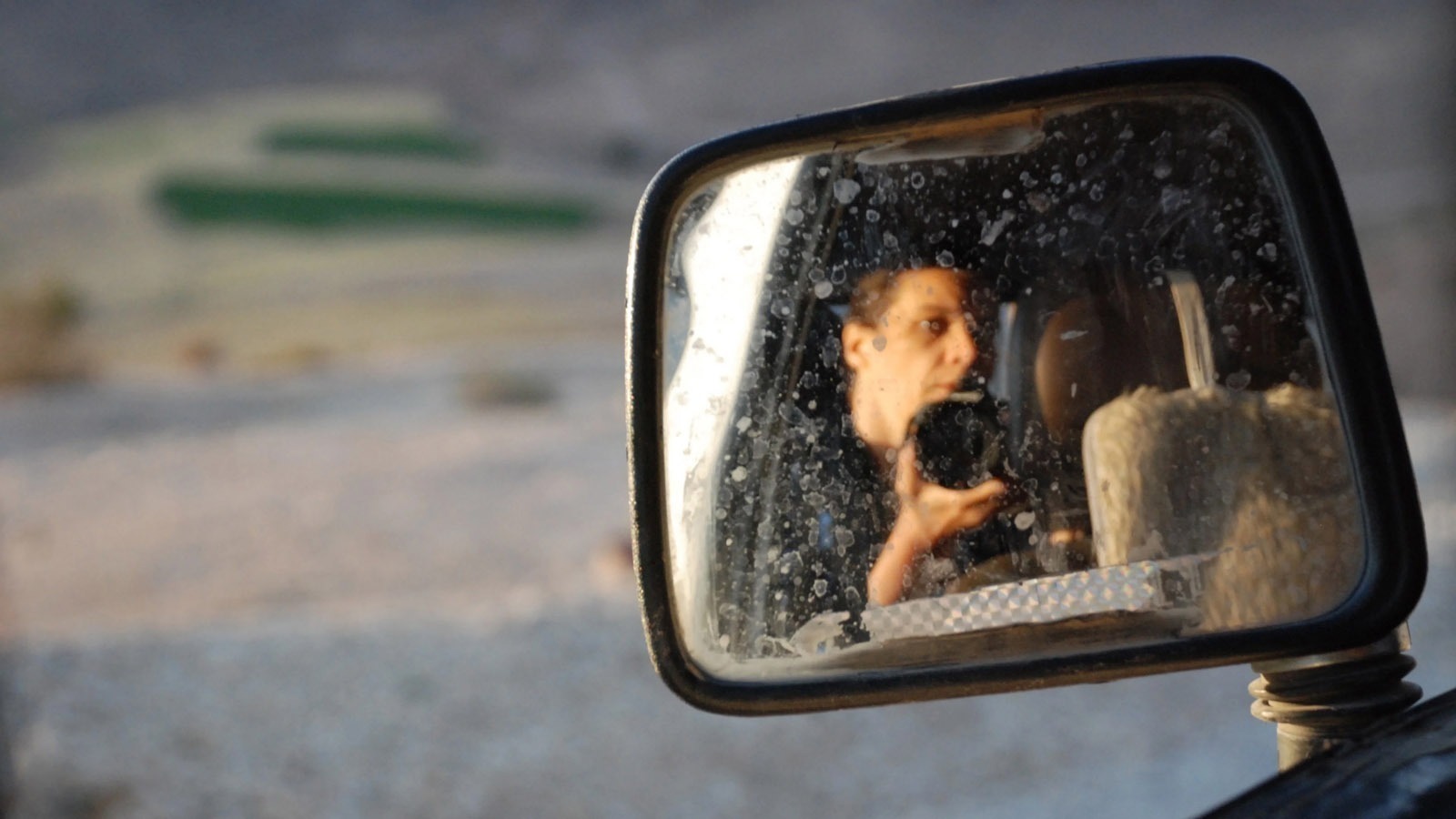
- Last December, Documentary Magazine polled contributors and members of the International Documentary Association to come up with a ranked and annotated list of the twenty-five greatest nonfiction films of the twenty-first century as well as a string of “singular picks,” films with just one vote. The pairing of the two lists “offers an ongoing dialectic between center and margin,” suggests Winnie Wang in one of two new pieces reflecting on the results. “The documentarian as skillful portraitist, one who doesn’t merely capture, but embellishes in order to get at a deeper truth, who understands performance not as anathema to authenticity but as integral to it, is precisely the type found throughout the [first] list,” writes Manuel Betancourt. A portrait captures “a connection between the sitter and the one capturing their likeness. Look no further than Cameraperson to find a documentary that turns that friction into its very thesis. Made up of sequences shot for a number of projects she worked on as a cinematographer, Kirsten Johnson’s fragmented self-portrait is a film about the dignity of the documentary gaze—of her gaze, in fact.”
- In a recent newsletter, Jamelle Bouie points us to Lovia Gyarkye’s excellent profile of Raoul Peck for Hammer & Hope. Peck has been making films for decades, and he’s probably best known for I Am Not Your Negro (2016), a historical essay film drawn from James Baldwin’s writing, and Orwell: 2+2=5 (2025), which compels viewers to “confront the parallels between our fascist reality and the English writer’s dystopian visions,” as Gyarkye puts it. “But calling Peck just a political director minimizes his achievement, allowing people to ignore the artistic merits and intellectual rigor of the work. Peck is more like a modern griot, a filmmaker who has made an art of his archival excavations. He reconstitutes the past in order to combat historical erasure, and in his films—like the work of the anthropologist Michel-Rolph Trouillot and the literary scholar Saidiya Hartman—the archives are a contested site, an arena in which power can be reclaimed.”
- It’s Black Writers Week at RogerEbert.com, and Robert Daniels, who is overseeing this year’s sixth edition, talks with Maya Cade, who founded the Black Film Archive in the summer of 2021 and will soon be both the owner and president of Milestone Films. For Cade, “one of the joys has been being an archivist for Black directors. I help them with their own archives by gathering their material. So, the Black Film Archive is not just the digital archive that you see. A lot of the work is tangible, like ensuring that another generation can learn from the papers and materials, the physicality of what these directors have to offer.”
- Earlier this month, the Tehran Revolutionary Court upheld an in-absentia verdict against Jafar Panahi, sentencing him to one year in prison. Charged with propagandizing against the Islamic Republic, Panahi can now appeal to another court. In Panahi’s It Was Just an Accident (2025), a group of former political prisoners kidnap and confront a man they believe was their torturer. “Panahi draws on the two dominant realist tendencies in contemporary Iranian cinema, associated with Abbas Kiarostami and Asghar Farhadi, while forging a distinctive style of his own,” writes Mehrdad Babadi in the Point. “From Kiarostami he adopts two familiar motifs: the car and the road trip.” And “he draws on Farhadi’s model of interpersonal and social drama to create a mystery thriller in which conversation does not clarify the situation but complicates it . . . More than any other Iranian director, [Panahi] registers the condition of Iranians under an authoritarian regime with unusual precision.”
- It’s Screwball Summer at the Garden Cinema in Covent Garden, and in the new London Review of Books, Ruby Hamilton notes that the seventeen-film program running through August 18 includes “nearly all the classics of the genre, among them the first, the fastest, and the truest: It Happened One Night (1934), His Girl Friday (1940), The Awful Truth (1937). Not all of the choices fit in—Arsenic and Old Lace (1944) is a black comedy, but is it a screwball?—but then you end up quibbling about the Broadway farce vs. the populist comedy vs. the Lubitsch picture, and it’s not long before you begin to sound like Gary Cooper’s po-faced grammarian in Ball of Fire (1941), a grade-A hair-splitter.”
Don’t miss out on your Daily briefing! Subscribe to the RSS feed.