John Berger and Cinema
Share
When John Berger died in 2017, Sarah Cowan, writing for the Paris Review, noted that he was “best known for Ways of Seeing, the 1972 BBC series and book—perhaps the most bold, clear, and widely renowned explanation of art’s entanglement with capitalism.” He was a true polymath: after beginning his career as a painter, he went on to become a critic, novelist, and screenwriter.
Film Comment coeditor Devika Girish, who has described Berger as “my lodestar,” writes that Berger was “that increasingly rare figure: a public intellectual who was as breathtakingly skilled with words as he was staunch in his insistence that art was a political means to a more just world. He wasn’t afraid of being called a propagandist; he also wasn’t afraid of upholding beauty as something potent and sacred.”
November 5 will mark the hundredth anniversary of Berger’s birth, and in the run-up, Girish has programmed Hold Everything Dear: John Berger and Cinema, a Film Comment Live series opening this evening in New York at Film at Lincoln Center and running through August 5 at the Brooklyn Academy of Music, Anthology Film Archives, the Museum of the Moving Image, and Metrograph.
The series borrows its title from the essay collection Hold Everything Dear: Dispatches on Survival and Resistance, one of several books by Berger—according to Cowan, he wrote more than fifty—that Verso is publishing to mark the centenary. In September, Verso will release Tom Overton’s long-anticipated biography, John Berger: From Life.
“In books like Hold Everything Dear,” writes Owen Hatherley for the New Left Review, Berger’s “acknowledgement of the defeat of the communism in which he was a lifelong, if nonconformist believer, often appears alongside the notion of resistance as itself a virtue, a belief in togetherness and comradeship even in futility, a kind of Beckettian Marxism. This is sometimes attractive, but it spins virtue out of appalling necessity.”
Film Comment has posted “The Chorus in Our Heads, or Pier Paolo Pasolini,” a 2006 essay Berger wrote after seeing La rabbia (1963), a film Pasolini was commissioned to make from archived newsreel footage as an answer to the question, as Pasolini himself phrased it, “Why is our life dominated by discontent, by anguish, by the fear of war, by war?”
“Pasolini’s answer to the original question was simple,” wrote Berger: “The class struggle explains war.” The producer was rattled, and in an exemplary case of bothsidesism, he commissioned a right-wing journalist to make a second part and then recut Pasolini’s version so that the two halves could be squished into a single feature.
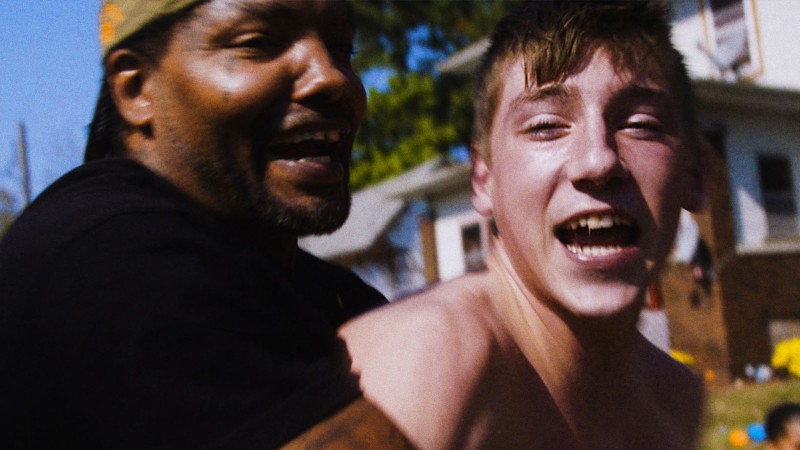
Pasolini disowned the entire project, but in 2008, Giuseppe Bertolucci and the Cineteca di Bologna, drawing on Pasolini’s extensive notes, reconstructed his original vision. La rabbia di Pasolini, running just under an hour, will open the series, and it will be followed by artist and writer Timothy Neat’s 1993 feature Walk Me Home.
“Shot by Vadim Yusov, Andrei Tarkovsky’s cinematographer from Ivan’s Childhood (1962) to Solaris (1972), Walk Me Home locates the eternal in the seemingly arbitrary, beginning with its first image: a light reflected in a bowl of soup suggesting a cosmic landscape,” writes Bernardo Rondeau at Screen Slate. Play Me Something (1989), another film directed by Neat and cowritten with Berger, screens tomorrow at BAM. “In both,” notes Rondeau, “Berger has a scene-stealing turn as a mysterious yet magnetic raconteur.”
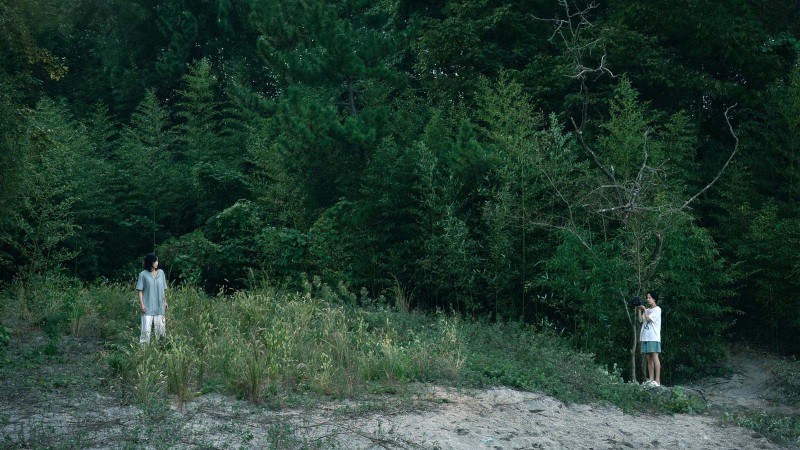
On Friday and Monday, Anthology will screen Robert Kramer’s Walk the Walk (1996), a film in conversation with Berger’s 1995 novel To the Wedding. In both works, a family splits up, and its members head out on separate journeys across Europe. Brett Story (The Hottest August, Union) is currently working on a feature about Berger, and on Saturday afternoon, she’ll be at MoMI to present an audiovisual lecture, Reality Is All We Have to Love, following a screening of Germinal (1973), a short documentary Berger made in the English mining village Creswell.
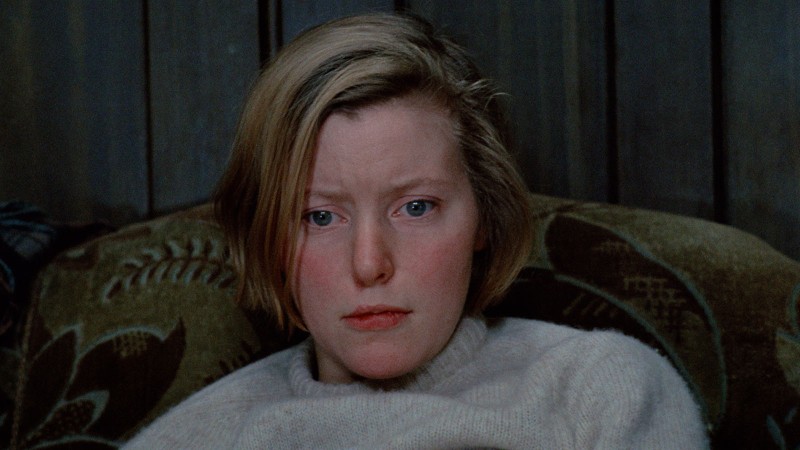
Two of Berger’s collaborations with Swiss director Alain Tanner are probably the most widely known films from his cinematic oeuvre. In her Village Voice review of The Salamander (1971), screening Saturday and Tuesday evenings at Anthology, Molly Haskell observed that Bulle Ogier stars as “a character conceived along the lines of Skolimowski’s Jane Asher in Deep End and Rohmer’s Haydee Politoff in La collectionneuse—a young woman who stubbornly resists the efforts of men to classify her, or squeeze her into the ready-made molds of their fantasies.” Jane Asher “pays with her life; Haydee reaches a stalemate; and Bulle Ogier gains for them all a victory, destroying the intellectual safeguards the heroes have constructed against the possibility of such a woman.”
In Jonah Who Will Be 25 in the Year 2000 (1976), screening Sunday at Metrograph, a group of post–May ’68 idealists comes to grips with the Me Decade. “Tanner combines Godard’s intellectual responsibility with Renoir’s faith in the resiliency of the human spirit, resulting in a film that is both enlightening and encouraging,” wrote Dave Kehr in the Chicago Reader. “Funny, moving, and instructive, Jonah is that rare thing: a political film that speaks to the heart as well as the mind.”
Berger reunited with Michael Dibb, who had directed the Ways of Seeing series, to work together on Pig Earth (1979) and Parting Shots from Animals (1980). Pig Earth, Berger’s 1979 collection of essays, poems, and short stories, is “a lyrical account of the way of life of the peasants in the Haute-Savoie, who became the author’s friends and neighbors,” writes Vincenzo Pietropaolo for POV. “In transforming Pig Earth into a film essay, Dibb relies heavily on photographs of the same peasants . . . made by Jean Mohr in collaboration with John Berger, for Another Way of Telling, a landmark book.”
Production on Parting Shots, based on Berger’s essay “Why Look at Animals?,” was well underway “when Berger suggested to the filmmakers that it would be more effective if the premise was reversed,” writes Pietropaolo. “What if the film were made from the point of view of the animals looking at people? In true collaborative spirit, the filmmakers went one step further: They bookended the film with shots of the crew members wearing animal masks as they filmed on location. Berger’s voice opens the film: ‘We, animals, are disappearing. We have made a film. Not so much what remains of us the animals, but of you, the people.’”
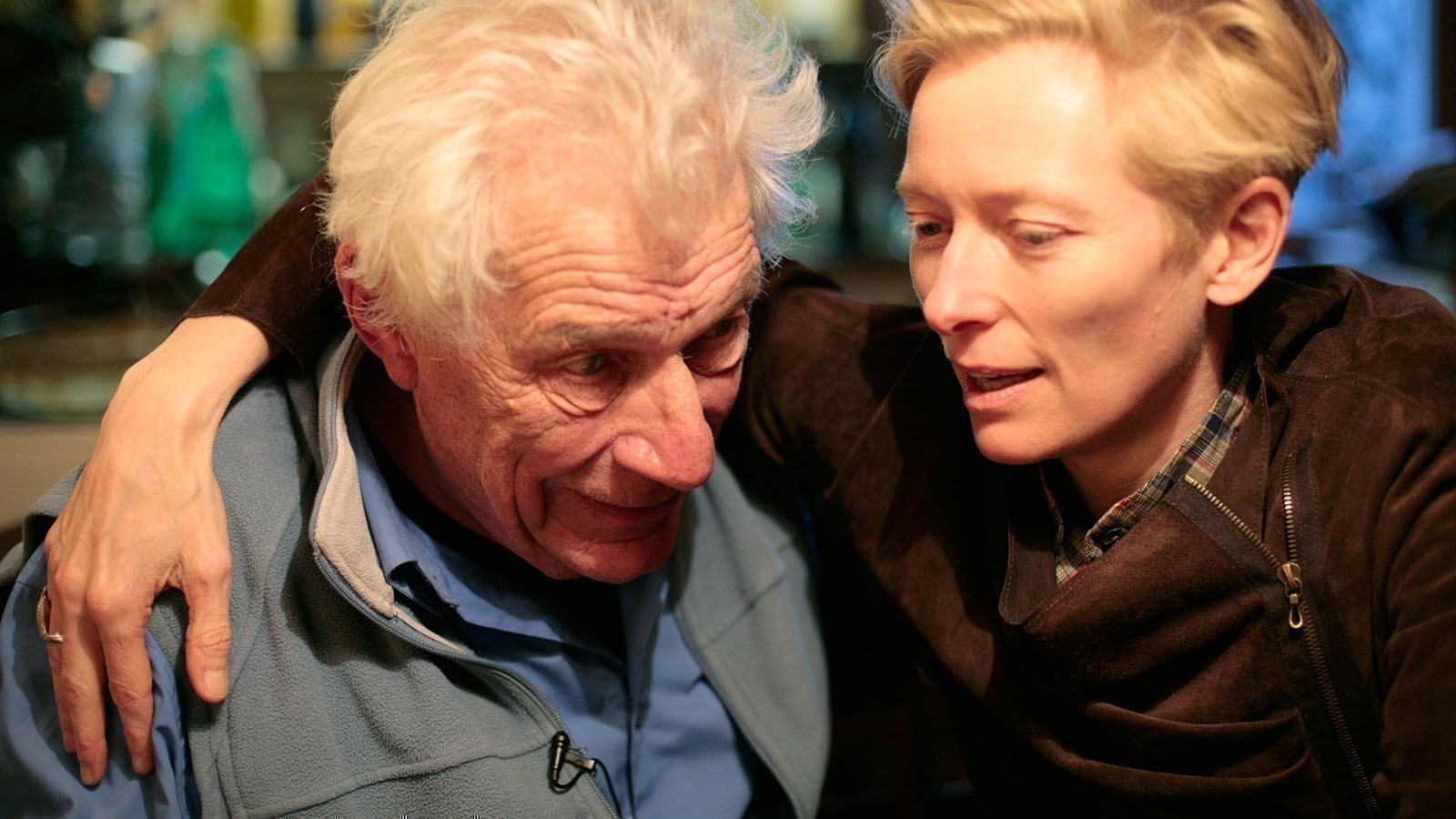
As the title suggests, The Seasons in Quincy: Four Portraits of John Berger (2015), screening Monday at Anthology, is a four-part film with four directors in charge of each seasonal chapter: Bartek Dziadosz, Colin MacCabe, Christopher Roth, and Tilda Swinton. Shot in the French Alpine village that Berger had called home since 1973, the film meanders between Berger’s conversations with Swinton and writers Ben Lerner and Akshi Singh as well as among the directors and Swinton’s kids. “There’s certainly no developing narrative related to Berger’s life or twilight years,” writes Clayton Dillard at Slant. “Yet that proves to be the film’s very delight, as it finds energies in the exchange of small talk, insisting that it’s in these moments, between life’s larger events, that one finds vitality.”
Don’t miss out on your Daily briefing! Subscribe to the RSS feed.