The Contemplative and the Corporal
Share
Described by the Guardian’s Catherine Shoard as “one of the most hotly anticipated dramas of the year,” Elsinore, directed by Simon Stone (The Dig) and written by Stephen Beresford (Pride), will open the seventieth BFI London Film Festival on October 7. Andrew Scott stars as Ian Charleson, the Scottish actor best known to movie fans for his winning turns in Chariots of Fire (1981) and Gandhi (1982).
Charleson’s Hamlet, though, is the stuff of London theater legend. He first played the melancholic Dane in the 1970s and then, when Daniel Day-Lewis bowed out of a 1989 National Theatre production, he took up the role again. Three years before, Charleson had been diagnosed with HIV, and it was clear that he only had months to live; director Richard Eyre overcame his initial hesitation and let him go on.
“Charleson’s performance, which ran for six weeks until mid-November, was widely felt to be one of the finest ever seen on stage,” writes Shoard. “The day after his final show, Ian McKellen refused the Evening Standard award for best actor and instead gave his statuette to Charleson.”
Behemoth!, directed by Tony Gilroy (Michael Clayton, Andor) and starring Pedro Pascal as “a cellist picking up the pieces of a fractured life,” will see its world premiere as the Centerpiece presentation of the New York Film Festival on October 2. San Sebastián (September 18 through 26) has announced an Official Selection that includes new work from Nicole Garcia, Hans Petter Moland, Pablo Larraín, and Mike Leigh, who, via IndieWire, has delivered deeply sad news: Tender Loving Care will “very likely” be his final film.
This week’s highlights:
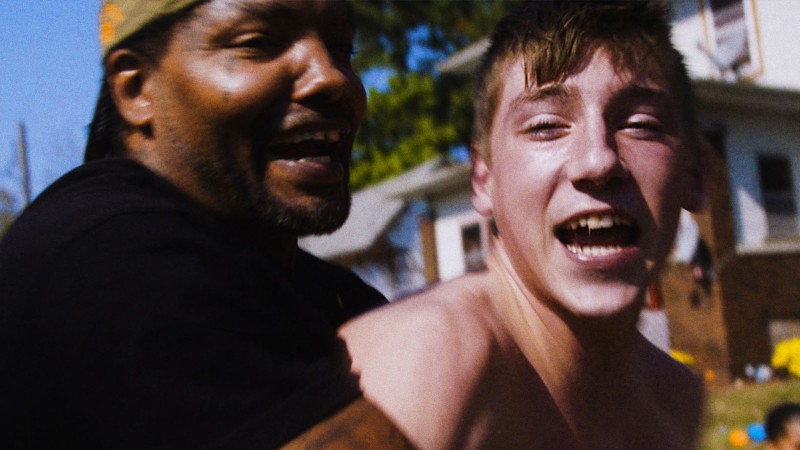
- Jimmy (2024) is the first feature from photographer Yashaddai Owens, who wrote, directed, edited, and shot his fleet-footed portrait of James Baldwin—who, at twenty-four, left Istanbul for Paris in 1948—on black-and-white 16 mm. Jimmy is now seeing a weeklong run at IFC Center, and Owens will be taking questions today, tomorrow, and Sunday. Benny O. Arthur “embodies Baldwin with an avid grasp of the contemplative and the corporal,” writes Lisa Kennedy in the New York Times. “Jimmy sees anew. He saunters. He pokes around parks and outdoor markets. In his room, he dances birdlike—a duckling turned swan! He conjures Gene Kelly in Singin’ in the Rain as he moves along a boulevard. Only there’s no rain pouring down, just love bubbling up. And, finally, vitally, he begins writing. The scratching of pen to paper heralds a history beginning—his and ours.”
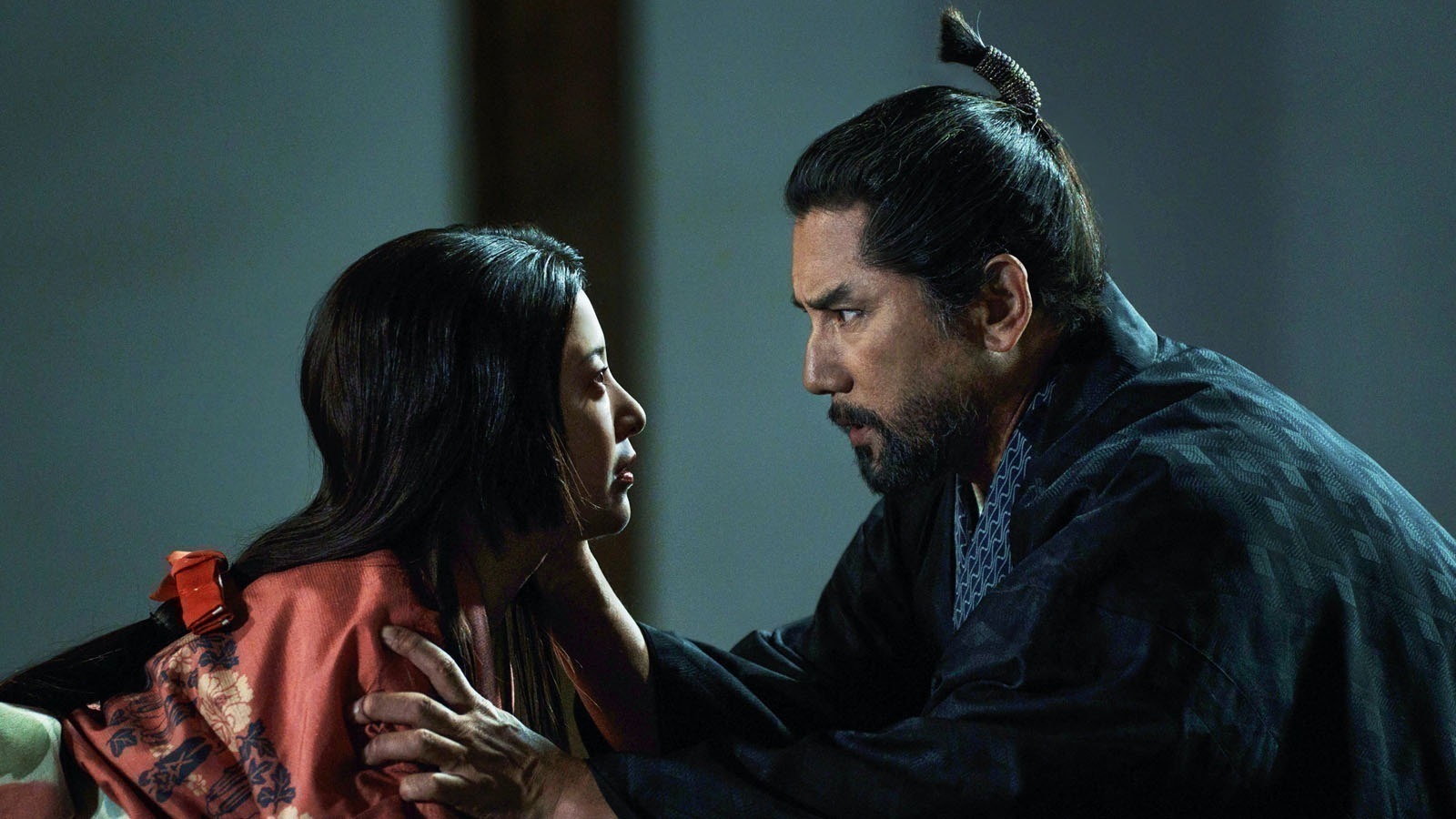
- “The past inexorably haunts the present; it’s the idea that, most obviously, sits at the heart of [Kiyoshi] Kurosawa’s ghost stories but is often just as present in his ambient thrillers, his dramas, his comedies, and even his romances,” writes Fred Barrett. Amazingly, after spending more than forty years making nearly thirty features, Kurosawa has directed his first period drama. Adapted from Honobu Yonezawa’s 2021 novel, The Samurai and the Prisoner is set in the besieged court of a samurai nobleman in sixteenth-century Osaka. When it premiered at Cannes, Jessica Kiang, writing for Variety, called it “a satisfyingly linked series of rousing whodunnits, a tricksy game of mental cat-and-mouse, and a trenchant, often rather moving, exploration of the nature of true leadership, in all its solitude and sacrifice.” The New Yorker’s Justin Chang finds that “Yonezawa’s novel allows Kurosawa to do what he has always done best: track down killers, investigate lovingly detailed crime scenes, and apply the mechanics of murder plots toward gravely existential ends.”
- After a brief shoutout to “one of my all-time favorite films,” Carl Th. Dreyer's Ordet (1955), Michael Sicinski turns to Roberto Rossellini’s “amazingly lighthearted” The Flowers of St. Francis (1950). “By Rossellini’s reckoning,” writes Sicinski, “living in imitation of Christ makes one an outcast, an oddball, utterly at odds with the standard laws of society. In appealing to a higher law, Christianity makes you ungovernable, a bit of an anarchist.” David Hering, in the meantime, revisits Robert Bresson’s L’argent (1983). While it’s “far from a direct adaptation” of Tolstoy’s The Forged Coupon, “one senses Bresson’s ongoing engagement with transferring the metaphysical conflicts of the nineteenth-century novel to a world in which religion is in retreat. There is no interventionist God in Bresson’s world, but God might nevertheless be present at all times: ‘There is the feeling that God is everywhere,’ he said in a 1973 interview. This quantum God, both absent and present simultaneously, is how I account for the simultaneously oppressive and trancelike qualities of Bresson’s films. Silence can be golden, and it can also be suffocating.”
- As Brian De Palma’s Carrie turns fifty, Sitges (October 8 through 18) is paying homage with this year’s poster and a screening of a 4K restoration. Sissy Spacek’s “bloodstained, ramrod-straight body is the film’s signature image,” writes Matthew Eng at Reverse Shot, “though what endures in my memory is not so much the havoc that Carrie unleashes as the warmth radiated by Spacek. Her surplus of sensitivity, her alien tenderness, deepens the film and gives it an emotional immediacy that it would not otherwise possess.” De Palma’s Obsession was released just three months before Carrie, and at IndieWire, Jim Hemphill gets screenwriter Paul Schrader to explain to him why he and De Palma had a more or less permanent falling out over the project. Also: At Screen Slate, Patrick Dahl notes that De Palma’s Hi, Mom! (1970) “hilariously dunks on revolutionary art and activism without ever siding with The Man.”
- A new issue of Senses of Cinema doesn’t need a dossier to be packed with reading to last to the end of summer. Salvador Carrasco takes a sixtieth-anniversary deep dive into Gillo Pontecorvo’s The Battle of Algiers, a film that figures into Pritish Das’s appreciation of the “enduring relevance” of Humberto Solás’s Lucía (1968). Leonard Schwartz takes a close look at Susan Bee’s 2013 painting Pickpocket, in which an image from Bresson’s 1959 film “becomes other than what it was.” Colette de Castro finds in Dag Johan Haugerud’s 2024 Oslo trilogy Dreams, Sex, and Love “a utopian portrayal of consent in an ideal world, one in which consent is not based on power dynamics or gender and heterosexual norms but rather on desire and love.” And then, of course, there are the interviews, festival reports, book reviews, program notes, and new inductees into the Senses collection of essays on Great Directors: Abel Ferrara, Khavn, and Masaaki Yuasa.
Don’t miss out on your Daily briefing! Subscribe to the RSS feed.