July Books
Share
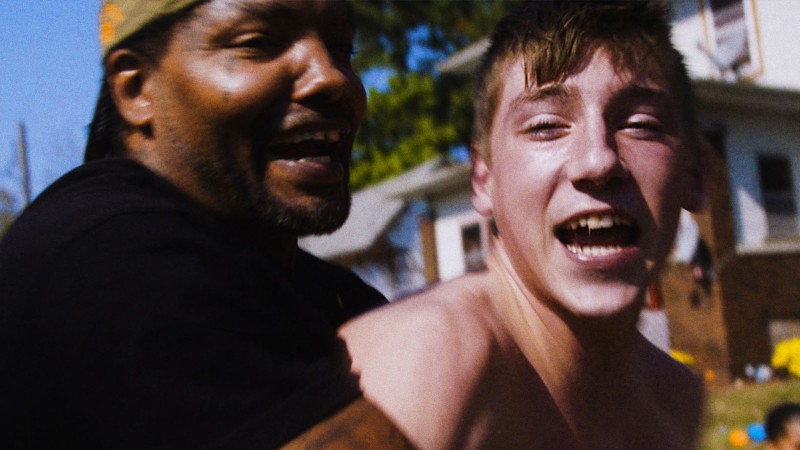
As noted yesterday, Robert Kramer’s Walk the Walk (1996) will screen tomorrow and again on Monday at Anthology Film Archives in New York as part of the Film Comment Live series Hold Everything Dear: John Berger and Cinema. Two years ago, as Re:Voir was restoring and rereleasing Kramer’s films, the Viennale was presenting a retrospective, and the Austrian Film Museum had just released Starting Places: A Conversation with Robert Kramer, Clinton Krute and Michael Blair invited Erika Balsom and Benjamin Crais to take part in a discussion of Kramer and his work for the Film Comment Podcast.
“Amid the recent spate of screenings, books, and retrospectives tied to this sudden Kramer renaissance is Whitney Strub’s Films That Explode Like Grenades: Robert Kramer and the Search for a Radical Cinema,” writes Nicolas Pedrero-Setzer, introducing his interview with the author for Screen Slate. “Strub has spent over a decade researching the life and work of the New Left filmmaker turned wayward expat, and his biography on the man is rigorous.” Films That Explode “assembles an incredible portrait of a veritable New Left Zelig, balancing out that chronicling with insightful commentary on a figure whose history has always been more akin to legend.”
Strub notes that Kramer cowrote and appeared in Troublemakers (1966), a documentary about organizing for change, and “was able to use that film to connect with Jonas Mekas, who then took him to the Pesaro Film Festival in 1967. He met all of the Italian filmmakers there. His datebook in his papers has phone numbers for Bertolucci, Pasolini, Straub-Huillet, and Agnès Varda. He knew how to make it into a scene and it helped that he was extremely attractive. People were drawn to him; he was smart, articulate, and charismatic. But no one is actually Forrest Gump. No one randomly sleepwalks through history. He would never admit it, because he was so anti-careerist rhetorically, but he knew how to be in the right place and meet the right people.”
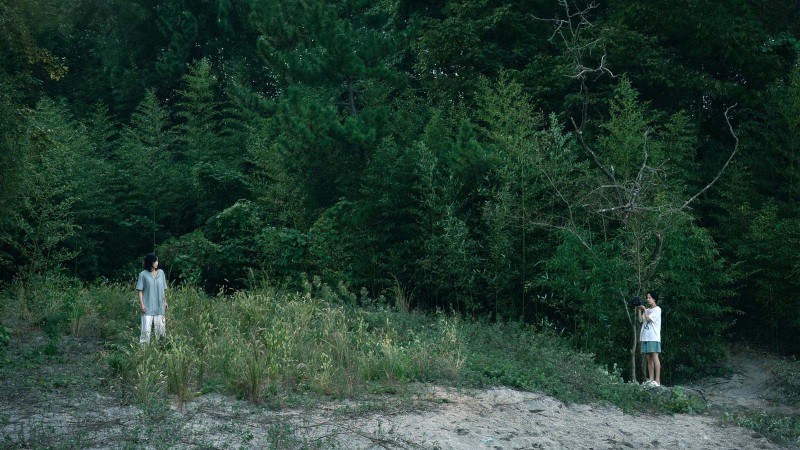
Screen Slate is also running Andrea Torres’s interview with Collier Schorr, an artist and photographer whose work has been featured at the Whitney Biennial as well as on the covers of Interview and Rolling Stone. Schorr has documented her latest project—a reimagining, six years in the making, of Chantal Akerman’s first feature, Je tu il elle (1974), as a dance piece on video—in Writing a Letter: Akerman Ballet, Act 1.
“I think the reason why Chantal’s work, and Je tu il elle, was so inviting to me was that it was like a self-gaze,” says Schorr. “It’s very documentary-like, but also very unconscious because she’s the performer. She’s aware of being scrutinized and she has some kind of desire to be scrutinized. You don’t really get the sense that there’s a desirous exchange between her and the cinematographer, because I think she’s so clearly directing how the camera is operating in the room.”
Sprinting Through a Century
The memoirs of Soviet writer Ilya Ehrenburg, spanning six volumes, “remain one of the most astonishing testaments to the first half of the twentieth century,” writes Paul Cuff, who has been spending time lately with Usine de rêves, the 1936 French edition Ehrenburg’s “cultural analysis of the film industry as it stood at the dawn of sound. More than a simple history of Hollywood or a report on the evolution of filmmaking, Ehrenburg creates a vivid picture of the key players dominating the industry and the ideologies shaping the marketplace.”
In Staging Nuremberg: How the United States and the Soviet Union Fought Over the Portrayal of Nazi Crimes, Sylvie Lindeperg, the author of Night and Fog: A Film in History, tracks two competing staging concepts. The Americans, of course, aimed to tell this story with the drive of a Hollywood narrative, while the Russians had plenty of show-trial expertise.
Farran Smith Nehme is pretty sure that Alfred Hitchcock saw Lawrence Huntington’s Wanted for Murder (1946), “given (among other points) the similarities between the fairground climax of Strangers on a Train (1951) and Huntington’s crowded, menacing scenes at a carnival.” Nehme’s essay on Huntington, a too-often overlooked but “highly effective stylist,” first appeared in Great Expectations: British Postwar Cinema 1945–1960.
In his piece for the London Review of Books on Hitchcock and Herrmann: The Friendship and Film Scores that Changed Cinema,Jonathan Coe notes that author Steven C. Smith naturally covers “the triple whammy of Vertigo, North by Northwest, and Psycho.” Smith “analyses both the scores and the collaborative processes behind these three films in detail, but works of genius, oddly, are less interesting to read about than misfires and wrong turnings. Despite the fact that his book is written in a somewhat breathless journalistic style, its narrative tempo doesn’t really get lively again until we move past The Birds (soundtrack-wise, an interesting experiment in electronica, into which [Bernard] Herrmann entered wholeheartedly) and on to the ill-fated Marnie. Perhaps the best book written about this broken-backed film is Evan Hunter’s short memoir Me and Hitch, which tells the story of why he was fired from it.”
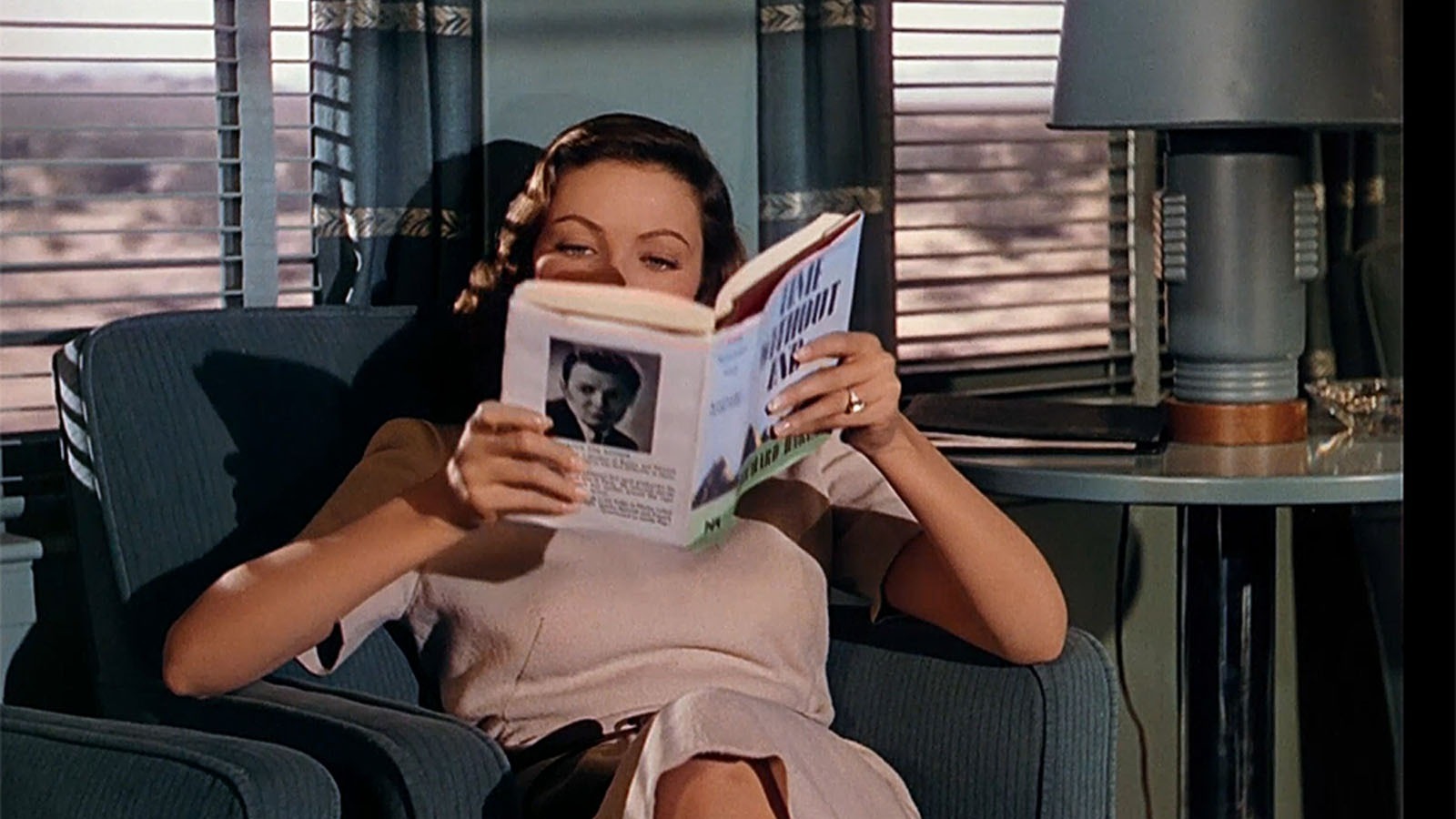
Will Scheibel’s Gene Tierney: Star of Hollywood’s Home Front is “an engrossing read, starting with Tierney’s wartime efforts and tracing her successes and challenges as she alternated between fame and illness,” writes William Blick at Retreats from Oblivion. “Always thorough and painstaking in provision of details, the book prompted this reader to take a second look at World War II–era filmmaking and the studio system from a new perspective.”
The evolution of a great director is “beautifully delineated in Patrick McGilligan and Paul Cronin’s new book Sydney Pollack: Collected Interviews, which assembles twenty-one interviews with Pollack conducted from 1970 to 2017,” writes Jim Hemphill for IndieWire. “The breadth and depth of the interviews and their arrangement in chronological order give the book the quality of an autobiography told in real time, as Pollack forms, tests, rejects, and rediscovers his own theories about filmmaking from his breakthrough hit, the harrowing Depression-era tragedy They Shoot Horses, Don’t They?, to his final triumph, the smart and bittersweet thriller The Interpreter.”
For the Los Angeles Review of Books, Tim Brinkhof writes about Tom Sito’s Drawing Life Back Into Animation: A Personal Journey Through the Toon Renaissance of the 1990s and finds that the author has “a large repertoire” of “anecdotes to pull from.” Sito was “an animator on classics such as Disney’s Aladdin (1992) and The Lion King (1994), as well as Shrek (2001) from DreamWorks. He also worked closely with an animation director whose impact on the field is second only to Walt Disney: Richard ‘Dick’ Williams, remembered, among other things, for his contributions to Robert Zemeckis’s Who Framed Roger Rabbit (1988) and The Thief and the Cobbler, an unfinished passion project that consumed the bulk of his six-decade career. The first helped bring feature animation back from the dead. The second, despite its troubled development, remains one of the most ambitious and impressive animated films of all time.”
Rough Fictions
In the New York Times, Sam Lipsyte recommends oncologist, filmmaker, and writer Roshan Sethi’s debut novel, The Simp, the story of an unemployed actor, Raj Ladlani, who takes a job as a personal assistant to Jim and Anna, “white Hollywood A-listers” and a “performatively sensitive power couple” with a “heartbreakingly neglected child.” Lipsyte: “Beneath the novel’s deadpan, stinging depictions of this rarefied Tinseltown milieu, The Simp also explores the painful but, in Sethi’s hands, bleakly comic ways race and colonial history collide with the dream of fame.”
In 1956, Bob Wade and Bill Miller, writing under the name Whit Masterson, wrote Badge of Evil, which Orson Welles then reworked as Touch of Evil (1958). “Every admirer of Welles—that is, every lover of cinema—will find endless fascination in perusing the point of origin of one of his greatest films,” writes James Morrison for Film International. “Every devotee of film noir should be grateful to Stark House Press for their judicious and varied curation of a series of books from which some of the classics derived.”
“LA is America with no place left to run. LA is America with its back against the wall.” So says Jake Deal, a livestreamer racing between crime scenes and one of three main characters in Jordan Harper’s fourth thriller, A Violent Masterpiece. “In some ways the novel is a classic LA noir, with three characters confronting secretive forces that run the city,” writes Carolyn Kellogg in the Atlantic. “At the same time, it is a vivifying refresh, with ripped-from-the-headlines villains.” Kellogg argues that noir “can’t get by on plot alone. Almost every page of A Violent Masterpiece has a spark and crackle of language, detail, idea.” With Red Sheet, on the other hand, James Ellroy “tries to get by on plot alone.”
Forthcoming
Next month will see the publication of Body Horror: Biology, Biopower, Biotechnology, in which Xavier Aldana Reyes tracks the evolution of the subgenre from David Cronenberg’s The Fly (1986) and Shinya Tsukamoto’s Tetsuo: The Iron Man (1989) to Julia Ducournau’s Raw (2016) and Coralie Fargeat’s The Substance (2024). The official release of Drew Pisarra’s Diabolically Good: The Movie Career and Afterlife of Horror Icon Vincent Priceis slated for next month as well.
Persheng Vaziri’s Documenting Iran: Filmmakers and Social Change arrives on August 25, and Cheshire on Film—a cross between a memoir and a critical anthology from critic Godfrey Cheshire, a crucial champion of Iranian cinema—will be out on September 1. Two days later, two additions to Bloomsbury’s Movies Minute by Minute series will be released: Stephen Lee Naish’s Point Break, a detailed study of Kathryn Bigelow’s 1991 action movie, and Johanna Isaacson’s Sisters, an analysis of Brian De Palma’s 1972 horror classic.
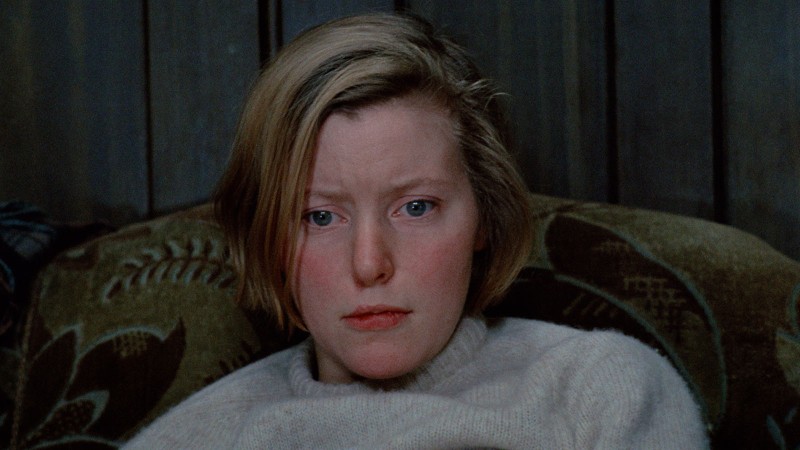
The rollout of Decadent Editions from Fireflies Press will be back on track with the September 22 publication of Anwen Crawford’s Morvern Callar, a study of Lynne Ramsay’s 2002 follow-up to her debut feature, Ratcatcher (1999). Lauren Theisen and Emily St. James’s Every Time a Bell Rings: The Legacy and Meaning of It’s a Wonderful Life, America’s Most Beloved Holiday Film will arrive on September 29.
Elaine Kagan, who started out as a secretary to John Cassavetes and later landed roles in Martin Scorsese’s Goodfellas (1990), Steven Soderbergh’s Traffic (2000), and dozens more films and television shows, has stories to tell. They’re collected in The Picture Business, which hits shelves on October 6.
Variety’s Alex Ritman reports that MUBI Editions has teamed up with the Cinémathèque française to publish The Faust Bible: The Making of F. W. Murnau’s Masterpiece on October 17. The book will “bring to light a recently unearthed artefact of film history,” notes Ritman, “a visual diary of approximately four hundred photographs and original illustrations documenting the making of the film almost step-by-step.”
Listening
Notable recent guests on Guide for the Film Fanatic include Sarah Welch-Larson, the author of Becoming Alien: The Beginning and End of Evil in Science Fiction’s Most Idiosyncratic Film Franchise, and Isaac Butler (The Perfect Moment: God, Sex, Art, and the Birth of America’s Culture Wars), who chats with hosts Jason Bailey and Mike Hull about Bob Fosse’s Cabaret (1972).
John Bleasdale, the host of Writers on Film, talks with Samira Ahmed about her new book on Richard Lester’s first Beatles movie, A Hard Day’s Night (1964), and Nick Dawson, host of the Talkhouse podcast Nobody’s Ever Asked Me That, spends some time with Abel Ferrara, whose memoir, Scene, was published last fall. And Tony Lee Moral is in the Projection Booth,discussing his new book, A Century of Hitchcock: The Man, the Myths, the Legacy.
Endnotes
Jonathan Rosenbaum has a newsletter now, and subscribers are privy to the esteemed critic’s thoughts on new releases such as Steven Spielberg’s Disclosure Day and writing from the archives such as a 2010 review of Tony Pipolo’s Robert Bresson: A Passion for Film for Cineaste that’s never appeared online before. Jonathan Monovich’s interview with Joseph McBride for Film International, in the meantime, is sparked by the recent publication of the film historian and screenwriter’s I Loved Movies, But . . . , an extended look back on his life and work in a conversation with film critic and sports writer Danny Peary.
To go out with a bang, let’s flag Bram Van Beek’s big summertime roundup of new releases for Sabzian. Here we find notes on stories by Eric Rohmer; essays by Louise Brooks and Erika Balsom; a portrait of Maurice Pialat; collections of writing by Jean-Luc Godard, Harun Farocki, and Michael Almereyda; and much more.
Don’t miss out on your Daily briefing! Subscribe to the RSS feed.