Silent Movie Week 2026
Share
Four decades ago, when Dave Kehr was a film critic for the Chicago Reader, he noted that D. W. Griffith’s Way Down East was “based on a florid Victorian stage melodrama about a seduced and abandoned orphan girl who seeks refuge with a farm family. Through his star, Lillian Gish, Griffith gives the story an emotional power that lifts this 1920 silent feature to the level of a folktale; it becomes something simple, strong, and timeless.”
Now, as a curator in the Department of Film at the Museum of Modern Art, Kehr has selected Way Down East as the opening-night film of MoMA’s fourth annual Silent Movie Week. On Wednesday, the first of seven dynamite evenings—as Farran Smith Nehme puts it, this year’s lineup is “one masterpiece after another”—a ten-piece orchestra conducted by musicologist Gillian Anderson will accompany the world premiere of a new digitized edition of MoMA’s 1979 photochemical restoration.
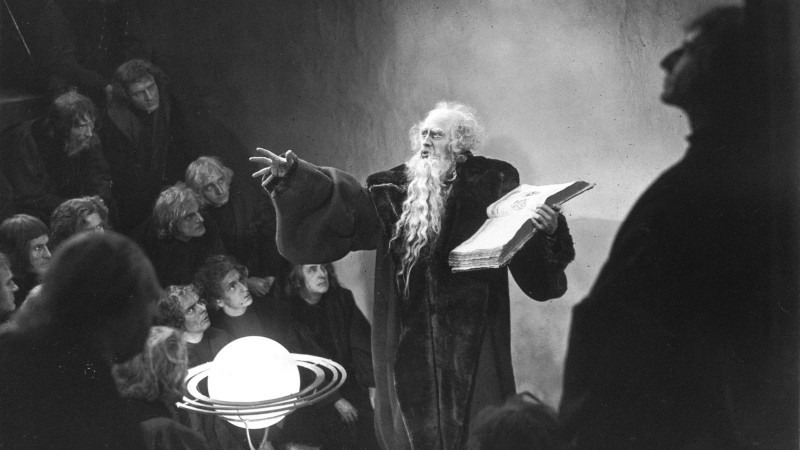
The entire program is a showcase of MoMA restorations with the single exception of the closing-night presentation. As Kehr and Department of Film assistant Steve Macfarlane point out, F. W. Murnau’s Sunrise: A Song of Two Humans (1927) “was restored by our friends at the San Francisco Film Preserve using some elements from MoMA.” This “definitive digital restoration” opened last month’s Il Cinema Ritrovato.
Beatrice Loayza was there, and writing for Notebook, she calls Sunrise “a hodgepodge of moods and timeless themes, shifting between carnivalesque comedy and heart-splitting melodrama as it unfolds a dark story of marital reconciliation. Universal is a rightfully contested word, but with its dreamy balance of studio artifice and psychological realism, channeled across city and country backdrops, Sunrise makes a compelling case for that term’s relevance.”
In their overviews of this year’s Silent Movie Week, both Michael Barrett at PopMatters and Marya E. Gates spotlight the two films in the program currently unavailable for home viewing. “I first saw Ernst Lubitsch’s The Student Prince in Old Heidelberg (1927) at the Pordenone Silent Film Festival about a decade ago and I think I am still crying,” writes Gates. Ramon Novarro stars as the prince who falls for an innkeeper’s niece (Norma Shearer) and is then duty-bound to return to his kingdom. For Gates, “of all the films screening during this year’s fest, this is the one I think should absolutely not be missed.”
Raoul Walsh’s What Price Glory (1926) “wraps its sobering messages about war in a raucous, character-driven comedy that became popular and controversial for its profanity and sexual allusions,” writes Barrett. Edmund Lowe and Victor McLaglen star in the adaptation of the 1924 Broadway hit as womanizing U.S. Marines, and they reprised their roles in two sequels Walsh directed as well as a third directed by John Blystone. John Ford oversaw the second unit work in the first film and then directed his own version in 1952 with James Cagney and Dan Dailey.
The Ford entry in the program is 3 Bad Men (1926), starring Tom Santschi, J. Farrell MacDonald, and Frank Campeau as outlaws aiming to rob a wagon train when they’re beaten to the punch by a rival gang. After driving that band off, all three bad hearts melt when they come across a weeping homesteader (Olive Borden).
Ford directs “with a dazzling eye for intricate set-ups,” writes Fernando F. Croce. “His America is a land still in fragments, a country of stampedes finding its inner balance: Frames are composed with the continuous bustle of people and vehicles, and then there’s the stillness of a congregation moments before a wagon set ablaze crashes through the church wall. History is vaudeville when it isn’t tall-tale.”
The rest is comedy. MoMA has reconstructed the original 1918 release versions of Charlie Chaplin’s A Dog’s Life and Shoulder Arms, and as the Museum explains in the program notes, this was no small feat. In A Dog’s Life, Charlie’s Tramp saves a stray from a pack of attacking canines and a singer (Edna Purviance) from mobsters.
“Chaplin linked the Tramp’s and the singer’s actions to the dog’s, often cutting between scenes in which they appeared in similar dilemmas,” notes Frank Miller at TCM. “This use of association as the basis for plot construction gave him a way to string together what in earlier films had been simply a series of disparate gags. Years later, he would say that though it restricted his ability to use any gag he thought of, it ultimately made his films funnier and deeper.”
In Shoulder Arms, Chaplin plays an infantryman in the First World War, and the three reeler is “a prime example of the most important aspect of Charlie Chaplin’s artistry,” writes Paul Tatara for TCM, “his ability to gracefully skirt the line between comedy and tragedy.”
Chaplin’s friends and colleagues tried to talk him out of trying to squeeze laughs out of the horrors of war, but Shoulder Arms turned out to be his biggest hit to date. Tatara notes that the sequence “in which Charlie moves through enemy territory while camouflaged as a rickety tree is a gem, one of the more potently bizarre interludes in any Chaplin picture.” A Dog’s Life and Shoulder Arms screen on Sunday with The Bond (1918), a rarely seen propaganda short plugging U.S. Liberty Bonds.
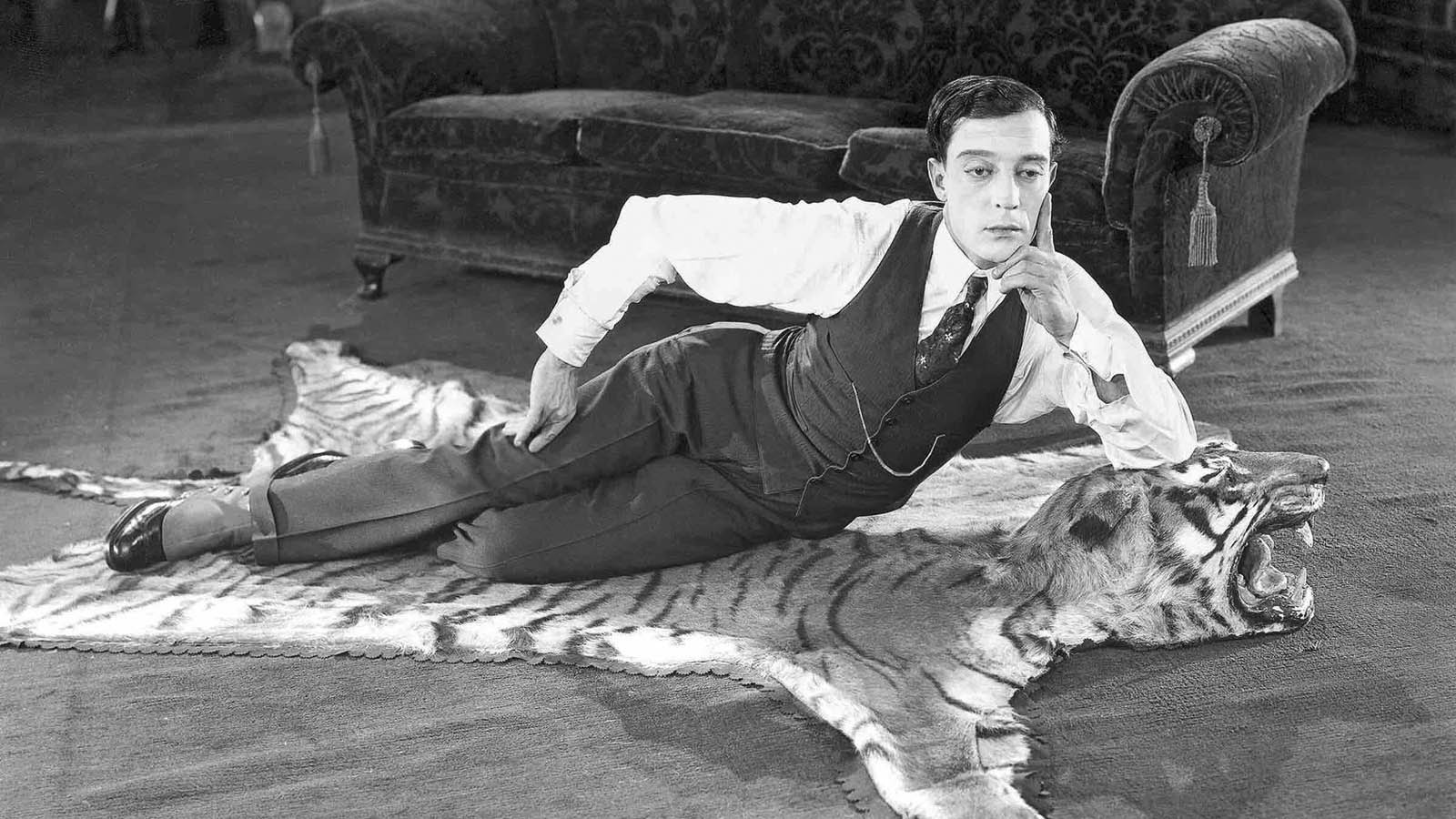
In The Navigator (1924), codirected with Donald Crisp, Buster Keaton and Kathryn McGuire are young and rich and utterly helpless when they find themselves alone on a drifting ship. “The Navigator is a blissful dose of Keatonian intoxicant, with all of the visual precision, effortless rapport, and filmmaking savoir-faire that implies,” wrote Michael Atkinson last year for the San Francisco Silent Film Festival. “In a Keaton film, you always have the sense that the camera is in the perfect spot, the action will unfold with diamond-cut rhythm, and the strain of making it all happen, even the impossible things, will not show.”
Don’t miss out on your Daily briefing! Subscribe to the RSS feed.