August Books
Share
One of the many aims of these monthly roundups of notes on new books is to spotlight the enduring power and beauty of one of our oldest media, the printed word, and if it’s delivered within a creatively designed object, all the better. As it happens, this has been a terrific summer for movie magazines as pleasing to the eye as they are to the mind.
Designed by Matt Wiley and featuring a cover by Louise Giovanelli, the second issue of the Metrograph is on its way to subscribers and will hit stores next month. Whit Stillman, Aubrey Plaza, Tacita Dean, Apichatpong Weerasethakul, Elaine May, and Luc Moullet are among the sixty or so contributors, and the issue includes tributes to the late critic Gary Indiana and filmmaker Paul Morrissey.
The theme of Notebook’s seventh issue is “the unfilmable,” a concept Paolo Cherchi Usai elaborates on in his introductory text. Bilge Ebiri outlines a history of the frame rate, and there are also contributions from Yoko Ono, Guy Maddin, and Kevin Jerome Everson as well as a cover by Deborah Stratman.
A couple of weeks ago, Christopher Small, one of the founding editors of Outskirts, launched the third issue in Locarno. The centerpiece is a dossier on Vittorio De Seta, and Pontón Magazine is running Small’s essay on Roberta Findlay, “whose films and pugnacious public comments thwart the tidy auteurist and especially feminist readings well-meaning fans apply to them.” The fifth volume of Mezzanine, in the meantime, features texts on Luc Moullet by Beatrice Loayza and Will Sloan.
The summer has also seen the launch of two new magazines. The new quarterly Narrow Margin focuses on the work of Luc Moullet and Vittorio Cottafavi in its inaugural issue, and This Is Cinématographe, a journal dedicated to American cinema, offers Bilge Ebiri’s interview with director and cinematographer Ernest Dickerson, artwork by Johnny Ryan, and a comic by Nathan Gelgud.
Lives of the Filmmakers
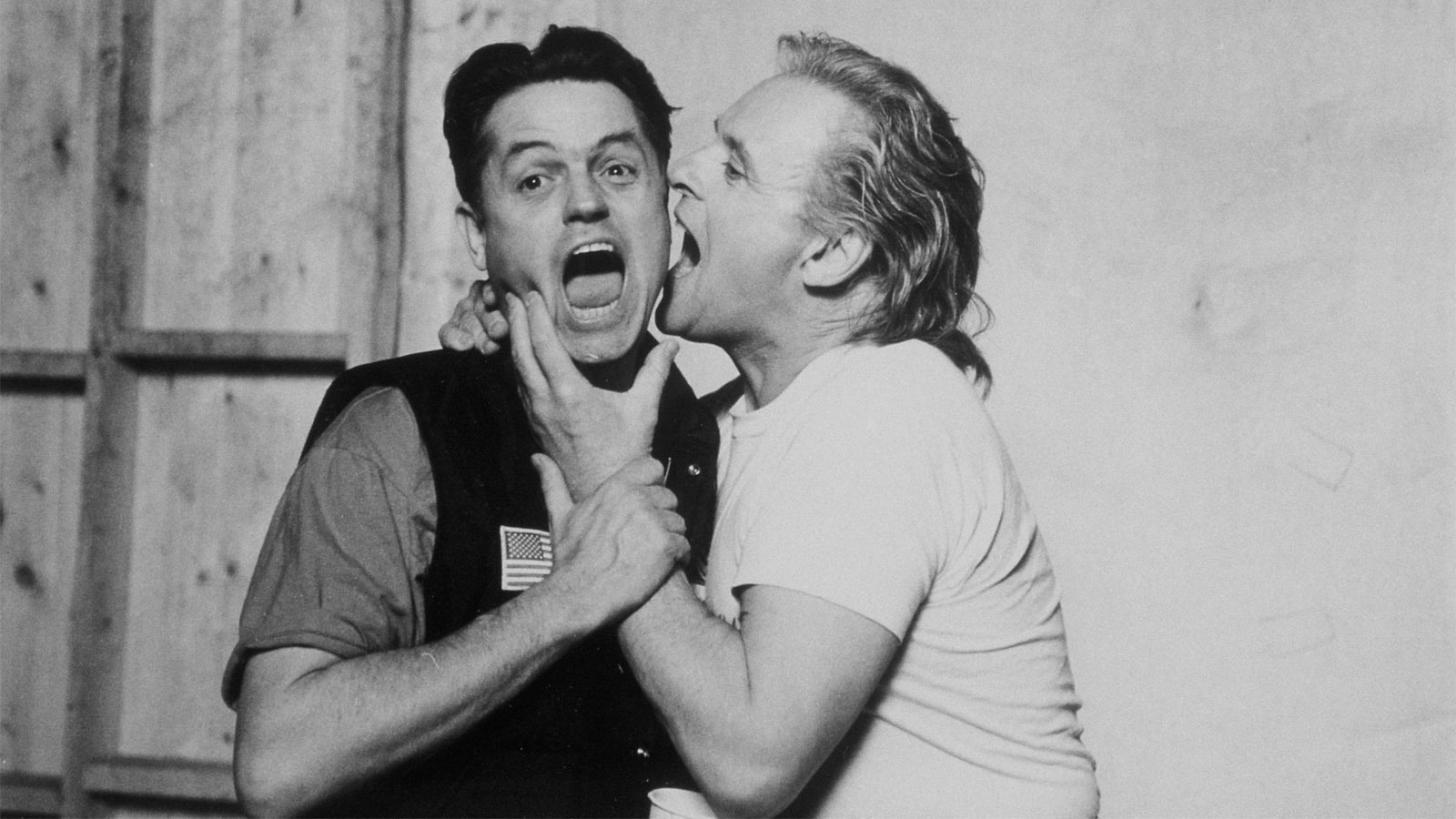
With articles on Who Am I This Time (1982), Melvin and Howard (1980), Stop Making Sense (1984), The Silence of the Lambs (1991), The Manchurian Candidate (2004), and Rachel Getting Married (2008), the current issue of Bright Wall/Dark Room is dedicated to the work of Jonathan Demme. In the Los Angeles Times, Nathan Smith finds David M. Stewart’s biography There’s No Going Back: The Life and Work of Jonathan Demme “uneven,” but for Peter Keough at the Arts Fuse, it’s “brisk, comprehensive, and insightful.” In the Shepherd Express, David Luhrssen writes that the book amounts to “compelling testimony for Demme’s role as an insider-outsider in an industry that, in the last years of his life, was increasingly inhospitable to creativity.”
Sean Burns talks with Stewart for Crooked Marquee, noting that the author “hopes the book will be more like a starting point than the final word on this unique American artist. It’s high time for such a project, because while one can’t exactly describe an Oscar winner as an underappreciated filmmaker, it does feel a little like we take Jonathan Demme for granted.”
Writing for the Los Angeles Review of Books, Amelia Anthony finds that James Miller’s The Passion of Pedro Almodóvar: A Self-Portrait in Seven Films “succumbs to an overreaching extension of auteurism—so that the portrait of Almodóvar that emerges ultimately defers critical or creative interpretation of his works to the director himself, either through Almodóvar’s stated intentions in notes and interviews or the biographical facts of his life.” Miller’s “most vivid readings of the films draw upon his expertise in philosophy, knowledge about Spanish history, and familiarity with works of other filmmakers; when he lets Almodóvar get the last word, the original and creative act of criticism becomes diminished.”
In Ida Lupino, Forgotten Auteur: From Film Noir to the Director’s Chair, Alexandra Seros offers “detailed discussions of Lupino’s singular visual language, her ambiguous endings, and her skillful, efficient directing style,” writes Jans B. Wager for Bright Lights Film Journal. “In the process, the author uncovers gratifying bits of evidence, builds connections among Lupino and her cohort of creative workers, and considers thought-provoking notions about why the filmmaker remains both valued and underappreciated as a director.”
Cinematographer Néstor Almendros was renowned for his work on films by François Truffaut, Eric Rohmer, Maurice Pialat, Jean Eustache, and Monte Hellman, and he won an Oscar for his work on Terrence Malick’s Days of Heaven (1978). Writing for Metrograph Journal, Carlos Valladares revisits Almendros’s “invaluable” memoir, A Man with a Camera. From the beginning, writes Valladares, we can see “the two sides of Almendros—the leftist political dissident, and the strident aesthete—equally emerge fully formed. From his early years in Spain, and his subsequent periods based in Cuba, the United States, and France, Almendros understood how intertwined politics and aesthetics were, and how to skillfully combine the two. ‘From that time,’ he writes, ‘I have never attacked the so-called escapist cinema as some people do, because I think it helps many poor souls get through their lives, as it helped me in those precarious days.’”
More Lives to Talk About
Shawn Levy’s Clint: The Man and the Movies is a “fine-grained and deeply researched unfolding of Eastwood’s life and career [that] subtly tweaks familiar biographical formulas in a way that parallels what Eastwood has done with typical Hollywood practices, to reveal fascinating truths about Eastwood’s art, and about cinema itself,” writes Richard Brody. On the New Yorker Radio Hour, Brody talks with David Remnick about three of his favorite Eastwood films, Play Misty for Me (1971), Bird (1988), and Sully (2016).
Levy, in the meantime, is a guest on the Writers on Film podcast, where host John Bleasdale also talks with Roger Lewis about The Life and Death of Peter Sellers. Bleasdale, whose The Magic Hours: The Films and Hidden Life of Terrence Malick came out late last year, already has a new biography on the shelves, Darkness Visible: The Cinema of Jonathan Glazer. In another episode of Writers on Film, Bleasdale chats with Kaleem Aftab about Glazer’s Sexy Beast (2000).
Nicolas Rapold, whose own The Worlds of Hayao Miyazaki: The Influences and Inspiration Behind the Iconic Films will be out next month, recently spoke with Will Sloan on The Last Thing I Saw about his new critical reappraisal, Ed Wood: Made in Hollywood USA.
Black Film Culture
Nicholas Boggs’s new James Baldwin biography, Baldwin: A Love Story, “makes a hugely important contribution,” writes Louis Menand in the New Yorker, “because it takes us to the heart of Baldwin’s message—the fear of love—and shows how urgent that problem was for him.” Vanity Fair is running an excerpt in which Boggs tells the story behind the screenplay based on the life of Malcolm X that Baldwin tried—and failed—to complete. “His ‘Hollywood journey’ had been ‘a revelation,’ Baldwin would say in an interview a little over a year later,” writes Boggs, who goes on to further quote from the interview: “The things I was asked to write in the name of Malcolm, the advice I was given about the life and death of a friend of mine was not to be believed. So I left. I split to save my life.”
For the Brooklyn Rail, Edward Mendez talks with Alyssa Lopez about her new book, Reel Freedom: Black Film Culture in Early Twentieth-Century New York City. “At the turn of the century, as cinema became incredibly popular as a new, modern amusement, you saw Black New Yorkers getting at different aspects of film—not just filmmaking—to push back against their exclusion from this amusement and public city spaces,” she says. For Lopez, “film culture is those interactions around cinema: the act of moviegoing, the act of being in the movie theater; labor, or hidden labor, in terms of projectionists (as people can’t see them, but they’re absolutely part of making film possible); film criticism; directors, specifically Oscar Micheaux and his interactions with censors.”
Ashley Clark, our curatorial director, has a new, wide-ranging, and smartly designed survey coming out in February. The World of Black Film: A Journey Through Cinematic Blackness in 100 Films features a foreword by artist and filmmaker John Akomfrah (Handsworth Songs).
Forthcoming
Friday will see the release of O Brother, What Might Have Been: Three Lost Screenplays by Preston Sturges. September begins with Peter Cowie’s memoir, Flashbacks: A Passion for Film, followed by Hallelujah Now, the only published novel by the late Terence Davies.
On September 27, Stephen Rebello will be at Vroman’s Bookstore in Pasadena to talk about his new book, Criss-Cross: The Making of Hitchcock’s Dazzling, Subversive Masterpiece Strangers on a Train. The Paris Review is running an excerpt from Six Films, a collection of experimental texts by Marguerite Duras translated by Olivia Baes and Emma Ramadan and slated for release on September 30.
October will bring Scene, a highly anticipated memoir from Abel Ferrara, and The Man Who Shot Liberty Valance, a study of John Ford’s 1962 western by Chris Yogerst. And A. S. Hamrah has two books on the way, Last Week in End Times Cinema, due in November, and Algorithm of the Night, arriving on December 2.
Endnotes
We haven’t felt terribly compelled to delve into Amy Odell’s new biography, Gwyneth, but we will say that Emma Brockes’s overall assessment in the Guardian of Paltrow and the book seem fair enough. We’ll also mention that Jessa Crispin’s What Is Wrong with Men: Patriarchy, the Crisis of Masculinity, and How (Of Course) Michael Douglas Films Explain Everything has been relatively warmly received by Alexandra Jacobs in the New York Times but a bit less so by Judith Warner in the Washington Post.
The MIT Press is running excerpts from Joan Copjec’s Cloud: Between Paris and Tehran: Kiarostami/Corbin/Lacan and Peter B. Kaufman’s The Moving Image: A User's Manual. Recent reviews in Film International include Andrew Kolarik on Pardis Dabashi’s Losing the Plot: Film and Feeling in the Modern Novel and Johannes Schönherr on Marie Sophie Beckmann’s Films That Spill: Beyond the Cinema of Transgression. And Kevin B. Lee has edited The Future of Survival, a collection gleaned from a workshop held in Locarno last year.
At Silent London, Pamela Hutchinson has posted brief reviews of new books on Anna May Wong, a bank robber who briefly became a movie star, and Luke McKernan’s new collection, Let Me Dream Again: Essays on the Moving Image. We’ll wrap, as we so often do, with a pointer to Christopher Schobert’s latest round of recommendations at the Film Stage. This month brings notes on Walter Murch’s Suddenly Something Clicked: The Languages of Film Editing and Sound Design and on new books about Twin Peaks, Humphrey Bogart and John Huston, and Greta Gerwig.
Don’t miss out on your Daily briefing! Subscribe to the RSS feed.