Sho Miyake Wins the Golden Leopard
Share
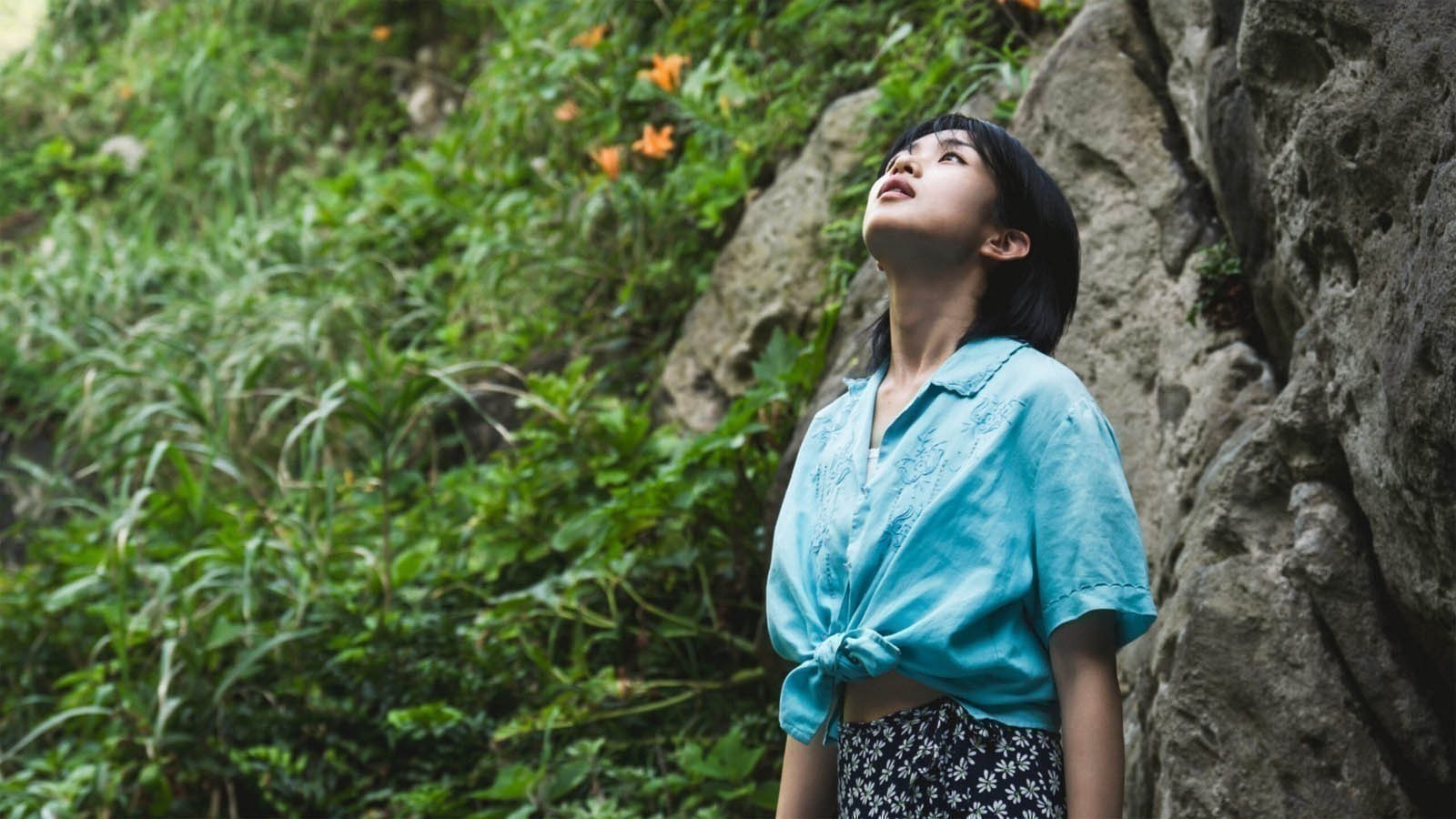
Sho Miyake was not yet thirty when his first feature—Playback (2012), a black-and-white time-travel puzzler—was invited to premiere in the main competition in Locarno. A good number of features, shorts, music videos, and television episodes came and went before Miyake finally won the international attention he deserved with Small, Slow but Steady (2022), a piercing yet understated adaptation of a memoir by a deaf female boxer. For Guy Lodge in Variety, Small, Slow but Steady “turns out to be somewhat aptly described by its own title, though none of those adjectives quite conveys its rare and delicate grace.”
Miyake returned to Locarno this year with Two Seasons, Two Strangers and won the festival’s top prize, the Golden Leopard. He’s taken two stories by manga artist Yoshihara Tsuge and reshaped them. “Scenes from the Seaside” (1968) becomes a film within the film, following Nagisa (Yumi Kawai) and Natsuo (Mansaku Takada), “two lonely young people who quickly go from being strangers to finding solace in each other during their summertime dates at the beach,” as Robert Daniels explains at RogerEbert.com. “The vibrant photography of this paradisal seaside drapes every scene in hues of blue and green, while the editing remains meditative yet brisk.”
This film is being written by Li (Shim Eun-kyung) in the other half of Two Seasons, Two Strangers, a reworking of Tsuge’s “Mr. Ben and His Igloo” (1967). Li is writing her screenplay while staying in an isolated inn nestled in wooded and snow-covered mountains. She’s also slowly forging a friendship with the taciturn owner of the inn, Benzo (Shinichi Tsutsumi). Tsuge “pursued a pure form of manga, free from traditional story structures,” Miyake tells Locarno’s Keva York. “I was influenced by his way of trusting the reader’s senses and imagination, and his work helped me to rediscover surprise, confusion, joy, humor, and sadness within a dark or absurd world.”
At IndieWire, Josh Slater-Williams finds that Tsuge is “an ideal match for the filmmaker’s skill with bringing real interiority to fable-like storytelling,” and for Diego Lerer, Two Seasons, Two Strangers is “a beautiful and deeply human film, crafted with delicacy and intelligence.”
More Locarno Awards
A Special Jury Prize went this past weekend to Elsa Kremser and Levin Peter’s White Snail, and as Carmen Gray notes at the Film Verdict, the new feature is “a fresh departure from the duo’s prior, widely played documentaries about strays on Moscow’s streets, Space Dogs (2019) and Dreaming Dogs (2024), though it echoes their sense of mysterious connection on the margins.” Marya Imbro and Mikhail Senkov shared a Pardo for Best Performance for their respective turns as an aspiring teen model and a mortuary technician and amateur painter. Their meeting in a morgue in Belarus “sets the tone for a film that can be oppressively subdued at times,” finds David Robb at Slant, “but that’s offset by the icy elegance of its handheld cinematography, which effectively renders the loneliness of its characters and the poignancy of its Minsk setting.”
The other Pardo for Best Performance went to Manuela Martelli and Ana Marija Veselčić for portraying Teresa, a Chilean woman who seemingly appears out of nowhere, and Milena, the lone woman overseeing a mountain village in early twentieth-century Croatia while the men are away tending sheep. Hana Jušić’s “ominous and riveting” God Will Not Help “comes nearly a decade after her Venice-awarded feature debut, Quit Staring at My Plate (2016),” notes Carmen Gray. “Against the brutal sparring for dominance of the men, an allegiance between Teresa and Milena grows, and a solidarity in rebellion as nourishing as it is dangerous emerges as its own form of salvation.”
The Pardo for Best Direction went to Abbas Fahdel for Tales of a Wounded Land, shot in southern Lebanon between October 2023, when the conflict between Hezbollah and Israel was reignited, and February 2025. “This film was born out of an inner urgency,” Fahdel tells Locarno’s Christopher Small, “the need to bear witness to the brutality of a war that began to ravage the region where we live—a war that shattered lives, destroyed homes, wiped out villages, and displaced over a million people, my small family and I among them.”
Locarno’s jury—Rithy Panh (president), Joslyn Barnes, Ursina Lardi, Carlos Reygadas, and Renée Soutendijk—gave a special mention to Dry Leaf, Alexandre Koberidze’s follow-up to What Do We See When We Look at the Sky? (2021) and the winner of this year’s FIPRESCI Prize. Tracking the search for a missing photographer and shot on an obsolete mobile phone, Dry Leaf is “a joy for devotees of the strange, singular, and sometimes transcendent,” writes Jessica Kiang in Variety. “It’s a movie to ride shotgun alongside, with the windows down on a lazy trip to nowhere in particular, that ends up taking you everywhere in particular.”
Codirected by Nicolas Graux (Century of Smoke) and Trương Minh Quý (Việt and Nam), Hair, Paper, Water . . . won the top prize in the Filmmakers of the Present competition. For Robert Daniels, this is an “observationally rich and overwhelmingly beautiful” documentary portrait of an elderly woman seeking to pass along to her grandchildren the language of culture of the Rục, a small and dwindling tribe in Vietnam. And Neo Sora (Ryuichi Sakamoto: Opus, Happyend) won the Pardino d’Oro for the Best Auteur Short Film for A Very Straight Neck, starring Sakura Ando as a woman whose neck pain rouses disjointed memories and haunting dreams.
Don’t miss out on your Daily briefing! Subscribe to the RSS feed.