Reckoning with Ryan O’Neal
Share
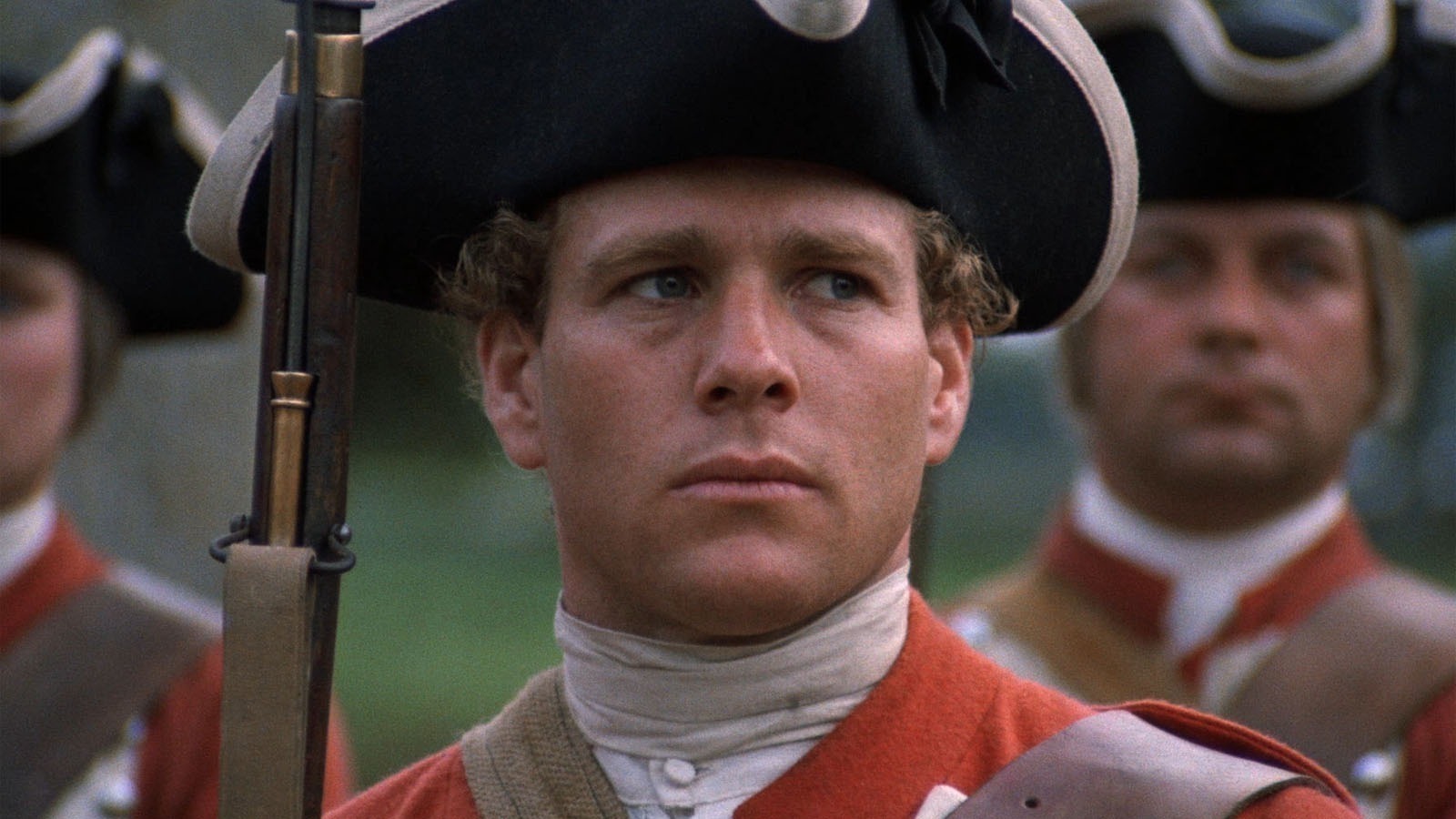
An asterisk hangs low over remembrances of Ryan O’Neal, who passed away last Friday at the age of eighty-two. The dreamboat of the prime-time soap opera Peyton Place, who appeared on the show for five seasons in the late 1960s, became one of the most in-demand actors of the following decade when Love Story (1970) claimed the number-one spot at the U.S. box office for a total of ten weeks. O’Neal delivered understated and often underappreciated performances in Stanley Kubrick’s Barry Lyndon (1975) and Walter Hill’s The Driver (1978), but he also fell out with his daughter, Tatum O’Neal, his costar in Peter Bogdanovich’s Paper Moon (1973), and he fired a gun at his son Griffin. Fortunately, he missed.
The son of novelist and screenwriter Charles O’Neal (The Seventh Victim) and actress Patricia O’Neal (née O’Callaghan), Ryan grew up in Los Angeles and became a formidable amateur boxer in high school. When the family moved to Munich, he worked as an extra and stuntman on Tales of the Vikings, a television series from Kirk Douglas’s production company. Back in the States, O’Neal landed his first speaking roles and eventually wound up costarring with Dorothy Malone and Mia Farrow in Peyton Place.
His first movie was The Big Bounce (1969), an adaptation of Elmore Leonard’s novel directed by Alex March, and crucially, his second film was The Games (1970), directed by Michael Winner and adapted from Hugh Atkinson’s novel by Erich Segal, who was turning a screenplay into his first novel, Love Story. Released on Valentine’s Day in 1970, the book became the year’s best seller, and Segal recommended O’Neal for the role of Harvard student Oliver Barrett IV to the head of Paramount Pictures, Robert Evans, whose wife, Ali MacGraw, was a lock for Jenny, the working-class music major Oliver falls for.
O’Neal and MacGraw’s “chemistry is sweet but potent, and carries this lightweight story of young romance and terminal illness above its corny, weepy components,” writes Jason Bailey in the New York Times. The Telegraph’s Robbie Collin suggests that O’Neal became a star “because of how well he dressed and how good he looked. He remained one, however, because—like Cary Grant a generation before him—he was smart enough to immediately turn those two enviable qualities against himself.”
Bogdanovich’s What’s Up, Doc? (1972) is a gleeful homage to Howard Hawks’s screwball classic Bringing Up Baby (1938), starring Grant and Katharine Hepburn as a hapless nerd being chased by a seemingly skittery woman who simply will not let up until she gets what she wants. In Bogdanovich’s film, O’Neal is Dr. Howard Bannister, a musicologist, and Barbra Streisand is Judy Maxwell, a college dropout with an encyclopedic memory. Bogdanovich then cast Ryan and Tatum O’Neal in Paper Moon (1973) as a pair of grifters—he may or may not be her father—roaming Kansas and Missouri during the Great Depression. “It was a piercingly sad and funny pairing,” writes the Guardian’s Peter Bradshaw. “Tatum is old beyond her years (it is still shocking to see her smoke a cigarette) and Ryan, for all his character’s predatory cynicism, looks boyish.”
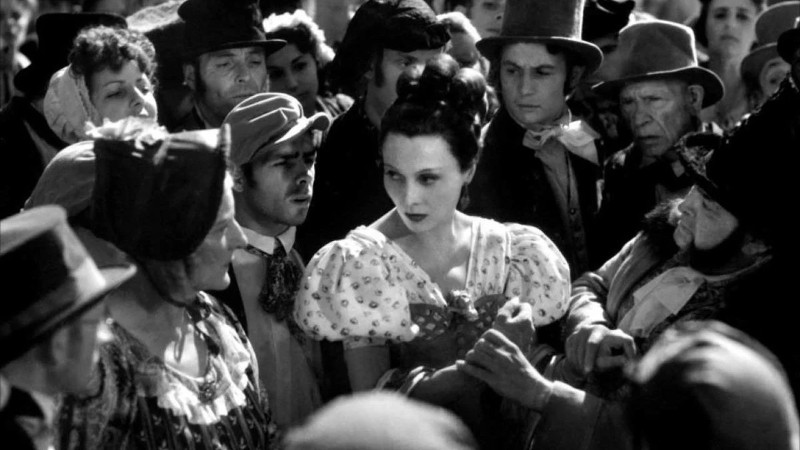
“O’Neal’s work with Bogdanovich is rightly adored,” writes Collin, “but the director who most mercilessly turned his natural boyish persona to his own perverse ends was Stanley Kubrick.” Adapting William Makepeace Thackeray’s 1844 picaresque novel The Luck of Barry Lyndon, Kubrick tells the story of a penniless Irishman who fights with the British in the Seven Years’ War, falls in with a professional gambler, marries up, and then gambles and cheats his way all the way back down again.
In the essay accompanying our 2017 release, Geoffrey O’Brien observes that “what was raffish comedy becomes a richer and stranger mix of scenes that is almost an exemplary catalog of life experiences, with all their variety and all their oppressive limitations.” As for O’Neal, “he stands somehow apart, almost abashed, in the film of which he is the center. At the start, he has the naive candor of the adolescent he is playing, and he never quite loses that fresh-faced quality.”
O’Brien noted that “O’Neal’s performance has been criticized as inexpressive,” and revisiting Barry Lyndon for the Guardian in 2016, John Patterson wrote: “Firstly, let’s all lay off Ryan O’Neal. He was never in a greater movie, and I find Barry Lyndon unimaginable without him. His Americanness adds a further echo of alienation to Barry the Irish outsider. O’Neal’s face is slightly doughy and unformed throughout, suggesting that experience leaves no imprint upon Barry whatsoever—he never learns, after all . . . Ryan O’Neal is Barry Lyndon. No do-overs. Deal with it.”
O’Neal worked again with Bogdanovich and Tatum on Nickelodeon (1976), a comedic ode to the silent era, and reunited with Streisand for The Main Event (1979), a movie that allowed him to show off his boxing prowess. In between, he appeared in Richard Attenborough’s A Bridge Too Far (1977), a Second World War movie bulked up with showcase scenes for nearly every major male star of the era, and in Walter Hill’s The Driver, a thriller that was poorly received in 1978 but has since been championed by such directors as Quentin Tarantino and Edgar Wright. Collin finds that O’Neal’s “glassy unreadability thanks to his weirdly out-of-place good looks—wasn’t he too pretty for this rough-tough gig, in the same way Ryan Gosling would be more than thirty years later in Drive, and Ansel Elgort almost forty years later in Baby Driver?—makes the film all the more coolly enticing.”
“As O’Neal moved into his forties, good roles seemed to go out of their way to avoid him,” wrote Ronald Bergan for the Guardian a few years ago. “Among his better performances was as an egomaniacal film director (clearly based on Bogdanovich) in Irreconcilable Differences (1984),” directed by Charles Shyer and cowritten with Nancy Meyers. “One of his most bizarre,” added Bergan, “was as a pot-smoking would-be writer in Norman Mailer’s idiosyncratic Tough Guys Don’t Dance (1987) in which O’Neal delivers the mantra, ‘Oh, man! Oh, God!’”
“At some point,” writes Valerie J. Nelson in the Los Angeles Times, “he stopped trying as an actor, O’Neal once admitted, a sentiment that may have applied to his personal life as well.” Vanity Fair’s Anthony Breznican walks us through the sordid details of that “chaotic and destructive personal life, including a volatile, high-profile relationship with Farrah Fawcett; accusations of drug use and physical abuse; and ultimately estrangement from many of those he was closest to. He spent his latter years trying to fix the things that had gone awry.”
He seems to have achieved some degree of success. News of his passing was first broken by his son, Patrick O’Neal, who declared that he will “share my father’s legacy forever.” Later that same day, Tatum O’Neal told People that her father “meant the world to me. I loved him very much and know he loved me too. I'll miss him forever and I feel very lucky that we ended on such good terms.”
Don’t miss out on your Daily briefing! Subscribe to the RSS feed.