Bruce Goldstein’s Top10
Recipient of a special New York Film Critics Circle award for visionary programming, Bruce Goldstein is the Repertory Program Director of New York’s Film Forum, for which he has created more than 350 film festivals and spearheaded the rereleases of more than one thousand classic films, all in new 35 mm prints. In 1997, he founded Rialto Pictures, a distribution company specializing in classic rereleases. Because few have done more for classic film than Goldstein, we asked him to pick his ten favorite non-Rialto Criterion titles.
“All these films have one thing in common: they're audience pleasers. Rules forbid me from including Rialto titles on this list; otherwise, Rififi, Nights of Cabiria, Quai des Orfèvres, Pépé le Moko, Masculin féminin, Billy Liar, and others might have made the cut.” In no particular order:
Photo by Robin Holland
-
1
Alfred Hitchcock
The 39 Steps
Prototypical Hitchcock innocent-man-on-the-run thriller—it could be the Hitchcock I’m still most partial to.
-
2
Akira Kurosawa
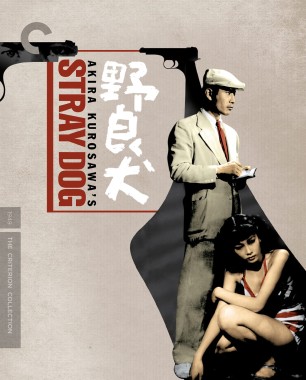
Stray Dog
Seven Samurai goes without saying. But Stray Dog is the best Japanese film noir I know, with two powerhouse stars: Takashi Shimura and Toshiro Mifune.
-
3
Preston Sturges
Sullivan’s Travels
When we reopened Film Forum in a new theater, in 1990, this is the one I chose as the opening attraction for the repertory screen. One viewing will explain why.
-
4
Ernst Lubitsch
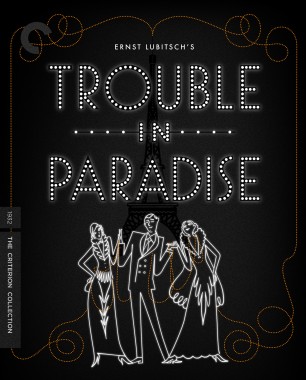
Trouble in Paradise
“I’ve been to Paris, France and Paris, Paramount. I prefer Paris, Paramount,” Ernst Lubitsch once famously remarked. This is Lubitsch and Paris, Paramount, at their absolute peak.
-
5
François Truffaut
The 400 Blows
Watch this and Breathless together and you’ll understand what the big deal about the new wave was.
-
6 (tie)
-
René Clair
Le million
As delightful as any other film of the early thirties. Their influence on sound films in general, and musicals in particular, is underestimated.
-
Pietro Germi
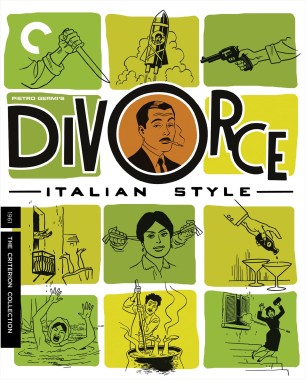
Divorce Italian Style
La crema della crema of Italian comedies. Honorable mention: Fellini’s The White Sheik.
-
8
David Lean
Great Expectations
The most perfect literary adaptation ever (can anyone come up with a better one?).
-
9
Leonard Kastle
The Honeymoon Killers
Very little of what’s called “independent” today really is. The Honeymoon Killers is a real independent; made on a shoestring, this is the most chilling movie of its decade.
-
10
Jules Dassin
Night and the City
A quintessential film noir by a master of the genre. In style and theme, it resembles a later favorite of mine, Sweet Smell of Success.