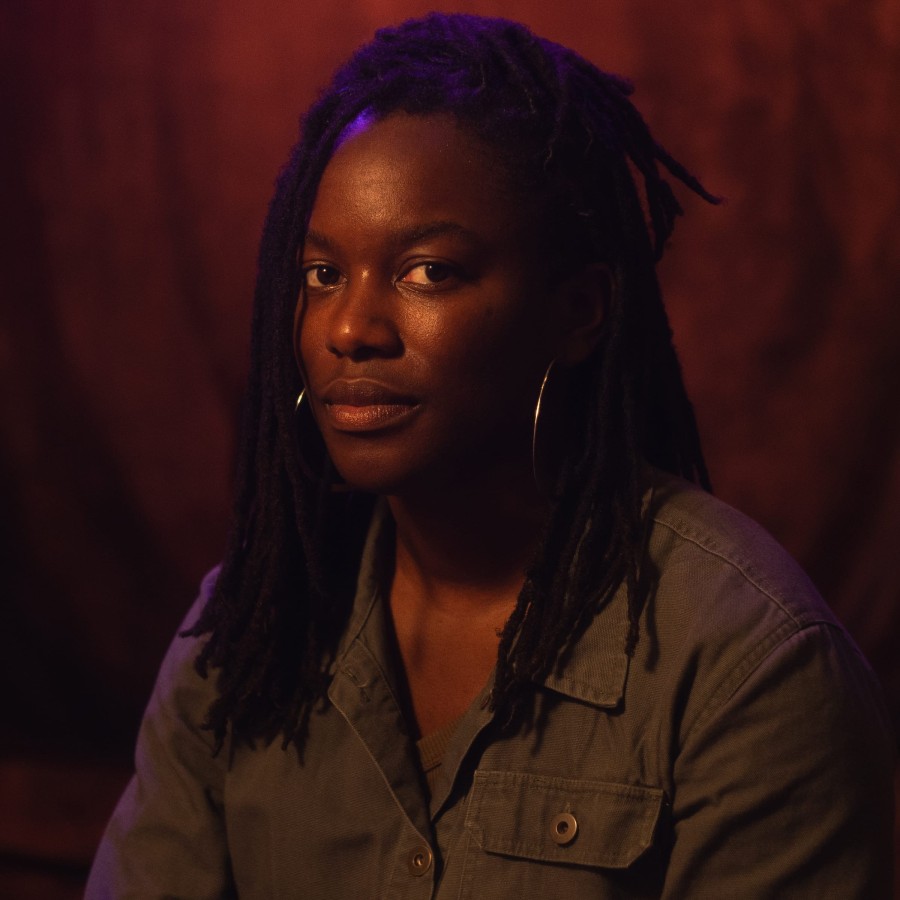
Shatara Michelle Ford’s Top10
Shatara Michelle Ford is an African American filmmaker. Their debut feature, Test Pattern, was released by Kino Lorber in 2021 to critical acclaim, landing on over a dozen best-of-2021 lists. It received nominations at the Gotham Awards, Spirit Awards, and NAACP Image Awards, and won prizes from the San Francisco Film Critics Circle, Austin Film Critics Association, Women Film Critics Circle, New Orleans Film Festival, and BlackStar Film Festival. Additionally, Ford was awarded the prestigious New Generation prize by the Los Angeles Film Critics Association, and is a 2021 Pew Fellow. Their second feature is Dreams in Nightmares.
-
1
Charles Burnett
To Sleep with Anger
This film was introduced to me at Pitzer College by a dear professor of mine, the late Ntongela Masilela. Professor Masilela’s work was my foundation in cultural studies, the instigator of my artistic practice, and my gateway into the LA Rebellion more broadly—and Charles Burnett specifically. This was the film that did it. This is what pushed me into the medium of filmmaking. It’s so special to me. To Sleep with Anger is deceptively quotidian and incredibly layered. Each space and character has its own richness and vibrancy. The film itself is straightforward, yet our director found ways to innovate by leaning fully into the world he created, rather than giving into the narrative expectations of an audience at any given moment.
-
2
Charles Burnett
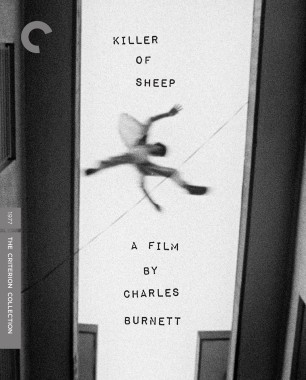
Killer of Sheep
To Sleep with Anger pushed me into filmmaking, and Killer of Sheep provided intellectual and formal scaffolding. It is a raw, natural film. Realist and human. There are philosophical considerations at play. Presented in vignettes, the film provides a type of mnemonic nudge to remind us that our past is also our present; that the ways in which we understand ourselves depend greatly on what has come before us; that children are our witnesses, and their conflicts reflect our own; that we recreate what we don’t consider, and lack of consideration is rooted in disconnection from our own humanity.
-
3
Robert Altman
McCabe & Mrs. Miller
I love Nashville and 3 Women just as much, but I especially love this 4K digital restoration of McCabe and Mrs. Miller. It just looks and sounds so, so good.
Perhaps my interest in making movies about Americans and America came from my dad’s near-constant consumption of westerns in my youth. I have seen most of them, many times, which has brought me a deep understanding of and affinity for the genre. I’m a sucker for a revisionist western, and the story of a chaotic alliance between a serious, competent businesswoman and a mercurial, feckless man, with cinematography by Vilmos Zsigmond—that’s a winner for me. The film is so darkly funny. Its humor rests on Altman’s observations of people at their most transactional, and that absurd, tragic shoot-out at the end works all the better because of it.
-
4
Edward Yang
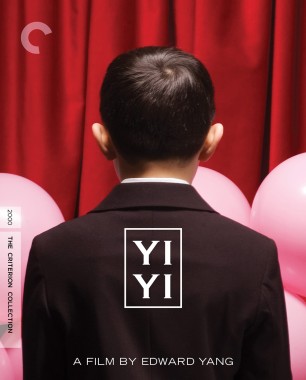
Yi Yi
Intimate and epic. Purposefully human. I love, love, love, love, love this movie. After I moved from London back to the U.S. in 2013, a dear friend and collaborator of mine gave me the Criterion Blu-ray as a gift, insisting that I would love it, and Yolanda: you were not wrong. I fell hard for Edward Yang’s entire filmography. Thank God for the New Taiwan Cinema movement. Someone needs to go ahead and program a Killer of Sheep and Yi Yi double feature.
-
5
Sofia Coppola
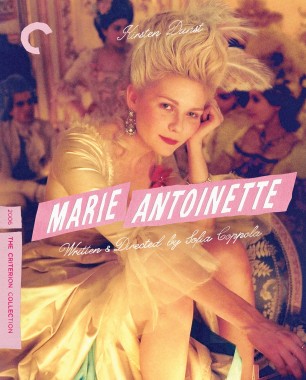
Marie Antoinette
No one nails the anguished ennui that is born of extreme privilege but keeps people trapped in society’s box like Sofia. No one matches image to music for mood better than her. As a teenager watching her films, I was often left saying, wishfully, “Wouldn’t that be nice?,” even as I witnessed the bleak fate of these women play out in front of me. I think that’s her genius as a filmmaker. It all looks so fun, so grand in there . . . and it is, up to a point. She reminds us that we, the audience, are merely voyeurs here. There is no better subject for this approach than Marie Antoinette, and she just knocks it out of the park. I love watching this movie. I love wrestling with the feelings I have while watching it. It is a treat every time I watch it.
-
6
Martin Scorsese
The Age of Innocence
An excellent adaptation of a book I love, about repressed people trapped inside of a world of artifice of everyone’s making. Edith Wharton read her people to filth, and Scorsese honors her approach. The movie is so decadent, as are the lives lived on-screen, and yet everyone is so obviously sad. I love the performances in this movie. The inner struggle emanating out of Daniel Day-Lewis’s Newland slowly drags you down with him into his pit of pathetic, self-inflicted sorrow. Michelle Pfeiffer is everything as Countess Olenska, striking this frightening balance of intense yearning and resigned stoicism. It’s all in her eyes.
-
7
John Sayles
Matewan
Carefully studied, plain, and considered. A sociopolitical masterwork with incredible performances. It’s a movie with a point, where every single aspect matters. In the world of American independent cinema, John Sayles is one of the best to ever do it. I greatly admire his approach to filmmaking. The cinematography here, by Haskell Wexler, is just as stunning and impressive to me as Zsigmond’s work in McCabe.
-
8
Shu Lea Cheang
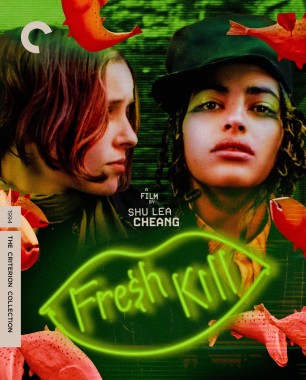
Fresh Kill
I saw this in this random alt programming block when living in London in 2010. After watching, I told myself that a film can be anything. Anticapitalist in form and function. Bright, bold, goofy, funky, and blaring. A lively gay chaotic exhortation. Ms. Shu Lea Cheang was throwing it all out there. Doing all of the truth-telling. I left the screening feeling like I was sloshing through a drainpipe full of American capitalist sludge, while also being housed inside of this sweet and hopeful lesbian family reminding us that interdependence is the way through and love is the antidote.
-
9
Sidney Poitier
Buck and the Preacher
Oh, how I love a western. Oh, how I love Sidney Poitier! I have a special place in my heart for Mr. Poitier the director. His Black politics overflowed in everything he did. He had mainstream cultural power, and used it every time. Anyway, here we have a westward-expansion picture! A black wagon train going from Louisiana to the unsettled Kansas territory after the Civil War, which sounds a lot like a road trip to me. As I write this, I see way too many parallels to Dreams in Nightmares that I hadn’t even appreciated. Shame on me for not even recognizing the opening to this film as a spiritual cousin to the opening of my film. If you like westerns, this is a western lovers’ western, led by two of the most talented and charismatic actors of our time. That soundtrack is also top-notch.
-
10
David Fincher
The Game
The Game is a movie about the human tendency to lean into artifice to create a container for feeling. It explores the great lengths we go to in our own minds to come up with excuses to suspend disbelief, and how, at its most extreme, that habit can manifest for those who are emotionally detached, distant, numb, or afraid to feel. In the case of Nicholas Van Orton, played by a perfectly cast Michael Douglas, we have a character who does all of these things, in addition to having money and power, which afford him an experience of effectively being the protagonist in a real life role-playing game or the lead in his own movie. Personally, I think The Game speaks even more loudly at this moment, as our society’s appetite for artifice has never been higher and the means of production have become accessible and ubiquitous, so much so that we are all active participants via social media, reality television, etc. I don’t believe this to be the best Fincher movie, but it is certainly one of my most beloved. I’m frequently quoting from it in jest.