DOC NYC 2026
Share
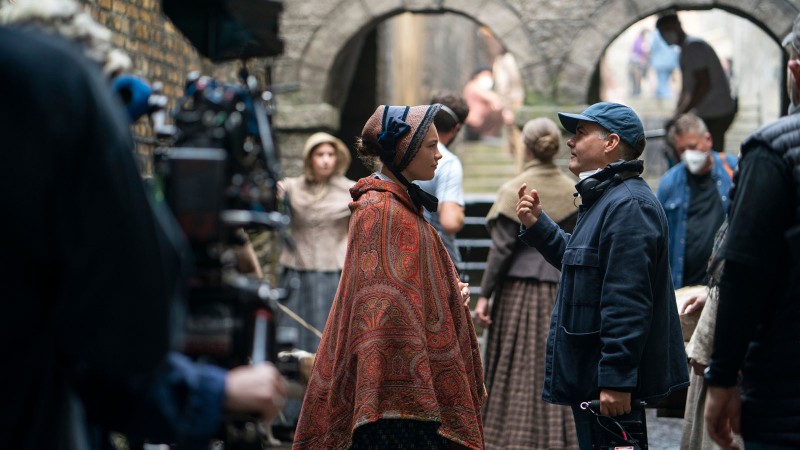
The largest documentary film festival in the country, DOC NYC will open tomorrow with the U.S. premiere of Èlia Gasull Balada and Matteo Norzi’s The Hummingbird Paints Fragrant Songs, a portrait of Peruvian artist Sara Flores. “In folk-art terms,” writes Mark Asch for the Art Newspaper, Flores’s work is “similar in its organic fastidiousness to mandalas, or to henna or Māori tattooing; or, in modernist terms, it resembles a cross between an Agnes Martin grid painting and William Morris wallpaper, or perhaps as if Piet Mondrian had been obsessed with the rainforest canopy instead of city streets.”
Now in her seventies, Flores has been embraced by the art world, and she has been using her fame and influence to campaign for the rights of her Shipibo-Konibo community. At RogerEbert.com, Robert Daniels finds The Hummingbird Paints Fragrant Songs “as spirited as the artist’s advocacy.”
More than two hundred films will screen at DOC NYC before the seventeenth edition wraps on November 19 with Kate Davis and David Heilbroner’s Totality, a chronicle of the 2024 total eclipse captured by twenty-one film teams. DOC NYC will then carry on online through November 29.
This year’s Centerpiece presentation is Union Town, the third film in Barbara Kopple’s loose trilogy on American labor that began with Harlan County USA (1976) and continued with American Dream (1990). Embedded with unionized Teamsters at UPS, Amazon employees, and food deliveristas, Union Town is “a stirring, defiant, battle-hardened affair, swinging between the fraught picket line and the still more hazardous New York City streets,” writes the Guardian’s Xan Brooks. “It’s a new film that feels old in the best sense of the word; a hoarse battle cry that summons the ghosts of The Grapes of Wrath and the New Deal, Eugene Debs and Woody Guthrie. That America is long dead and buried, a casualty of changing times, but Kopple sees no reason why it should not rise again.”
American Stories will be a strand to keep an eye on, in light of the country’s ongoing political and cultural realignment. An Albanian immigrant’s “semi-accidental” purchase of a shopping mall in Pennsylvania prompts Brian Becker to look back in Mall Country on the waning of shared communal spaces. Brad Abrahams and Simon Ennis trace pervasive lines of conspiratorial thinking throughout the country in Gimme Truth. For Baby/Girls, Alyse Walsh and Jackie Jesko spent two years with three teen moms at a Christian maternity home in Arkansas, and when the film premiered at SXSW, Siddhant Adlakha wrote in Variety that the film tells “deeply moving stories of women made to suffer quietly across multiple generations, thanks to a cultural war that was lost long before the Dobbs decision.”
This year’s DOC NYC 2026 will offer a good handful of films about cinema itself, including The Flesh and the Soul, Giuseppe Papasso and Barbara Tarricone’s extensive interview with David Cronenberg; Robert Richardson: The White Devil, Jana Hojdová’s portrait of the cinematographer best known for his work with Martin Scorsese and Quentin Tarantino; and Ivora Cusack and James June Schneider’s The Newsreel: Characterization of Subversive Organization, which traces traces the history of a radical filmmaking collective that emerged in the 1960s. Let’s take a closer look at two more.
Illuminations
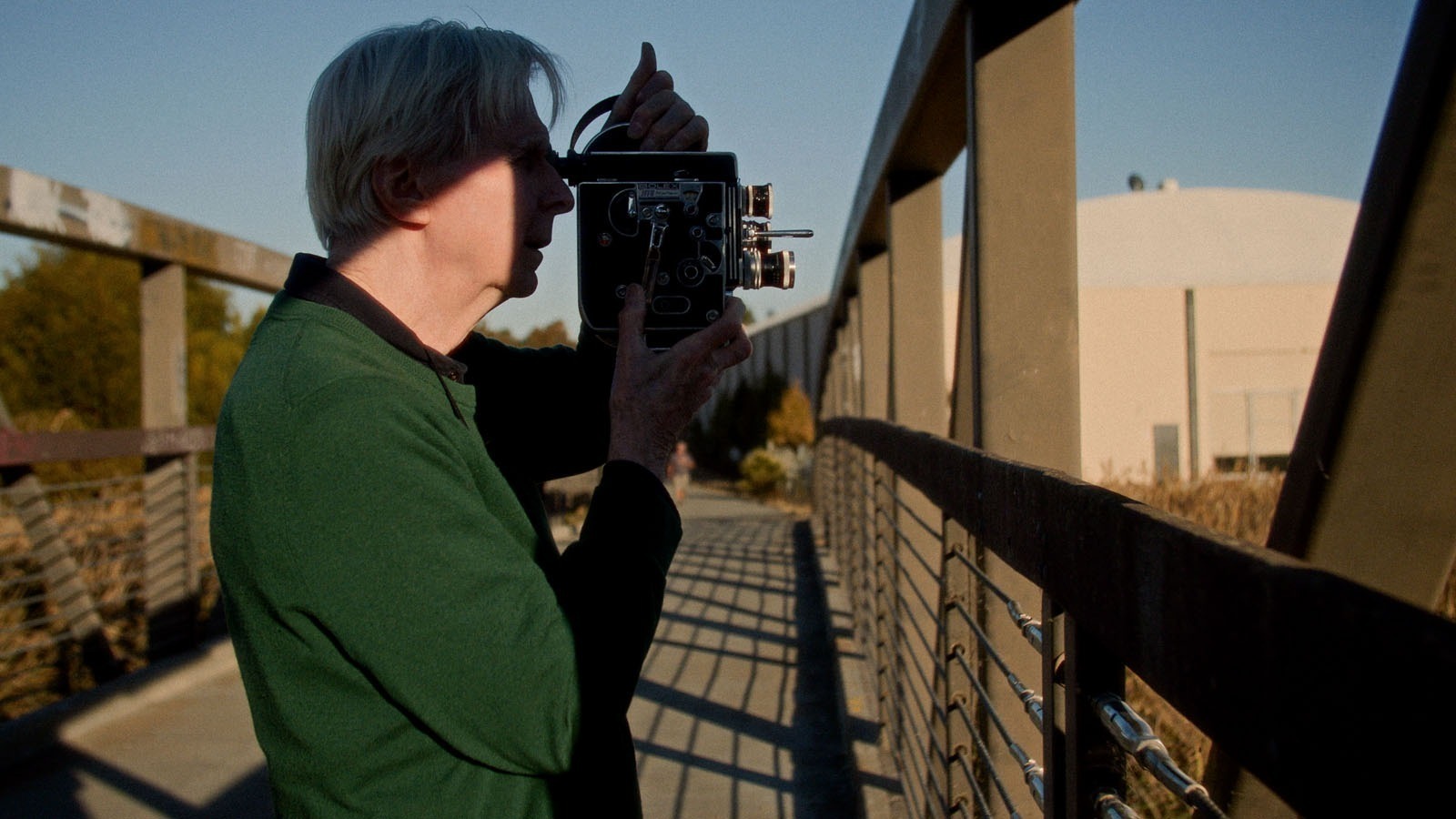
Tomorrow sees the world premiere of Illuminations, Patrick Shen and Brandon Vedder’s lovingly crafted portrait of filmmakers Nathaniel Dorsky and Jerome Hiler. Shen and Vedder follow Dorsky and Hiler as each steps out from the home they share in San Francisco and into the city or over to Golden Gate Park with a 16 mm Bolex camera, a bulky yet pristine and impeccably maintained machine that every now and then serves as a conversation piece when it attracts a curious stranger.
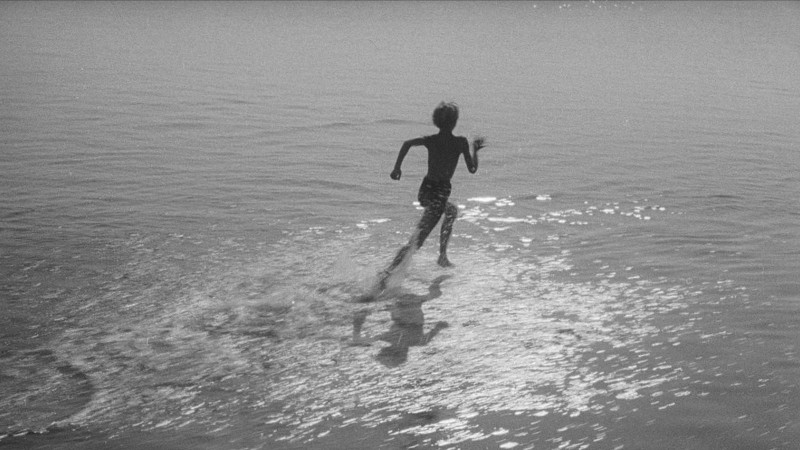
For more than sixty years, Dorsky and Hiler have been making transporting films rich in texture and dappled light, and for many of those years, these films have been in an ongoing dialogue, with each artist taking inspiration from the work of the other. Backstory in Illuminations is brief, but the men beam as they recall first crossing paths while scoping out the art scene in 1960s New York—and the day that Jonas Mekas more or less set them up.
When they’re not out shooting, Dorsky and Hiler are opening packages of film reels from the lab or threading a projector before hitting the lights and taking a first look at a day’s work. They also go shopping: Dorsky and Hiler famously maintain a collection of colored-glass telephone pole insulators that captivatingly bend the light piercing in through their windows.
Over three evenings, from November 16 through 18, Dorsky and Hiler will be at Anthology Film Archives to present and discuss their recent films, and the program will wrap with a rare screening of Dorsky’s Arboretum Cycle in its entirety. The Cycle is “literally a shining example of his singular practice,” writes Jonathan Kiefer for Screen Slate. “As films, they’re formally similar to each other but almost hermetically unlike anybody else’s. As caves of art-historical echoes, they’re wide open: a twitch of focal plane here, and pastoral impressionism melts into modernist abstraction; an exposure ramp there, and what at first suggests dusky Botticellian treetops suddenly gives off the frisson of an Andy Goldsworthy earthwork.”
The Pervert’s Guide to Utopias
Following The Pervert’s Guide to Cinema (2006) and The Pervert’s Guide to Ideology (2012), director Sophie Fiennes and philosopher Slavoj Žižek have teamed up again to give us The Pervert’s Guide to Utopias, which screens in New York on Saturday and Monday as a Special Presentation and in Berlin on November 28. As Žižek explains in the trailer, if aliens were to ask him how they might understand humanity, he would not tell them to take a look around but to watch our movies. And for this one, he’s selected fifteen about the end of the world to dissect while playfully inserting himself into their reconstructed settings.
“Utopia and the end of the world, Žižek argues, are now inextricably mixed,” writes Pietro Bianchi for e-flux. “Perhaps they must be thought together, just as capital contains both the possibility of its own overcoming and that of catastrophe. Judgment Day, however, is not simply something that may happen in the future. It is a future that already exists in our present. The problem is how to see it.”
“There is no better place to begin these utopian deconstructions than Apocalypse Now (1979), which takes up the failure of the Enlightenment and finds evil not as ignorance but as evil fully aware of itself,” writes Sonya Vseliubska for Little White Lies. Žižek’s analyses of film sequences “thrill on their own, but they also serve a smooth passage into the pressing real-world examples his logic keeps veering toward. Across its two hours, the film covers Gaza, AI, Putin, Kylie Jenner’s Handmaid’s Tale–themed party, class divisions of vampires, and Trump . . . And if his terms and turns threaten to lose us, Fiennes has mastered a cinematic syntax that carries Žižek’s dizzying detours through incisive cutting, seductive light, and a rich chromatic palette, casting the whole viewing experience in a sleek, hypnotic glow.”
“Vividly exploring the late films of Andrei Tarkovsky, the communist scholar systematically explains how we essentially try to pay off our karmic debt with self-inflicted arbitrary suffering,” writes Hugo Emmerzael in Modern Times Review. “The engulfing flames at the end of The Sacrifice (1986) help explain why we tend to hurt ourselves: somewhere deep down, we can rationally imagine that our very existence implies the suffering of someone else. Žižek is usually at his best when he evokes our libidinal enjoyment of repression, which he does here with such emotional urgency that it reveals how the philosopher has grown from academic meme-ster to age-worn sage of our darkening days.”
Don’t miss out on your Daily briefing! Subscribe to the RSS feed.