Be Tender
Share
When the news broke on Thursday that Patrick Stewart had passed away the day before at the age of eighty-six, millions of fans naturally turned to his dear friend Ian McKellen. “Before everything else, Patrick was defined by being born and bred in Yorkshire, the proud county in the north of England which he loved to the end,” wrote McKellen at the top his tribute to “the most respected and beloved actor of his generation on either side of the Atlantic.”
Stewart “wore his heart on his sleeve,” added McKellen, “which made him a man to rely on, to admire, and in my case, love.” Stewart and McKellen first met “as ambitious young actors with the Royal Shakespeare Company half a century ago,” and McKellen was among the many friends and colleagues who practically begged Stewart not to sign a six-year contract that would tie him to the role of Captain Jean-Luc Picard in Star Trek: The Next Generation. The rest is television history.
“Star Trek was best known for the interplay between William Shatner’s charismatic, impulsive Captain Kirk and Leonard Nimoy’s drily logical Spock,” writes Ben Child in the Guardian. “Stewart brought something of both men to the captain’s chair as Jean-Luc Picard, combining analytical rigor with a depth of feeling his imposing formality could never quite conceal. The bald, cerebral Englishman was a bold choice to succeed Shatner’s swaggering Canadian alpha male—but his ability to bring quiet authority and conviction to even the most outlandish of scenes gave the Enterprise an entirely different center of gravity. Through seven seasons and four feature films, Stewart made audiences believe that the most interesting person in the room might also be the most thoughtful and humane.”
Stewart could bring a daunting gravity, an endearing empathy, or a sly comedic streak to his performances in such films as John Boorman’s Excalibur (1981), David Lynch’s Dune (1984), Mel Brooks’s Robin Hood: Men in Tights (1993), Christopher Ashley’s Jeffrey (1995), or Jeremy Saulnier’s Green Room (2015). But his second-most famous role was Charles Xavier, codenamed Professor X, in the X-Men franchise.
“While fans of the series will no doubt have a range of personal favorites,” writes the Hollywood Reporter’s David Rooney, “for me, Stewart’s best performance as Charles Xavier was his last, in James Mangold’s haunting, Western-adjacent Logan [2017]. Starring opposite Hugh Jackman as a battle-weary Wolverine, Stewart brought enormous pathos and heart to the ailing Professor X, his telepathic gifts turned glitchy by an unknown brain disease. The emotional depth and the heavy burdens of the past in both leads’ performances—but Stewart’s in particular—make Logan one of the most unexpectedly poignant MCU films, transcending the comic-book genre to become a moving character study.”
At the end of an all-night pub crawl as the 1960s bled into the ’70s, Peter Medak, the Hungarian-born British director who passed away this week at the age of eighty-eight, convinced Peter O’Toole to at long last set in motion a film adaptation of Peter Barnes’s play The Ruling Class. O’Toole had been sitting on the rights, but now, Medak would direct and O’Toole would star as Jack, the 14th Earl of Gurney, who believes he is Jesus Christ—until he believes he’s Jack the Ripper.
The film flopped in 1972, but for years afterward, it was a hit on the midnight-movie circuit. In a 2001 essay, Ian Christie suggested that what made The Ruling Class “exceptional (and difficult for some) are its outrageous mixing of genres and its sheer ambition. Not only are there allusions to Shakespeare and Marlowe, but also to Wilde and Whitehall farce; to the gentility of Ealing Studios, with a plot that distantly evokes that other great black comedy Kind Hearts and Coronets, and to Hammer’s gore-fests . . . Above all, it’s a great, disturbing black comedy, and deservedly now a cult classic.”
Medak went on to direct The Changeling (1980), a horror movie championed by Martin Scorsese,Steven Spielberg, and Guillermo del Toro; a string of riveting crime dramas, The Krays (1990), Let Him Have It (1991), and Romeo Is Bleeding (1993); and more than a few Peak TV–era episodes of such shows such as The Wire and Breaking Bad. In 2018, Medak made The Ghost of Peter Sellers, a documentary about how his 1974 comedy Ghost in the Midday Sun was sabotaged by its star. “What’s most fascinating is that there’s no self-indulgence on Medak’s behalf,” wrote Richard Whittaker in the Austin Chronicle. “It’s a filmmaker coming to terms with a deep bruise in his life, and the realization that time may heal all wounds, but will still leave a scar.”
Elke Sommer, who costarred with Sellers in A Shot in the Dark (1964), with Paul Newman in The Prize (1963), with Glenn Ford and Rita Hayworth in The Money Trap (1965), and with Dean Martin and Sharon Tate in The Wrecking Crew (1968), passed away on Wednesday. She was eighty-five. And we’ve lost Barbara Barrie as well. She won a Best Actress award in Cannes for her performance in Larry Peerce’s One Potato, Two Potato (1964), appeared in the original Broadway production of Stephen Sondheim’s Company (1970), and was nominated for an Oscar for her turn as a supportive mom in Peter Yates’s Breaking Away (1979). She was ninety-five.
As Deepa Parent reports in the Guardian, a court in Tehran has sentenced Jafar Panahi to five years and one month in prison and ordered the seizure of all his assets. The director of last year’s winner of the Palme d’Or, It Was Just an Accident, has also been barred from travel and the use of social media for two years. Both the charges and the ultimate consequences of the sentence—delivered in abstentia—remain unclear, and as of Monday, Panahi had not been detained. Kleber Mendonça Filho speaks for most of us: “I hope this injustice is rectified as soon as possible.”
In festival news, Sundance (January 21 through 31) has announced the lineup for Legacy, the program of new restorations formerly known as From the Collection, copresented in 2027 with Letterboxd. Patricia Cardoso’s Real Women Have Curves, Alfonso Cuarón’s Y tu mamá también, Justin Lin’s Better Luck Tomorrow, and Stacy Peralta’s Dogtown and Z-Boys will all be celebrating their twenty-fifth anniversaries. The selection also includes Barbara Hammer’s Nitrate Kisses, Tom Kalin’s Swoon, and Julie Taymor’s Fool’s Fire, all from 1992.
Rotterdam (January 28 through February 7) has rolled out a first wave of ten world premieres slated to screen in the Bright Future and Harbour programs, and as festival director Vanja Kaludjercic puts it, they range “from the playful and provocative to the intimate and politically urgent.” And on February 14, the Berlinale (February 10 through 21) will host the world premiere of David Bowie “Stage”, an immersive concert experience. “Making Moonage Daydream, I had access to every filmed performance in existence of David Bowie,” director Brett Morgan tells the Guardian’s Dave Simpson, “but when I saw this one I knew this was without question the greatest filmed performance of his career.”
This week’s highlights:
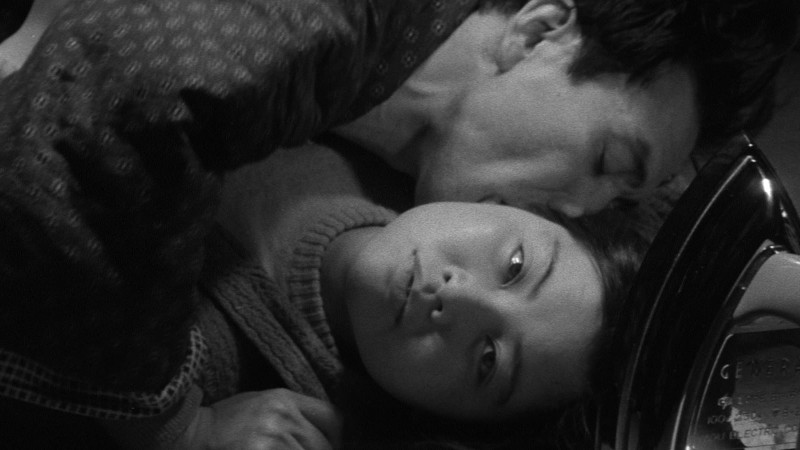
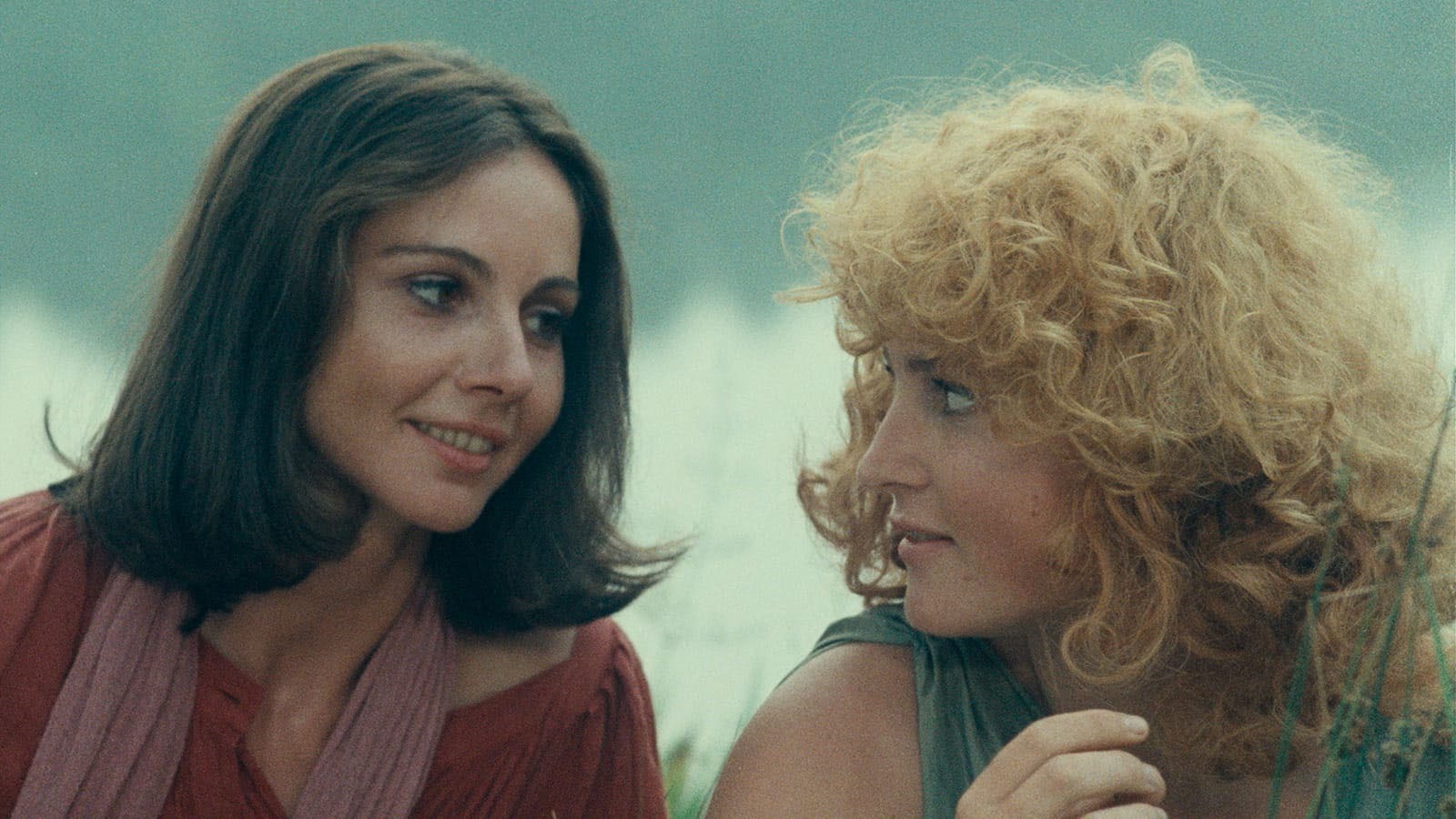
- “Tenderness may have been Agnès Varda’s primary subject,” writes Sasha Frere-Jones in Notebook, “or a derivative of what now feels like her guiding principle: Be tender . . . the love in her gaze makes her films feel radically different from anything else coming from the surrounding New Wave cohort.” Varda’s “vision of love is profound rather than decorative, essential rather than a strategy of mood. Of all the unhoused people she films in [L’opéra-mouffe (1958)], she writes that ‘all of them—the old, the one-eyed, and the homeless—had once been babies, newborns often loved, whose bellies had been kissed and whose bottoms had been powdered.’ The unassaulted body is perhaps the demand of her politics, an assertion on behalf of tenderness in physical space . . . There is no single most important film in Varda’s catalog,” but One Sings, the Other Doesn’t (1977) “could be seen as the hinge.”
- The new issue of the New York Review of Books features Melissa Anderson on the late Rosa von Praunheim’s Tally Brown, New York (1979), a portrait of the performer who appeared on Broadway, in films by Andy Warhol, and “in strip clubs, jazz joints, and Vegas lounges.” The film opens with a cover of Bowie’s “Heroes” that “soars with even more emotion than the original.” Tally Brown is “also a capsule of New York at the very end of the pre-AIDS era, and it is difficult not to be consumed by grim thoughts as we watch the stylish, youngish men—and they are almost all men—watching Brown at Reno Sweeney,” a West Village cabaret. “How many would outlive the performer, who was felled by a stroke at age sixty-four in 1989?”
- “The movie business being what it is today, we’re unlikely to see another Ridley Scott,” writes Vince Keenan, who has set out on a long and unhurried stroll through the oeuvre. Why? “Because he’s a first-rate craftsman with a lengthy track record who still feels underappreciated. Because among his formidable filmography are many movies I’ve enjoyed multiple times; several I’ve wanted to revisit; a half-dozen I’ve never seen; and a few I’d pay hard cash to avoid watching again.” But Keenan will watch and write about every one. The journey begins with the 1965 short Boy and Bicycle, a “simple, highly effective mood piece” starring Scott’s younger brother, Tony (Top Gun, True Romance). There’s a brief stop to admire the mod stylings of the mid-1960s series Adam Adamant Lives!, and then it’s on to the commercials, including a beloved ad that “tells a quintessentially British tale, valorizing hard work and a hot cup of tea. Its lessons—develop a routine, go about your business, and keep moving—would serve a body well in fifty-plus years of filmmaking. Or ninety years of life.”
- Now in its twenty-first year, Reverse Shot’s “A Few Great Pumpkins” offers a full week of daily reviews of scary movies, and so far this year, contributors have revisited films by James Whale, Richard Attenborough, E. Elias Merhige, Kim Tae-yong and Min Kyu-dong, and Jaume Collet-Serra. Reverse Shot is also running Greg Cwik’s piece on F. W. Murnau’s Nosferatu (1922), starring Max Schreck, “one of cinema’s most enigmatic personages” and an accomplished actor now remembered for one role and one role only. “The combination of Murnau’s dreamlike naturalism and Schreck’s indelible presence creates a hypnagogic ambience. Even though the story of Dracula is universally known, there is still an inescapable, unsettling sense that something bad is coming, leaving us suffering in the grip of a cryptic seduction.” Nosferatu screens tonight at New York’s Museum of the Moving Image with live piano accompaniment.
- Let’s wrap with a Halloween-themed mini-roundup. Tyler Malone’s Literary Hub piece “No One Really Drives Away from Anything in Horror Films” serves as a fine supplement to our Criterion Channel program Highway Horror. For Letterboxd, Ariel LeBeau revisits Richard Kelly’s Donnie Darko (2001), and for the New York Times, Maya Salam has put together an oral history of the film’s making and bumpy release. At Hyperallergic, Matt Stromberg tours The Horror Show, an exhibition on view at the Academy Museum through July 25. At the Film Stage, Dan Mecca talks with Gavin Mevius about the “B-Sides of Jacques Tourneur.” And for Screen Slate, Stephanie Monohan talks with Yasmina Tawil about The Spirit Compels Her: Possession and the Demonization of Women, a weeklong series Tawil has programmed for the Brooklyn Academy of Music, and Jonathan Kiefer recommends Tomas Alfredson’s Let the Right One In (2008), which screens tonight at the New Parkway Theater in Oakland.
Don’t miss out on your Daily briefing! Subscribe to the RSS feed.