Masaki Kobayashi: Midcareer Masterworks
Share
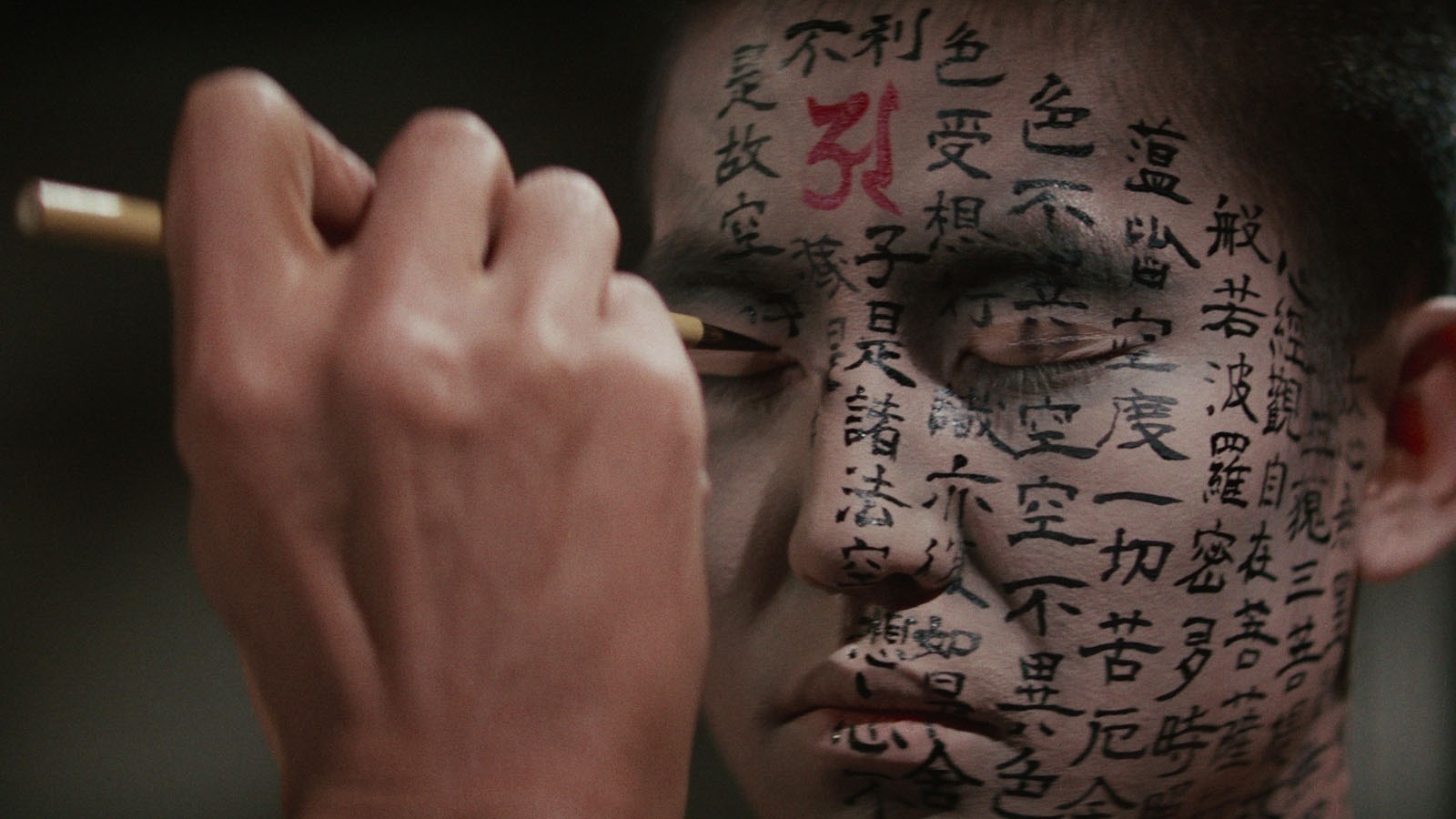
This is the season we go looking for a ghost story that will chill us to the bones, and Masaki Kobayashi’s Kwaidan (1964) offers four, all of them gloriously stylized adaptations of Lafcadio Hearn’s retellings of tales from Japanese folklore. “The gorgeousness of their painted skies and otherworldly color schemes, the transparent unreality of everything we see, all the bravura touches of stylization, only emphasize that one may travel to the farthest reaches of the imagination only to find at last a great and terrifying void,” writes Geoffrey O’Brien.
A new restoration of the original three-hour cut screens tonight in Los Angeles, and on Saturday, All Hallows’ Eve, Kwaidan will open The Cinema of Masaki Kobayashi: Midcareer Masterworks, a series running through November 21 at the Berkeley Art Museum and Pacific Film Archive. “By Japanese standards, Kobayashi was unprolific, with fewer than twenty narrative features to his name,” writes Philip Kemp. “But Kobayashi made up for his relative lack of quantity with a rare integrity and seriousness of moral purpose—allied to a visual and dramatic acuity—that earn him a place among the great humanist filmmakers.”
Kobayashi was also, as Michael Koresky has pointed out, “the most aggressively social-minded” of the great Japanese directors to emerge after the Second World War. A pacifist and a socialist, Kobayashi was drafted into the Imperial Japanese Army, and while his regiment fought in Manchuria and later warded off starvation while stationed on the Ryukyu Islands, he resisted promotion to any rank higher than private.
These wartime experiences inform The Human Condition (1959–1961), a nine-and-a-half-hour, three-part epic based on Junpei Gomikawa’s six-part autobiographical novel. The film took four years to complete and stars Tatsuya Nakadai—“the actor who most fiercely embodied Kobayashi’s conscience on-screen,” as Mark Asch has noted—as Kaji, a left-leaning labor camp supervisor drafted into the army and eventually captured by the Soviets. The Human Condition “might be one of the last great humanistic films in the tradition of Jean Renoir, as well as a haunting swan song for the humanistic project in its own right,” writes Michael Joshua Rowin for Reverse Shot.
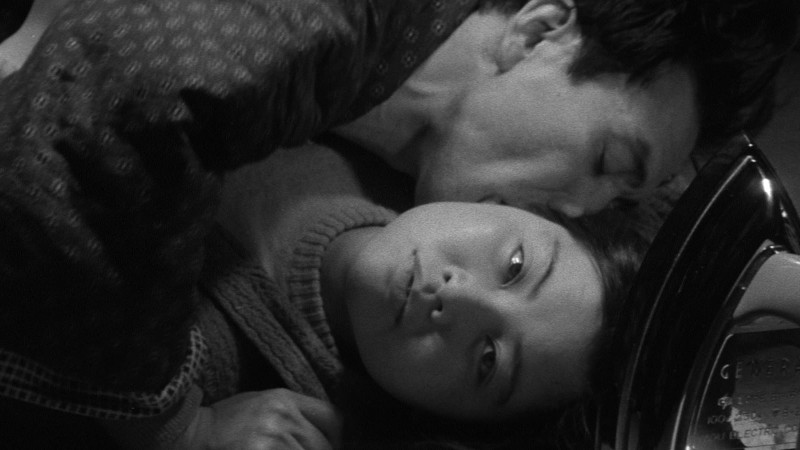
“Whereas The Human Condition’s expressive use of its 2.35:1 frame seems to take in the whole, wide, wicked world,” writes Koresky, The Inheritance (1962) “employs its 2.40:1 aspect ratio to peer into dark, shadowy corners inhabited by a few contentious people.” A dying businessman announces that his fortune is to be divided primarily among his illegitimate children—with a little something on the side going to his young wife, who, like the man’s friends and colleagues, knew nothing of these kids. And now they have to be tracked down.
“This is Kobayashi’s first drama set in an exclusively bourgeois milieu, and its visual condemnation of materialism is especially pronounced,” writes Koresky. “Despite the anger of its message, however, the film floats along on sultry waves, thanks to Toru Takemitsu’s jazzy score (the first of several collaborations with Kobayashi) and the sensuality of its every expansive, black-and-white frame.”
“In any era, I am critical of authoritarian power,” Kobayashi told Joan Mellen in 1972. “In The Human Condition, it took the form of militaristic power; in Harakiri [1962], it was feudalism. They pose the same moral conflict in terms of the struggle of the individual against society.”
With the story of an unemployed samurai (Tatsuya Nakadai) who arrives at the manor of a local feudal lord and requests permission to commit ritual suicide there, Kobayashi “rejects the notion of individual submission to the group,” writes Mellen. “He condemns, simultaneously, the hierarchical structures that pervaded Japanese political and social life in the 1950s and 1960s, especially the zaibatsus, the giant corporations that recapitulated feudalism.”
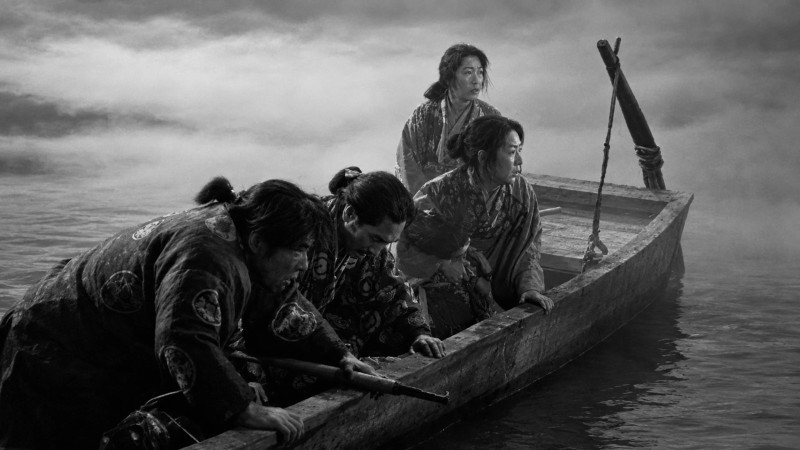
Samurai Rebellion (1967) is “perhaps even more bleak, because the style is more sober,” wrote Donald Richie in 2005. Toshiro Mifune stars as a skilled swordsman fighting to keep his family from being torn apart in eighteenth-century Japan. “The film seems made of less than Harakiri,” wrote Richie, “yet at the same time there is a more cuttingly hysterical edge, much more blood, many more dead. Whoever it was who suggested that if Harakiri is somewhat Shakespearean, then Samurai Rebellion is plainly Jacobean, the observation is correct.”
Don’t miss out on your Daily briefing! Subscribe to the RSS feed.