Julia Loktev’s Undesirable Friends
Share
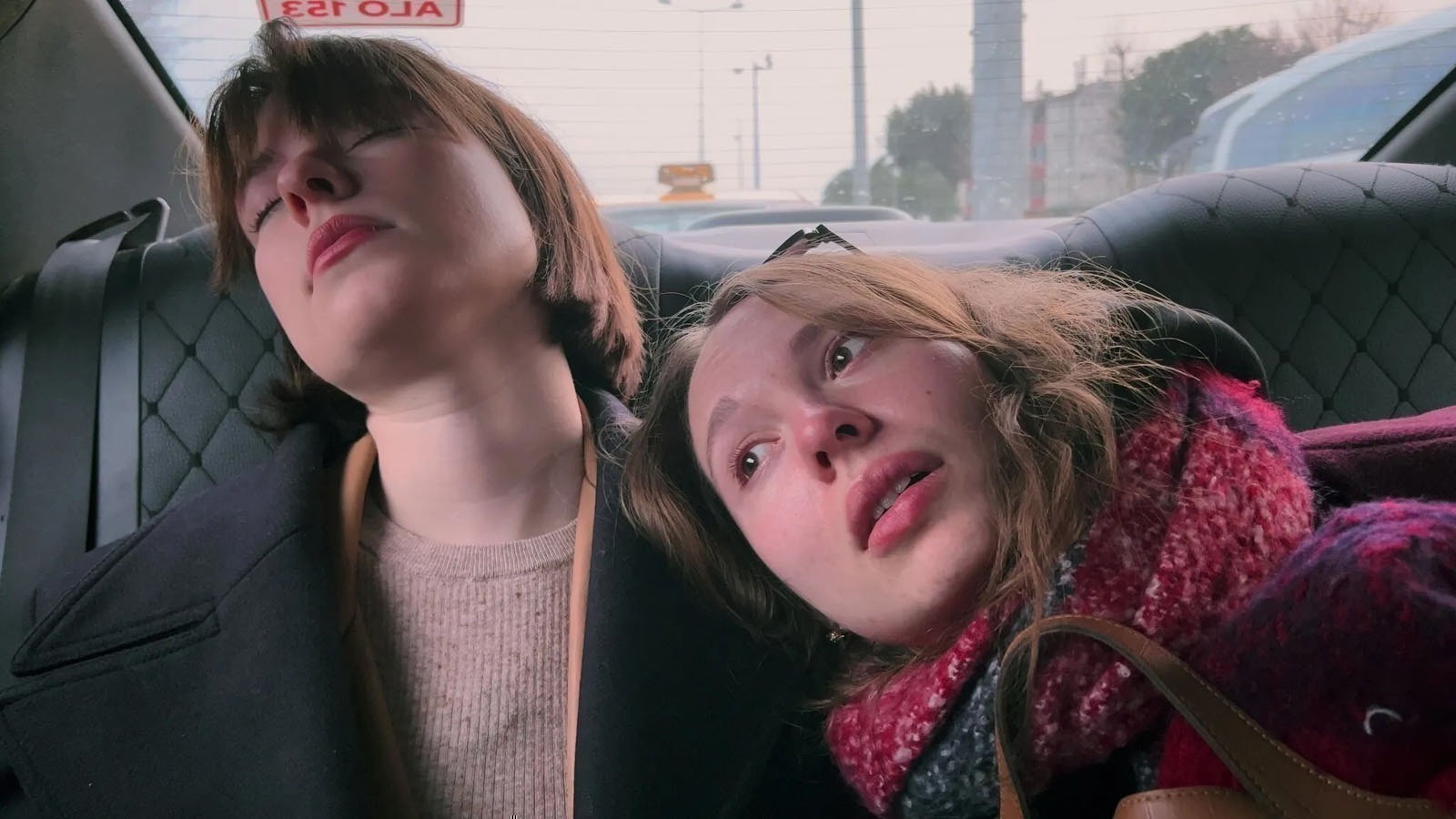
Julia Loktev’s My Undesirable Friends: Part I–Last Air in Moscow (2024) ends with a cliffhanger. In the fall of 2021, Loktev—who was born in the Soviet Union, emigrated to the U.S. with her family when she was nine, and has directed the acclaimed fictional features Day Night Day Night (2006) and The Loneliest Planet (2011)—headed to the Russian capital where journalists for TV Rain, one of the few remaining independent media outlets in the country at the time, were being declared “foreign agents.”
On February 24, 2022, Putin launched his full-scale invasion of Ukraine, and with it, a severe crackdown on dissent at home. Within days, TV Rain shut down, and its reporters, facing the likelihood of arrest or worse, began fleeing the country. My Undesirable Friends: Part II–Exile, screening in New York and London today and tomorrow before heading next month to Portland and Austin, picks up their stories just days later and follows them through the spring of 2026.
“Last Air in Moscow was the long whistle of a dropping bomb; Exile follows the trajectory of the shrapnel,” writes the A.V. Club’s Jacob Oller. TV Rain editor in chief Anna Nemzer heads first to Georgia and then the U.S. Valeria Ratnikova, known to her friends as Lera, bounces from Turkey to Latvia—where TV Rain broadcast for half a year before being tossed out due to what seems to have been a misunderstanding about a news anchor’s reference to “our soldiers” in a report on the war in Ukraine—to the Netherlands, where TV Rain, now primarily a YouTube channel, is currently based.
Ksenia Mironova has resettled in New York, and talking to Slate’s Sam Adams last year, she “described the uncanny sensation of watching the U.S. follow her country down the road to fascism.” Elena Kostyuchenko has written a widely praised memoir, I Love Russia: Reporting from a Lost Country. TV Rain journalist Peter Ruzavin and Ukrainian reporter Nataliya Gumenyuk became a couple, and he wound up joining the Ukrainian armed forces.
Over the course of Exile’s 355 minutes—thirty more than Last Air in Moscow—these and several other journalists “live lifetimes in just a few years, while feeling like, as one of these subjects describes it, both German and Jew on the brink of WWII,” writes Oller. “They flee for their lives while still feeling complicit in the atrocities. The rest of the world reinforces this: They were second-class Russians because they published the truth; they’re second-class emigrants because they’re Russian.”
“I remain absolutely besotted with this project because of how uniquely well it unifies its ambitions—emotional, political, formal, journalistic—across six hours, no less,” writes Nicolas Rapold for Screen Slate. “Loktev continues in her dual roles as confidante, eliciting the equivalent of on-the-fly exile memoirs and monologues, and one-woman crew, wielding her iPhone with the intimacy of a friendly chat and casually reinventing what we’ve come to accept about cinéma vérité. Leaning here into love—through the relationships between couples, both lovers and friends—Loktev's tough-and-tender chronicle pushes back against oppression and fear as the organizing narrative imposed upon the world by Putin and his ilk, but also does not spare the extent of Russia’s aggression, from incredibly intrusive spying up to and including murder attempts.”
“When a few of the reporters express a firm belief that the invasion of Ukraine will be over in a couple of months, it speaks to the limitations of on-the-ground analysis,” writes Michael Sicinski at In Review Online. “But when others who are facing prison sentences actually consider returning to Russia to do their time, as [Russian opposition leader and activist Alexei] Navalny did, it can be difficult to refrain from shouting at the screen as if you were watching a horror film.”
Vulture’s Bilge Ebiri emphasizes that “the dangers they face are very real. Over the course of Exile, one of Loktev’s subjects is poisoned; another receives a five-year prison sentence in absentia. They are constantly and credibly threatened, their locations and details given out in menacing anonymous messages. They are obviously being surveilled. At one point, they hang out with a noted human-rights activist, who later turns out to have been an informer for the Russian police . . . The whole movie seems to play out in whispers.”
“Many of the conversations in Exile revolve around a set of themes that, to audiences facing rising authoritarian and fascist movements in their own countries, play like giant revolving sirens,” writes Alissa Wilkinson in the New York Times. For Nick Schager at the Daily Beast, Exile is “as must-see as they get.”
Talking to Alex Lei at In Review Online, Loktev notes that many of her subjects “have been convicted in absentia, which means that they can’t step foot in about fifty percent of the world; in India and Vietnam, they could be arrested. At the same time, they all keep working. They all keep reporting on the war in Ukraine.” It’s a point she hammers home in her conversation with Marshall Shaffer at Slant: “There’s the next day, and the next day, and that’s so much what the film is about. How do you keep fighting the good fight, even when it’s hard, even when it feels lost? But you still do it. To me, that’s a really inspiring story.”
Don’t miss out on your Daily briefing! Subscribe to the RSS feed.