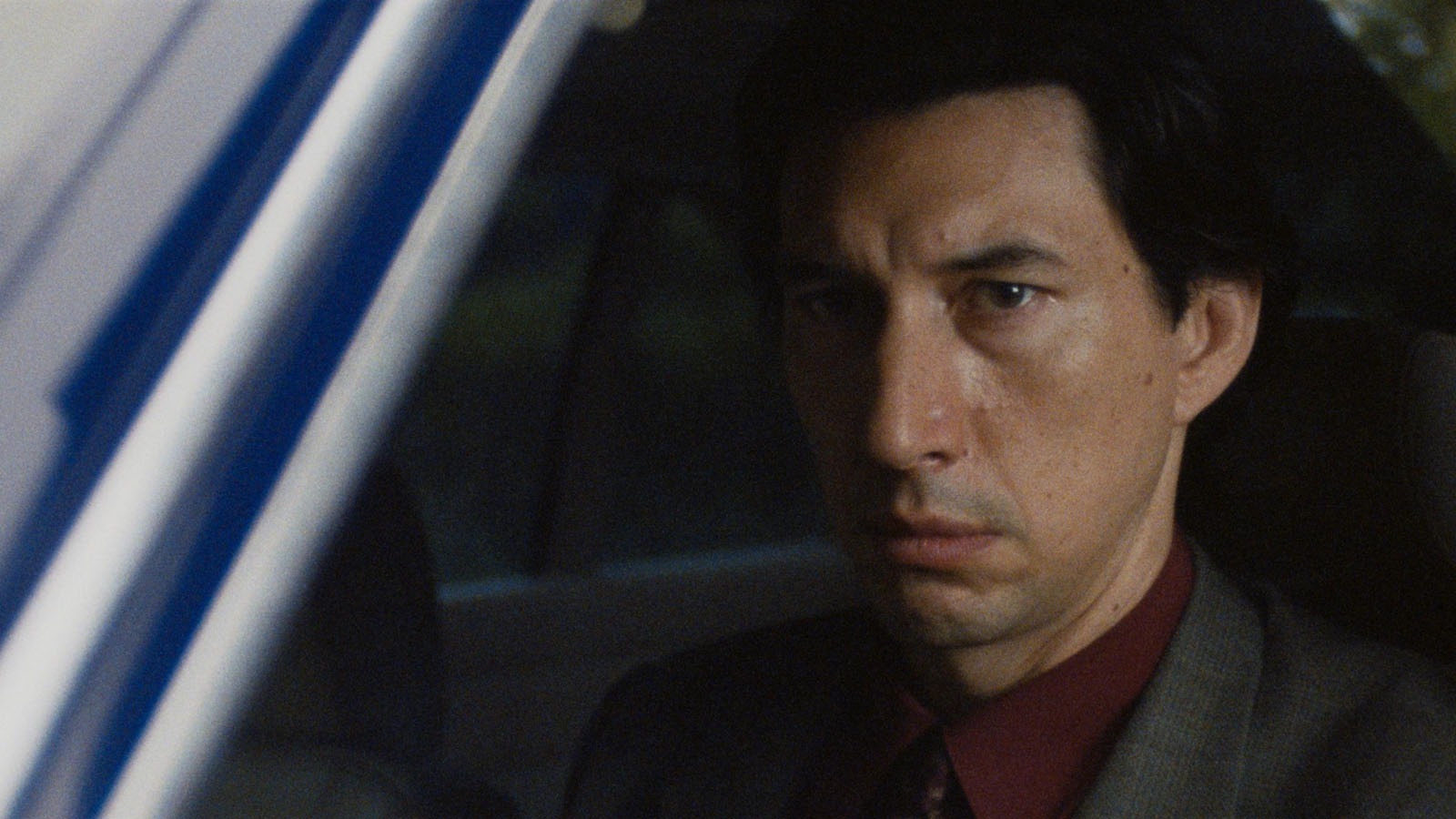
The sixty-fourth New York Film Festival opens tomorrow with James Gray’s Paper Tiger, starring Adam Driver and Miles Teller as brothers who, in mid-1980s New York, cook up a money-making scheme and stumble into some very serious trouble with the Russian mafia. It’s “a film that I adore,” NYFF artistic director Dennis Lim tells David Canfield in the Hollywood Reporter, and “one that we really wanted to champion. I think twenty, thirty years ago, this would’ve been a great film; in the current context, for an American filmmaker to make a film like this, it’s a miraculous film.” Paper Tiger “balances something that feels really gritty and true to the New York of [Gray’s] childhood but also has this mythic grandeur that I think relates to Shakespeare or Greek tragedy—it’s a bold thing for a film to do.”
Canfield is particularly keen on talking about Luca Guadagnino’s Artificial, one of an unusually large number of features seeing their world premieres in New York this year. Yura Borisov, who broke through internationally playing the Russian henchman Igor in Sean Baker’s Anora (2024), plays real-life computer scientist Ilya Sutskever, who crosses paths with Sam Altman, a young entrepreneur who would eventually become a cofounder and the CEO of OpenAI.
“For me, this is absolutely a film about today,” says Lim. “People are asking me questions about how AI is going to affect the future of filmmaking, and I think, how is AI going to affect the future of human existence? What’s really impressive about this film is how it strikes, for me, a perfect tone. It gets across that the situation that got us here is at once horrifying and hilarious and something to reckon with; the film gets this trajectory across with a real sense of moral urgency, and I think it’s finally beginning to hit home with people that we have to reckon with it.”
Lim, a frequent Criterion contributor, is also the author of David Lynch: The Man from Another Place and Tale of Cinema, his 2022 book on the 2005 film by Hong Sangsoo. A second edition with a new afterword is in the works, and at the Film Stage,Nick Newman asks Lim if he could imagine not programming a new Hong film. There are two lined up in the Main Slate this year, The Day She Returns and Nowhere to Lay My Eyes.
Newman’s question is a tough one for Lim, because he’s convinced that Hong is at work on “one project, and every film just adds to this massive, ongoing film in progress. So I don’t know; he seems to do it in enough ways every time. I actually think the two from this year are among two of my favorite recent Hongs.” The Day She Returns is the one “I’m maybe especially fond of because I feel like this is one that people are possibly likeliest to dismiss because it’s so minimal. It’s one that he filmed in four days, and it’s just an interview and then another and then another. But I think it’s conceptually so smart.”
Talking to Film at Lincoln Center’s Jordan Raup about the festival’s history and mission—“It’s just: how do we make an argument for cinema?”—Lim notes that “I’m pretty sure that our audience is going to go for Arthur Harari’s The Unknown, a film that I think was overlooked in Cannes and is a really interesting twist on a genre film, and a film that I think really should be taken seriously.”
As it happens, in the latest “Goings On” newsletter from the New Yorker,Richard Brody briefly spotlights a few standouts, including The Unknown, “a harrowingly intense, metaphysical melodrama, set in and near Paris, where three people, after casual sexual encounters, discover that they have swapped bodies with their partners. The exotic premise is developed with relentless seriousness, even severity, extracting deep pathos from the characters’ eerie reckonings.”
Beyond the Main Slate and its lineup of thirty-four features, Spotlight is “a section that I created to kind of expand the purview of what we might show,” Lim tells Raup, and Currents is “a section that’s very dear to my heart and very important for the identity of this festival. And that section, which we think of as a section for adventurous work, is a bigger and more robust section in this current iteration of the festival.”
As always at the NYFF, Revivals is as rich as any other section. This year’s lineup includes new restorations of Alexander Kluge’s debut feature, Yesterday Girl (1966), and Luchino Visconti’s final film, L’innocente (1976), as well as Paula Delsol’s recently revived first feature, La dérive (The Drift, 1964).
“The reemergence of La dérive is part of one of the most significant phenomena in contemporary film culture: an archive fever running high enough to inspire delirium,” writes Erika Balsom for the New York Review of Books. “The ratio between hype and quality is sometimes askew. But then there are rediscoveries like La dérive, which fully justify the fanfare. Now what baffles is not the film itself, but how something so accomplished and so proximate to the French New Wave could remain so little known for so long.”
For guidance through the immense NYFF64 program, the package put together at Slant might be a good place to start. At the Film Stage, the staff is recommending that New Yorkers prioritize a dozen films that have yet to secure distribution in the U.S. because it may be a while before a second chance to see them comes along.
The publication to keep a close eye on throughout the festival’s eighteen-day run will be FLC’s own magazine, Film Comment. The new fall issue is out and features Robert Daniels’s interview with James Gray and Imogen Sara Smith on Paper Tiger as well as Melissa Anderson on another Main Slate entry, All of a Sudden, along with Inney Prakash’s interview with director Ryusuke Hamaguchi. “As per usual,” write editors Devika Girish, Clinton Krute, and Michael Blair, “more articles (and podcasts) will be added to the issue each week, so keep an eye out, especially for our upcoming NYFF64 coverage.”
Don’t miss out on your Daily briefing! Subscribe to the RSS feed.