TIFF 2026: The People Have Chosen
Share
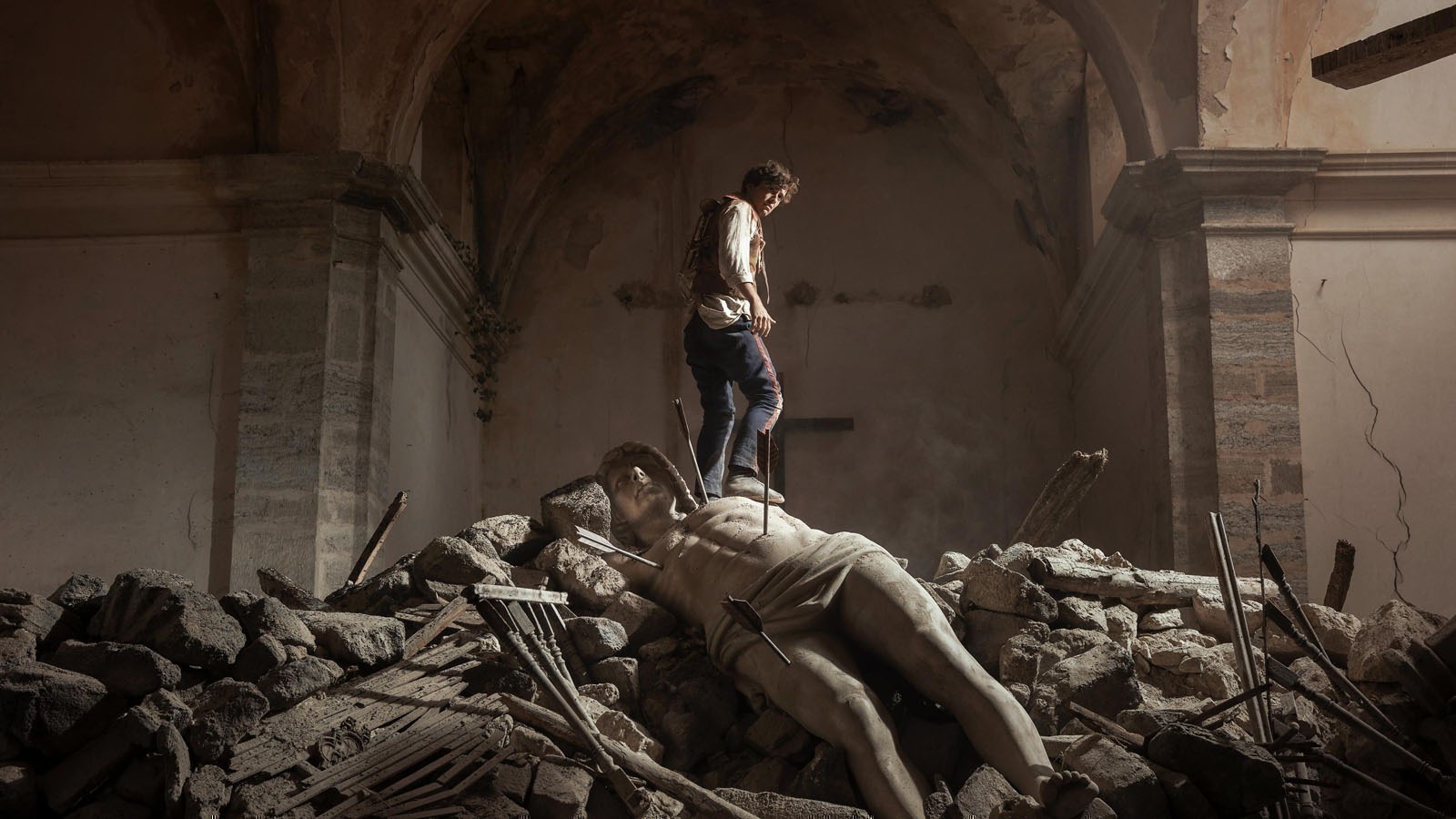
Anyone mentioning the People’s Choice Award voted on by attendees at the Toronto International Film Festival is going to add, as Stephanie Goodman does in the New York Times, that the coveted prize “can be a bellwether of the Best Picture Oscar, as in 2018 and 2020, when Green Book and Nomadland went on to win at the Academy Awards.” This year’s winner, announced on Sunday as TIFF 2026 wrapped, is La bola negra (The Black Ball), directed by Javier Calvo and Javier Ambrossi.
Los Javis, as the two-man team is commonly known, shared the Best Director Award in Cannes with Paweł Pawlikowski (Fatherland), and La bola negra won its first audience award when it screened at the Sydney Film Festival in June. It’s the first film in a language other than English to win the People’s Choice Award since Lebanese filmmaker Nadine Labaki’s Where Do We Go Now? won in 2011. La bola negra will open in theaters on October 16 before landing on Netflix in December.
Cowritten with Alberto Conejero and inspired by an unfinished Federico García Lorca story, the film rolls out “a neorealist tale of a closeted young man seeking membership at a casino in 1932, a tragic wartime romance set in 1937, and a lo-fi drama about a historian prompted to investigate all of this in 2017,” writes Sophie Monks Kaufman at IndieWire. And there is a “fourth element, which serves as the connective tissue for everything,” a “timeless poetic expression of love for all the queer storytellers who died before they could truly live.”
Siân Heder’s disability-rights drama Being Heumann opened this year’s festival, and it’s the second runner-up. The first runner-up is Peter Farrelly’s I Play Rocky, “an underdog story about an underdog story,” as Vulture’s Alison Willmore puts it. It’s about “how down-and-out actor Sylvester Stallone, broke and forever typecast as a meathead thug, wrote a project about a small-time Philly boxer who gets a shot at the championship and then insisted anyone interested in making the movie agree to let him play the lead role.”
I Play Rocky is “a feel-good story with a guaranteed happy ending,” adds Willmore, noting that this “puts it in the sweet spot for Farrelly, who after decades of making gross-out comedies with his brother Bobby, went solo to make Green Book,” a “road trip movie that proposed that centuries of dehumanizing racial animus could be overcome by unlikely friendship and some ethnic humor. Say what you will about Green Book, and there’s a lot to say, but Farrelly definitely understands the mechanics of the sort of broad dramedy someone could take their grandmother to see around the holidays. (It’s no mistake that I Play Rocky goes wide on November 20, right before Thanksgiving.)”
Simon Stone’s Elsinore, starring Andrew Scott as Ian Charleson—the real-life star of Chariots of Fire (1981) who pushed through his ultimately terminal illness to deliver an immortal Hamlet at the National Theatre in 1989—won the International People’s Choice Award. We’ll take a closer look at Elsinore when it opens the seventieth BFI London Film Festival on October 7.
The first winner of the International People’s Choice Award when the prize was introduced last year was Park Chan-wook’s No Other Choice, and as it happens, both two runners-up this year are Korean films as well: Lee Chang-dong’s Possible Love and Hur Jin-ho’s The Assassin(s), which Siddhant Adlakha, writing for Variety, calls “a clockwork political saga sure to spark curiosities about the attempted assassination of strongman South Korean prime minister Park Chung-hee in 1974, which resulted in the death of his wife, first lady Yuk Young-soo, as well as a young bystander.”
Reviewing “this entertaining procedural” for Screen, Tim Grierson notes that it “grows angrier as it barrels forward. The Assassin(s) focuses on three characters—a detective, a veteran newspaper editor, and his young reporter—who work together to unravel the truth, and the deeper the conspiracy goes, the more engaging the narrative becomes. In the process, the film reveals itself to be an impassioned salute to a free press and a condemnation of a corrupt government that knowingly deceived its citizens.”
Barry Avrich’s Darlene Love: I Know Where I've Been—described by Robert Daniels at RogerEbert.com as “a loving, endearing tribute to the best voice of her generation”—won the People’s Choice Documentary Award. The first runner-up, James Marcus Haney’s Black Sunflowers, “offers a painful portrait of Ukrainian youth caught at the moment when life should have been opening up,” writes Nataliia Serebriakova for FilmInk. “Instead, an entire generation has been forced to learn how to live alongside death.” And the second runner-up, Mila Aung-Thwin’s The Ultra Runner, is a portrait of ultramarathon competitor Tiberiu Uşeriu.
Directed by Matthew Rankin (The Twentieth Century, Universal Language), Ladies and Gentlemen, Brian Mulroney won the People’s Choice Midnight Madness Award. Corey Atad is one of many freshly won-over fans, and he calls Ladies and Gentlemen “an almost impossible-to-describe, kaleidoscopic comedic documentary account of the former Canadian Prime Minister’s rise to the leadership of the Progressive Conservatives in the late-1970s and early ’80s, before finally winning the ultimate seat of power in Canadian politics. It’s an incredibly engrossing, and laugh-out-loud hilarious, surreal experience of a film.”
The first runner-up is Paolo Strippoli’s The Spiral, which premiered in the main competition in Venice. The Los Angeles Times’ Joshua Rothkopf calls it a “rapturously silly, ultra-enjoyable Italian horror movie that demands its own franchise pronto.” Sabu’s Arrested Memory, the second runner-up, stars Ethan Juan as an undercover detective whose memory is slipping, and it’s brought Johnnie To’s Vengeance (2009) to the minds of both Jake Cole at IndieWire and Sean Gilman at In Review Online.
Launched in 2015, TIFF’s Platform Prize “honors filmmakers with strong directorial vision and distinctive storytelling.” This year’s winner is Theja Rio’s Angh, “an exquisite elegy to the people of Nagaland, India,” as Robert Daniels describes it for Screen. “It concerns Anghba (Anghlong Konyak), an aged chief trying to stave off the slow death of his traditional village at the hands of a patronizing white American Baptist missionary (Douglas Henshall). Unlike most films about assimilation, no outward physical violence occurs here. The blows are instead to the spirit—especially when the chief’s mute son Amao (Sobino Rengma) becomes infatuated with the new colonizing religion. The chief’s holy battle is a tragic fight against the inevitable.”
Jurors Pablo Trapero (president), Amma Asante, Sylvia Chang, Luc Déry, and Albert Lee gave a Special Jury Award to Amanda Kernell’s Brace Your Heart. “In a remote Sámi village in the Swedish mountains,” writes Nikki Baughan for Screen, “twenty-year-old Ejva (Elli-Sara Valkeapää) inherits her father’s herd of reindeer after he dies unexpectedly. Forced to balance her grief with the needs of her family, the physical demands of the job, and the patriarchal traditions of this isolated community, Ejva faces a monumental challenge even before a horrifying encounter further knocks her confidence. Anchored by a raw, naturalistic performance from Valkeapää and expressive craft, this is a small but fierce exploration of female resilience.”
“Wavelengths, TIFF’s programming section for unconventional, artist-driven filmmaking, has long been an oasis for what Scott MacDonald has called ‘a critical cinema,’ works that interrogate social structures as well as the conditions of their own making,” writes Michael Sicinski for Notebook. No awards are presented to the works screened in the program, but Sicinski’s annual Wavelengths roundup is always an essential read.
Don’t miss out on your Daily briefing! Subscribe to the RSS feed.