Lee Chang-dong’s Possible Love
Share
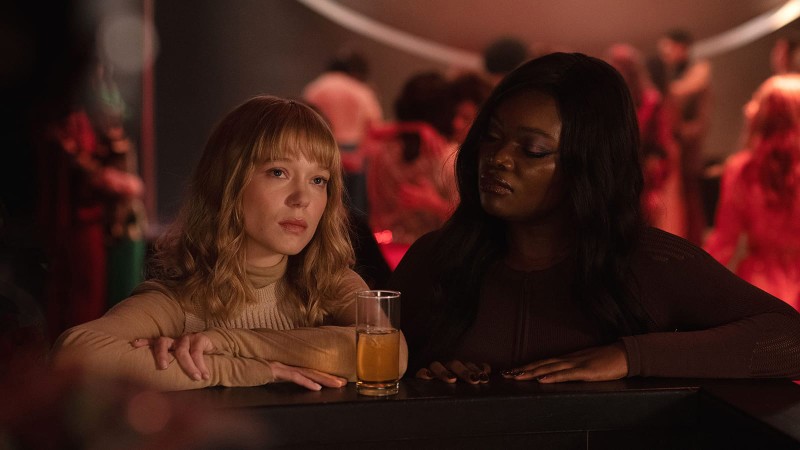
Throughout the Labor Day weekend, premieres of some of the season’s most promising films were popping off in Venice and Telluride. The first episodes of the fall marathon are out from the Film Comment Podcast and The Last Thing I Saw, and critics are posting ratings to the grid at Moirée. While some are scoping out Oscar prospects for a few standout performances—for example, Julianne Moore’s in Jesse Eisenberg’s The Debut, Robert Pattinson’s in Lance Oppenheim’s Primetime, and Andrew Scott’s in Simon Stone’s Elsinore—others have been enthralled by what the Hollywood Reporter is calling the “sensation” of Venice, Possible Love, the first feature from Lee Chang-dong since Burning (2018).
“Clocking in at 164 minutes, it’s a huge, novelistic work,” writes Vulture’s Bilge Ebiri. “Lee, already a master of absorbing dramas, has made what might be the most powerful, political, hypnotic film of his career.” Venice’s eighty-third edition, “and awards season in general, is filled with bravura performances, with brilliant actors doing high-wire acts that pull us into their characters’ realities while also allowing us to admire the risks the actors themselves are taking. By contrast, the characters and the performances in Possible Love creep up on us, steadily and slowly, until we’re so invested in their lives that even minor events can take our breath away.”
Sul Kyung-gu, who starred in Lee’s Peppermint Candy (1999) and Oasis (2002), plays Ho-seok, who has been laid off by SP Heavy Industries. When he joined a strike to protest, SP called in the state to conduct a brutal crackdown. Ho-seok is hurting—and drinking—and his wife, Mi-ok, does what she can to cope. The pair have a son, Cheol (Jung Seol), and a yearslong bond that is strong but strained. As Mi-ok, Jeon Do-yeon, “delivers another once-a-century performance less than twenty years since her first collaboration with Lee,” Secret Sunshine (2007), writes IndieWire’s David Ehrlich.
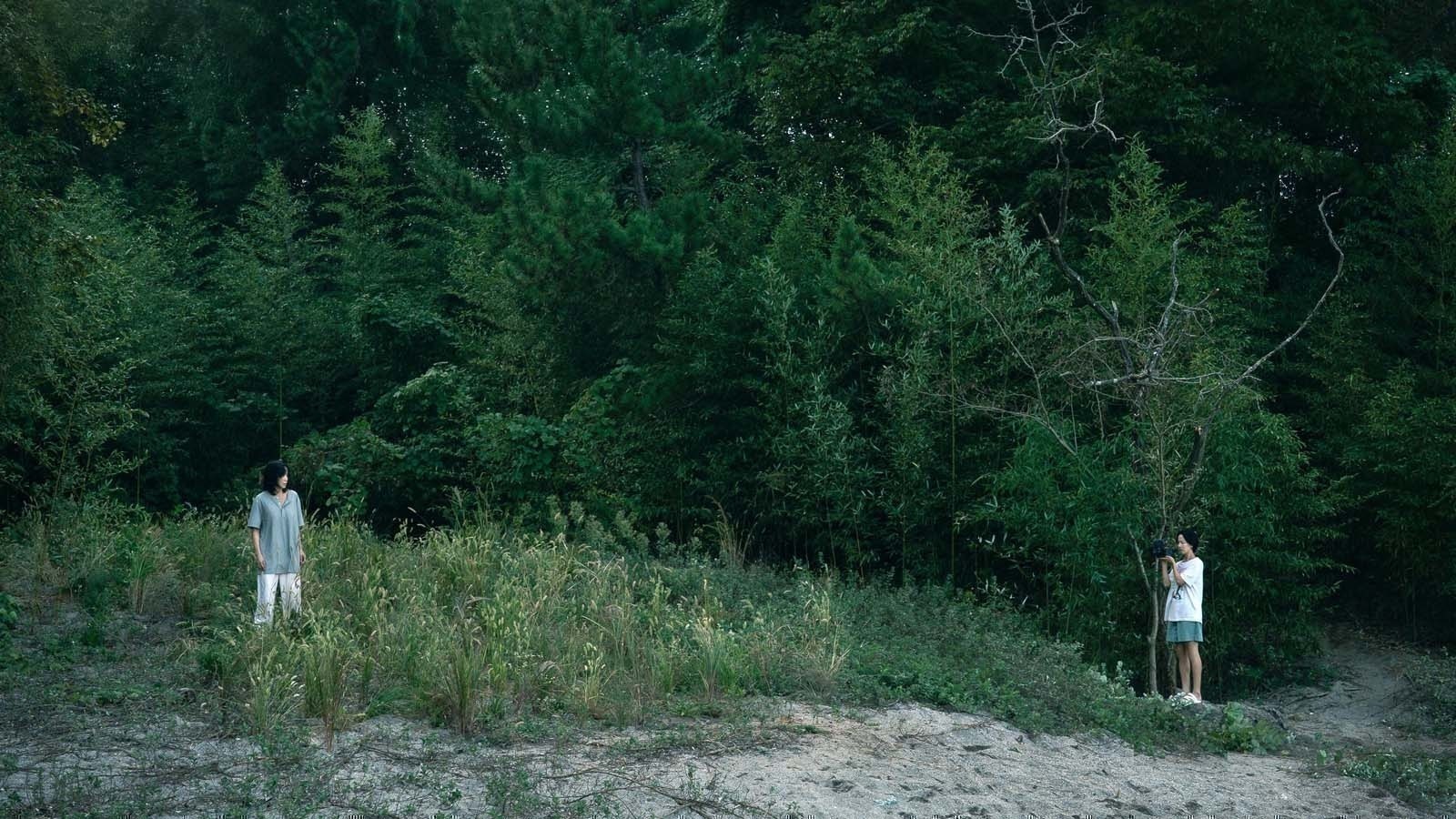
Enter Ye-ji, an aspiring filmmaker who has decided to make the private lives of the laboring class the subject of her first documentary. Cho Yeo-jeong’s Ye-ji has reminded more than a few reviewers of her Yeon-kyo, the well-meaning woman who has married into wealth and privilege in Bong Joon Ho’s Parasite (2019). Ye-ji’s husband, Sang-woo, is played by Zo In-sung, who has broken through internationally this year with a leading performance in Na Hong-jin’s Hope.And Ye-ji, who has befriended Mi-Ok and is dead sure that Ho-seok would be the ideal subject of her film, convinces Sang-woo to have the working-class couple over for a weekend in their well-appointed home.
“The movie’s most potent scene occurs late in the film when, with Ye-ji’s camera rolling, Ho-seok finally lets his guard down,” writes Time’s Stephanie Zacharek. “Ye-ji may be getting the footage she set out for, but has she earned it honestly? Sul Kyung-gu is sensational here. If the character he’s playing is key to Ye-ji’s movie-within-a-movie, he’s also Possible Love’s anguished beating heart.”
“There is perhaps a subtle critique here, of the predatory instincts of the filmmaker towards their subject, of the desire to invade someone else’s life and shape their reality according to your own will,” writes Jessica Kiang in Variety. “These are instincts that Lee has somehow been born without. His subjects may be fictional creations but, especially as embodied by such a fine cast, they’re allowed to live and breathe their own private existences, their own personal idiosyncrasies, yielding characters who are almost as unknowably strange as, in your secret heart, you know yourself to be.”
“Through tipsy confessions and wistful recollections, Lee carefully unpacks the contrasting marriages, masterfully observant and tender in his approach,” writes Hannah Strong at Little White Lies. “Under the surface, desire is a knife edge, whether it’s the blunt sense of ownership over everything that comes with generational privilege or the sharp ache of the working man for a sense of security. It’s a remarkable feat that Lee contains so many narrative threads within Possible Love without ever losing command of them.”
“In its scenes of factories, union gatherings, and ex-employee counseling groups,” writes the Hollywood Reporter’s David Rooney, “Possible Love at times seems to sit somewhere near the process-based approaches of, say, Laurent Cantet or Frederick Wiseman, while its unhurried build from low-key conversation-as-action into more emotionally charged territory reminded me of Ryusuke Hamaguchi’s recent All of a Sudden. But comparisons aside, this is unmistakably a Lee Chang-dong film, its aching humanism reflecting the co-existence of despair and hope.”
Possible Love opens with a dedication to Dekalog: Ten (1988), the final chapter in Krzysztof Kieślowski and cowriter Krzysztof Piesiewicz’s series tackling each of the Ten Commandments. The dedication is a nod to an ongoing project to reimagine each installment, but Possible Love strays farther from the original than Asghar Farhadi’s Parallel Tales has from Dekalog: Six. Following the premiere in Venice, Possible Love heads next to festivals in Toronto and New York and will see a limited theatrical release on October 23 before landing on Netflix on November 6.
Don’t miss out on your Daily briefing! Subscribe to the RSS feed.