To Be Free
Share
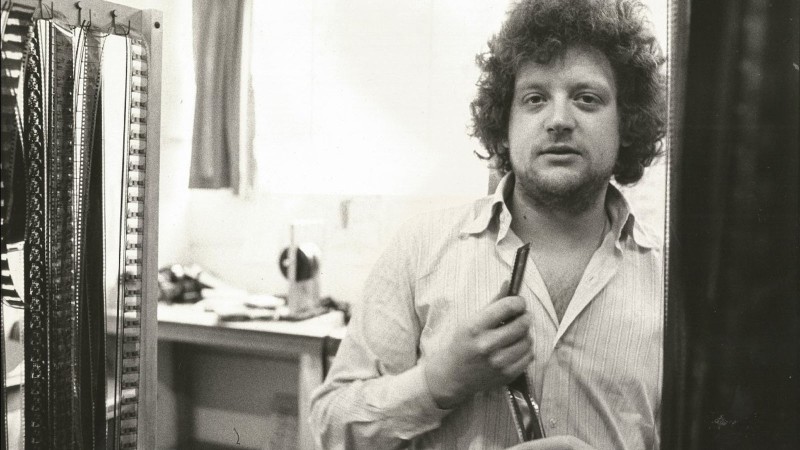
Patricio Guzmán’s The Battle of Chile (1975–1979) “endures to this day as a furious witness to a terrible history,” wrote Samuel Brodsky when he interviewed Guzmán for Film Comment a few years ago. The three-part chronicle of events leading up to, during, and in the immediate aftermath of the military coup that put an end to leftist Salvador Allende’s democratic government in Chile is “widely regarded as one of the towering achievements in the history of documentary film,” wrote Sukhdev Sandhu for the Guardian in 2012, and it “nearly didn’t happen.”
Chris Marker (La Jetée) had championed Guzmán’s documentary feature debut, The First Year (1972), which captured the first twelve months of the Allende administration. “Allende’s election had shaken the continent, the streets were heaving,” wrote Kaleem Hawa for Another Gaze last year, but a blockade on imports of film stock meant that Guzmán and his team couldn’t carry on working.
Marker sent a one-line telegram: “I will do what I can. Chris.” A month later, forty thousand feet of black-and-white film stock landed at the airport in Santiago. The completed film had to be smuggled out of the country with the help of the Swedish embassy. One cameraman had been killed during the shooting and another was “disappeared” in 1974. Guzmán, who passed away on Tuesday at the age of eighty-five, left Chile and worked in exile in France and Spain.
After the military junta was ushered out of power in 1990, Guzmán began making return trips to his home country. “Quieter and more inwardly focused than their predecessors,” writes Daniel Witkin for Reverse Shot in 2020, “Guzmán’s latter-day films show that the rage of his previous works are coalesced into a calm, resolute probing for personal and historical truth. Interweaving explorations of Chile’s landscape with interrogations of its national memory, they are at once free-associative and intricately constructed.”
“Beyond his directing,” writes Natalia Hernández Moreno for Cinema Tropical, “Guzmán was a foundational theorist and educator who reshaped how documentarians approach nonfiction storytelling across the Spanish-speaking world. Through his widely influential text Screenwriting for Documentary Film (El guion en el cine documental) and decades of teaching—including masterclasses at Cuba’s International Film and Television School (EICTV) in San Antonio de los Baños and institutions across Europe and the Americas—he argued passionately that nonfiction cinema demanded the same narrative architecture and poetic freedom as fiction.”
This week’s highlights:
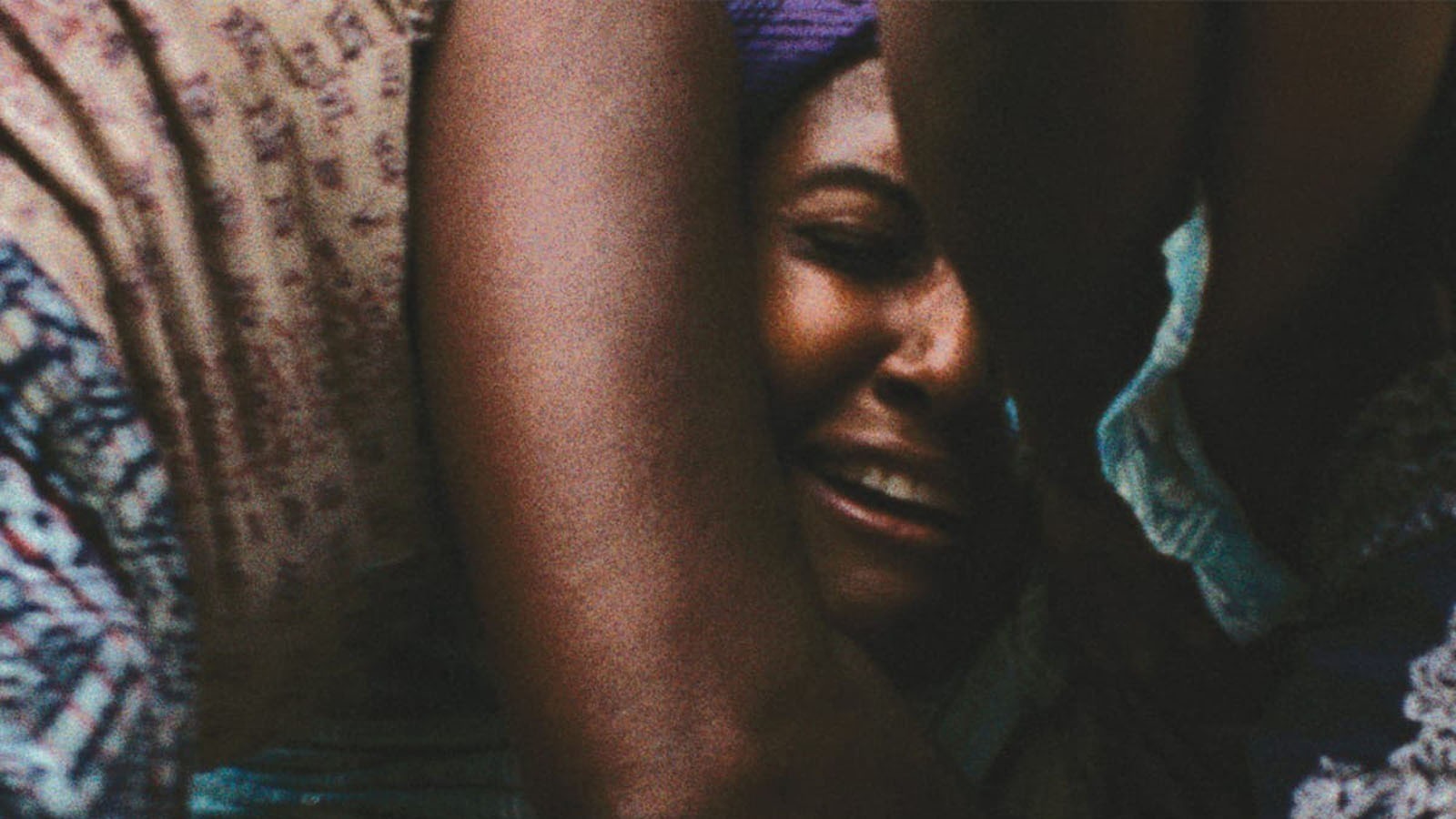
- Sarah Maldoror’s Sambizanga (1972), which depicts the Angolan struggle for independence from Portuguese colonization, is “a cinematic work of immense historical and cultural importance that stages a reckoning with the interlocking systems of colonialism, capitalism, and patriarchy,” wrote Yasmina Price a few years ago. Writing for Sight and Sound, Rachel Pronger notes that the film is “not an abstracted public lecture on Marxist theory; it’s an intimate film, made by someone with skin in the game. Maldoror’s filmmaking was driven by a conviction that women like her should be telling their own stories.” Pronger also interviews Maldoror’s daughter Annouchka de Andrade, who has curated a season of her mother’s films running through October 4 at BFI Southbank in London.
- Soraya Nadia McDonald points out in the Guardian that Maya Annik Bedward’s documentary Black Zombie establishes that “zombies are a Haitian idea, invented to capture the metaphysical anguish of being torn from one’s home and subjected to torture, rape, and forced labor.” Introducing his interview with Annik Bedward for Letterboxd’s Journal, Isaac Feldberg notes that the film is “concerned with not only the long history of the zombie but also its distortion in early Western literature and the cinema that followed.” This is a rich conversation touch on films ranging from White Zombie (1932) with Bela Lugosi through George A. Romero’s Night of the Living Dead (1968) to such recent films as Jordan Peele’s Get Out (2017) and Ryan Coogler’s Sinners (2025).
- Avec Kim, the new wordless short film by Claire Denis for the Miu Miu Women’s Tales series, is now online and features Suzanne Lindon as a mechanic spiffing up a vintage Ford Granada and then cleaning up to head out to pick up a friend played by Kim Gordon, who provides a transporting soundtrack. In 2020, Lindon directed her first feature, Spring Blossom, and she tells Alex Denney at AnOther Magazine that, as the daughter of Sandrine Kiberlain and Vincent Lindon, she just knew that “people on Twitter and everywhere else would want to kill me because I was doing a movie. I know I grew up in a very privileged bubble in which it’s [possible] to make a film when you’re nineteen, but I’ve never hidden myself and I just decided to do whatever I wanted, which I think Claire appreciated.” Denis, says Lindon, “has this independence and spirit of just doing what she wants and saying what she has to say.”
- New York’s Metrograph is currently presenting a series of films by Tsui Hark, and Nick Pinkerton has a piece in the Journal on “Tsui’s agonized howl of a movie,” Don’t Play with Fire (1980). Newly restored, Tsui’s third feature tracks three rebellious teens who team up with a young woman and blunder their way into the criminal underworld. “Tsui’s Hong Kong, like Dickens’s London, comes off as both teeming and oddly intimate, a city where the closeness and squalor of housing leads to much of life being lived on the streets, and people’s paths are constantly crisscrossing,” writes Pinkerton. “As abject and anguished as Tsui’s film may be, it is anything but enervating; the combination of virtuoso talent and fierce commitment to a vision never is.”
- In 1964, Britain’s Granada Television broadcast what was to have been a one-off, Seven Up!, a collective portrait of fourteen seven-year-olds, ten boys and four girls, directed by Paul Almond. Michael Apted, a researcher who helped select the children, decided to follow up in 1970 with 7 Plus Seven, checking in on the same kids at fourteen. And he carried on, every seven years, passing away three years after completing 63 Up (2019). Now Asif Kapadia has directed the two-part 70 Up, which “has a more reflective and elegiac tone than in previous years,” writes Lucy Mangan in the Guardian. It’s “something of a meta-narrative too, as the participants give their thoughts about the series and about Apted.” In a touching piece for the BBC, George Wright talks with the surviving subjects of “the longest-running documentary series ever made. In 2024, it was voted the most influential TV show of the past fifty years.”
Don’t miss out on your Daily briefing! Subscribe to the RSS feed.