Holding Our Own
Share
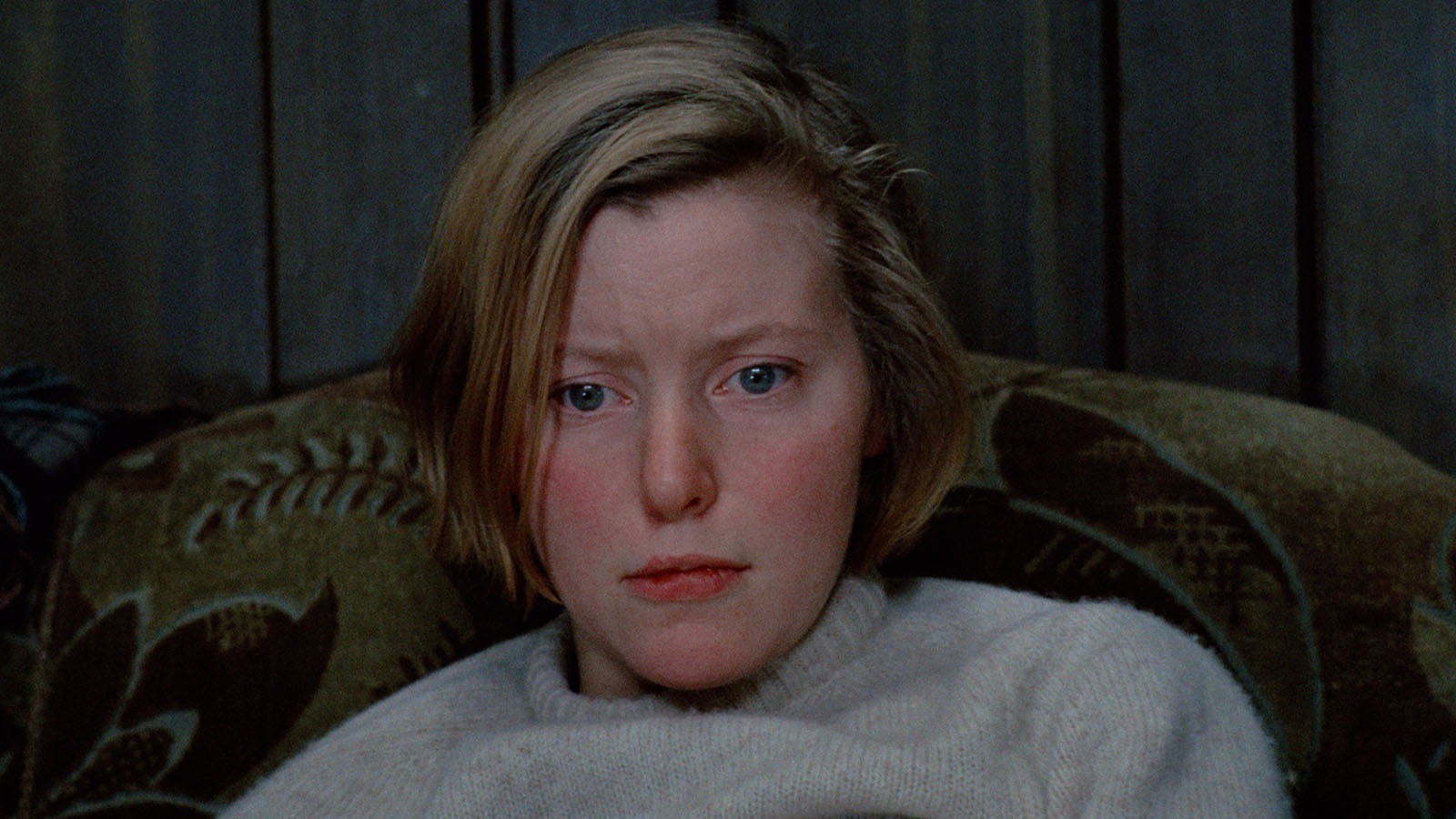
And we’re off. Venice has opened with Danny Boyle’s Ink, and Telluride, opening today and running through Sunday, has announced a lineup of more than sixty features. The Colorado festival with what IndieWire’s Anne Thompson calls a “Rocky Mountain summer-camp vibe” will host the world premieres of Jesse Eisenberg’s The Debut, with Julianne Moore; Andrew Haigh’s Colm Tóibín adaptation, A Long Winter; Mike Leigh’s Tender Loving Care, with Kate O’Flynn; Simon Stone’s Elsinore, with Andrew Scott; and David Zellner and Nathan Zellner’s Alpha Gang, with Cate Blanchett.
Luca Guadagnino’s Artificial, starring Andrew Garfield as OpenAI cofounder and CEO Sam Altman, will see its world premiere at the New York Film Festival (September 25 through October 12). Artificial is one of more than 250 titles lined up for the seventieth BFI London Film Festival, slated to run from October 7 through 18. The festival will launch Ray Gunn, the long-awaited animated sci-fi mystery from Brad Bird (The Incredibles), and The Trip to the Northern Lights, the fifth season of Michael Winterbottom’s travel series featuring Steve Coogan and Rob Brydon.
The Viennale, in the meantime, is previewing a 2026 edition (October 22 through November 3) that includes special programs dedicated to Jocelyne Saab and Austrian films of the 1990s as well as a Robert Aldrich retrospective copresented with the Austrian Film Museum. An accompanying book edited by Christoph Huber features a foreword by Dominik Graf: “We have been missing a director like Aldrich for decades. And we miss him especially now.”
This week’s highlights:
- The new Yale Review features an essay by Bilge Ebiri on “what I’ll call reticent auteurs, directors whose scarce output lends them a certain mystique.” Víctor Erice, for example, or Lance Hammer, Charles Laughton, Barbara Loden, Elem Klimov, Julie Dash, and of course, Terrence Malick. “The category is a capacious one,” writes Ebiri, “encompassing reclusive geniuses, thwarted iconoclasts, and tragic shooting stars. Some of these artists make only one movie. Some make more but resist the temptations of a prolific career, because of their own exacting standards, the challenge of raising money to make films, or forces beyond their control. The idea of a reticent auteur has less to do with a filmmaker’s individual circumstances and more to do with our response to what they make.”
- “Four city jerks, privileged and frustrated young men from Kolkata, head to the countryside for a few days of slothful rest and rowdy dissipation,” writes the New Yorker’s Richard Brody as he revisits Satyajit Ray’s Days and Nights in the Forest (1970), “a teeming, turbulent, confrontational meld of emotion and observation, placing the eruptive pressure of societal conflict amid the seeming trivia of social life . . . As the story unfolds, relationships between friends, transactions with locals and bureaucrats, episodes of love and lust, and moments of painful self-awareness produce a subjective panorama of unredressed inequality, squandered energy, stifling tradition, and a restive quest for liberation.”
- In a piece for Filmmaker on Universal Westerns, the Museum of Modern Art series that ran this summer, Ricky D’Ambrose notes that critic Philip French sensed in the genre “‘a pessimistic feeling about the fragility of American civilization and its problem in putting down roots.’ For French, the ghost town is emblematic here because it becomes the one place where ‘the central characters are doomed to die or emerge shriven.’ In our own time, this ‘pessimistic feeling’ has found another form: namely, the ‘elevated’ horror film, in which the ghost town has reached a state of immanence and in which dread is either domestic or dispersed into ambient trauma and grief. Perhaps the present glut of horror movies, many of them having zipped through the YouTube-to-Hollywood pipeline of recent years, will one day look as sealed and symptomatic as Italy’s waxen white-telephone movies of the 1930s, which perfected the comforts of the private world at the moment that the public one was being utterly dismantled, with fascism on the rise.”
- Contemporary at 75 is a season of events happening this fall all across London celebrating the seventy-fifth anniversary of Contemporary Films, a distributor founded in 1951 by Charles Cooper, “the East End–raised son of Jewish refugees from the Russian pogroms” and “a Communist whose first involvement in film was with Kino, distributor of such titles as Battleship Potemkin (1925) in the 1930s, when anti-Soviet censorship was at its height,” as Henry K. Miller writes for the BFI. Contemporary has introduced Londoners to the work of Ingmar Bergman, Andrzej Wajda, Yasujiro Ozu, and Mike Leigh, whose directorial debut, Bleak Moments, was picked up by Contemporary in 1971. “We were fresh on the block and innocent,” Leigh tells the Guardian’s Andrew Pulver, “and you take everything for granted in some way. But actually, when you think about it, they were pretty remarkable and they embraced this thing.”
- To mark the twelfth anniversary of a film that took twelve years to make, select theaters have been screening Richard Linklater’s Boyhood (2014) again, giving the Los Angeles Times’ Mark Olsen an opportunity to chat with the director about his cast “actually having lived those years and earned those feelings”; what differentiates that epic shoot from one of his current projects, an adaptation of Stephen Sondheim’s musical Merrily We Roll Along that will take twenty years to complete; and about the endurance of cinephilia. “I started noticing this post-pandemic,” says Linklater. “The audience that came back was really strong and it was young . . . I’m glad to see cinema holding its own within the bigger struggle for what people think is worthy of their time.”
Don’t miss out on your Daily briefing! Subscribe to the RSS feed.