Sergei Loznitsa in New York
Share
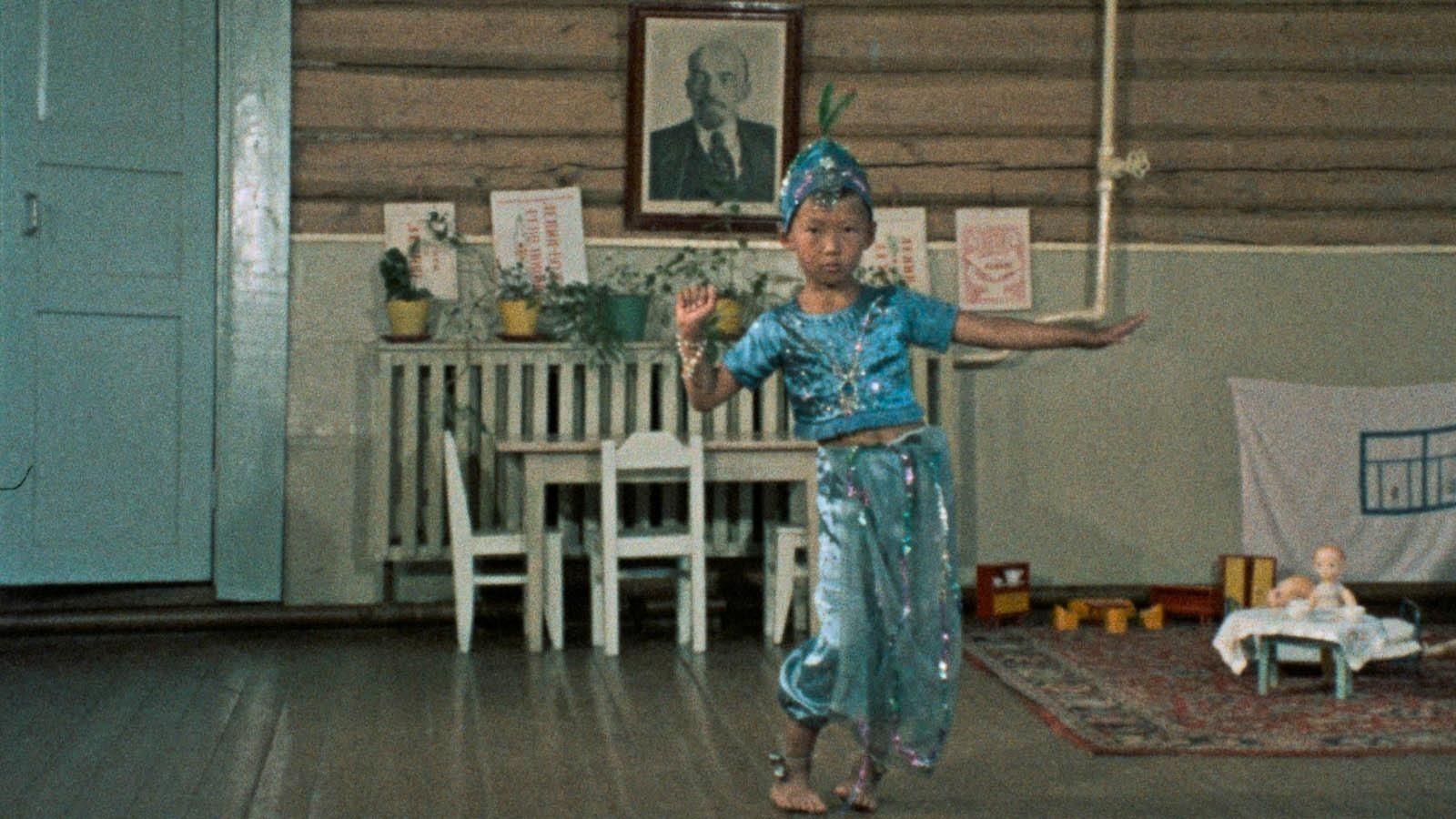
“If ever there was a project for Sergei Loznitsa, this was it,” wrote Jay Weissberg in Variety when Imperium premiered in Venice last month. In the early 1970s, an Italian communist film crew armed with 16 mm cameras spent three years traversing the Soviet Union, shooting more than sixty hours of ethnically and culturally diverse day-to-day living from the Baltics to the Pacific and from the Arctic down to the “Stans.” “From urban commuters to village fêtes, Baku trawlers to Siberian reindeer herders,” wrote Weissberg, “the cameramen aimed to capture the Soviet polity at a time when Westerners had a gray, monolithic image of what lay behind the Iron Curtain.”
The Italians were working on a major television series, but in the end, only a few episodes aired. Loznitsa has now honed all that original footage down to a vivid travelogue running just short of three hours. On Sunday, Imperium won the Best Film Award at the seventieth BFI London Film Festival, and on Friday, the Museum of Modern Art will launch the first complete retrospective of Loznitsa’s work in North America.
Loznitsa will be there to introduce Imperium. “What astonishes is not so much that the Kremlin was able to hold it all together for so long but that ancient customs and peoples stubbornly resisted some seventy-five years of forced labor, dogma, and terror,” write MoMA’s programmers, wryly adding that “Russia today is another story altogether.”
“An empire projecting a delusion of homogeneity is here revealed as something much more permeable and syncretic,” wrote Leonardo Goi in a Notebook dispatch from Venice. “Buddhist monks in orange robes and blue-tinted shades strolling around temples in Kalmykia; Christians flocking to centuries-old churches in Armenia; women boasting their traditional clothes somewhere in Turkmenistan; models strutting with their Italian-style coats in Riga. A miraculous alchemy binds the original directors to the man editorializing their material several decades later. The Italians didn’t just provide Loznitsa with a time machine, [they] also shared his keen eye for incongruous images, wherein the cultural uniformity flaunted by Moscow is routinely complicated by endemic symbols and traditions. The result is a riveting snapshot of a bygone world that never feels didactic.”
As a Ukrainian filmmaker who studied in Moscow, Loznitsa has spent nearly three decades probing the entangled histories of his own country and Russia. His earliest short films and features are studies of specific milieus in then-contemporary Russia—a construction site, a farming community, a train station, a rural psychiatric hospital, a factory. With Blockade (2005), Loznitsa began a series of features constructed exclusively from archival footage. All of Blockade’s fifty-two minutes were shot by Soviets during the Siege of Leningrad undertaken by the Nazis from 1941 to 1944. The estimated death toll is one and a half million, around half of the city’s prewar population.
“Loznitsa doesn’t adorn the eerie footage with talking heads and factoid title cards,” wrote Jim Ridley in the Village Voice. “What narrative there is, along with a sense of incrementally mounting horror, emerges unbidden from the images—teeming streets that gradually thin, bundled proles panning for filthy water in potholes, stick-thin pedestrians stepping matter-of-factly past wrapped corpses. The movie is a tone poem of attrition.”
The MoMA series isn’t arranged this way, but Loznitsa’s oeuvre could be viewed as a hundred-year journey through wars, their desolate aftermaths, and the very occasional and short-lived triumph. That journey would begin in Moscow in 1930, when eight men, professors and engineers, were accused of conspiring against the state. Another feature culled from archival footage, The Trial (2018) bears down on the emphasis Stalin’s regime put on turning the legal process into a show in which the masses were called on to play the crucial role of the hysterical chorus demanding retribution.
The New Yorker’s Richard Brody points out that, years later, the prosecutor “was falsely accused of being a spy and executed. Terror continued to assign roles at random,” and indeed, “a palpable sense of randomness is Loznitsa’s singular accomplishment. As in the trial itself, there is no story in The Trial—only the spectacle of the transformation of people into totalitarian subjects.”
Set in 1937, Two Prosecutors (2025) is based on a novella written in 1969 by Georgy Demidov—a physicist who had spent fourteen years in the gulag—but not published until 2009. Kornyev, a young and idealistic lawyer played by Aleksandr Kuznetsov, ventures into the dark labyrinth of Stalinist bureaucracy to argue on behalf of an aging prosecutor (Alexander Filippenko). He also aims to report on rampant corruption in the People’s Commissariat for Internal Affairs. “If Loznitsa has cited Gogol and Kafka as touchstones,” writes Leonardo Goi at the Film Stage, “there are scenes in Two Prosecutors that echo the bleak absurdism of Roy Andersson.”
In 1941, German soldiers and Ukrainian collaborators murdered 33,771 Jews at the Babi Yar ravine outside Kyiv. The New York Times’ A. O. Scott has called Babi Yar. Context (2021) “a wrenching and revelatory collage . . . What is astonishing is how thoroughly nearly everything that happened before and after the massacre was documented, in black-and-white and sometimes in color. The detail is unsparing and relentless: farms and villages set on fire by German soldiers; Jews being rounded up, humiliated, and beaten; snowy fields strewn with frozen corpses; bombs exploding in downtown Kyiv; the public hanging of twelve Germans convicted of atrocities after the war. Though there is a military and political narrative to be gleaned from all of this, Loznitsa’s method is to allow the human reality to speak for itself.”
Based on a novel by Vasil Bykov and set in Nazi-occupied Belarus, In the Fog (2012) centers on Sushenya (Vladimir Svirski), a railway worker falsely accused of collaborating with the Germans. “Death, or so he believes, would bring him a kind of exoneration,” writes the NYT’s Manohla Dargis, adding that “for all the devastations visited on the characters, Loznitsa is searching for the human good amid a human catastrophe. The stunning opening scene—a probing sweep around a Bruegel-like tableau of people, dogs, and mud—puts that search into cinematic terms and also telegraphs the narrative’s circular form. We go on, circle back, go on.”
The Natural History of Destruction (2022)—whose title is taken from a 1999 collection of essays in which W. G. Sebald addressed the unwillingness in German culture to process the carpet bombing of the country’s cities in the waning days of the Second World War—is another archival collage. But Loznitsa brought this nightmare of firestorms and mass death to Cannes in the immediate wake of Putin’s invasion of Ukraine.
Dispatching from the festival, Notebook’s Daniel Kasman found “a dangerous flirtation in the film with equivocation and simplification, with all sides equally bad, war being evil. But more likely, the film, in its terrible vision of ruination, should be taken as a warning, first to Putin and then to the rest of the world. To Putin, the warning is: Along a certain path, you will only bring destruction to yourself, your people, and your country. To the rest of the world: You can fail too, by embracing the dark allure of supremacy through obliteration.”
Half a year after that Cannes premiere, Loznitsa was in Venice with The Kiev Trial (2022), which documents the 1946 hearings that have sometimes been referred to as the “Kyiv Nuremberg.” Fifteen Nazis and collaborators were found guilty of committing atrocities in Ukraine during the war. “Unlike Babi Yar: Context, which gave us documentary footage of the killings,” noted Jonathan Romney in Sight and Sound, “The Kiev Trial follows the Claude Lanzmann principle of recounting rather than showing horrors—apart from the final sequence, which shows the actual hangings, in front of a Kyiv multitude, of the German officers.”
Here our journey might take a slight detour to the twenty-first century for two reflections on the scars left by the Second World War. “If poetry after Auschwitz constituted an act of barbarism,” wrote Jay Kuehner in Cinema Scope, “then what can be made of curious tourists eating sandwiches, or snapping self-portraits, on the lawns of former concentration camps now repurposed as museums? The question isn’t so much posed as interrogatively embedded in Austerlitz’s [2018] conceptual framework, in which ‘dark tourism’ is subjected to a formally distanced yet skeptical gaze of its own, by way of a camera that is, to all appearances, indistinguishable from—and yet purely oppositional to—the ubiquitous memory tool of choice brandished by the idling hordes. Premised on the paradox of fleeting vigilance and historical sampling, Austerlitz extends from Sergei Loznitsa’s own visit to Buchenwald, where a source of unease arose from proximity to the living rather than the dead.”
Writing for Variety, Jessica Kiang found Victory Day (2018) to be “a perfect corollary” to Austerlitz. Each May 9, Russian-speaking residents of Berlin gather in Treptower Park to celebrate the 1945 triumph of the Soviet Union over Nazi Germany. “At one end towers the massive statue of a strapping Soviet soldier, sword in his hand, child nestled in the crook of his arm, standing atop a trampled, broken swastika,” wrote Kiang. “All the way at the other end, past the sixteen decorative ‘sarcophagi’ on which Joseph Stalin quotes are literally carved in stone, and through a raised portal of red marble emblazoned with hammers and sickles, a gently downward-sloping avenue, lined with hushed weeping willows, leads to a much smaller statue: a seated woman, bowing her head in grief.”
“The site’s epic, pathos-heavy symbolism seduces even as it repels,” wrote Ela Bittencourt in the Village Voice. “In one mausoleum relief, thanks to Loznitsa’s forced perspective, a German plane appears small enough to be struck by a Soviet peasant’s outstretched, elegantly poised hand. The iconography evokes episodes of unremitting civilian suffering during an airstrike, yet Loznitsa captures it first in close-up, revealing an uncanny inner strength.”
“A mesmerizing, two-hour assemblage fashioned from archival material intended for The Great Farewell, a never-released feature documenting the March 1953 funeral of Soviet maximum leader Joseph Stalin, Sergei Loznitsa’s State Funeral [2019] is both awesome and stupefying, conjuring the spectacle of a dead pharaoh laid to rest in a celluloid pyramid of his own design,” wrote J. Hoberman for Artforum. “Loznitsa saves the body count (twenty-seven million murdered, executed, tortured to death, imprisoned, sent to labor camps, or deported; fifteen million starved to death) for the kicker.”
Revue (2008) is “surely the greatest compendium of Soviet kitsch since 1997’s East Side Story,” wrote Vadim Rizov in the Voice. “Loznitsa’s simple strategy is to narrow in on the gap between ‘cultural’ events and the dreary realities they celebrated in the ’50s and ’60s by cutting back and forth between self-consciously nationalist concerts/social-realist plays and their real-world inspirations. The gulf is rarely wide: The newsreel footage Loznitsa finds—factory workers woodenly announcing their patriotic quota increases—is hardly more convincing than the terrible plays made to glorify them.”
Mr. Landsbergis (2021) contextualizes an interview with Vytautas Landsbergis, who spearheaded the movement that led to Lithuania becoming in 1990 the first Soviet republic to declare its independence. “Formally, Mr. Landsbergis heralds a few key ruptures,” wrote Leonardo Goi for Notebook. “It marks the first time Loznitsa’s voice can be heard in his films, and the first time one of his archival docs features a talking head. Sitting in his summer house, Landsbergis recalls those tumultuous years, and his musings intersperse the mélange of black-and-white and color clips the director assembles from Soviet and Lithuanian sources.”
Eight cameramen set to work in Leningrad when Soviet hardliners in Moscow attempted to oust Mikhail Gorbachev in the summer of 1991. “People poured onto the streets, the army refused to fire, the coup failed, and the Soviet Union was soon a thing of the past,” wrote Jay Weissberg in his Variety review of The Event (2015). “Loznitsa relies on an intelligent audience with historical memory, and among that demographic, few will be unmoved by the inevitable pondering: What happened to the optimism of 1991?” Robert Greene put The Event on Sight and Sound’s list of the best documentaries of that year and noted: “When Putin pops up, waves of present tragedy rush through the material.”
“Imagine the early, hellaciously bleak work of Cormac McCarthy transposed to the corrupt outlands of modern Russia and/or Ukraine and composed with a steely psychopath’s disregard for cohesion, and you have something like Sergei Loznitsa’s debut feature, a two-hour-plus decathlon of evil cross-purposes and runaway iniquity,” wrote Michael Atkinson in his review of My Joy (2010) for the Voice.
The plot of A Gentle Creature (2017), Loznitsa’s second fictional feature, is “almost comically simple,” wrote the Telegraph’s Robbie Collin. “A woman tries to deliver a parcel: that’s it. There is no clear debt to the Dostoyevsky novella with which it shares its title,” but “the great Russian novelist’s shadow keeps looming up from murky corners, along with similar debts to the savage nineteenth-century satires of Saltykov-Shchedrin and Gogol.” Loznitsa’s “vision of this world, shot by the great Romanian cinematographer Oleg Mutu, is immersive and unnerving.”
In the fall of 2013, thousands of demonstrators began gathering in Kyiv’s Maidan Nezalezhnosti (Independence Square) to peacefully protest Ukrainian president Viktor Yanukovych’s refusal to sign an agreement that would draw the nation closer to the European Union. The government cracked down, the people rose up, and Yanukovych eventually fled to Russia. Loznitsa was there with two other cinematographers, Serhiy Stefan Stetsenko and Mykhailo Yelchev. Maidan (2014) “harkens back to the heroic, journalistic roots of documentary-making,” wrote Leslie Felperin in the Hollywood Reporter, “and yet feels ineffably modern and formally daring. It’s a tiny marvel of a movie.”
Within four years, Putin had annexed Crimea and was infiltrating Ukraine from the east. Donbass (2018) is a “brutally matter-of-fact, cynically comic string of vignettes depicting social destabilization in the titular war-ravaged region,” wrote Robert Abele in his 2020 review for the Los Angeles Times. “And yet, as the world grows ever more calloused toward propaganda-fueled division, official criminality, and everyday armed conflict, we may need more films as bracing as Donbass to slap us straight about where this is leading us all.”
Loznitsa has spoken of The Invasion (2022) as a follow-up to Maidan, but at the Film Verdict, Clarence Tsui found it at least structurally closer to Donbass. Rather than depict actual military maneuvers, The Invasion, shot over a period of two years, is a series of “chapters dedicated to individual events. Weddings and water rationing, shooting practice and surgery, Christmas festivities and the chaotic aftermath of an airstrike: all are brought vividly to life by cinematographers Evgeny Adamenko and Piotr Pawlus. These visual snippets are sewn together masterfully by Loznitsa and Danielius Kokanauskis to produce a comprehensive picture of what Ukrainian society is like in the present day.”
When the European Film Academy issued a statement of solidarity with Ukraine just hours after Putin launched his invasion, Loznitsa found it to be pretty weak tea. He revoked his membership and condemned the Academy for failing “to call a war a war.” Days later, the EFA announced that it would exclude Russian filmmakers from its European Film Awards, a move that only further infuriated Loznitsa, who noted that “many friends and colleagues, Russian filmmakers, have taken stand against this insane war.”
Following Saturday’s screening of State Funeral, Loznitsa will take part in a conversation with Julia Loktev, the Russian-born American director of My Undesirable Friends, the two-part, eleven-and-a-half-hour chronicle of Putin’s crackdown on independent Russian journalists reporting on the war. MoMA’s retrospective will then carry on running through November 24.
Don’t miss out on your Daily briefing! Subscribe to the RSS feed.