Don’t Just Eat
Share
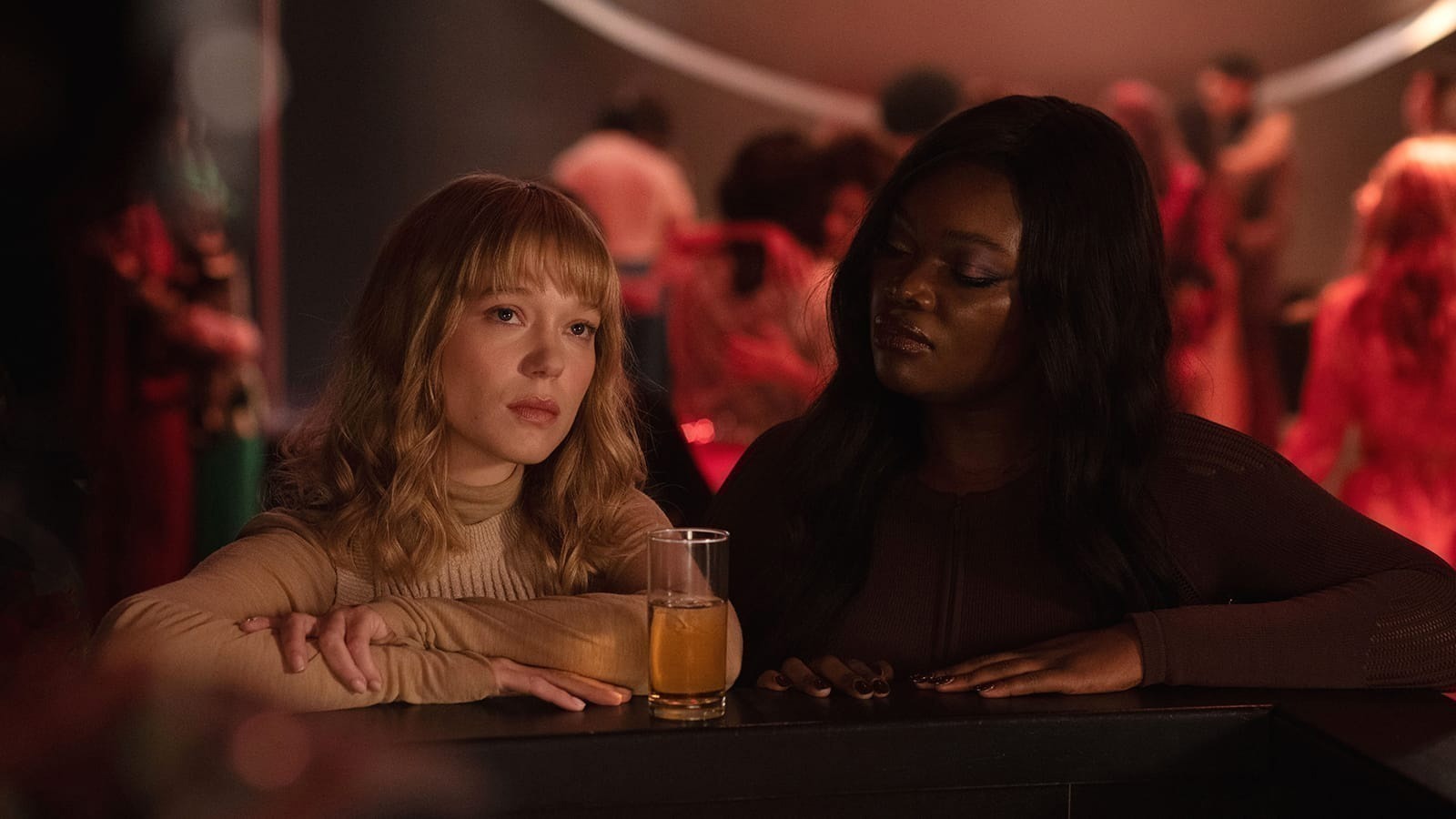
“He’s got a weathered, expressive sort of all-American look as well as the rolling yet emphatic vocal patterns of a man who, once he gets going, likes talking,” wrote Michael Sragow in a 2016 issue of Film Comment. “He knows how to imbue a populist complaint with ornery wit.” Sragow was profiling Tom Skerritt, who passed away yesterday at the age of ninety-three.
Skerritt broke through in Robert Altman’s M*A*S*H (1970), playing Captain Augustus Bedford “Duke” Forrest, a southern surgeon sharing a tent near the frontlines of the Korean War with Hawkeye (Donald Sutherland), Frank Burns (Robert Duvall), and Trapper John (Elliott Gould). He played the husband of Shirley MacLaine’s character in The Turning Point (1977) and the husband of Sally Field’s in Steel Magnolias (1989); both films were directed by Herbert Ross.
Skerritt was Dallas in Ridley Scott’s Alien (1979) and Viper in Tony Scott’s Top Gun (1986). In Robert Redford’s A River Runs Through It (1992), he played Reverend John Maclean, a Presbyterian minister and the father of two boys who grow up to become young men played by Craig Sheffer and Brad Pitt. And in 1993, Skerritt won an Emmy for his lead performance as Jimmy Brock, the sheriff of the small fictional town of Rome, Wisconsin, in David E. Kelly’s series Picket Fences.
A few days ago, Ava DuVernay broke off from a conversation about her new documentary, 14th, to remember Ann Hornaday, the film critic at the Washington Post from 2002 to 2025. Hornaday was only sixty-six when she passed away last Sunday. She “loved films and filmmakers so much,” said DuVernay, “that whatever stories she would tell, even if she didn’t like a movie, she did it with such humanity and dignity. There was a respect there.”
Hornaday was the author of Talking Pictures: How to Watch Movies, and just before her health took a turn for the worse, she turned in the manuscript for a book about Alan J. Pakula’s All the President’s Men (1976). Her publisher hopes to have it out at some point in 2028. The Hollywood Reporter’s Steven Zeitchik remembers Hornaday not just as a colleague but also as a friend. “Was she a mentor?” he asks. “A role model? Ann would scoff at such designations. She was just being herself. Yet it always, unassumingly, felt inspirational. And aspirational.”
At IndieWire, Anne Thompson quotes from a piece Hornaday wrote in 2022: “Of all artistic mediums, cinema occupies the trickiest space between fabrication and reality, exploiting the porous nature of both to become a third thing entirely: the distortion of the literal truth that becomes internalized as consensus history.”
This week’s highlights:
- Most would agree with Sean Burns when he writes for WBUR that, a dozen years on, Karina Longworth’s You Must Remember This is “still one of the best” film-related podcasts around. Longworth is currently on a fifteen-city tour, screening movies and talking about her latest season—the twenty-first!—The Bisexuals, tracing the flaming path of Libby Holman, who was, as Burns describes her, “a 1920s torch singer who first hit it big with a racially ambiguous stage persona and a voracious sexual appetite that didn’t so much transcend gender boundaries as disregard them entirely.” Friends and lovers included Montgomery Clift, Tallulah Bankhead, Josephine Baker, and Nicholas Ray. Burns asks Longworth about the films she’ll be discussing on Tuesday and Wednesday at the Brattle in Cambridge, Hans Richter’s Dreams That Money Can Buy (1947), Otto Preminger’s Laura (1944), and George Stevens’s A Place in the Sun (1951).
- Two pieces this week spotlight the LA Rebellion of the 1970s, ’80s, and early ’90s. For the Guardian, Adria R. Walker talks with Charles Burnett about his second feature, My Brother’s Wedding (1983), and with Maya Cade of Milestone Films, who says that “the goal of restoration is to use every tool in our arsenal to make the song that you may be familiar with, if you will, sing anew.” And in her latest Film Comment column, Melissa Anderson writes about Barbara O. Jones, who starred in Haile Gerima’s Bush Mama (1979) and Julie Dash’s Daughters of the Dust (1991). “No matter the part,” writes Anderson, “all of her performances are distinguished by her extraordinary talent for nonverbal expression—a mien expertly calibrated to communicate imperious invincibility or tattered self-worth, a gaze capable of both vaporizing all in its trajectory and revealing limitless sorrow.”
- Several Futures is a distributor founded and run by a single person, Graham L. Carter. For Verso Books, Benjamin Crais talks with Carter about several of the films he’s worked on, including Heiny Srour’s Leila and the Wolves (1984), Pradip Krishen and Arundhati Roy’s In Which Annie Gives It Those Ones (1989), and Axelle Ropert’s Petite Solange (2021). Ghassan Salhab is “a cinephile who had made a film interviewing Jean-Luc Godard during the making of Notre Musique (2004),” says Carter, and his Phantom Beirut (1998) “struck me as one of the few films to demonstrate that its director has actually internalized and processed Godard’s work, not just aped him. I told Ghassan this and he was like, ‘Yeah, in Arabic we have an expression that’s like, “We don’t just eat our food, we digest.”’”
- Inspired as a teen by Andy Warhol and mentored by Gregory Markopoulos, Warren Sonbert made films that would often feature friends such as Nathaniel Dorsky and Jerome Hiler. “At first glance,” writes Arindam Sen for Texte zur Kunst, “Sonbert’s kaleidoscopic filmmaking may seem like an act of crude assemblage at the service of decorative impressionism; upon closer inspection, however, it becomes apparent that his compositions are carefully crafted—guided by metaphors, montage of soft resonances, deliberate chromatic variances, and basic formal dualities.”
- Following a quick word from the editors, the new Senses of Cinema opens with a passage from Proust. From there, Milo Farragher-Hanks examines how two films from 2023, Andrew Haigh’s All of Us Strangers and Bertrand Bonello’s The Beast, “evoke and revise the cinematic conventions of the haunted city.” The new issue also features articles on “the so-called Brazilian Super 8 boom” of the 1970s and childhood in Chie Hayakawa’s Renoir (2025), Shinji Somai’s Moving (1993), and Edward Yang’s Yi Yi (2000); festival reports from Karlovy Vary, Locarno, and San Sebastián; interviews with Marta Mateus, Lisandro Alonso, and Sebastian Brameshuber; two book reviews; and one new addition to the Great Directors collection, Ko Nakahira, whose Crazed Fruit (1956) “announced, with a nihilistic bang,” writes Andy Lauer, “the arrival of a new age of Japanese cinema.”
Don’t miss out on your Daily briefing! Subscribe to the RSS feed.