October Books
Share
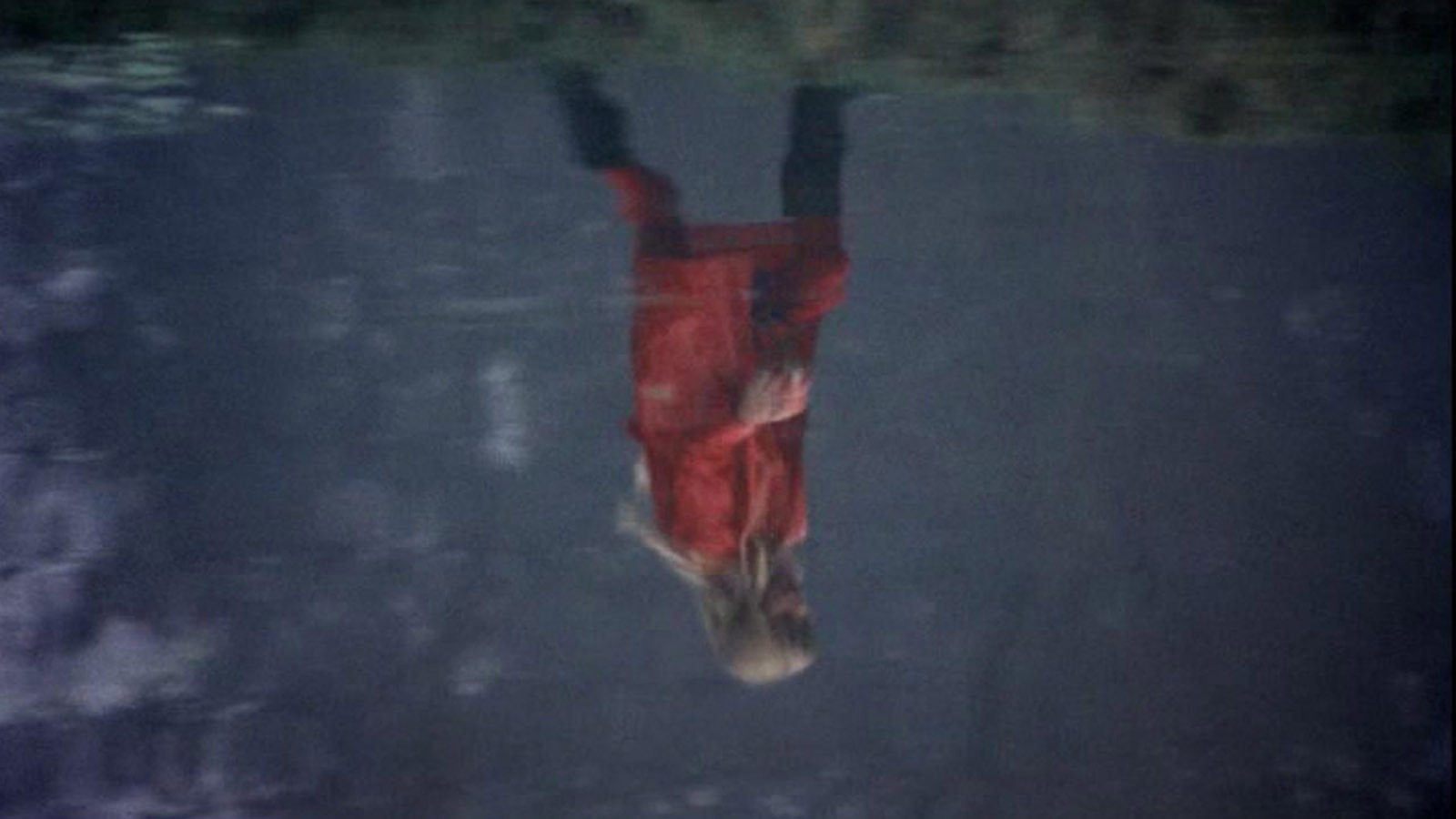
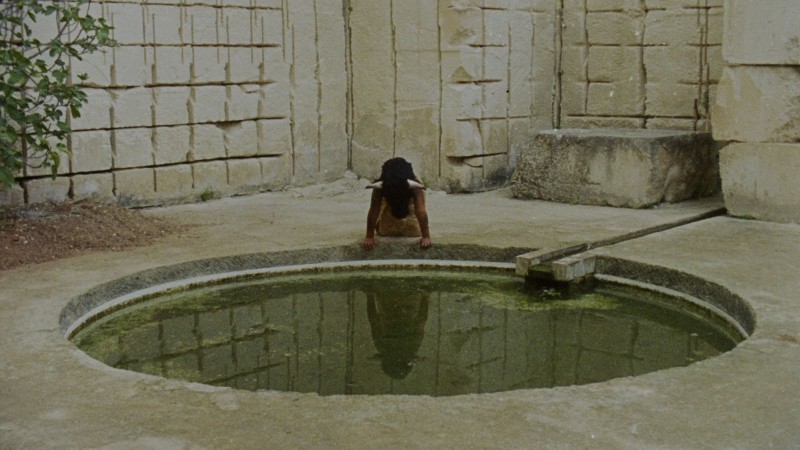
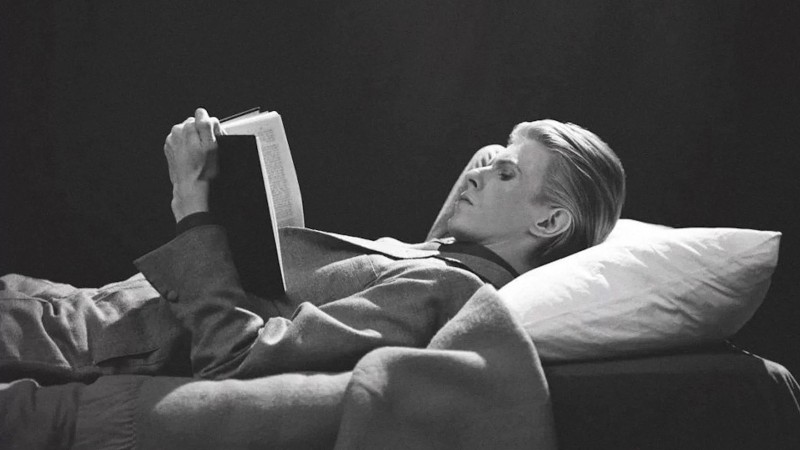
An October roundup on new and noteworthy titles calls for noting right up at the top that Justin John Doherty will be at the BFI Reuben Library in London next Wednesday to talk about his new book, Don’t Look Now and Then. It’s a collection of previously unpublished photographs from the set of Nicolas Roeg’s 1973 horror classic that also includes contributions from Mark Jenkin, Carol Morley, and Stephen Woolley. And the 1970 cult favorite that Roeg codirected with Donald Cammell is the subject of Performance: The Making of a Classic, which gathers rare photos shot on the set by future filmmaker and screenwriter Andrew Maclear—who was just seventeen at the time.
More New Arrivals
When Charlie Chaplin died in 1977, he’d been working on a project for nearly ten years that few had heard much of anything about until, around five years ago, the Cineteca di Bologna published—in a limited edition and in Italian—the screenplay for The Freak. The story centers on Sarapha, a young woman with wings who was to have been played by Chaplin’s daughter Victoria.
As Dalya Alberge notes in the Guardian, “the surviving working papers for The Freak are more extensive than for any of Chaplin’s other films.” Now the complete screenplay—along with storyboards, designs, production notes, photos, and historical context provided by Chaplin biographer David Robinson—appears for the first time in English as Charles Chaplin’s The Freak: The Story of an Unfinished Film from Sticking Place Books.
Other new SPB titles include Daniel Kremer’s Adventures in Auteurism: A Crusade for the Critically Neglected, a collection of dozens of case studies with a foreword by Joe Dante, and Julian Upton’s High Contrast Hollywood, a celebration of great movies shot in black and white long after the ascendance of color. And next month will bring I Loved Movies, But . . . , a collection of film historian Danny Peary’s conversations with Joseph McBride, the renowned author of books on Orson Welles, John Ford, Ernst Lubitsch, Frank Capra, and Steven Spielberg.
In Jesus Christ Kinski, award-winning author Benjamin Myers (Cuddy) imagines an unnamed hypochondriac writer becoming obsessed with footage of an infamous 1971 one-man performance by Klaus Kinski, the actor most famous for tormenting Werner Herzog on the sets of Aguirre, the Wrath of God (1972) and Fitzcarraldo (1982). “As lapel-grabbing rants give way to downbeat musings, the book exerts a strange charm, ushering us behind the scenes of its own making,” writes Anthony Cummins in the Guardian.
Reviewing Water Mirror Echo: Bruce Lee and the Making of Asian America for the New York Times, Jennifer Szalai finds that Jeff Chang, “whose books include Can’t Stop Won’t Stop, a history of hip-hop’s early years, has written a capacious and entertaining account of Lee’s life and times. Lee, who was thirty-two when he suddenly died, was hard to pin down, in all senses of the word. Chang has rummaged through the archives and interviewed Lee’s surviving family members and friends; he writes with the diligence of a scholar and the propulsive energy of a fan.”
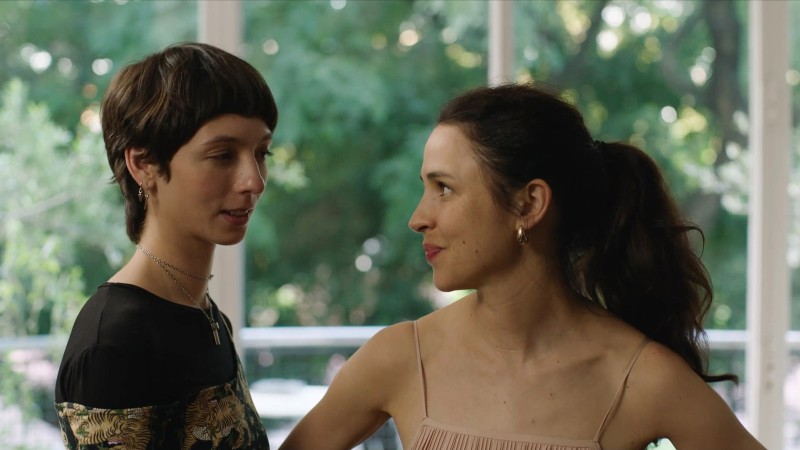
AnOther Magazine has posted a couple of pages from Tilda Swinton: Ongoing. The singular actor’s first book features contributions from Olivia Laing and Jim Jarmusch and conversations with Joanna Hogg and Apichatpong Weerasethakul.
Critical Studies
Writing for Critical Inquiry, Erin Graff Zivin suggests that with The Traces of Jacques Derrida’s Cinema, Timothy Holland takes on “an impossible task: excavating and imagining the largely oblique, subterranean relation between the discipline of film studies and the vast oeuvre of the deconstructive thinker . . . Despite a certain scarcity of writing on the topic, Holland argues, film haunts Derrida’s thought, and the films that feature Derrida likewise exhibit a spectral thread.”
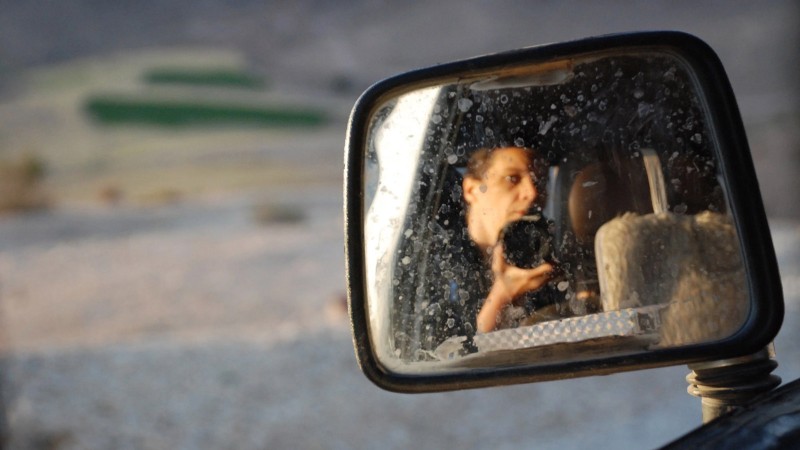
In an excerpt in Metrograph Journal from Ulrike Ottinger: Film, Art, and the Ethnographic Imagination, a collection edited by Angela McRobbie, Patricia White writes about the 2020 autobiographical film Paris Calligrammes, “a very deliberate telling, retrospective and redacted, which refuses extensive biographical access. Instead, Paris Calligrammes is a portrait of a city at a moment in time: a title card tells us it is an homage to Paris as Wunderkammer.”
Forthcoming
Next July will see the publication of Aaron Kerner’s new translation of Eric Rohmer’s only novel, first published in 1946. McNally Editions describes Élisabeth, set in the French countryside in 1939, as “a war novel awaiting a war.”
Best known for The Wes Anderson Collection, an ongoing series of marvelously illustrated deep dives, Matt Zoller Seitz has announced his next project. He describes Leading Man as “an epic story of the transformation of the movie industry and modern masculinity from the 1950s to the present, with [Jack] Nicholson as the main character.”
Sheila O’Malley will be taking questions about her new book, Frankenstein: Written and Directed by Guillermo del Toro, on November 4, just days before the movie hits Netflix, and again on November 14.
Updates
Nick Newman (Film Stage), Elizabeth Purchell (Screen Slate), and R. Emmet Sweeney all talk with Will Sloan about his new book, Ed Wood: Made in Hollywood USA, and writing for Metrograph Journal, Sloan suggests that Wood’s “vast literary output encompasses some of his most revealing work.”
“What interests me about Wood,” writes Oliver Evans for the Los Angeles Review of Books, “is that he was already trying to make a kind of ‘bad’ movie. That he failed even in that limited ambition, and failed so extremely, gives his work its moving air of illegitimacy and misguided passion. Sloan is extremely alive to this quality in Wood.”
In the London Review of Books, John Lahr calls Walter Murch’s Suddenly Something Clicked: The Languages of Film Editing and Sound Design “a piñata of ideas and anecdotes about his life and work. It sheds light on his forensic craft, his distinctive way of thinking about editing and the making of many of the major films he’s worked on, including Apocalypse Now (1979), the Godfather trilogy (1972–90), The Conversation (1974), American Graffiti (1973) and the 1998 recut of Orson Welles’s Touch of Evil.”
In his first novel, What’s with Baum?, Woody Allen “slips an amusingly corrosive one-liner or two into just about every paragraph,” writes Sean Burns for North Shore Movies. “The man is still a joke machine, and he’s at his funniest when he lets his contempt hang out like it does here, taking potshots at both his loser protagonist and the Manhattan culture vultures who might be right to consider him beneath them.”
Endnote
On the latest episode of Guide for the Film Fanatic, genre specialist Alexandra Heller-Nicholas discusses Abel Ferrara’s Ms .45 (1981) with hosts Jason Bailey and Mike Hull. Ferrara’s memoir Scene is out this week, and it’s one of several books recommended by Christopher Schobert in his latest roundup for the Film Stage.
Don’t miss out on your Daily briefing! Subscribe to the RSS feed.