Version restaurée 2025
Share
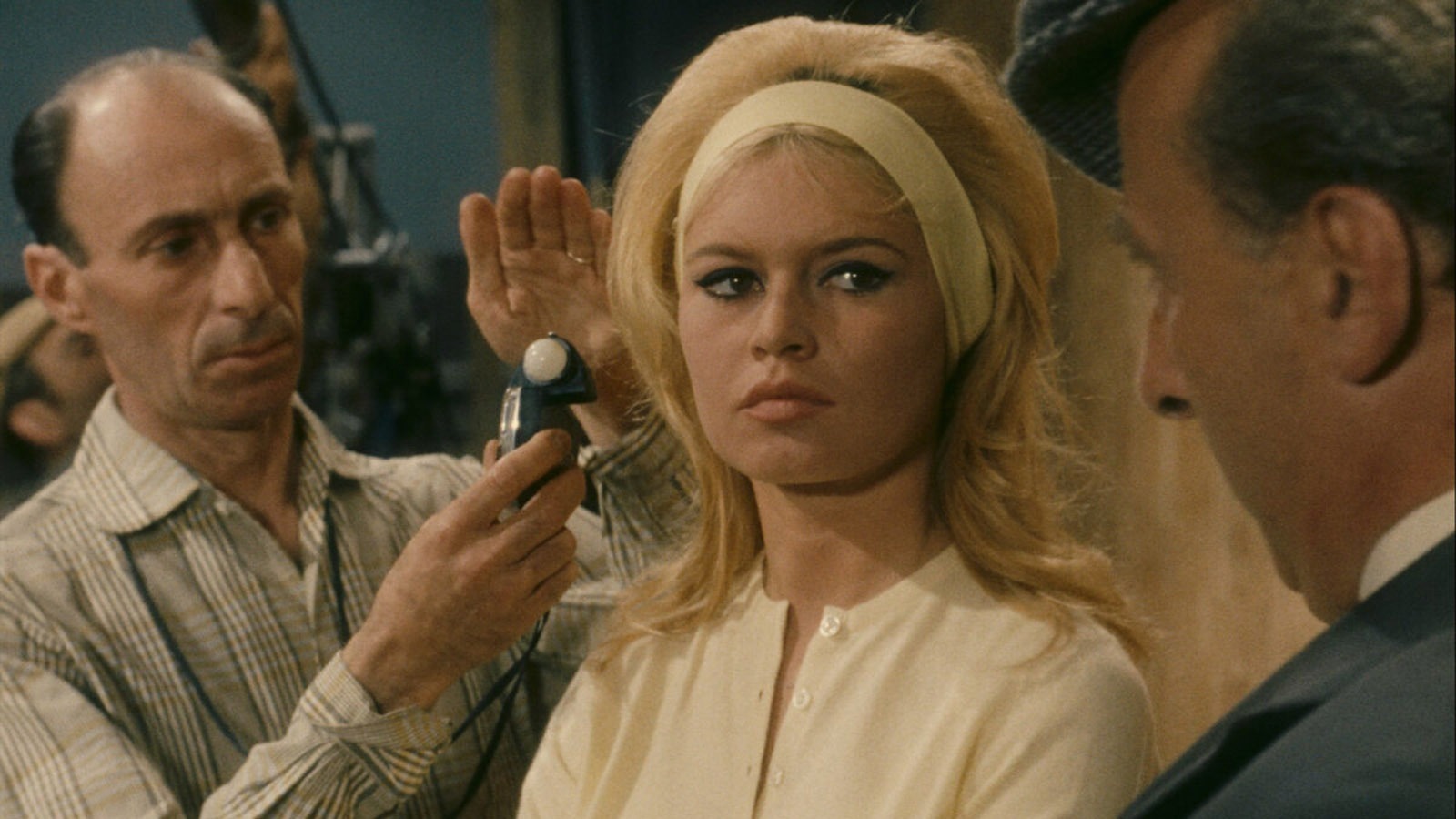
The second edition of L’Alliance New York’s Version restaurée has opened with Louis Malle’s A Very Private Affair (1962), and the series will showcase a total of seven recent restorations through October 7. When A Very Private Affair screened at Il Cinema Ritrovato a couple of years ago, the festival quoted from Marcel Martin’s appreciation in a 1962 issue of Cinéma: “Vie privée is first and foremost a dazzling poem of sumptuous, shimmering images. Thanks to Henri Decaë’s talent, it is one of the most beautiful color films ever made.”
Brigitte Bardot stars as Jill, the free-spirited daughter of a well-to-do ballerina. Her mom has been seeing Fabio (Marcello Mastroianni), a respected publisher, and bored with her own lover (Dirk Sanders), Jill nevertheless heads off with him to Paris. She lands a job as a model, and eventually, her first movie role.
In no time, Jill is an international star hounded by reporters and photographers. For L’Alliance programmer Jake Perlin, “Malle’s fourth film—following his smashing debut, Elevator to the Gallows, the taboo-breaking controversy of The Lovers and the beloved Zazie dans le métro—is the least acknowledged, but under reconsideration, his greatest French language film. With A Very Private Affair, Malle begins to deconstruct the Bardot myth the year before Godard would with Contempt.”
“One of my favorite and one of the seemingly most heartfelt of Godard’s movies is his late Notre musique (2004), which is perhaps the fullest flowering of his dialectical mentality,” wrote Richard Hell for Screen Slate not long after Godard died in 2022. Screening on September 30, Our Music “has three sections: ten minutes of hell at the beginning, ten of heaven at the end, and fifty-nine minutes of complex, emotional, beautiful, horrifying, and intelligent purgatory in between. That’s the structure Godard created, with a nod to Dante, to try to examine the situation in the Middle East, or the possibility of holding opposing stances at the same time. Set in the ruins of Sarajevo. Massacres upon massacres, in wrenching confusion and searching investigation, approaching reality.”
The Big Night, the winner of the Golden Leopard in Locarno in 1976, is a portrait of a cluster of Leninists in Lausanne attempting to live up to the ideals of May ’68. When director Francis Reusser passed away in 2020, Godard told fellow Swiss filmmaker Lionel Baier that Reusser “was undoubtedly one of the critical witnesses of the late twentieth century and early twenty-first in Switzerland, never once forgetting that he loved complaining, filming, and living.”
This Thursday, Claire Devers will take part in a Q&A following a screening of Black & White, which won the Camera d’Or when it premiered in Cannes in 1986. “I’m still baffled at how a filmmaker as assured and expressive as Devers could have vanished from our collective consciousness,” wrote Dan Sallitt in 2007. Black & White “starts in digression and slow accumulation, eventually focuses on a sexual obsession that might give pause even to the most libertarian viewers, and follows the concept by logical steps to an unthinkable conclusion.”
Next week begins with Jean-Louis Bertuccelli’s Ramparts of Clay (1969), a portrait of life in a Tunisian village that focuses both on a nineteen-year-old woman and the conflict between striking workers and the military. “Capital and violence encounter the resistance of the forces of production,” wrote a Berlinale programmer when Ramparts screened in the Forum program in 2020. “Bertuccelli, who had to shoot his film in Algeria because of reservations on the part of the Tunisian government, stays with the perspective of the exploited without glossing over the violence within their community.”
When Head of the Pack (1974), Joël Santoni’s portrait of cyclist Eddy Merckx, screened at the Bristol Bike Film Festival ten years ago, the programmers called it an “all-time classic of the cycling film genre” and “an inspirational study in determination and a cinematic poem to the greatest rider of all time.” The L’Alliance series will wrap with Julien Duvivier’s Boulevard (1960), starring a young Jean-Pierre Léaud, who had been introduced to the world in François Truffaut’s The 400 Blows just one year earlier. Léaud’s Jojo is another runaway, living alone in the Pigalle district of Paris and bouncing from one odd job to the next. “A curious mixture of on-location street scenes and stage sets,” writes Jake Perlin, “this meeting of old legend and nascent New Wave icon is a fascinating, rough-edged story of a young man lost.”
Don’t miss out on your Daily briefing! Subscribe to the RSS feed.