Prismatic Ground, Year Five
Share
Copresented with Screen Slate and now in its fifth year, Prismatic Ground will screen five “waves” of experimental nonfiction and avant-garde films in New York from Wednesday through Sunday. The first wave, Your Touch Makes Others Invisible, takes its title from the festival’s opening night film. Director Rajee Samarasinghe will be at Anthology Film Archives to discuss his investigation into the disappearance of more than a hundred thousand people, mostly Tamils, during twenty-six years of civil war in Sri Lanka. Your Touch will be preceded by Jean-Pierre Olivier de Sardan’s recently rediscovered “agitprop” short Palestine Will Win (1969).
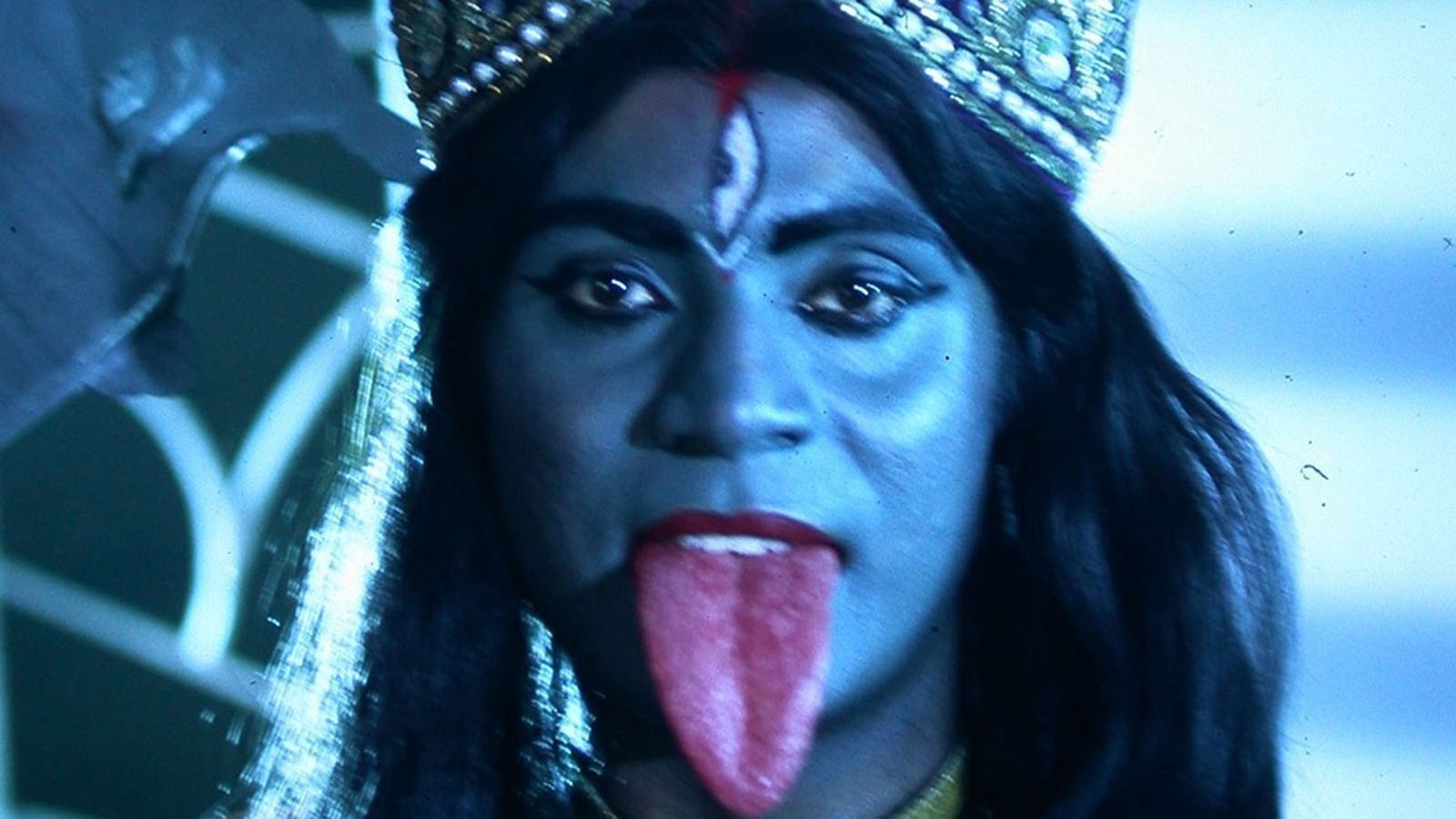
The fifth annual Ground Glass Award “for outstanding contribution in the field of experimental media” will be presented to Ashish Avikunthak, who will not only discuss his own work but also take part in a four-film tribute to the late Kumar Shahani. As Srikanth Srinivasan explains in Film Comment, while both filmmakers have been associated with India’s Parallel Cinema, “their high-modernist practice stands far removed from the socially minded but formally conservative works” the movement is known for.
“Above all,” writes Srinivasan, “Shahani’s and Avikunthak’s films find common ground in their rejection of the psychological realism that dominates classical narrative cinema. A Marxist by persuasion, Shahani framed his rejection in pointedly Brechtian terms: ‘Realism of detail,’ he wrote, ‘can be a mask for eluding the real problems of society, its class relations.’ Denying viewers cathartic immersion in a self-contained fictional world, Shahani instead invited them to arrive at a rational analysis of the relations depicted in his films. For Avikunthak, this rejection is a matter of religious ritual. Emptied of individual psychology, his human figures become metaphysical vehicles embedded in predetermined textual and gestural transactions.”
Srinivasan’s 2020 book Modernism by Other Means is a study of the work of Amit Dutta, whose films, as Soham Gadre wrote for the Los Angeles Review of Books, “are enveloped in specific Indian experiences and histories: painting, fables, myths, and cultural traditions both ancient and contemporary.” Dutta’s Rhythm of a Flower (2024), a portrait of Indian classical musician Kumar Gandharva, screens on Thursday at the Brooklyn Academy of Music after Yehui Zhao’s new feature, May the Soil Be Everywhere, a reflection on her scattered family’s connections to a remote village in China.
Friday’s program at Light Industry opens with Thunderland, as a matter of fact, a performance combining Frédéric Boisclair’s soundscapes and Charles-André Coderre’s live 16 mm projections. Later that evening, Adam Piron will be among the five filmmakers on hand to discuss their work. Piron says his thirteen-minute The Early Sun, Red as a Hunter’s Moon is an “exercise in adjusting the moving image to an interpretation of time as it is perceived within the Kiowa philosophy: a circular dialogue between the mythic, the historical, and personal reflection.”
On Saturday, it’s back to Anthology for screenings of new work by Burak Çevik, Isiah Medina and Philip Hoffman, Kevin Jerome Everson, and several other filmmakers as well as a program of cinema and poetry presented by filmmaker Courtney Stephens (Invention, John Lilly and the Earth Coincidence Control Office) and poet Shiv Kotecha. Following more screenings at Anthology on Sunday, this year’s edition will wrap in the evening at Metrograph with the New York premiere of Angelo Madsen’s A Body to Live In, “a doc as unconventional in form as its leading man,” as Lauren Wissot wrote for Filmmaker earlier this year. “Comprised of various formats (16 mm, VHS, archival, 2K) overlaid with underground voices (Annie Sprinkle and Ron Athey are probably the best known), the film takes us on a winding journey through the life and philosophy of photographer-performance artist-ritualist Fakir Musafar, one of the founders of the modern primitive movement.”
Madsen was “one of the first people I reached out to when I started the festival,” says Prismatic Ground founder and director Inney Prakash, “and it’s an honor to close out our fifth year with his new feature film—a bracing portrait of an extraordinary and unapologetic life lived proudly on the fringes.”
Don’t miss out on your Daily briefing! Subscribe to the RSS feed.