Jeremy Thomas: An Astonishing Career
Share
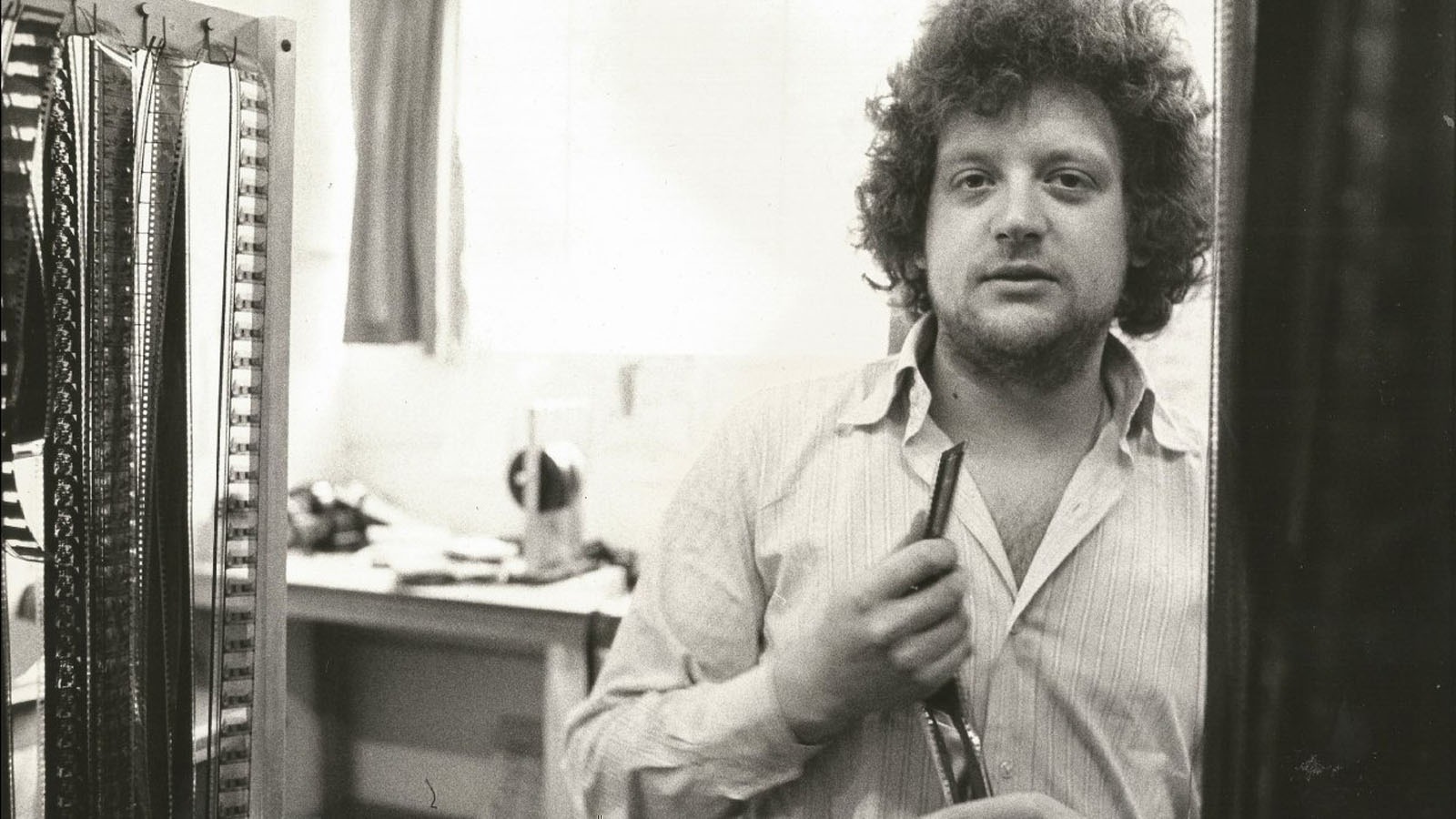
“One of the greatest film producers, Jeremy Thomas, died last night,” posted writer and filmmaker Mark Cousins on Saturday. “I made it back from America to be with him at the end. We drank red wine and cried. Truly loved him.”
Cousins is probably best known for his epic 2011 documentary The Story of Film: An Odyssey, but he’s also made “more, shall we say, idiosyncratic works,” as Matt Zoller Seitz puts it at RogerEbert.com. The Eyes of Orson Welles (2018), for example, is framed as what Glenn Kenny has called an “unabashedly, unapologetically personal” letter to the director.
“The job of film producer has always been notoriously hard to define,” wrote Mark Olsen at the top of his review in the Los Angeles Times, “because it can be so many different things: creative coach, finance manager, general facilitator, problem solver.” So, which is it? The Storms of Jeremy Thomas “basically answers ‘all of the above.’ At one point in the film, Thomas himself describes producing as ‘putting together people, ideas, and money.’”
A few years ago, Glenn Kenny hosted a Q&A with Thomas following a screening of Cousins’s film and hung out with him a bit outside of the theater bar while the legendary producer fired up a joint (and for the record, Kenny abstained). On Saturday, Kenny reflected on Thomas’s legacy in a piece with a killer title, “Come On, Don’t You Want to See a David Cronenberg Movie of Naked Lunch?”
“Thomas had filmmaking in his blood,” writes Kenny. “His dad was Peter Thomas, who directed Bob Hope and Katharine Hepburn in The Iron Petticoat on the one hand, and the penis-transplant-movie-with-a-Kinks-soundtrack Percy on the other. His uncle Gerald Thomas directed a slew of Carry On comedies. He spoke of his relatives with pride, and gratitude for what they had taught him; he wasn’t the least bit abashed by their work. He knew, as the best film workers do, that the love and the heartbreak and the headaches and the just damned hard work of picture-making is largely the same no matter what genre or register you’re working in. The last thing to be in this business is a snob.”
“A brilliant and inexhaustibly creative man,” writes the Guardian’s Peter Bradshaw, “self-effacingly charming and quietly spoken in a world of loudmouths and show-offs, and hypervigilant for new talent,” Thomas “was more like a cross between an entrepreneur, an enigmatically clever and kindly Cambridge don, and the movie world’s favorite cool uncle, or maybe cool great-uncle.”
Raised in London, Thomas began working right out of school as an assistant editor on such films as Ken Loach’s Family Life (1971) and Perry Henzell’s The Harder They Come (1972). The first film he produced was Philippe Mora’s Mad Dog Morgan (1976), starring Dennis Hopper as a real-life outlaw in 1850s Australia.
When he returned to England, Thomas teamed up for the first time with Jerzy Skolimowski on The Shout (1978), and the pair would reteam—with Thomas serving as either producer or executive producer—on Essential Killing (2010), 11 Minutes (2015), and EO (2022). In 1980, Thomas made the first of three features with Nicolas Roeg, Bad Timing, followed by Eureka (1983) and Insignificance (1985).
After producing Nagisa Oshima’s Merry Christmas Mr. Lawrence (1982), Thomas turned to Stephen Frears’s The Hit (1984), starring Terence Stamp, John Hurt, and Tim Roth as British gangsters in Spain. “Frears turns this fish-out-of-water phenomenon of nouveau riche cockney gangsters seeking Shangri-La in Andalusia into a moral fable fraught with fatalism, an idea that clearly fascinated Jeremy Thomas,” writes Graham Fuller. “Sixteen years later, he and director Jonathan Glazer made Sexy Beast, in which the good life enjoyed by retired safecracker Gal (Ray Winstone) on the Costa del Sol is rocked by the psychotic Logan (Ben Kingsley), sent by his boss to bring Gal to London for a heist.”
Then came the towering milestone of an astonishing career, The Last Emperor (1987), independently produced, directed by Bernardo Bertolucci, and the first—and so far, only—Western production that the Chinese government allowed inside the Forbidden City. “This was an epic of foreign coproduction, filled with the hope that China was ready to be a part of the whole world again,” wrote David Thomson in 2009. “And, yes, this is the film that won nine Oscars, including Best Picture, Best Director, and Best Adapted Screenplay,” but “don’t be misled by all this pomp and glory. The Last Emperor is better than that—especially if you realize early on that it’s not just an epic but also a small film, one in which, somehow or other, the scope of David Lean has been enriched with the vision of Ozu.”
Further Thomas and Bertolucci projects include The Sheltering Sky (1990), Little Buddha (1993), Stealing Beauty (1996), and The Dreamers (2003). In 2014, Sight and Sound’s Nick James sat down with Thomas for a long and relaxed chat. One anecdote segued into the next, and when it came to Bertolucci, Thomas noted that “there was a gaiety around his shoots. Lunch was a very important part of the filmmaking experience. It was a great lesson in how to handle talent.”
“A Jeremy Thomas production should always be pleasurable,” suggested James. “There’s no point otherwise,” said Thomas. “This is why I have trouble with minimalist cinema. For me a film should have aspirations to be grand. What’s going on is a privileged collaborative creative moment between a group of people. Travelling and arriving are very different. The travelling part is always magnificent in the memory, the arriving just okay.”
Luca Guadagnino interviewed Thomas for his seven-hour-plus documentary on Bertolucci, Joie de vivre, which has just premiered in Venice. “Jeremy Thomas’s death leaves a gigantic void,” Guadagnino tells Variety. “The space he was fulfilling was a space of pure cinema. Someone who knew how to collaborate with filmmakers and make them better, and how to be himself—a great filmmaker.”
Thomas did, in fact, direct one feature, All the Little Animals (1998), starring Christian Bale as a mentally impaired young man who takes shelter in the home of a recluse played by John Hurt. Roger Ebert noted that the film “has a fearsome single-mindedness that suggests deep Jungian origins.”
Thomas “loved directors,” Terry Gilliam tells Variety. Gilliam, who worked with Thomas on Tideland (2005) and The Man Who Killed Don Quixote (2018), adds that the producer was “fearless in getting some very unlikely films financed and released, often to worldwide success . . . Most of all, he was a joy to work with. You always felt protected and encouraged, rare qualities to experience, especially when lack of time and money are swirling around you, raging at your head. Filmmaking is not cheap, and the pressures are intense, but Jeremy always remained calm and supportive. He was a rare and very unique gem in the world of producers.”
Further collaborations hammer home Gilliam’s comments: Karel Reisz (Everybody Wins, 1990), Cronenberg (Naked Lunch, 1991; Crash, 1996; A Dangerous Method, 2011), Takeshi Kitano (Brother, 2000), Richard Linklater (Fast Food Nation, 2006), Jim Jarmusch (Only Lovers Left Alive, 2013), Ben Wheatley (High-Rise, 2015), Matteo Garrone (Tale of Tales, 2015), and Takashi Miike (Hara-Kiri: Death of a Samurai, 2011; Blade of the Immortal, 2017; First Love, 2019). And Miike’s Bad Lieutenant: Tokyo has just premiered in Toronto.
“We promised to celebrate the world premiere here in Toronto and have a good drink together,” Miike tells Variety. “This sudden news came out of nowhere, leaving me completely in shock and deeply saddened. Jeremy gave me my wings—he was a great mentor and an irreplaceable friend. Rest in peace for now. Until we meet again.”
Don’t miss out on your Daily briefing! Subscribe to the RSS feed.