We Will Always Love Dolly Parton
Share
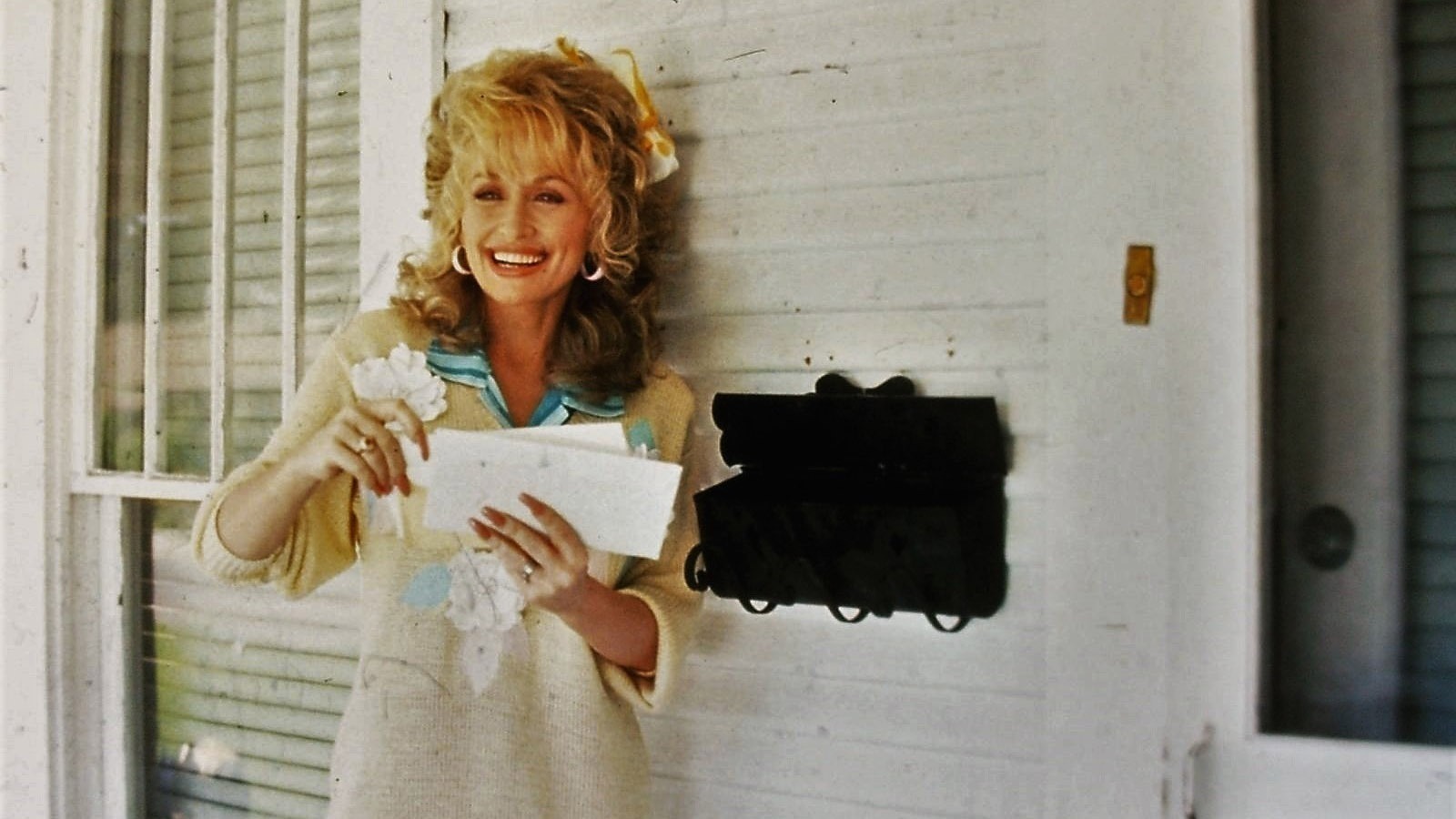
“Instant sainthood,” declared Jack White when the news of Dolly Parton’s passing at the age of eighty broke on Tuesday. The White Stripes’ 2004 cover of “Jolene”—the second of many of Parton’s solo number-one singles on the country charts and first released in 1974—is one of the fiercest of the nearly three hundred of them, including covers by Olivia Newton-John, Beyoncé, and Parton’s goddaughter, Miley Cyrus.
For decades, legend held that Parton had written “Jolene” on the same day that she wrote “I Will Always Love You,” which Whitney Houston turned into the best-selling single of all time by a female solo artist when she recorded it for the 1992 film The Bodyguard. “Well, I don’t really know if they were written in the same night,” said Parton a few years ago, but the two megahits “were certainly written within a very short span of time.”
It hardly matters. “We will always love her, and there will never be another like her,” writes Rebecca Solnit. “Down home and brilliant, feminist and feminine, glitter-bedecked and generous, country and cosmopolitan, funny and soulful.” As Chris Willman puts it in Variety, “virtually every American on any side of any musical or cultural equation would unabashedly own up to Dolly love.”
Born the fourth of twelve children in a one-room cabin in Tennessee, Parton grew up listening to her mother singing Irish and Welsh ballads, and she wrote her own first song, “Little Tiny Tasseltop,” when she was just five. Three years later, she was writing and performing with her uncle Bill Owens, who taught her the guitar and got her on a local radio show when she was ten. At thirteen, she was being introduced at the Grand Ole Opry by Johnny Cash.
Porter Wagoner, a country star with a hit television show, brought her aboard around the time that her first album, Hello, I’m Dolly, was released in 1967. She eventually grew out of the gig, going on to record twenty-five number-one Billboard country singles, many of them crossover hits.
“All the tropes we now associate with country music—the idea that the genre boils down to ‘three chords and the truth,’ as the songwriter Harlan Howard once put it—were beginning to crystallize,” writes the New Yorker’s Amanda Petrusich. “Parton was such a crucial engineer. Her writing contained enormous warmth and tenderness; unlike some of her erstwhile male colleagues, she possessed an almost uncanny capacity for empathy. Anyone can tell a story, but it takes a pure heart to make it mean something.”
In April, when the New York Times included Parton in its list of the thirty greatest living American songwriters, Lindsay Zoladz wrote that “there is always an earnest purity about Parton’s work and worldview. The sorrowful tonalities of Appalachia are alive in some of her most autobiographical music: The smell of honeysuckle wafts through the vivid ‘My Tennessee Mountain Home’; her classic country ballad ‘Coat of Many Colors’ alchemizes a remembered moment of childhood shame into a sparkling badge of honor. Artifice and authenticity, Parton reminds us in her own down-home, high-femme way, are not mutually exclusive.”
As for the artifice, Parton was just as famous and beloved for that too. The rhinestones, the mile-high hair, the whole “country girl’s idea of glam,” as she put it in her song “Backwoods Barbie.” Parton was “simultaneously a naughty, playful southern gal from the hollows of Tennessee and a deep, soulful thinker who could see through people right down to their true selves,” wrote Jane Fonda on Tuesday.
Fonda was instrumental in recruiting Parton to the big screen. Fonda’s production company was developing a story inspired by 9to5, a Harvard-based association of women office workers that has since gone national. Early drafts came off too preachy, so Fonda decided to team up with Lily Tomlin to make 9 to 5 (1980) a comedy—and to broaden the potential audience by casting Dolly Parton in her first movie role.
“As Doralee Rhodes, the happily married secretary of Dabney Coleman’s lecherous corporate vice president, kept busy dodging his unwelcome advances, Parton was a natural,” writes the Hollywood Reporter’s David Rooney. “Her luminosity, effervescence, folksy delivery, and innate comic timing infused the film with live-wire energy, whether she was fantasizing about hog-tying and spit-roasting the boss or bringing that fantasy to life, like a seasoned rodeo queen.” And the “eternally catchy country pop theme song Parton wrote and recorded for the film left its own mark, reaching number one on Billboard’s Country, Hot 100, and Adult Contemporary charts.”
Parton struck Roger Ebert as “a natural-born movie star” with “a quality of presence, a personal life force that seems to take over the screen.” Years later, in his 2011 memoir, Life Itself, Ebert recalled “an uncanny experience” he’d had while interviewing Parton in the run-up to the premiere of 9 to 5, and he told Gene Siskel about it.
As Ebert and Parton spoke, “I was filled with a strange ethereal grace. This was not spiritual, nor was it sexual. It was healing and comforting. Gene listened and said, ‘Roger, I felt the exact same thing during my interview with her.’ We looked at each other. What did this mean? Neither one of us ever felt that feeling again. From time to time, we would refer to it in wonder.”
As one of the creators of the podcast Dolly Parton’s America,Jad Abumrad interviewed Parton “a dozen times,” and in the New York Times, he recalls that he had a somewhat similar experience. “To sit with her was to watch (and then inevitably join) a person so completely inhabiting an earlier time that suddenly the air around you changed, the oxygen molecules shifted polarity,” writes Abumrad. “You saw the June bugs she was seeing and smelled the honeysuckle.”
But as Shima Oliaee, the producer of Dolly Parton’s America, points out, Parton’s life was not wall-to-wall ethereal grace and honeysuckle. “In the mid-’80s,” writes Oliaee in Time, “she opened up about her depression and suicidal thoughts following the end of an ‘affair of the heart,’ family issues, and a negative experience filming The Best Little Whorehouse in Texas.” In that 1982 musical comedy, Parton costarred with Burt Reynolds, and the overall critical consensus was that director Colin Higgins had fared far better with 9 to 5.
“It’s doubtful that anyone would try to make a case for the 1984 Sylvester Stallone vehicle Rhinestone,” writes David Rooney. “I wonder if there’s even a living soul who managed to get through it. But Parton could sew a silk purse out of a sow’s ear, introducing two top ten country hits in the movie.”
As Truvy Jones, who runs a beauty salon out of her home in Herbert Ross’s comedic drama Steel Magnolias (1989), Parton more than held her own in a cast that included Sally Field, Julia Roberts, Shirley MacLaine, Olympia Dukakis, Daryl Hannah, and as Truvy’s husband, Sam Shepard. “In a story filled with quirky locals and big southern personalities, Truvy is its beating heart,” finds Lacy Baugher Milas at the A.V. Club. Revisiting the film in 2012 for Slant, Eric Henderson wrote that “the camaraderie of its six principal actresses more often than not keeps the entirely-too-neat mess afloat.”
For Marya E. Gates at RogerEbert.com, the standout in the filmography is Barnet Kellman’s Straight Talk (1992), a “Chicago-set workplace romantic comedy in which Parton plays a small-town dance instructor from Arkansas who leaves her stick-in-the-mud boyfriend, moves to Chicago with dreams in her eyes, and accidentally becomes a beloved national radio call-in therapist. The film is preposterous, but as a kid who loved preposterous rom-coms, and especially loved watching them with my mother, it was one we returned to time and again.”
Like “Mae West or Barbra Streisand or Liza Minnelli or Bette Midler or Cher,” suggests the NYT’s Wesley Morris, if “a movie had them, it had no choice but to flaunt them, these vocalists who never ceased to amuse themselves, oddballs who nonetheless found themselves sexy, stars who could make a kind of sex essential to the comedy. Stars who couldn’t disguise what they felt because, as very different singers, feeling is their currency.” But Parton’s two Oscar nominations were for her music rather than for her acting. Last year, the Academy gave her its Jean Hersholt Humanitarian Award.
Imagination Library, her literacy program, has donated more than 150 million books to children, and in the New Republic, Edith Olmstead notes that Parton “urged her fellow Christians to accept and embrace members of the LGBTQ community and defended the rights of transgender people—making her a target for certain figures on the right. She was an outspoken supporter of the Black Lives Matter movement, and she donated the royalties from Whitney Houston’s cover of ‘I Will Always Love You’ to the Black community in Nashville. In 2020, during one of this country’s darkest moments, Parton donated one million dollars to coronavirus research at Vanderbilt University, which helped fund Moderna’s Covid-19 vaccine.”
“I try not to get into the politics of everything,” Parton told Mesfin Fekadu in the Hollywood Reporter in 2023. “I try to get into the human element of it. I have some of everybody in my own immediate family and in my circle of employees. I’ve got transgender people. I’ve got gays. I’ve got lesbians. I’ve got drunks. I’ve got drug addicts—all within my own family. I know and love them all, and I do not judge . . . If there’s something to be judged, that is God’s business. But we are all God’s children and how we are is who we are.”
Don’t miss out on your Daily briefing! Subscribe to the RSS feed.