BAM’s Arturo Ripstein Retrospective
Share
“I wanted to be Fellini or Kurosawa or Fritz Lang, but it didn't happen,” Arturo Ripstein told Carlos Aguilar a couple of years ago in the Los Angeles Times. “Luck chose for me to be Arturo Ripstein and I have resigned myself to being him all these years.” Underappreciated in the U.S. but one of the most lauded filmmakers in Mexico, Ripstein will turn eighty-two in December. Starting Friday, the Brooklyn Academy of Music will present a weeklong retrospective featuring several new restorations.
Our forthcoming release of the newly restored director’s cut of Deep Crimson (1996) includes an essay by Haden Guest, who programmed a Ripstein series at the Harvard Film Archive in 2013. “Fearless and subversive,” wrote Guest, “Ripstein’s films artfully transform popular genres—the western, the ‘family film,’ and above all, melodrama—into devastating attacks against the inveterate prejudice and myopia deeply-rooted in Mexican culture and history . . . Far from nihilistic, the unyielding pessimism often credited to Ripstein’s cinema is instead a brand of bracing humanism fascinated by the secret nightmares and dark fantasies of the indelible anti-heroes whose weakness, hubris, and folly Ripstein steadfastly refuses to sentimentalize.”
Though he was the son of renowned producer Alfredo Ripstein, young Arturo never seriously considered becoming a filmmaker until he met Luis Buñuel on the set of Nazarin (1959). Buñuel became something of a spiritual mentor, but it was Ripstein’s father who helped finance the aspiring director’s first feature, Time to Die (1966).
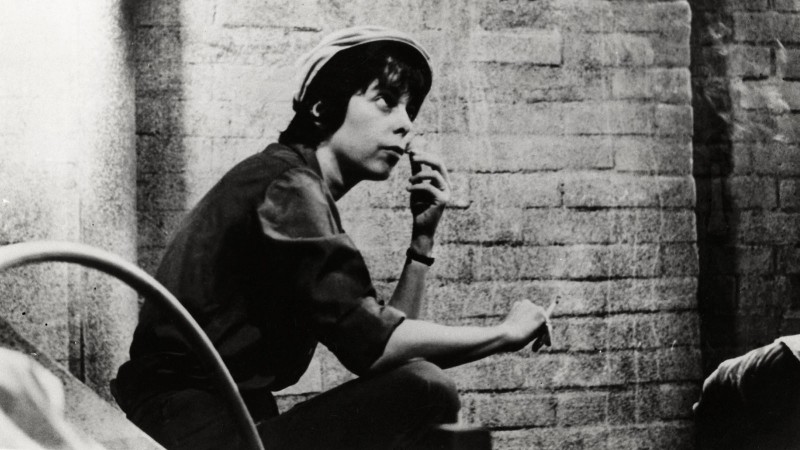
Nodding to John Ford’s The Searchers (1956) but closer in tone to Monte Hellman’s revisionist westerns The Shooting and Ride the Whirlwind (both of them also from 1966), Time to Die—written by Carlos Fuentes and Gabriel García Márquez—stars Jorge Martínez de Hoyos as a gunman returning to his hometown after serving an eighteen-year sentence for killing a man. And that man’s sons are set on revenge. Reviewing this “clear-eyed great scraped of all sentiment” in the Village Voice, Alan Scherstuhl noted that Ripstein, “only twenty-one at the time of production, and his soon-to-be-internationally-renowned screenwriters suggest skepticism about honor and violence, about the embrace of family itself, without ever assigning a speech.”
“I once told Arturo that this was his best movie, which I don’t think he was happy about,” Alfonso Cuarón mentioned to Carlos Aguilar. “But I still believe it’s a masterpiece about an inevitable tragedy.” BAM’s program also features The Castle of Purity (1972), a story confined almost entirely to one house and an inspiration for Yorgos Lanthimos’s Dogtooth (2009); The Holy Inquisition (1974), depicting the persecution of Jews in sixteenth-century Mexico; and A Place Without Limits (1977), in which, as Clayton Dillard has written for Slant, “Ripstein’s endemic commentary on homophobia and male fear of emasculation takes an understated but pointed form.”
In 1985, Ripstein met and eventually married Paz Alicia Garciadiego, a student of philosophy and literature who became his writing partner over the next four decades. Their first collaboration was The Realm of Fortune (1986), based on a story by Juan Rulfo. “The scripts Paz writes are very descriptive,” Ripstein told Aguilar. “Completely different from the austerity that screenwriting teachers preach. Here, hyperbole and excess reign. Her scripts are novels with dialogue. They can be read not only as a work plan but as literature.” And Alejandro González Iñárritu observed that “the universe of Ripstein and Garciadiego fearlessly delves into the swamps and darkness of the human soul.”
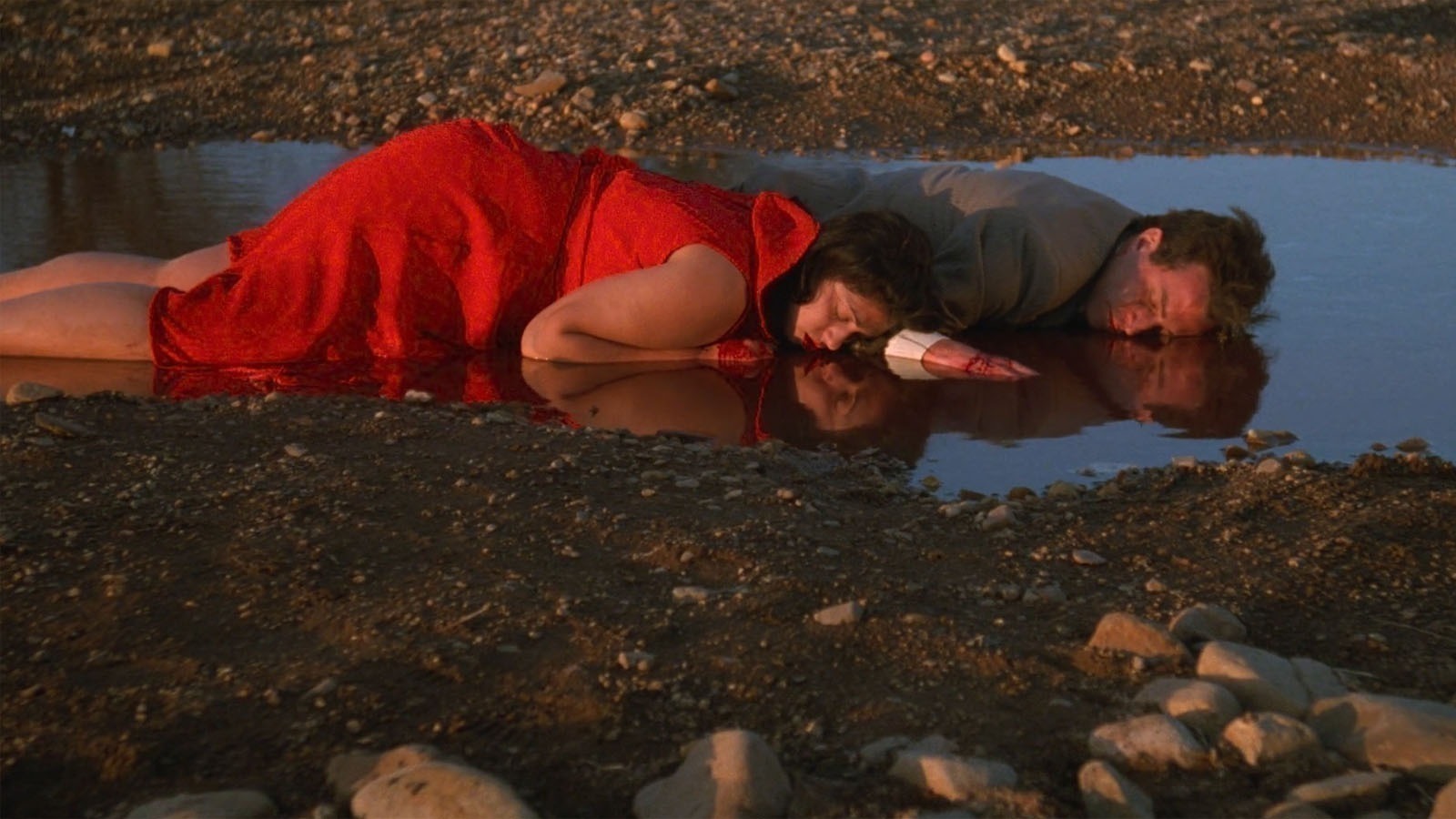
Like Leonard Kastle’s The Honeymoon Killers (1969), Deep Crimson draws on the true story of Raymond Fernandez and Martha Beck, a couple believed to have left a trail of as many as twenty corpses in their wake. “Built like an R. Crumb ingenue or an old DeSoto, the nurse Coral (Regina Orozco) is a fantastic creature—indolent, slovenly, inept, selfish, yearning for love, and reeking of the morgue,” wrote J. Hoberman in the Voice. In Cinema Scope, José Teodoro describes Daniel Giménez Cacho’s Nicolás as “phony from head to toe, posing as a Spaniard slumming in the colonies, very protective of his toupees and costuming himself in a fedora and trench coat like some Bogart manqué. Coral quickly discovers all of Nicolás’s flaws and still wants him anyway.”
For Hoberman, Deep Crimson is “something rarer than an alienated saga of mad love or an accomplished black comedy—this is a convincing movie about evil, with vanity and greed the deadliest of sins. At once svelte and savage, it inspires a certain awe. Ripstein pities his monsters and dares us to feel for them.”
Focusing primarily on Bleak Street (2015), Teodoro emphasizes that “Ripstein is no miserablist; he betrays no interest in hand-wringing. Whatever his or Garciadiego’s personal politics, their cinema is not anchored in didactic social commentary. Their polemics are, as with some of Ripstein’s contemporaries from the ’70s (such as Fassbinder), largely conveyed in coded forms embedded within the realm of melodrama.”
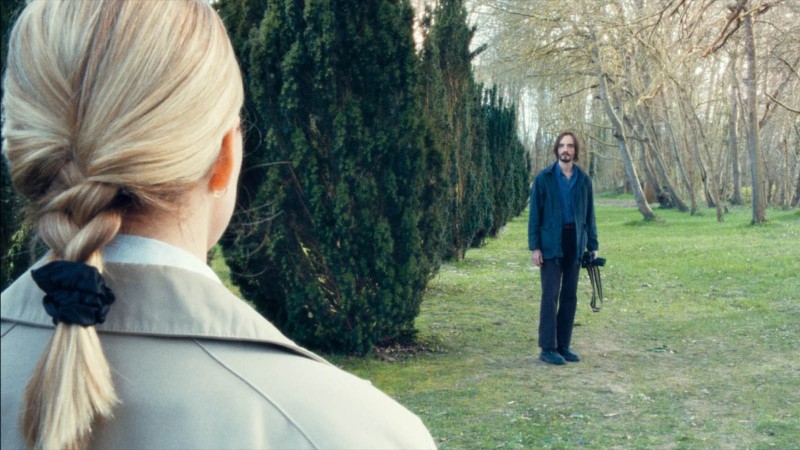
In Devil Between the Legs (2019), the most recent feature from Ripstein and Garciadiego, Beatriz (Silvia Pasquel) and the Old Man (Alejandro Suárez) play out what Fernando F. Croce describes in a Notebook dispatch from Toronto as an “acrid pas de deux.” The couple is “supposedly ‘past the age of passions’ yet unmistakably prisoner to them, whether said passions are lust or cruelty or, after so many years together, some baleful blurring of them . . . Yet, through the camera’s unyielding, unblushing scrutiny—Ripstein’s long-take examination of the weight of flesh evokes Erich von Stroheim—a battered type of compassion emerges.”
Don’t miss out on your Daily briefing! Subscribe to the RSS feed.