Up Three Mountains with Robert Redford
Share
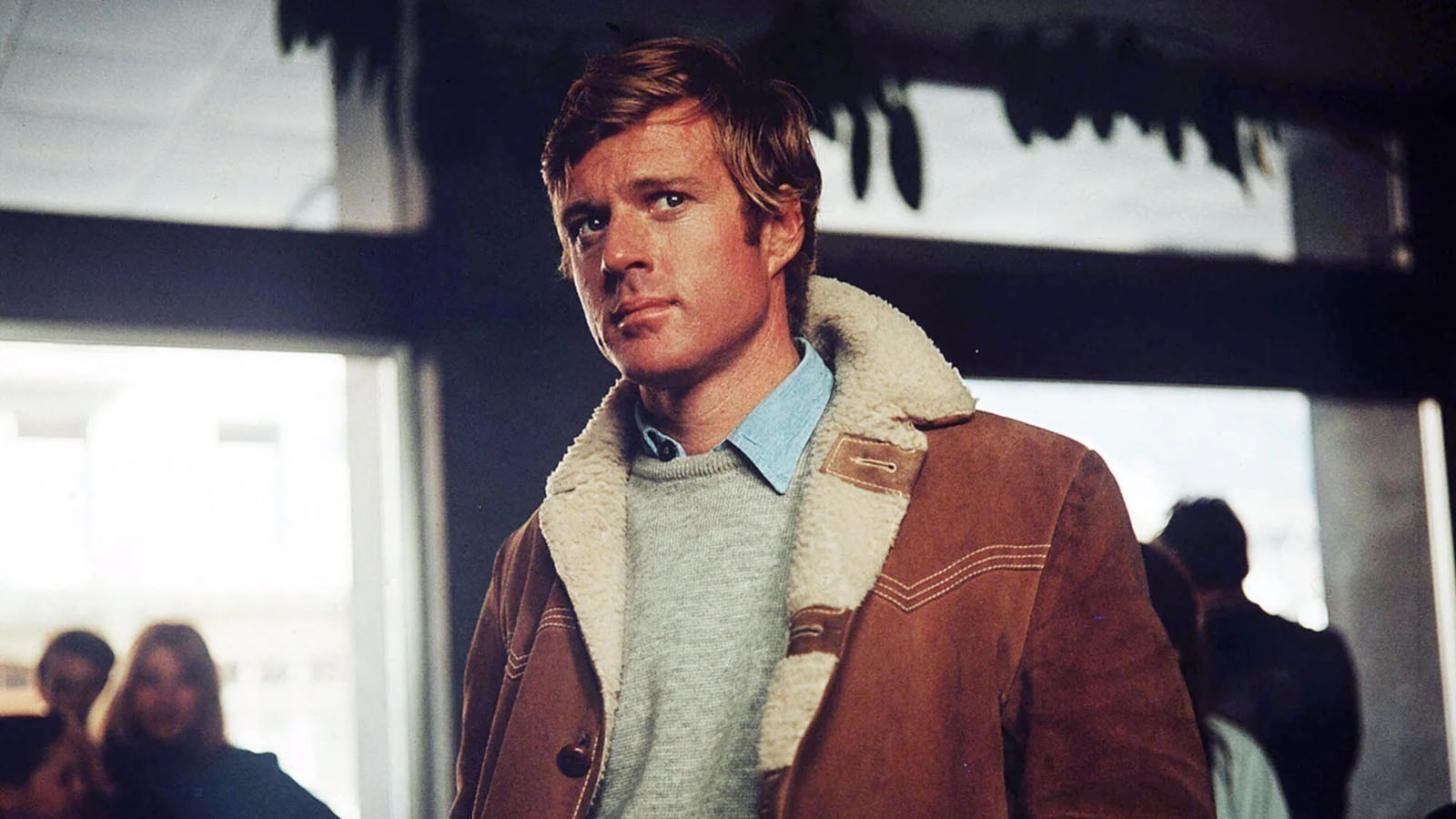
In a 2017 Esquire profile, Robert Redford told Michael Hainey that “to climb up the mountain is the fun, not standing at the top. There’s nowhere to go. But climbing up, that struggle, that to me is where the fun is.” Having appeared in his thirties in a string of hits—Butch Cassidy and the Sundance Kid (1969), The Sting (1973), The Way We Were (1973)—Redford was as big as any movie star gets. Mountain topped.
He turned to directing and won the Oscar for Best Director right out of the gate. Ordinary People (1980) won three more Oscars as well, including Best Picture. And another climb was already underway. In 1978, he cofounded the Utah/US Film Festival and launched the Sundance Institute the following year. With the Sundance Film Festival (officially renamed in 1991), Redford “played the role of mentor, patron, champion of the small and scrappy, benevolent godfather of independent cinema,” writes Adrian Horton in the Guardian. “It’s through Sundance, rather than his films, that Redford became, as the Black List founder Franklin Leonard put it on X, ‘arguably the film industry’s most consequential American over the last fifty years.’”
Sydney Pollack—who directed Redford in seven features, including The Way We Were, Three Days of the Condor (1975), and Out of Africa (1985)—once observed that Redford was “an interesting metaphor for America, a golden boy with a darkness in him.” Growing up in California, Redford was a restless kid struck with a mild case of polio when he was eleven. When he recovered, his mother took him to Yosemite National Park, and he told Time’s Stephanie Zacharek in 2018 that he was struck by “all the magical beauty of that area—it looks like it was sculpted by God.”
He took a job at the park three summers in a row and became “almost addicted to nature in its purest form.” The seeds were planted for a lifelong commitment to environmentalist causes. While attending the University of Colorado in Boulder—the future home of the Sundance Film Festival, by the way—he got a call from his father, who told him that his mother had died of a blood disorder. She was forty and had recently given birth to twin girls who died shortly after they were born.
Still in his teens and getting antsier, Redford took up drinking, partying, and racing around Boulder on a motorcycle until the university tossed him out. Cut loose, he headed to Europe, traveling through France, Italy, and Spain, selling his paintings and drawings, and barely scraping by. He landed in New York, where he studied painting and took classes at the American Academy of Dramatic Arts. Small roles in television and on Broadway came his way, and his first big boost was scoring the role of an uptight lawyer newly wed to a free spirit in the original 1963 production of Neil Simon’s comedy Barefoot in the Park.
Four years later, he costarred with Jane Fonda in the adaptation directed by Gene Saks. “While the film is a dated battle of the sexes,” writes Esther Zuckerman in the New York Times, “Redford and Fonda still bubble with a kind of nascent movie-star energy. She’s sensuous and daffy; he’s a nervous wreck.” “I fell madly in love with him on that one,” recalled Fonda when she learned that Redford had passed away on Tuesday at the age of eighty-nine.
Paul Newman and director George Roy Hill overruled every objection studio heads could dream up to keep Redford from being cast as the Sundance Kid. They wanted a star, and Redford wasn’t quite there yet. But Newman and Redford had hit it off, and the comedic chemistry between the outlaws on the run in Butch Cassidy and the Sundance Kid was rooted in a genuine camaraderie. The Guardian’s Ryan Gilbey finds that “although the movie is unable to fess up to its bromantic longings—did any woman in a buddy movie ever look more like a gooseberry than poor Katharine Ross?—it’s still worth seeing for Redford’s sunny charm.”
Reviews were lukewarm at best, but audiences fell in love. Butch Cassidy became the top-grossing movie of 1969, and in a 2013 piece for Men’s Journal, Stephen Rodrick emphasizes that it’s “hard to exaggerate Redford’s 1970s celebrity. Some of the experiences were funny, if scary. While in a Manhattan office building, Redford was chased into the basement by a group of nurses who’d heard he was in the building. ‘I plowed out through a couple of nurses, out into the street, and they followed me,’ remembers Redford. ‘They started pulling at my clothes and my hair.’ He jumped into a taxi, where the radio was playing ‘Raindrops Keep Fallin’ on My Head,’ from Butch Cassidy. ‘I thought, This is too much.’”
Redford knew how he wanted to harness his star power, and as Glenn Kenny writes for Decider, “he put his money where his mouth was. Almost immediately after skyrocketing to superstardom in 1969’s Sundance Kid, he worked for the once-blacklisted Abraham Polonsky—who had not directed a film since 1948’s remarkable noir Force of Evil—on Tell Them Willie Boy Is Here, a fact-based miscarriage-of-justice story.”
That same year, he teamed up with writer James Salter and novice director Michael Ritchie on Downhill Racer. Producing (but taking no credit for it), Redford stars as David Chappellet, a ruthlessly ambitious skier who joins the U.S. Ski Team in Europe. In 2015, Todd McCarthy wrote that Downhill Racer is “tough-minded, unsentimental, rigorous, understated, and refuses to manufacture unearned excitement. The film is daring in anchoring itself to a character as unlikable as Chappellet, and Redford never softens to reassure the viewer that he, the actor, may be less arrogant and self-centered than the man he plays. Chappellet is a total hard-ass, and while Redford would play hollow men again, he never did so quite this compellingly, with such hunger fueled by the flame of youth.”
That flame was about to power Redford through a remarkable run. In 1972, Redford starred as a legendary mountain man in Pollack’s Jeremiah Johnson and a fumbling thief in Peter Yates’s The Hot Rock. He also reunited with Ritchie to play an unknown Democrat running against a popular Republican senator in The Candidate, which the NYT’s Alissa Wilkinson calls “perhaps the greatest film about modern American campaigning ever made.”
For Adam Nayman at the Ringer, the “dark joke of the movie is that Redford’s Bill McKay really is just another pretty face; he’ll say or do whatever it takes to win, and because he looks and sounds so good doing it, the content of his character is irrelevant. By simultaneously playing to and against his looks, Redford showed a depth that had evaded his earlier performances.”
Redford “had a habit of making the job look too easy,” writes K. Austin Collins for the Atlantic, “and his nuances were often most apparent in contrast to multiple eras of co-stars—A-list actors like [Dustin] Hoffman, Natalie Wood, Paul Newman, Jane Fonda, and Barbra Streisand, then Meryl Streep, Michelle Pfeiffer, and even a fledgling Andrew Garfield . . . His craft was not predicated on reminding us, through strain and largesse, of a master at work; his mastery could be found in the fact that we so often seemed to miss it.”
“One of Redford’s gifts is that he was equally good at sharing the screen with men and women, which wasn’t always true of other 1970s male stars,” writes the NYT’s Manohla Dargis. “Perhaps that sense of comfort comes from the confidence that is specific to beauty: Redford never had to fight for your attention.”
The fall of 1973 saw Pollack’s The Way We Were, the story of the doomed love between Redford’s apolitical WASP and Barbra Streisand’s Jewish leftist, become a massive hit at the box office. “Watching her watch him, I feel very seen,” writes Dargis, and of course, those looks go both ways.
For Stephanie Zacharek, “the way Redford’s Hubbell Gardiner looks at his long-lost lover, Katie Morosky, during a chance reunion on a New York City street is a symphony of adult regret and longing, an acknowledgement that making the right choice always takes something from us.” Writing for the BFI, Christina Newland calls The Way We Were “the kind of unabashedly swooning romantic drama that you’d be foolish to call a guilty pleasure.”
On Christmas Day, 1973, The Sting, reuniting Redford with Paul Newman and George Roy Hill, opened to rave reviews. Redford plays the swift grifter Johnny Hooker, who, in 1936, teams up with a has-been (Newman) to take down a crime boss (Robert Shaw). “With its emphasis on the long con as an elaborate performance complete with lines, sets, and rehearsals, The Sting is one of the great films about looking and being looked at,” writes Matt Zoller Seitz for Vulture. “It also showed that the pupil from Butch Cassidy had surpassed the master: Newman’s role as the alcoholic con man Henry Gondorff was a glorified supporting part, gifted to him because his career was in a slump and Redford wanted to pay him back for handing him his big break. Timeless and endlessly rewatchable, The Sting made Redford one of the biggest stars in the world.”
For many, Redford’s first big, out-in-the-open stumble was The Great Gatsby (1974). Not even a screenplay by Francis Ford Coppola or the direction of Jack Clayton (The Innocents) could make up for the lack of spark between Redford’s Jay Gatsby and Mia Farrow’s Daisy Buchanan. Pollack’s Three Days of the Condor, though, is one of the great paranoid thrillers of the 1970s. Redford’s Joe Turner is a CIA analyst who leaves the office to grab lunch for the staff and returns to find all of his coworkers gunned down.
Not long after contacting headquarters, Joe realizes he’s a target—and that he can trust no one. An exchange at the end between Redford’s Joe and Cliff Robertson’s Higgins, the deputy director of the CIA’s New York division, seethes with a ’70s-era cynicism that rivals Ned Beatty’s “There are no nations” speech in Network, released the following year, 1976.
It should also be mentioned that Redford’s Joe sports a gray tweed blazer that French designer Nicolas Gabard deems “perfect.” Writing about Redford’s keen sense of style for the NYT, Jacob Gallagher suggests that the star was “an intellectual Marlboro Man tuned to maximum Americana. Mr. Redford’s characters were ‘I’ll do it myself’ men with skin as tough as elephant hide and a wardrobe gathered from an argyle-to-zoot-suit encyclopedia of American style.”
During a whistle-stop tour promoting The Candidate, Redford overheard political reporters chatting about a break-in at the Watergate complex in Washington, D.C. Redford’s curiosity led him to Washington Post reporters Bob Woodward and Carl Bernstein, who at the time were working on a book about how they broke a story that would eventually bring down the presidency of Richard Nixon. All the President’s Men (1976), adapted by William Goldman and directed by Alan J. Pakula, is “not just pretty damned true, it is true,” says Woodward.
The Hollywood Reporter’s Jordan Mintzer zeroes in on a sequence in which Woodward (Redford), acting on a tip from Bernstein (Dustin Hoffman), gets a potentially crucial source on the phone. “The way [Redford] uses his eyes in that scene, registering the truth as it slowly comes out, is unparalleled. And that gesture of gratitude he makes when his contact on the phone says: ‘I know I shouldn’t be telling you this . . . ,’ as if Woodward were thanking the gods themselves for the gift they’ve just dropped into his lap, says more about what’s about to happen—both to his career and to the country as a whole—than any words he could have spoken.”
Redford was one of more than a dozen A-listers to take a brief but lucrative turn in Richard Attenborough’s A Bridge Too Far (1977). He then costarred with Jane Fonda again in Pollack’s The Electric Horseman (1979) and played a prison warden going undercover in Stuart Rosenberg’s Brubaker (1980). W. D. Richter’s screenplay was nominated for an Oscar but lost to Alvin Sargent’s adaptation of Judith Christ’s novel Ordinary People.
Redford’s directorial debut is “handsome and classical,” writes Adam Nayman, “but it also contains bursts of raw emotion—especially from Timothy Hutton, who won an Oscar for his role as a young man mourning the death of his brother—that puncture its immaculate suburban surfaces. It’s a shame that Redford’s Oscar for Ordinary People is often invoked negatively, to imply that it was stolen from Martin Scorsese for Raging Bull—there aren’t as many directorial pyrotechnics here, perhaps, but making an upper-middlebrow chamber drama this good is hard. Otherwise, more people would do it.”
Matt Zoller Seitz notes that “Scorsese has always spoken highly of Redford’s filmmaking, and Redford directed occasional actor Scorsese to one of his best-ever screen performances as the politely menacing president of Geritol in Quiz Show,” the 1994 film based on a real game-fixing scandal that in the late 1950s nearly put an end to an entire television genre.
Of the ten features Redford directed, two more are especially notable: The Milagro Beanfield War (1988), an adaptation of John Nichols’s 1974 novel, and A River Runs Through It (1992), starring Brad Pitt as “the character I would have played if I was younger,” as Redford told Michael Hainey. “Being seen as the golden boy but having a dark side.”
Barry Levinson’s baseball movie The Natural (1984) is “really just a showcase for those storied shots of Redford foregrounded in the orange dusk of the Midwest, or lit up by bright stadium lights, gorgeously silhouetted and unabashedly American,” writes K. Austin Collins. “It wouldn’t work as well if you couldn’t look at the guy and instantly know who he is and where, in the national mythos, he belongs.”
In Out of Africa, Meryl Streep stars as Karen Blixen, who wrote under name Isak Dinesen and helped her husband, a Danish Baron, run a coffee farm near Nairobi. She falls for Denys Finch Hatton, the British aristocrat played by Redford. “Handsome and charming, capable and elusive, Redford’s character is the kind of emotionally unavailable male lead that Hollywood excels at delivering,” writes Alissa Wilkinson. “He’s a romantic hero precisely because he represents a fantasy—the self-possessed lover who changes the heroine forever.”
In Sneakers (1992), directed by Phil Alden Robinson (Field of Dreams), Redford stars as the head of a ragtag team of security specialists played by Sidney Poitier, Dan Aykroyd, River Phoenix, and David Strathairn. It’s a caper thriller with a dedicated following. In 2012, Slate celebrated the film’s twentieth anniversary with an informal symposium, and for the NYT’s Gilbert Cruz, Sneakers is simply “a weightless movie that makes me happy.”
Adrian Lyne’s Indecent Proposal (1993), starring Redford as a billionaire who makes an offer one young couple finds it next to impossible to refuse, was critically panned but sold a whole lot of tickets. Redford spent the rest of the 1990s and most of the 2000s appearing less frequently and in less remarkable films. For the Telegraph’s Robbie Collin, “it was as if the face of the American century itself was weathering before your eyes.”
J. C. Chandor was the first director to bring a film to Sundance—his debut, Margin Call (2011)—and then ask Redford to star in his next feature. When Stephen Rodrick asked why no other filmmaker at the festival had extended such an invitation, Redford joked, “I don’t know if they were scared or what, but it started to bother me, and I wondered if I should have hurt feelings.” Redford isn’t just the star of All Is Lost (2013), he is the film’s sole performer.
As “Our Man,” Redford is lost at sea, alone on boat damaged by a wayward shipping container in the Indian Ocean. Seventy-seven at the time, Redford insisted on doing his own stunts. “For the 106-minute running time of All Is Lost,” wrote the Washington Post’s Ann Hornaday, “Redford delivers a masterclass in the art of screen acting, using his prime instrument—his body—to deliver a galvanizing, physically grueling, deeply emotional performance that would be electrifying coming from someone half his age. The fact that it’s Redford up there, battling the elements, refusing to go gently, embodying the hopes, fears, desires, and recriminations of the generation of which he’s been so emblematic, makes All Is Lost not just thrilling, but profound.”
For Rolling Stone’s David Fear, “this scene from his last big screen role, in David Lowery’s extraordinary, elegiac The Old Man & the Gun (2018), says it all. It’s just a career criminal in his winter years, enjoying a car ride and having a conversation with Sissy Spacek’s widow over lunch. And in Redford’s hands, you get an entire life in a single, long exchange.”
“While the movie feels gently elegiac on its own,” writes Alissa Wilkinson, “it’s most meaningful as a summation of Redford’s whole career and all the kinds of heroes he’s been: the outlaw, the loner, the fighter, the intelligent adventurer, the irresistible leading man. That he chose for his final role to be directed by Lowery—whose early work showed at the Sundance Film Festival—feels perfectly fitting.”
“Sundance changed my life,” Chloé Zhao tells Mark Olsen in the Los Angeles Times. Zhao, who has just taken Telluride and Toronto by storm with Hamnet, worked on her first feature, Songs My Brothers Taught Me (2015), in the Sundance Labs—as Ryan Coogler (Sinners) did with Fruitvale Station (2013). For Coogler, Redford was “a shining example of how to leverage success into community building, discovery, and empowerment.”
Don’t miss out on your Daily briefing! Subscribe to the RSS feed.