Guillermo del Toro and Frankenstein
Share
The drumroll leading up to the premiere of Guillermo del Toro’s Frankenstein in Venice has been rumbling for thirty years. “It’s a movie I wanted to make before I even had a camera,” del Toro tells Variety’s Brent Lang. “When I saw the James Whale Frankenstein as a kid, I completely emptied my soul into the creature. I thought, ‘That’s me.’ It was a religious and spiritual moment.”
The fanfare greeting del Toro’s passion project will not be modest. Sheila O’Malley’s book on the film’s making will be out next month, and Venice Classics is presenting Sangre del Toro, which Screen’s Tim Grierson calls “a brisk, entertaining documentary” in which director Yves Montmayeur crafts “a collage of ideas and images that define del Toro’s oeuvre.” In Los Angeles, Beyond Fest (September 25 through October 9) will present Está Vivo: The Gods and Monsters of Guillermo del Toro, a retrospective featuring new restorations, director’s cuts, and rare 35 mm screenings, and from October 22 through 26, del Toro will serve as the guest artistic director of AFI Fest.
Frankenstein will see its North American premiere in Toronto on Monday before screening in Busan in a few weeks and in London next month. Netflix will then give the film a three-week theatrical run starting on October 17. The streaming begins on November 7.
“Horror mavens will recognize visual cues from Whale, and from the Hammer Frankenstein films too,” writes Glenn Kenny at RogerEbert.com, “but del Toro doesn’t lean too hard on his admiration for the cinematic tradition. The movie doesn’t wink; it believes in the story it’s telling and resolves to delve into all of its philosophical and spiritual implications.”
Mary Shelley set her 1818 novel in the waning years of the eighteenth century, and del Toro has shifted the time frame to the 1850s, a period that lends his version an early Victorian flourish. He tells Brent Lang that he cast Oscar Isaac as Victor Frankenstein because he “has all the swagger and swarthy seductive power that Victor, in my mind, had. He’s like a Byronic rock star.”
When Victor is first seen in the prologue, though, his swagger is gone. He’s discovered stranded in the Arctic by the crew of a Danish ship, and over the course of the first of the film’s two chapters, he tells his own story. When his beloved mother died giving birth to his younger brother, Victor was left solely in the hands of his disciplinarian father, Leopold (Charles Dance), a respected British doctor who expressed little more than disappointment in his boys. “Beneath its cranked-to-eleven, Romantic trappings,” writes the Telegraph’s Robbie Collin, “this Frankenstein is a story of fathers who egomaniacally mould their sons in their image, only to be repulsed by the result.”
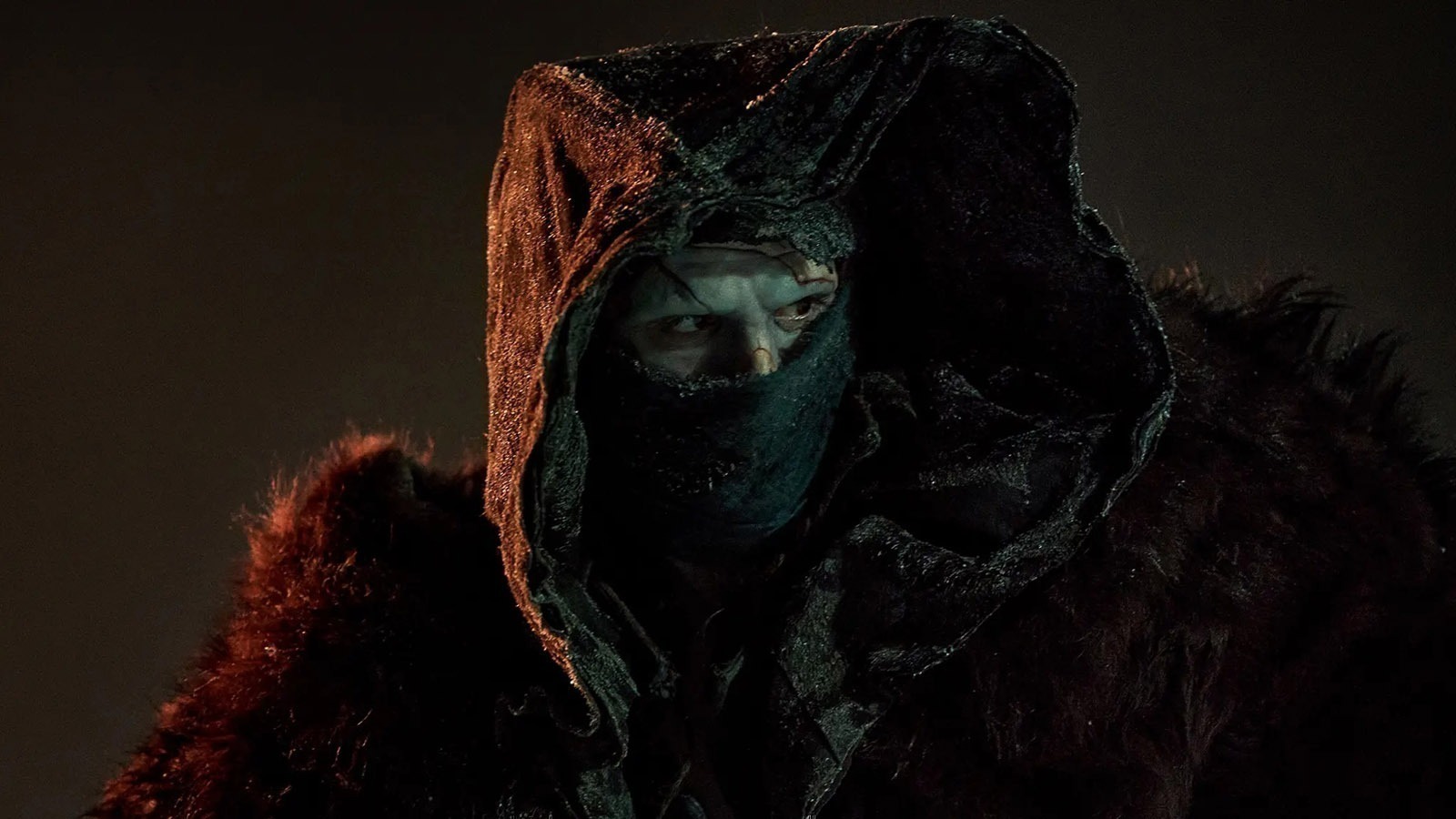
By 1855, Victor was scandalizing leading medical practitioners in Edinburgh with his experimental reanimations of dead flesh. Harvesting body parts from fallen soldiers on the battlefields of the Crimean War, Victor pieces together his creature.
Jacob Elordi’s “eyes are so full of humanity,” says del Toro. “I cast him because of his eyes.” After Andrew Garfield dropped out, Elordi had just nine weeks to prepare, and he “makes the creature’s awakening, his growing curiosity and hurt, feel fresh, vital, new,” writes Vulture’s Bilge Ebiri. “We know the Frankenstein story, even via its many abridged and bastardized versions; it’s one of the most familiar stories we have. And yet, the dawning of light in Elordi’s eyes breathes life into the old tale. Of all the parts that make this movie, it turns out his is the one that holds its soul.”
Del Toro and Elordi’s creature is “envisioned as a marble statue, with skin of a translucent white cut by deep rivers of red and purples and greens,” writes Rafa Sales Ross at the Playlist. “His cumbersome body is at once battlefield and map, leading curious eyes to the truth of its making, and the voice that powerfully emerges from within the caverns of his lungs seems at war with the quiet hesitancy of its delivery.”
In the Los Angeles Times, Joshua Rothkopf finds that “you immediately appreciate Elordi’s strategy of going small. Elordi takes over the telling of his tale, often running counter to the presentational grandiosity that a new Frankenstein would seem to require. The movie might come close to ringing hollow without such committed intimacy and, as it was with some of the exquisite work of frequent del Toro collaborator Doug Jones (Hellboy, Pan’s Labyrinth, the amphibian in The Shape of Water), Elordi extends the filmmaker’s tradition of finding something deep and recognizable in the alien.”
“In addition to its emotional force,” writes the Hollywood Reporter’s David Rooney, “del Toro’s Frankenstein is a film of heady sensorial pleasures. The director’s celebrated visual imagination—channeled through exceptional work from returning collaborators including cinematographer Dan Lausten, production designer Tamara Deverell, and costume designer Kate Hawley—constantly delights the eye. The bold use of color, especially the oversaturated reds and greens that scorch the shadows, is breathtaking. Meanwhile, the ears are massaged by a muscular orchestral score that’s among Alexandre Desplat’s most ravishing work.”
Whether or not Frankenstein will ultimately be deemed to be “del Toro’s finest work, it is the purest, most sincere distillation of all his dreams and nightmares, turned into two and a half hours of exhilarating passion for old school filmmaking,” writes Max Borg at the Film Verdict. Del Toro argues that it is “extremely important for me to keep the reality of film craft alive. I want real sets. I don’t want digital. I don’t want AI. I don’t want simulation. I want old-fashioned craftsmanship. I want people painting, building, hammering, plastering. I go in and paint props myself. I supervise the construction of the sets. There is an operatic beauty when you build everything by hand.”
“From Chronos to Pinocchio,” writes Hannah Strong at Little White Lies, del Toro’s work is “fascinated by the fantastical in both people and surroundings, and the sumptuous operatic fairytale del Toro has crafted now contains in its DNA the fabric of everything that came before it, a seamless patchwork that’s self-referential but never self-indulgent.”
Don’t miss out on your Daily briefing! Subscribe to the RSS feed.