Bigger Than Life in Chicago
Share
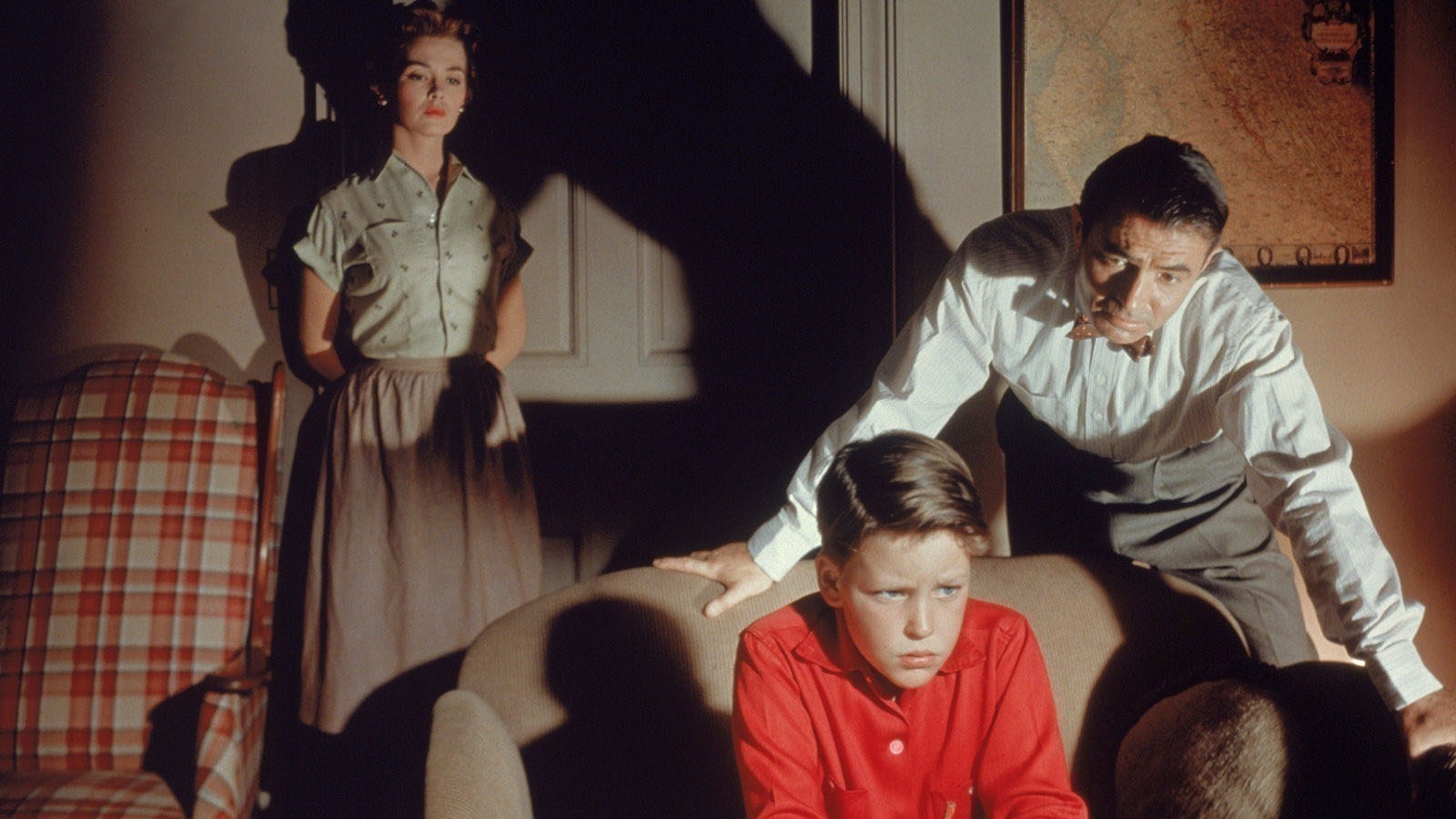
When Brazilian director Kleber Mendonça Filho (Neighboring Sounds, Bacurau) placed Bigger Than Life in the #1 spot on his Criterion top ten, he called Nicholas Ray’s 1956 feature “both disturbing and fascinating.” James Mason plays Ed Avery, an affable schoolteacher moonlighting as a taxi dispatcher and suffering from a potentially fatal inflammation of the arteries. As an experiment, doctors prescribe cortisone, which, on the one hand, relieves the pain, but on the other, turns Avery into a megalomaniacal monster.
Tonight at the Music Box Theatre, the Chicago Film Society will present Bigger Than Life on 35 mm. “In other hands,” write the CFS programmers, “a film about a father driven to infanticide by the stuff you put on mosquito bites could seem laughable, but Ray manages to conjure an aura of madness and bone-deep dread around even the scenario’s silliest bits of melodrama, evocatively using the extra screen space afforded by CinemaScope to film the Averys’ cavernous, dimly lit suburban home as if it were a tomb and Ed the ghoul haunting it.”
In the States, critics initially dismissed Bigger Than Life, and audiences ignored it, but across the Atlantic, the critics at Cahiers du cinéma rallied around Ray as a genuine auteur. Ray’s is “a thoroughly itchy, dissatisfied oeuvre, and the secret success of his best films may lie paradoxically in their flailings and failings,” writes B. Kite in the essay accompanying our release. “For the future directors of the New Wave, Hawks, Ford, Hitchcock, Preminger, et al., were figures to venerate, but Ray was someone to love, both precursor and peer.”
Bigger Than Life was restored and rereleased in the late 2000s, which is when Scott Foundas, writing in the Village Voice, traced a line between this “canny retelling of the Jekyll and Hyde story” and Blue Velvet (1986). “Shooting in crisp widescreen with cinematographer Joseph MacDonald,” wrote Foundas, “Ray begins Bigger Than Life as a series of immaculate hedgerows, picket fences, and modern kitchen appliances, only to gradually lower the camera angles and lengthen the shadows as the film transforms into a dystopian, surrealist expanse—an obvious precursor to David Lynch’s maggot-infested Lumberton, North Carolina; Father Knows Best reconfigured as Greek tragedy.”