28Aug00

Good Morning BY RICK PRELINGER

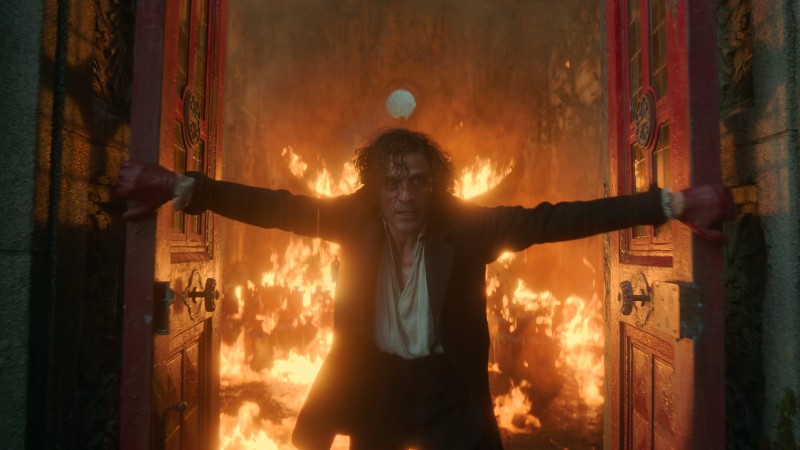
Good Morning is the wildcard in Yasujiro Ozu’s career, the film that looks least like all his others, and one of the few where he sees the world through childrens’ eyes rather than those of an old man.

For many years, Ozu’s films were rarely seen outside Japan. Their minimal narratives and idiosyncratic style resembled few other films, and distributors feared they were “too Japanese” for international audiences. During the 1950s and 1960s, most of his work was centered around the same motif: the attempt by an aging parent to marry off a dutiful daughter so that she could begin to live her own life. Donald Richie characterizes their point of view as “sympathetic sadness,” the Japanese concept of mono no aware: the perspective of a weary, relaxed, even disappointed observer, perhaps someone approaching death.

But with Good Morning, Yasujiro Ozu visits suburbia and comes back a happier person. He plunks us down into a new Japan, a bright, peppy place where American cultural influences have seeped into everyday life. The plot revolves around the ups and downs of suburban middle-class life in a small subdivision, where tiny houses are surrounded by white picket fences and filled with colorful furniture and appliances. Housewives bounce between homes, exchanging food, drink, and sometimes cruel gossip. Kids walk in and out of their neighbors’ houses to watch sumo wrestling on TV. TV, in fact, is really at the center of the story. Mr. Hayashi won’t buy a set, worrying that “TV will produce 100 million idiots.” Desperately wanting one, the Hayashi children first practice passive resistance, then escalate to screaming and yelling, and finally go on a silence strike.

In fact, though it is nominally a remake of Ozu's 1932 silent film I Was Born, But. . ., Good Morning sometimes feels remarkably like American TV sitcoms of the same period (except for the recurrent flatulence gags). It’s full of stock characters: Mr. Hayashi, the older, distracted father (played by Chishu Ryu, said to be Ozu’s alter ego, who’s present in most of his films); an avuncular bachelor, in love with the children’s aunt; gossipy neighbors, who cause great pain to Mrs. Hayashi over a matter of missing club dues; and a shameless grandmother, who can’t be intimidated by impatient relatives or sinister door-to-door salesmen. Best of all are the Bohemian neighbors, who lounge around in pajamas during the day, have posters for The Defiant Ones on their wall, and truck through the alleys singing scat.

But Ozu’s keenest critique is directed towards Japanese culture. Though most of his films are built around the banal, ordinary dialogue of daily life, here he criticizes adults’ propensity for meaningless, space-filling conversations, the small talk that “acts as a lubricant in this world.” It’s the emptiness of adult chatter that turns the young TV wannabees into social critics. They don’t want to grow up into a world of meaningless rituals, a world where two twentysomethings in love can’t get beyond mannered talk about the weather.

Ozu’s films are meditative and relaxed, but never boring. They reveal themselves slowly and obliquely, through conversation, elegantly minimal camerawork, beautifully composed establishing shots and meticulous sound design. His low-mounted camera puts us into eye contact with his characters, and as we begin to understand their lives, we’re invited to our own philosophers, too. I like to think that his mix of minimalism, humor and everyday life will outlast today’s synthetic, effects-driven cinema, and maybe even prefigure the cinema of the future.
Good Morning

Good Morning

Yasujiro Ozu

1959

93 min

Color

1.33:1

Categories: Film Essays

1 Comments

Sun 07 Jun at 05:36 AM

aatakad

With all due respect, I think this writer missed the boat with his “social criticism” comments. Yes, the kids criticize adults for speaking meaninglessly, but they are shown to be wrong.

In one of the more touching scenes in this film, their tutor and aunt discuss exactly that criticism. They readily admit that adults say all sorts of meaningless things but that those things play an important role in society— “a social lubricant,” he calls them. The penultimate scene, in which those same two characters are waiting for a train, makes it clear without a doubt that Ozu sides with the adults. They conduct a conversation composed entirely of meaningless phrases: “Good morning” “good morning” “nice weather” “yes” “you think it’ll stay nice?” “look at that cloud” “yes it looks like something” “yes, it does look like something.” But having followed them around for the last few days, we understand, and we know they understand that these sweet nothings, as it were, are as significant as “real” communication, if not more so.

The entire Ozu oeuvre supports this approach, really. He consistently opts for “meaningless gestures” to communicate things that are too powerful for mere words. Though he never goes so far as to paint anyone as “right” or “wrong,” Ozu’s later films are full of gentle criticism directed towards people who cannot accept the complexities, vicissitudes and ultimate sadnesses of human relationships. And this time, it’s the boys who don’t get it.

Add Comment

Archives

2010 01 02 03 04 05 06 07 08 09 10 11 12

2009 01 02 03 04 05 06 07 08 09 10 11 12

2008 01 02 03 04 05 06 07 08 09 10 11 12

2007 01 02 03 04 05 06 07 08 09 10 11 12

2006 01 02 03 04 05 06 07 08 09 10 11 12

2005 01 02 03 04 05 06 07 08 09 10 11 12

2004 01 02 03 04 05 06 07 08 09 10 11 12

2003 01 02 03 04 05 06 07 08 09 10 11 12

2002 01 02 03 04 05 06 07 08 09 10 11 12

2001 01 02 03 04 05 06 07 08 09 10 11 12

2000 01 02 03 04 05 06 07 08 09 10 11 12

1999 01 02 03 04 05 06 07 08 09 10 11 12

1998 01 02 03 04 05 06 07 08 09 10 11 12

1997 01 02 03 04 05 06 07 08 09 10 11 12

1996 01 02 03 04 05 06 07 08 09 10 11 12

1995 01 02 03 04 05 06 07 08 09 10 11 12

1994 01 02 03 04 05 06 07 08 09 10 11 12

1993 01 02 03 04 05 06 07 08 09 10 11 12

1992 01 02 03 04 05 06 07 08 09 10 11 12

1991 01 02 03 04 05 06 07 08 09 10 11 12

1990 01 02 03 04 05 06 07 08 09 10 11 12

1989 01 02 03 04 05 06 07 08 09 10 11 12

1988 01 02 03 04 05 06 07 08 09 10 11 12

1987 01 02 03 04 05 06 07 08 09 10 11 12

1986 01 02 03 04 05 06 07 08 09 10 11 12

1985 01 02 03 04 05 06 07 08 09 10 11 12

1984 01 02 03 04 05 06 07 08 09 10 11 12

Recent Comments

“Stray Dog as a gangster flick set in the 30's/40's. Det. Murakami (Mifune) - Ben Foster Det. Sato (Shimura) - Jeffrey Dean Morgan Harumi Namiki - Michelle Williams Yusa . . .”
—C Tyler Belile on Today’s Kurosawa Giveaway, 6 minutes ago

“"Triginta. Call me that. From when my name was on a sign. Or, if you want, call me the Agent." Sylvester Triginta has come to 1920s Capitol Hill looking for something to do. He's come here a long . . .”
—Matthias Galvin on Today’s Kurosawa Giveaway, 26 minutes ago

“Washizu Tilda Swinton Lady Washizu Keanu Reeves Noriyasu Betty White Miki Meryl Streep Old Ghost Woman Will Ferrell”
—TJD on Today’s Kurosawa Giveaway, 28 minutes ago

“DRUNKEN ANGEL: Nick Cave as the doctor Paul Dano as the young gangster with TB Tom Waits as the head of the Gang”
—Nick Philpott on Today’s Kurosawa Giveaway, 34 minutes ago

“Ah, well the remake would be The Hidden Fortress one of my favorite film of his. I would for a remake in Akira Kurosawa honor, not take his idea of fedual japan, but instead make this Europe, England . . .”
—Kellie on Today’s Kurosawa Giveaway, 42 minutes ago