For All Mankind: A Trip to the Moon

The decade-long Apollo program was the largest and most expensive undertaking in the history of man that wasn’t devoted to a war. During the four years between 1968 and 1972, there were nine manned flights to the moon. Twenty-four men made the journey; twelve actually landed on the lunar surface. They were the first human beings to leave the planet Earth for another world. This is their story.
For All Mankind began as a dream at the dawn of man, when the earliest humans gazed up at the night sky and pondered the moon, slept under its influence, dreamt of touching it. That lunar pull is primitively natural, literally visceral, and undeniable.
In the second century AD, a Syrian astrologer named Lucian of Samasota authored the first known account—entitled A True History—of visiting the moon. He discovered there “an enormous mirror” in which he was able to look back at his home with startling clarity. It was fiction, of course, a work of imagination and art, but the dream that inspired it was commonplace and universal. Nearly every race and tribe of humankind, dating back into deepest antiquity, has myths and legends about touching the moon.
For Western man, these tales, infused with Western science, were refined and embellished over the centuries. Ultimately, Galileo and Tsiolkovsky, Jules Verne and H. G. Wells, all responded to the dream with their own creations. While each genius’s creation was individual, their thoughts were cumulative, and the vision gathered vitality and force.
Filmmakers joined this movement as soon as their art form was invented. From Fritz Lang to Walt Disney to Stanley Kubrick, the moon was touched in movies for over fifty years, ever more believably, realistically, and artfully. And always there were audiences willing to be transported, eager to share the vision, as always there had been an effort to grasp a piece of the moon.
I began interviewing the Apollo astronauts in 1976. They were mostly retired astronauts by then, changed men. Over the years I taped nearly eighty hours of interviews with those original extraterrestrial humans, and excerpts from the tapes constitute the major part of the soundtrack of For All Mankind. The movie thus speaks with the intimate voice of personal experience.
Each astronaut described the same journey, in essence, but each expressed it quite differently. All had crisp memories of certain key moments that were common to all nine missions: blastoff, for instance, or the first taste of weightlessness, their first astonished glimpse of a whole earth, their stunned first look at the moon up close. They described these moments in different words but always with vivid intensity. These were memories shared among them, no matter which flights they were on, common events in a very uncommon experience.
In addition to descriptions of sights and events, I also collected insights and reflections from these pioneers. Going into space is, after all, one of the ways by which mankind has expanded its self-awareness. The moon was simply—as astronaut Jim Irwin, who landed there on Apollo 15, puts it—“our first footstep in space, where man was able to look back and see the earth, and see himself, in a different perspective.”
What they saw is the movie itself. The astronauts went into space carrying movie cameras—16 mm data-acquisition cameras—which they reached for reflexively, like tourists, whenever they saw something surprising or spectacular, or merely important. They saw such things almost continually. As a result, they brought back thousands of feet of amazing film, perhaps the most extraordinary footage ever shot by human beings. This film archive was exhaustively researched and carefully edited, elaborately processed, and finally blown up for the first time from the originals to 35 mm master prints. The result is both the most comprehensive and the most polished presentation ever made of this unique material.
For All Mankind is the firsthand story of a great, mythic adventure. Touching the moon was, by definition, a work of inspired imagination and high art, and scarcely requires further embellishment. It speaks for itself more eloquently than it can ever be interpreted: an age-old dream that at long last was fulfilled. The movie is a testament to the power of primitive vision and the strength of human will.

More: Essays
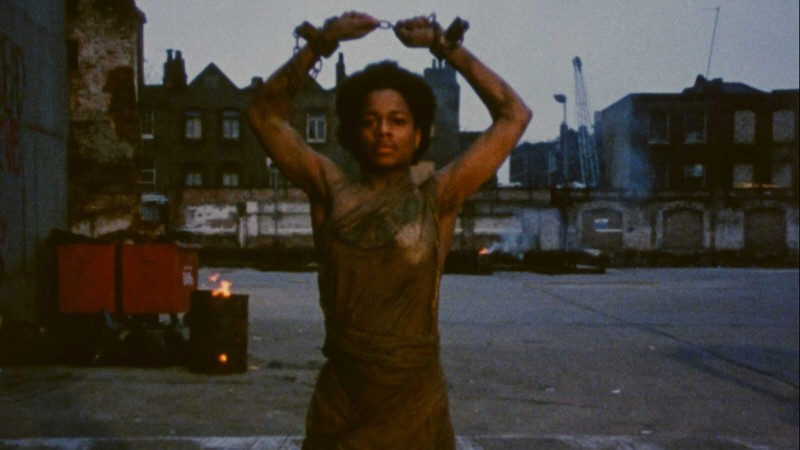
Welcome II the Terrordome: The Future Is Furious
A dystopian drama that draws on the influences of African mythology and hip-hop, Ngozi Onwurah’s debut feature uses a mix of speculative forms to expose anti-Blackness as a system that underpins the modern world.
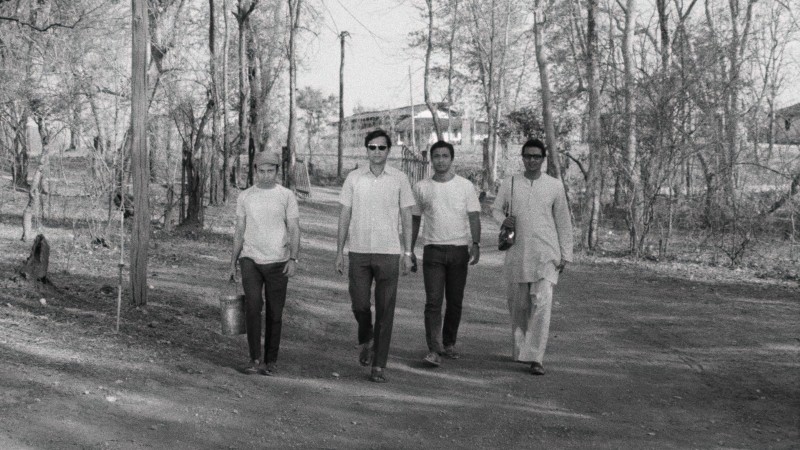
Days and Nights in the Forest: Into the Woods
In this tale of four privileged bachelors who embark on a trip to the Indian countryside, Satyajit Ray balances a biting critique of masculine fragility with splendid visual grace.
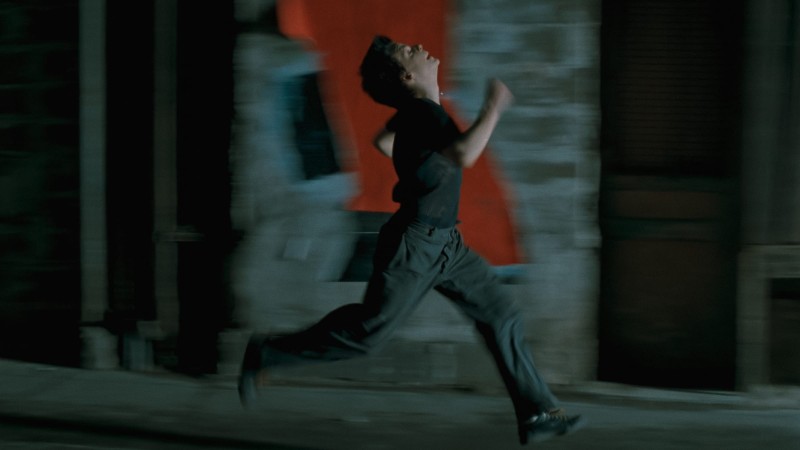
Three Films by Leos Carax: Vital Signs
With their mix of comedy, ecstasy, and aesthetic strangeness, the French auteur’s first three features grant us access to psychic states that we might not otherwise be able to enter.

The Secret Agent: Left Out of History
Kleber Mendonça Filho explores the elisions of history and memory in this splendidly polymorphous thriller about a man on the run in 1977 Brazil.