Little Odessa: He Ain’t Heavy, He’s My Brother
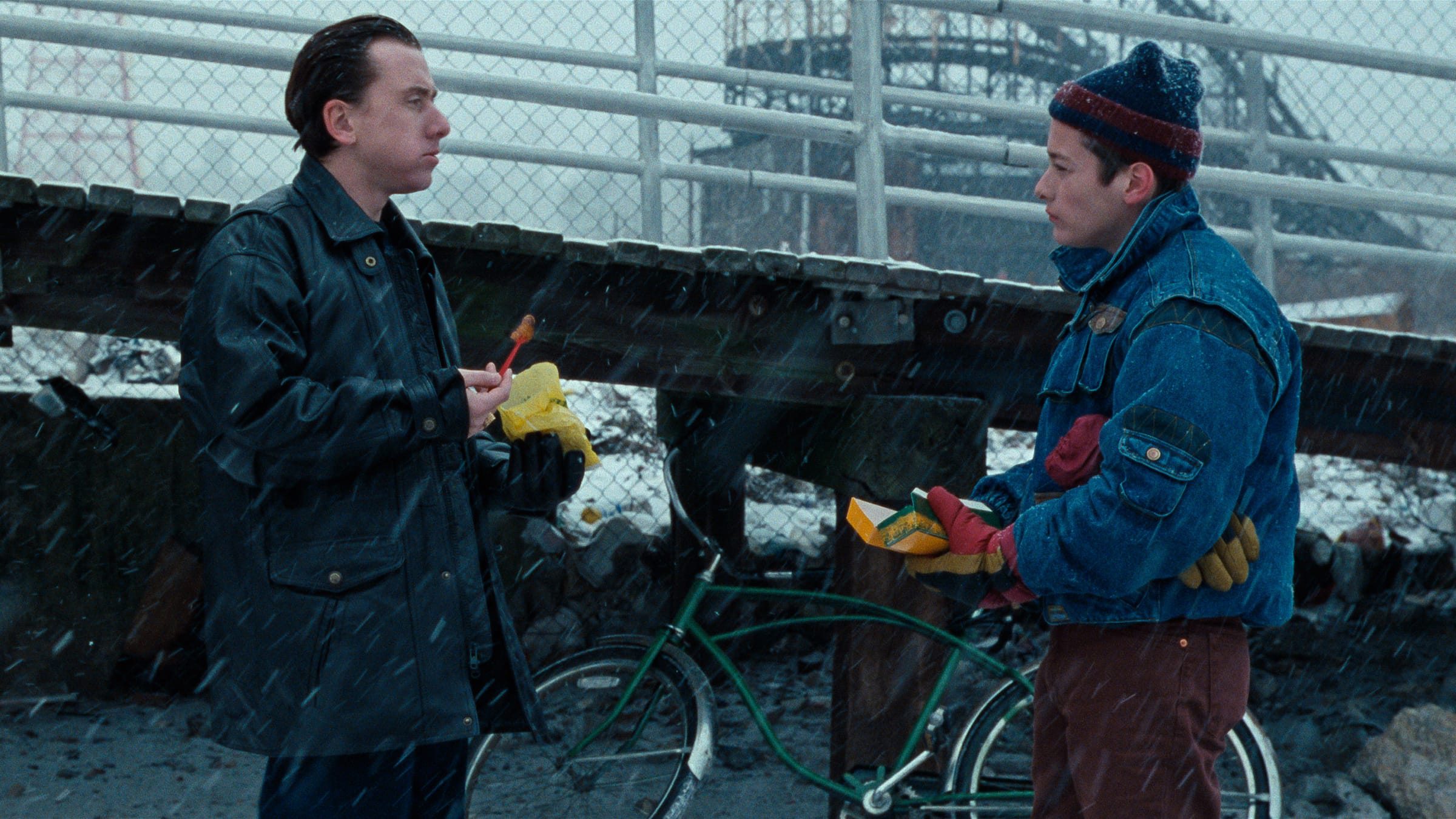
Throughout Little Odessa (1994), the extraordinary debut feature by James Gray, Joshua (Tim Roth) keeps telling the people he encounters that he’s not here, that they didn’t see him. We are introduced to the character in a close-up—accompanied on the soundtrack by a Russian choir singing music by the twentieth-century Leningrad-born composer Boris Kravchenko—in which his face emerges out of stygian darkness. His most striking feature in this view is his left eye, with its light-green iris. Can an eye be called laconic? In any case, his is giving nothing away.
Considering what he’s up to, though, it’s odd that he keeps insisting on his anonymity. The first thing we see Joshua actually do is cross a street in Los Angeles’s Little Russia. There are palm trees in the background, but the sky is as gray and dreary as it will be throughout the film. He walks up to an older man sitting on a bench and puts a bullet into him. A paid assassin who shoots people in broad daylight can’t necessarily count on going unnoticed. And yet Joshua, who always walks with his shoulders hunched against the wind whether or not one is blowing, is capable of committing homicide in public without anyone in his vicinity raising an eyebrow.
Despite what seems to be his knack for murdering with impunity, Joshua won’t emerge from the film unscathed. The protagonist is about to be sent across the country, setting into motion a drama of profound alienation and violent reckoning. Having accomplished his task in LA—“It’s done,” he says into the receiver of a pay phone—Joshua is immediately charged with another. The target of the assignment is an Iranian jeweler in Brighton Beach, also known as Little Odessa, the neighborhood in New York City where Joshua grew up. “Brooklyn’s no good for me, you know that,” he says, maybe trying not to sound too peeved so that he stays on his overseer’s good side. But his boss reminds him: “You owe us a debt.” As it turns out, Joshua owes several.
In these first scenes, we get a sense of how painstakingly distilled this movie is, in a way that very few debut features are. The inexorability of Gray’s films has been likened to that of Greek tragedies, and from the opening moments of Little Odessa, the misery to come is already in the air. The film is also akin to more than one Old Testament narrative—stories about fathers and sons, about brothers. Joshua’s destiny begins to collide with that of his estranged family when, against his will and better judgment, he skulks back to Brighton Beach, at the end of the B subway line, a quick transfer to Coney Island proper. In some noteworthy recent films, including Sean Baker’s Anora and Darren Aronofsky’s Caught Stealing, the neighborhood is busy as a hive with reprobates, hustlers, con artists, and other criminal types, but in Little Odessa it’s dark, furtive, skeevy, and mostly cold. Gray shot the film during a particularly brutal winter, and the dirty snowbanks we see are perfect correlatives for the movie’s mood.

More: Essays
Welcome II the Terrordome: The Future Is Furious
A dystopian drama that draws on the influences of African mythology and hip-hop, Ngozi Onwurah’s debut feature uses a mix of speculative forms to expose anti-Blackness as a system that underpins the modern world.
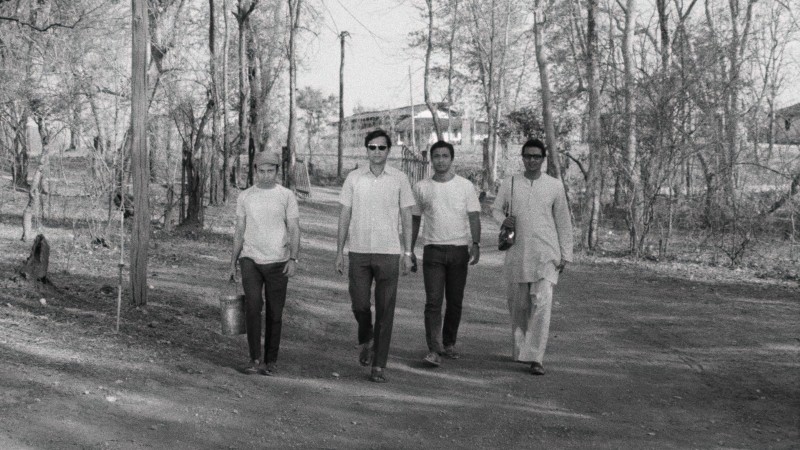
Days and Nights in the Forest: Into the Woods
In this tale of four privileged bachelors who embark on a trip to the Indian countryside, Satyajit Ray balances a biting critique of masculine fragility with splendid visual grace.
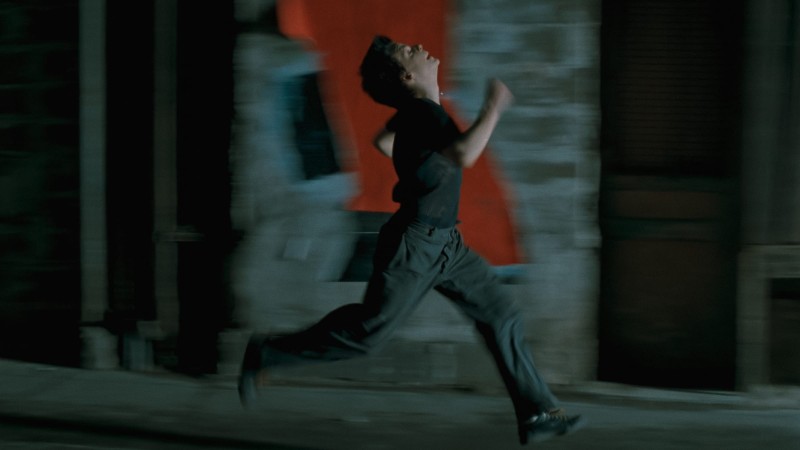
Three Films by Leos Carax: Vital Signs
With their mix of comedy, ecstasy, and aesthetic strangeness, the French auteur’s first three features grant us access to psychic states that we might not otherwise be able to enter.
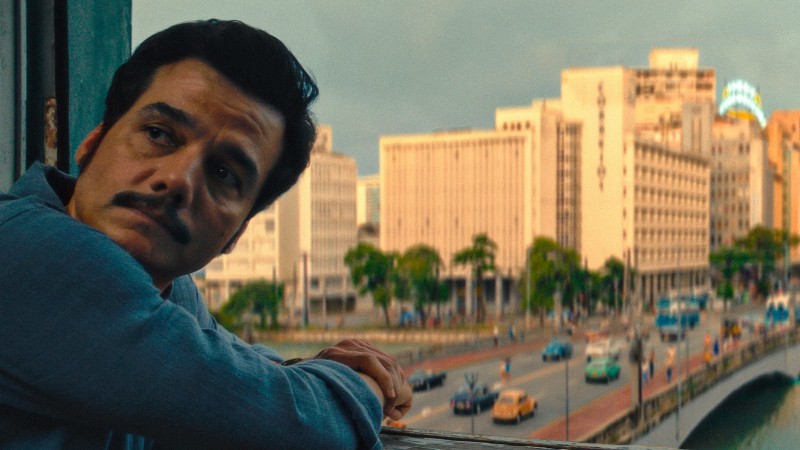
The Secret Agent: Left Out of History
Kleber Mendonça Filho explores the elisions of history and memory in this splendidly polymorphous thriller about a man on the run in 1977 Brazil.