Diane Keaton: Letting Go
Share
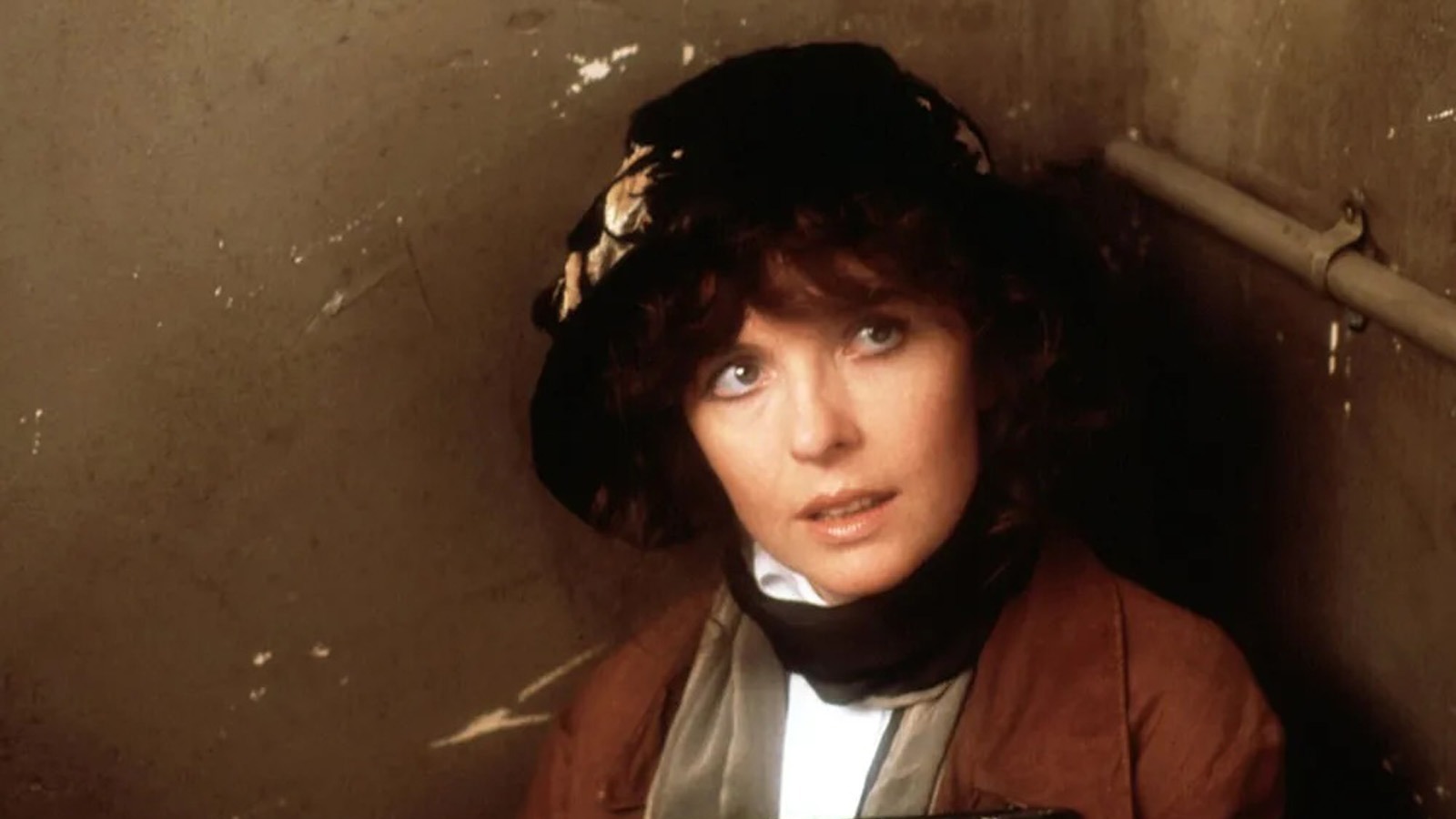
Days after news broke that Diane Keaton had passed away at the age of seventy-nine, we’re still just beginning to sort through what’s keeping us from letting go. In a piece under the headline “Why Diane Keaton’s Death Hits Harder,” Rhonda Garelick writes in the New York Times that it’s “as if we have lost a kind of ageless sprite we expected to have floating alongside us forever.”
The Guardian has gathered remembrances and tributes from eleven of its contributors, each taking a different approach to a seemingly uncrackable puzzle. With a moment-to-moment honesty that frequently threw interviewers and talk-show hosts off guard, she slyly—and often hilariously—shielded her independence and privacy. The accomplished actor, director, producer, photographer, sharp-eyed collector of “image-driven books,” and inadvertent collector of famous lovers (Woody Allen, Al Pacino, and Warren Beatty, more or less in that order) was both unknowable and almost intimately relatable. As Adrienne LaFrance puts it in the Atlantic, Keaton was “ferociously herself, yet never fully comfortable in her own skin.”
Growing up in southern California as the eldest of the four children of Jack Hall, a real-estate man, and Dorothy (née Keaton), Diane Hall was enthralled by the theatricality of the pageant that crowned her mother “Mrs. Los Angeles.” Within a few years, she was landing leading roles in high-school productions. For Vogue, Ellen Burney quotes a passage from Keaton’s 2011 memoir Then Again, a recollection of an opening-night triumph: “When Mom and Dad found me backstage, their faces were beaming. I’d never seen my dad so excited. I could tell he was surprised by his awkward daughter—the one who’d flunked algebra and smashed the new Ford station wagon. For one thrilling moment, I was his Seabiscuit, Audrey Hepburn, and Wonder Woman rolled into one.”
Keaton dropped out of college to jump-start her career in New York. She famously claimed that she refused to take her clothes off in the original Broadway production of Hair not for any “philosophical” reasons but simply because she was too scared. Her appearance alongside Woody Allen in his Play It Again, Sam on Broadway was—in the words of Allen’s character’s idol—Humphrey Bogart, “the beginning of a beautiful friendship.”
Herbert Ross directed the adaptation in 1972, a breakout year for Keaton. She was introduced in Francis Ford Coppola’s Godfather saga as Kay Adams, Michael Corleone’s girlfriend, and eventually, the second wife shut out of his world. In The Godfather Part II (1974), Kay slaps back hard: “It was an abortion, Michael. It was a son. A son. And I had it killed. Because this must all end . . . There would be no way, Michael, no way you could ever forgive me. Not with this Sicilian thing that’s been going on for two thousand years.” Kay is especially “notable for adding dimension and pathos to the compromises of a mob wife, years before Goodfellas or The Sopranos,” writes Joshua Rothkopf in the Los Angeles Times.
The following year, Keaton played a twenty-second-century socialite in Allen’s sci-fi comedy Sleeper, and in 1975, she was Sonja, the promiscuous cousin of Allen’s Boris, in Love and Death, Allen’s ardent send-up of Dostoyevsky and Tolstoy. In 1977, another Allen movie threatened to cast the public persona of “Diane Keaton” in cold hard stone.
“The only question I’ll ask about Annie Hall is whether you’re tired of people asking about Annie Hall,” Patt Morrison told Keaton in a 2012 Los Angeles Times interview. “No, I’m not. Everything is because of Annie Hall with Woody,” Keaton replied. “I’m so grateful to him; he really gave me an opportunity that changed my life.”
“For the latter half of the twentieth century, Annie Hall was the gold standard of romantic comedy,” filmmaker Peyton Reed (Down with Love) told Hillary Weston earlier this year. “It’s relentlessly funny, but it’s really romantic—and that’s because of Diane Keaton.” Allen “had jokes and timing,” writes the NYT’s Manohla Dargis. “Keaton did too, but she also had emotional transparency, a tremulous quality that drew you to her, and expressive eyes that watered easily but could also light up with persuasive joy.”
In all of Allen’s films, Keaton was “more than just the female romantic lead,” writes Glenn Kenny at the Decider, “more than just an adorable foil for Allen’s schlemiel schtick—she represented the life force, a vital counterpoint to the morbidly obsessive neurotic Allen portrayed.” Keaton was “in her own world and style in the 1970s, but she is very far from a dithering Lee Strasberg actress like Sandy Dennis because everything she does is ultra-legible,” writes Dan Callahan. “She will sometimes press down unexpectedly hard on a word or a reaction because she wants to keep us off balance, and always there is a sense of spontaneity, so that she seems to be living and working out her part in the moment, right then, which makes her capable of surprising both us and herself.”
Speaking of style, we must, of course. The fashion revolution Keaton sparked by piecing together Annie’s outfits from thrift-store finds and Ralph Lauren carried on evolving throughout her life but always remained uniquely her own. For Esther Zuckerman in the NYT, the “Diane Keaton look consisted of high necklines and oddball takes on traditionally male looks—hats and blazers; turtlenecks and button-downs; scarves and ties: menswear reimagined for herself. Other women would try to emulate her on red carpets or even in movies, like Meg Ryan in When Harry Met Sally (1989), for example. And yet, for the imitators, these ensembles looked like costumes. For Keaton, they were an ethos.”
Just months after Annie Hall opened to critical acclaim and box-office success, Keaton appeared as Theresa Dunn, a schoolteacher breaking free from the suppression of her childhood by giving free rein to her sexuality in Richard Brooks’s Looking for Mr. Goodbar. In dramatic roles such as this one, “Keaton dug into the bitterness, the capriciousness, the emotional recklessness of women tasting the first satisfaction they’ve ever felt and not giving a damn about the consequences,” writes Charles Taylor. “And when it came to being likable, Keaton didn’t give a damn either. She served the characters. After a while, it became apparent that what the critics and moviegoers who kept claiming she relied on the same mannerisms in each movie were really saying was, I don’t want to follow this actress into the difficult places she’s taking me.”
In Allen’s Manhattan (1979), Keaton “invests Mary, the high-strung, above-it-all New York journalist, with an acid quickness that bespeaks a new kind of information-age mindset,” writes Variety’s Owen Gleiberman, “and she has a laser-like gaze that makes her, in the end, too much to handle.” Warren Beatty’s John Reed, a hot-headed journalist covering the Russian Revolution, and Jack Nicholson’s Eugene O’Neill might have drawn a similar conclusion when confronted with Keaton’s Louise Bryant in Reds (1981).
“Keaton’s performance has to tiptoe along a thin edge,” writes the NYT’s Alissa Wilkinson. “While ostensibly Reed is the main character, it’s really Bryant who has to live out the full story: She encounters Reed’s beliefs, lives alongside them, lets them change her and then has to live with the consequences after the heroics have run their course . . . As the emotional core of the movie, Keaton’s performance in Reds is the bridge for the audience: We might not all be Reed, the charismatic idealist giving speeches, but we might be Bryant, just trying to catch hold as history barrels past and discovering who we are inside of it.”
“I’m a little afraid to say how good I think Shoot the Moon is,” wrote Pauline Kael in her 1982 New Yorker review of director Alan Parker and screenwriter Bo Goldman’s devastating divorce drama. “But I’m even more afraid that I can’t come near doing this picture justice.” Keaton, playing opposite Albert Finney, “may be a star without vanity: she’s so completely challenged by the role of Faith that all she cares about is getting the character right.”
After directing Belinda Carlisle in a music video and before taking on an episode of Twin Peaks, Keaton directed her first feature, Heaven (1987), “a surreal mix of interviews and archival footage exploring popular ideas of the afterlife,” as Alexis Soloski describes it in the NYT. Heaven “seems imbued with and reflective of the qualities that made Keaton an enjoyable performer. It is questing, capacious, stylish, ironic, giddy.” And for Charles Taylor, Keaton’s Unstrung Heroes (1995) is “a little miracle of feeling and taste” that features “what is probably the best work Andie MacDowell and John Turturro have done on film.”
The Guardian’s Hadley Freeman has “so much time for Keaton’s ’90s comedies, from Manhattan Murder Mystery (1993) to Father of the Bride (1991), and The First Wives Club [1996] sums up her strengths in all of them. She is a great team player, leaving the bigger comedy to Goldie Hawn and Bette Midler, but her on-screen charisma is irresistibly empathic. She plays Annie, whose emotional fool of a husband routinely takes her for granted, until she finally finds a way to take revenge. It is the 9 to 5 of the ’90s, with Keaton in the Jane Fonda role, but she makes it her own.”
Nancy Meyers’s Something’s Gotta Give (2003) finds Keaton’s Erica, a playwright, being pursued by a playboy (Jack Nicholson) and a boyish doctor (Keanu Reeves) but perhaps not enjoying it as much as she might. “Nobody else working in movies today can make her own misery such a source of delight or make the spectacle of utter embarrassment look like a higher form of dignity,” wrote A. O. Scott in the NYT. “Erica is by turns prickly, indecisive, uptight, vulnerable, self-assured, and skittish: traits Ms. Keaton blends into a performance that is at once entirely coherent and dizzyingly unpredictable.”
In 2004, Bruce Weber noted in the NYT that Meyers compared Keaton to Katharine Hepburn and Jean Arthur. Woody Allen told Weber that “with the exception of Judy Holliday, she’s the finest screen comedienne we’ve ever seen.” And Jack Nicholson told him that Keaton had “a funny slant on life to begin with, and it makes you want to be funny when you're around her. If you have trouble talking to her, that’s your fault.”
Over the next two decades, Keaton made a string of comedies and sequels (Father of the Bride, Part 3(ish), Book Club: The Next Chapter). “Part of the reason her death seems like such a shock is that Keaton was still making those movies as recently as last year, a constant multiplex presence,” writes Jesse Hassenger in the Guardian. “Now audiences will be pivoting from taking that presence for granted to realizing what an enormous influence she was on the romantic comedy as we know it.”
Don’t miss out on your Daily briefing! Subscribe to the RSS feed.