Horace Ové and Pressure
Share

Today the New York Film Festival and the BFI London Film Festival will jointly launch the new restoration of Horace Ové’s Pressure (1975), the first feature directed by a Black British filmmaker. Pressure will screen again tomorrow and on Friday in New York, and in London, it’ll screen once more tomorrow before the BFI kicks off a UK-wide theatrical run on November 3. Power to the People: Horace Ové’s Radical Vision, a season celebrating the artist and his legacy, will run at BFI Southbank from October 23 through November 30.
Ové, who passed away last month at the age of eighty-six, was “a pivotal figure in the landscape of British culture,” writes Ashley Clark for the BFI. “His work across mediums including film, television, theater, and photography was characterized by a unique combination of tactile humanism, brusque unsentimentality, and, in the words of his son, artist Zak Ové, an unyielding commitment to depicting ‘how for the first time articulate Black voices stood up to hold the world accountable for the neglect and injustice that had been our history.’”
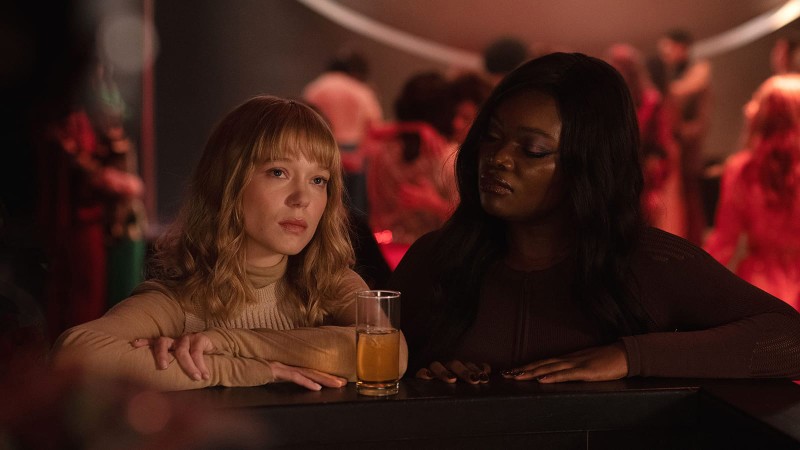
In Pressure, Herbert Norville, who would later appear in films such as Alan Clarke’s Scum (1979), Mike Leigh’s Meantime (1983), and Stanley Kubrick’s Full Metal Jacket (1987), plays Tony, the first child of Trinidadian immigrants to be born in England. Leaving school with a fine set of grades, Tony sets out to find a job, but one white interviewer after another turns him down. “While the film scathingly exposes prejudice and injustice,” writes Imogen Sara Smith for Film Comment, “it is also meticulously attentive to the texture of daily life: to the food, clothes, and music of ’70s Black Britain, and the look of the streets, shops, and rooms of lower-middle-class Ladbroke Grove.”
Writing about Pressure for BFI Screenonline, Julia Toppin notes that Ové and his cowriter, novelist Samuel Selvon, were not “afraid to show friction within the Black community between those who are disillusioned, with little hope and content to exist on the dole, and those who are politically active and fight for change, and between the older generation, content to know its place, not wanting to ‘stir up trouble,’ and a younger generation willing to fight for its rights.”
In his 2007 review for Electric Sheep, Paul Huckerby points out that a “variety of accents are heard throughout the film from the American activists, Tony’s Jamaican ‘street’ friends, his ‘cockney’ school friends and the middle-class accent of the accountancy firm’s interviewer. Characters are placed instantly within their respective cultures by the sound of their voices as clearly as by their skin color. The strong accents led to problems with the distributors—Ové even considered adding subtitles.”
The BFI did not, in fact, release Pressure for two years after its premiere at the London Film Festival. Many have suspected that the Institute got cold feet due to the severity of the portrayal of police brutality, but as Ashley Clark explains, there is probably “a more prosaic story of byzantine, bureaucratic distribution wrangles involving multiple protagonists leading to the delay.” In the Guardian, Ryan Gilbey writes that, once it was finally seen, Pressure “inspired a new generation of filmmakers, including Isaac Julien, Menelik Shabazz, and John Akomfrah, the last of whom called it ‘extraordinary.’ Along with Franco Rosso’s Babylon (1980) and [Menelik] Shabazz’s Burning an Illusion (1981), it became one of the defining works of Black British cinema.”
Ové was born Horace Courtenay Jones in 1936 to parents who ran a café and a shop in Belmont, a district of Port of Spain, Trinidad. In 1960, he changed his name—“he wanted to shed his so-called slave name for one that reflected his African heritage,” explains Penelope Green in the New York Times—and emigrated to England to become an artist. When Laura Enfield asked in 2015 about his first impressions of the country, he answered, “Cold, rain, and very, very white.”
Ové worked a series of odd jobs, appeared in movies as an extra, and was cast as a slave in Cleopatra, a production being directed at the time by Rouben Mamoulian. The film’s star, Elizabeth Taylor, fell ill in 1961, and when she recovered, 20th Century-Fox moved the production to Rome and hired a new director, Joseph L. Mankiewicz, and a new Mark Antony, Richard Burton. Ové, who had relocated with the rest of the cast and crew, stayed in Italy for three years.
Returning to Britain, Ové studied film in London, and in 1968, he shot a short documentary capturing a talk delivered to West Indian students in London by James Baldwin and Dick Gregory. “The film is thrilling not just because it captures Baldwin, eyes ablaze, at the peak of his rhetorical powers,” wrote Ashley Clark for Sight and Sound in 2020, “but because it offers evidence that political discourse was thriving among young Black people in Britain—Baldwin’s audience are not just passive listeners; they speak their minds, too.”
The BBC broadcast Ové’s hour-long concert movie, Reggae (1971), as well as King Carnival (1973), a history of the Trinidad and Tobago Carnival. Penelope Green describes Black Safari (1972) as “a Pythonesque mockumentary about a group of African explorers searching ‘darkest Lancashire’ for the heart of England along the Leeds and Liverpool canal, a good-humored spoof of the traditional colonial narratives.”
Highlights of the oeuvre after Pressure include A Hole in Babylon (1979), a dramatization of a botched robbery that turned into a siege that lasted for nearly a week in 1975; Who Shall We Tell? (1985), a documentary about the Bhopal gas tragedy in India; and Playing Away (1986), a comedy about a charity cricket match between an English and a West Indian team taking place during “Third World Week.”
Throughout his career, Ové drew up plans for several formally experimental projects, but the money rarely came through. “Here in England,” he told Sylvia Paskin in the Monthly Film Bulletin in 1987, “there is a danger, if you are Black, that all you are allowed to make is films about Black people and their problems. White filmmakers, on the other hand, have a right to make films about whatever they like. People miss out by not asking us or allowing us to do this. We know you, we have to study you in order to survive.”
Don’t miss out on your Daily briefing! Subscribe to the RSS feed.