Bresson and Marker
Share
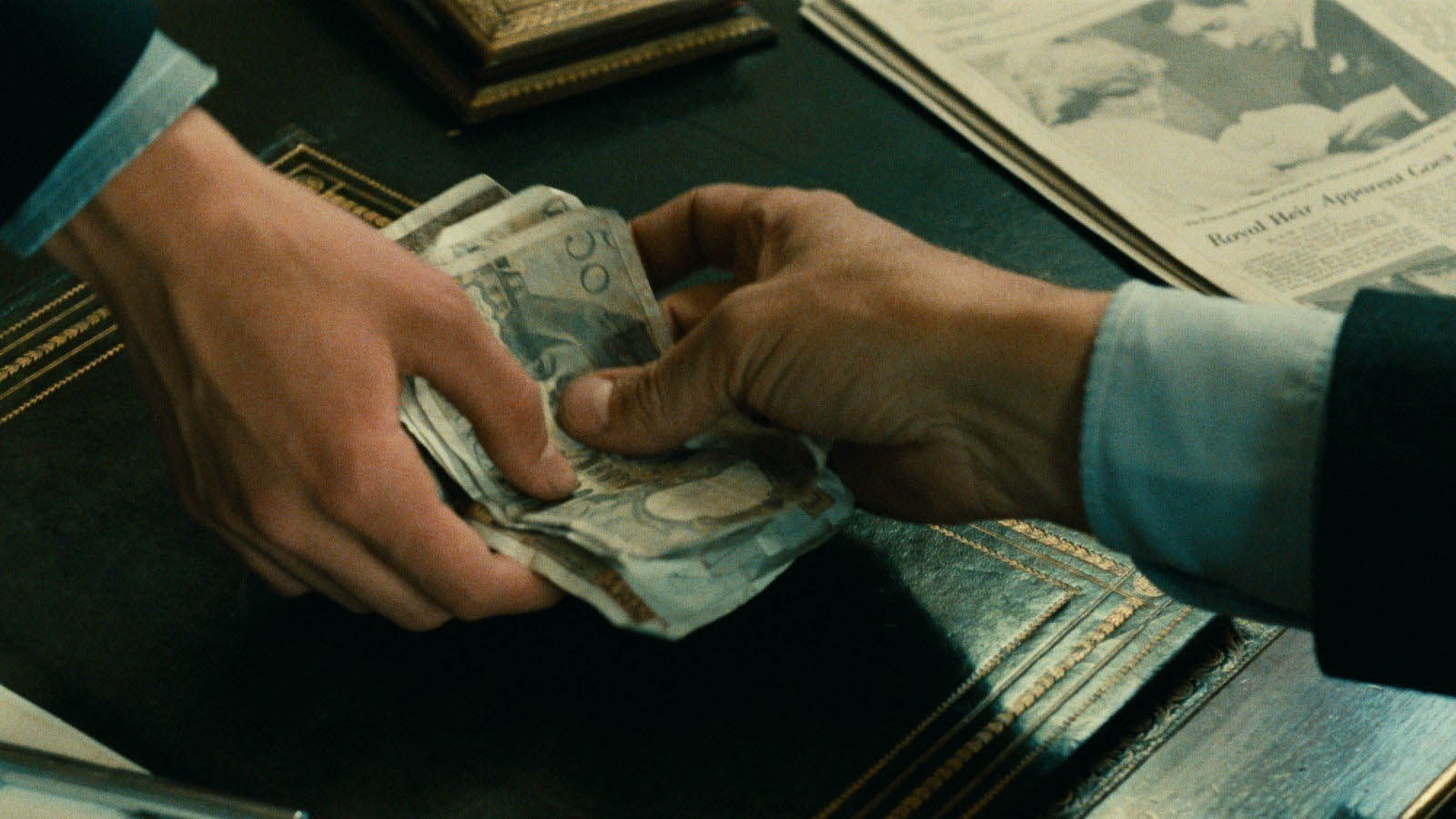
Pairing Robert Bresson and Chris Marker may seem like an odd curatorial choice, but as the programmers at the Cinemateca Brasileira in São Paulo explain in their notes on the series Bresson-Marker, which opens on Thursday and runs through July 9, there’s a prickly appeal in the juxtaposition. While both French filmmakers “challenged the limits of cinematographic language,” there isn’t much overlap between the two bodies of work in terms of theme, technique, or even context. But as the series plays out, setting one run of stylistic innovations next to another, entirely different one, the paths intersect in the year 1983, when both Bresson and Marker released films that “reflect on the state of society”—L’argent and Sans Soleil.
A “quest for refinement—in the sense of distillation, concentration, purification—was what really drove” Bresson, wrote Adrian Martin in the 2017 essay accompanying our release of L’argent. “In major works including Diary of a Country Priest (1951), Pickpocket (1959), Au hasard Balthazar (1966), Mouchette (1967), and Lancelot du lac (1974), he pared down every scene and shot, every movement and utterance of his performers, to the bare essentials. Each situation, image, and sound had to have a sharpness, a freshness, a novelty. That is why Bresson’s cinema is forever modern, forever new, no matter when, where, or how we encounter it.” L’argent maps “the workings of an entire capitalist system boiled down to the movement of a forged note and the unstoppable catastrophe that it triggers.”
Marker’s catlike curiosity led him to collaborate with figures as divergent as Alain Resnais (Statues Also Die, 1953), Walerian Borowczyk (Les astronautes, 1959), and Pierre Lhomme (Le joli mai, 1963). Best known for his dystopian short La Jetée (1963), Marker went on to work with Jean-Luc Godard, Agnès Varda, Joris Ivens, William Klein, Claude Lelouch, and Resnais on the documentary Far from Vietnam (1967) and with the leftist film collectives SLON and ISKRA before issuing his own assessment of the state of the left post–May 1968 with A Grin Without a Cat (1977).
As Catherine Lupton wrote in 2012, Sans Soleil “was greeted as Marker’s triumphant return to personal filmmaking.” This is “Marker’s tour de force as a cinematic essayist, all playful musings and meandering digressions, in which passing observations on such apparently banal subjects as pet cats and video games yield profound insights into the big issues of twentieth-century civilization: history, memory, political power, the function of representation, ritual and time.”
Subscribe to the RSS feed, and for news and items of interest throughout the day, every day, follow @CriterionDaily.