Eclipse Series 11: Larisa Shepitko

WINGS: TAKING OFF
Of all the dazzlingly talented filmmakers to emerge from the Soviet Union, Larisa Shepitko has remained one of the least widely known. While many of her film school contemporaries, including Andrei Tarkovsky, Sergei Parajanov, and her eventual husband Elem Klimov, went on to international renown, Shepitko has remained under the radar—even though at the height of her career she was on the verge of breaking through to the same kind of acclaim as her much better-remembered compatriots. Sadly, that career ended at the moment of her ascendance, when she was killed in a car crash outside of Leningrad at the age of forty, leaving behind a child, a husband to keep alive her legacy, and a brilliant, if small, body of work, comprising just four feature films.
Shepitko was born in Ukraine in 1938. When she was still very young, her father, a Persian officer, divorced her schoolteacher mother, leaving her to raise three children on her own. Following this early abandonment (which seems to have inflected her work, often dealing with loneliness or isolation), Shepitko moved at age sixteen to Moscow, where she eventually entered the famed All-Russian State Institute of Cinematography. Though at the time the Soviet film industry was still in a post–World War II downturn, soon enough Shepitko found herself part of a new generation of young filmmakers artistically encouraged by the freer atmosphere of Khrushchev’s thaw. Even more auspiciously, she came under the tutelage of one of the nation’s greatest film artists, seminal Soviet director Alexander Dovzhenko.
Dovzhenko was also from Ukraine, and Shepitko felt a kinship with him both in his celebration of their shared folk heritage and in his austerely poetic and social-realist imagery; Shepitko always maintained that he was her greatest influence. Her graduation film, Heat (1963), shows his impression, both in its parched agricultural setting and its spare, naturalistic style, and was famous for its arduous shoot amid the punishing conditions of its Kazakh steppe locations. Yet it was Shepitko’s first feature after graduation, 1966’s penetrating character study Wings, that truly announced a visionary new talent.
Starring beloved character actress Maya Bulgakova as a World War II fighter pilot turned headmistress, Wings heartrendingly brings to light the inner life of a forty-two-year-old woman who must reconcile remembrance of her illustrious past with her drab present reality. Shepitko brilliantly expresses this by contrasting her character’s stifling quotidian experiences, marked by claustrophobic interiors and tight compositions, with heavenly, expansive shots of sky and clouds, representing the freedom and exhilaration of her flying days, and Bulgakova effortlessly inhabits this stern but reasonable woman with empathy and surprising humor. The primary tone of Wings is one of ambivalence—about Russia’s Stalinist past and unsure future—and though it may seem surprising today, the film sparked much public debate, both for acknowledging a generation gap and for painting a war hero as a forgotten, lost soul. Still, Wings remains most effective as a finely detailed portrait of a woman looking back wistfully, made by another woman, full of promise, just looking ahead.
THE ASCENT: EVER GREATER HEIGHTS
Around the time of Wings’ release, Larisa Shepitko and the Soviet film industry were entering yet another new era, one in which the promises of Khrushchev’s thaw were fast receding. With Brezhnev appointed general secretary in 1964, a less intellectually open Communist Party was reemerging. Shepitko’s next film, a short for the omnibus feature Beginning of an Unknown Era (1967), about a young engineer who brings electricity to an impoverished village, was a casualty of its time; though the project was conceived as a commemoration of the fiftieth anniversary of the October Revolution, authorities deemed its depiction of the Bolsheviks as negative, and it would be shelved for the next twenty years. Nevertheless, Shepitko, who always considered herself a humanist rather than a strictly political filmmaker, was able to make two more feature films in the 1970s, the second of which would become the key to her cinematic legacy.
In 1971, her only color film, You and I, was released. Charting the lives of two male surgeons struggling with differing notions of fulfillment, the film was hailed as a masterful character study and critique of consumerism, and it solidified Shepitko’s reputation. But her greatest triumph was still to come. After having her son, Anton, at age thirty-five, under extreme risk of death due to a serious spine injury, Shepitko began to plan her darkest, grandest vision. “At that time, I was facing death for the first time, and like anyone in such a situation, I was looking for my own formula of immortality,” she would later say. Her cinematic response was 1977’s The Ascent.
At once a visceral, earthy evocation of life on the ground during World War II and a momentous, spiritual Christian allegory, The Ascent, adapted from a novella by prominent Russian writer Vasili Bykov, drags the viewer alongside two peasant Byelorussian soldiers, Sotnikov and Rybak, as they attempt to evade, and finally are captured by, marauding Nazis. From the film’s opening images of telephone poles haphazardly jutting out of snowdrifts like bent crosses, Shepitko, with cinematographer Vladimir Chukhnov, plunges us into a nightmarishly blinding whiteness, a physical and moral winter that envelops everything in its path—except, ultimately, the victimized and beatific Sotnikov, whose slow journey toward death brings a strange enlightenment. Such redemption eludes Rybak, whose ruthless desire for survival puts him at odds with the Christlike martyr Sotnikov, and Shepitko charts their twinned passages to darkness and light with a stunning arsenal of aural and visual experimentation.
This time, Shepitko created little in the way of controversy, as The Ascent’s Dostoyevskian war narrative dovetailed perfectly with the requisite nationalist pride. And the film played as well abroad as at home, winning the prestigious Golden Bear at the 1977 Berlin Film Festival. With her newly bankable artistic cachet, Shepitko set to work on a film about a Siberian village titled, eerily, The Farewell. On June 2, 1979, she was killed, along with four crew members, in a car crash while on location. Her husband, filmmaker Elem Klimov, was on set a week later to finish the project. Yet most critics maintained that the final product lacked Shepitko’s unique personal vision, obviously a point of view that could never be replicated.
More: Essays
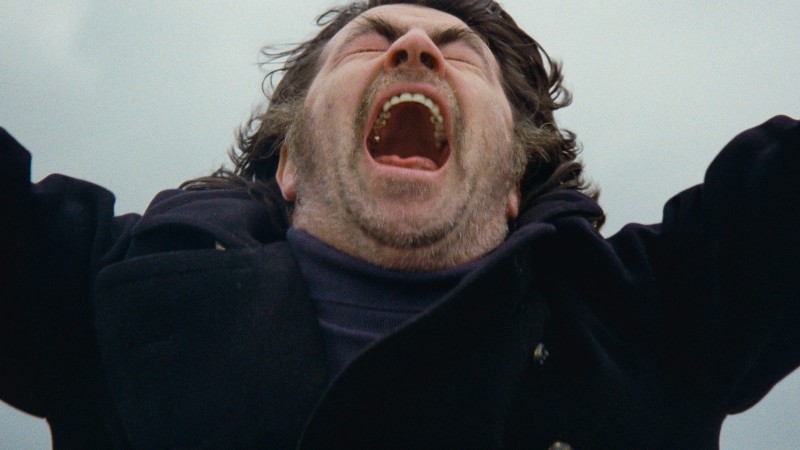
The Shout: Sound and Fury
Blending elements of psychological thriller, social satire, and psychedelic film, Jerzy Skolimowski’s Cannes-award-winning classic uses its audacious sound design to evoke the terror of English civilization.
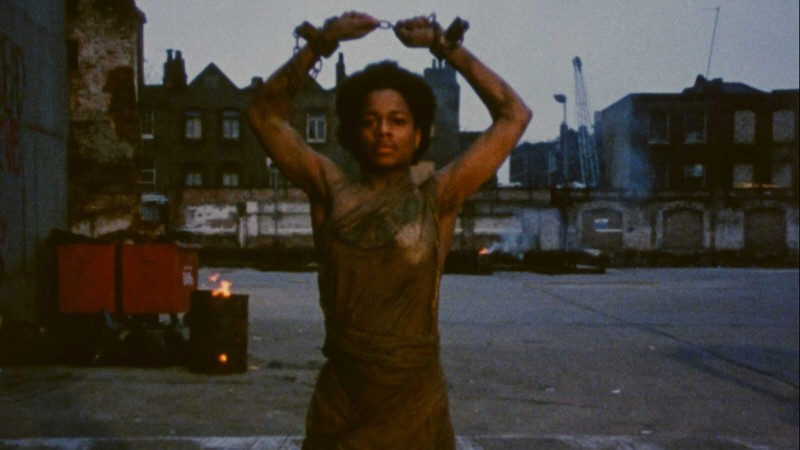
Welcome II the Terrordome: The Future Is Furious
A dystopian drama that draws on the influences of African mythology and hip-hop, Ngozi Onwurah’s debut feature uses a mix of speculative forms to expose anti-Blackness as a system that underpins the modern world.
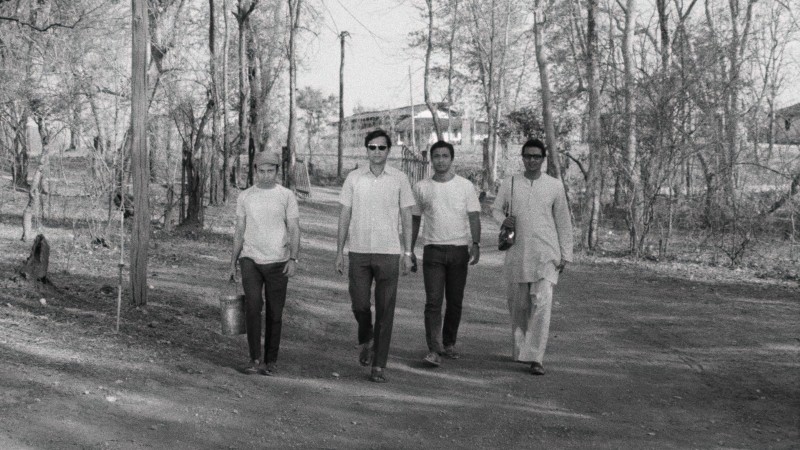
Days and Nights in the Forest: Into the Woods
In this tale of four privileged bachelors who embark on a trip to the Indian countryside, Satyajit Ray balances a biting critique of masculine fragility with splendid visual grace.
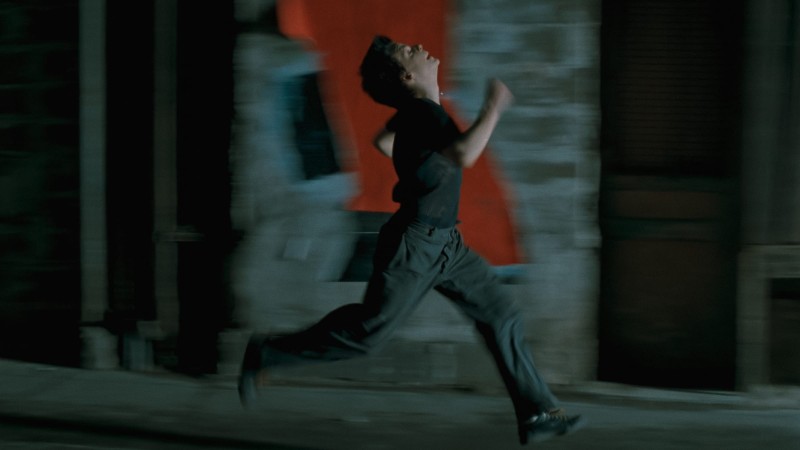
Three Films by Leos Carax: Vital Signs
With their mix of comedy, ecstasy, and aesthetic strangeness, the French auteur’s first three features grant us access to psychic states that we might not otherwise be able to enter.