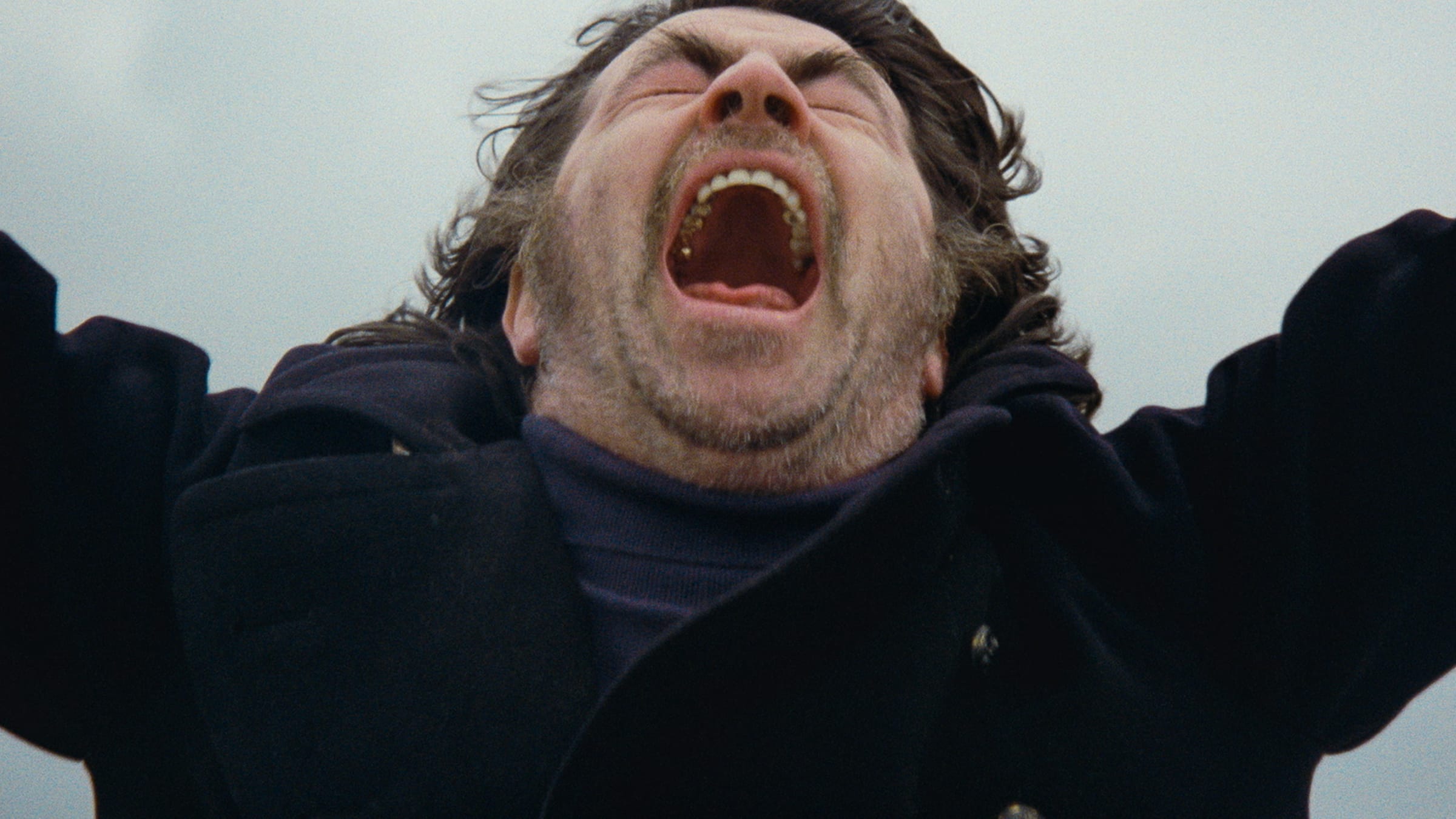
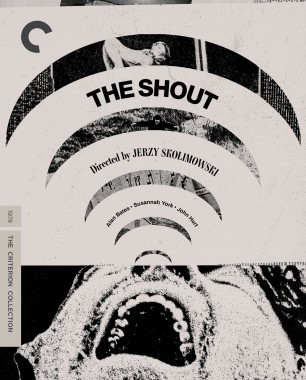
“Every word of what I’m going to tell you is true,” Crossley informs Graves at the start of his tale. “Only I’m telling it in a different way. It’s always the same story . . . but I change the sequence of events, and I vary the climaxes a little, because I like to keep it alive.” As played by Bates, Crossley is a figure of wild contrasts; he speaks in the actor’s low, sonorous voice, with a crisp, patrician accent honed at the Royal Academy of Dramatic Art, but he is also occasionally prone to far-fetched bits of folklore and philosophy, outlandish declarations, and shocking confessions. We would be right to be skeptical, as Anthony is, of what Crossley says about the “terror shout.” Indeed, even when he demonstrates it for his host—in a remote locale in the vast, windswept sand dunes—its true purpose and power remain as opaque as everything else about Crossley.
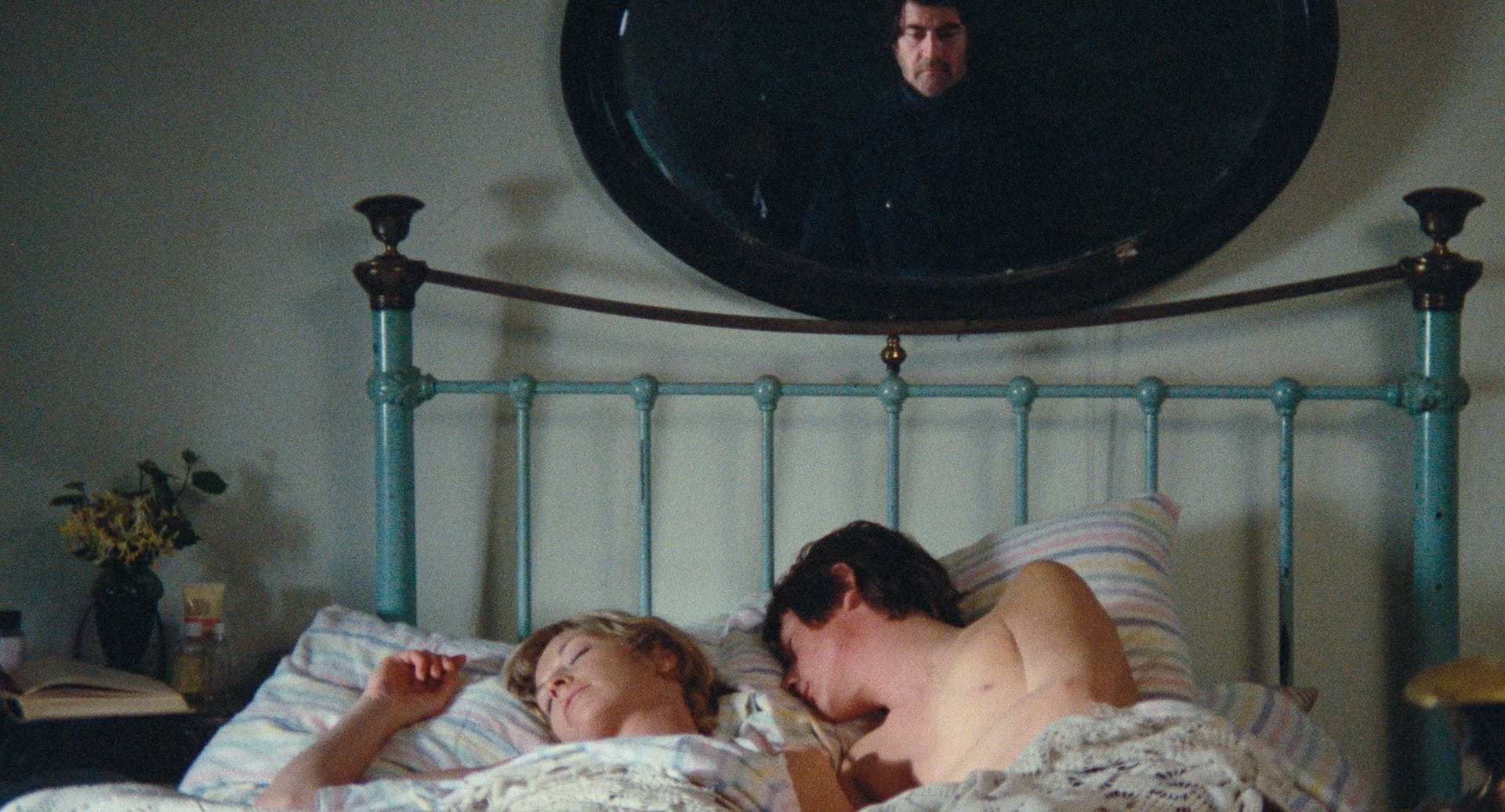
The terror of English civilization is deepened by the characters’ (principally Anthony’s) anxieties about masculinity, desire, and sexual potency. In this way, the film anticipates Skolimowski’s first American film, The Lightship (1985), which pits Robert Duvall’s dandy, queer-coded psychopath against Klaus Maria Brandauer’s oddly passive naval captain during a hostage takeover. In both films, the intrusion of a stranger into the protagonist’s world exposes the latter’s weakness and hypocrisy. It also seems to surface a degree of homosexual panic—an erotic tension between the two men and a fear of bodily proximity and domination. The “terror shout” is, after all, penetrative, which is why Anthony heeds Crossley’s advice to stuff candle wax in his ears for protection. Crossley’s insidious home invasion also entails the sexual conquest of Rachel, rendering Anthony a cuckold in his own house. The nature of the Fieldings’ relationship is itself quite unclear: it is at times very affectionate and intimate, and at others marked by indiscretion and lies.
In Bates, Hurt, and York, the film boasts a formidable cast. All three are among the most important actors of their generation, and each had by then amassed a remarkable body of work on stage and screen. In placing them alongside one another, Skolimowski heightens the tension of the characters’ power struggles, making deft use of his performers’ strikingly disparate body types and demeanors. As Anthony, Hurt sports a floppy head of fair hair and moves clumsily, his slight frame giving him a boyish appearance that is belied by his trademark gravelly voice. Contrasting with Bates—who is dark and imposing of stature, with a hint of romantic volatility and an almost Wellesian comportment—Hurt appears vulnerable, as he does in many of his key roles during this period: in Ridley Scott’s Alien (1979), where he is violently ruptured by an extraterrestrial fetus, and in David Lynch’s The Elephant Man (1980), where his entire body is a tortured form. He also often appears smaller in the frame than York’s Rachel, whose broad physicality makes her more at home in their cozy farmhouse than her skinny, nervy husband. Like her bold turns in Robert Aldrich’s The Killing of Sister George (1968) and Robert Altman’s Images (1972), York’s performance here feels very lived-in; her character is sensuous and mercurial both as a partner to Anthony and as a lover-slave to Crossley. In fact, while the film—which is filtered through Crossley’s perspective and foregrounds Anthony’s neurotic unraveling—seems to center a power struggle between men, Rachel is the most complex and variable of the trio, alternately submissive and dominant, grounded and untethered, warm and remote.
While it mines much of the same material found throughout the horror genre, The Shout belongs to a parallel cinematic lineage—more art-house than grindhouse. It was the first film produced by Jeremy Thomas’s legendary Recorded Picture Company, which would go on to make Bernardo Bertolucci’s The Last Emperor (1987), David Cronenberg’s Crash (1996), Jonathan Glazer’s Sexy Beast (2000), and Skolimowski’s EO (2022). The Shout is also a significant milestone in the long, storied career of its director. After leaving his native Poland in 1967, Skolimowski had an itinerant phase that yielded international coproductions in Belgium, Italy, and elsewhere in Europe. The Shout, which would go on to win the Grand Prix du Jury at the Cannes Film Festival, came in the middle of his highly productive decade-and-a-half sojourn in England, which began with his surrealist cult classic Deep End (1970) and ended with Success Is the Best Revenge (1984), a quasi-autobiographical film about a Polish theater director and his family exiled in England during the era of the antiauthoritarian Solidarność (or Solidarity) movement.
Despite the half century that separates Graves’s story from Skolimowski’s film—for which the director shares a writing credit with the original screenwriter, Michael Austin—The Shout is remarkably faithful to its source. Graves was an English poet and novelist who is now probably best known for I, Claudius, his 1934 novel about ancient Rome. (Notably, Hurt appeared in the role of Caligula in a TV adaptation of the book broadcast on the BBC in 1976.) The film retains his frame story and evokes his language’s eerie slippage between the mundane and the uncanny by frequently interrupting the narrative with dreams, premonitions, and hallucinations, destabilizing our sense of what is real and what the characters merely imagine. It also makes use of Graves’s sexual frankness. Bisexual and polyamorous, the author presents the Fieldings as a surprisingly modern couple for interwar Britain, suggesting they are in something of an open marriage. In fact, Graves, who wrote the story while suffering from the aftereffects of his service in the First World War, was partly inspired by his own experiences of being in a throuple with his first wife, Nancy Nicholson, and the poet Laura Riding.
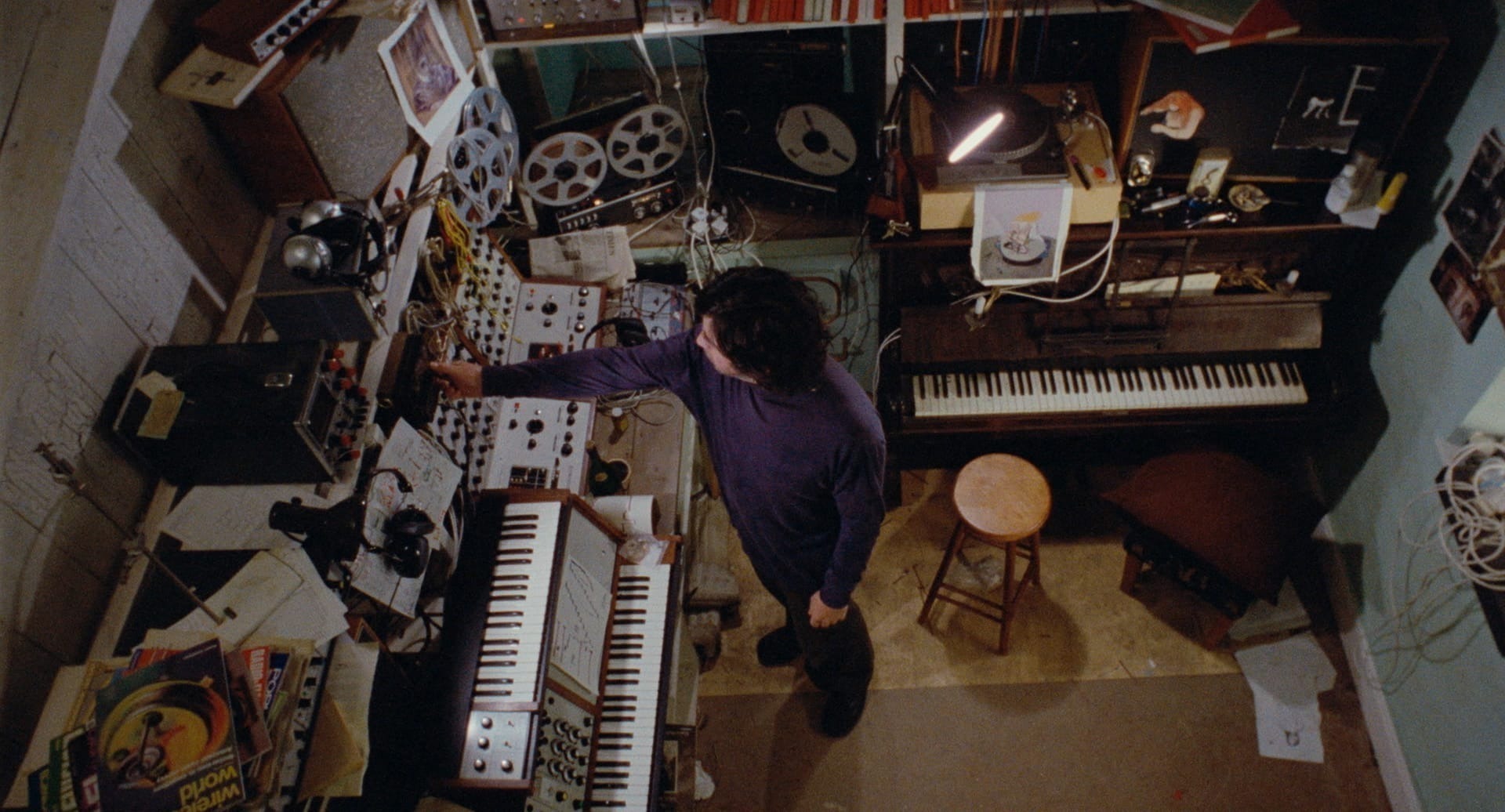
Some of the principal differences between the story and the film stem from the specific possibilities of their respective mediums. As literature, the former need only evoke the power of sound; the latter must let us hear it. Fortunately, in Skolimowski, The Shout has a director who has consistently demonstrated an inventive and experimental approach to sound design since his first feature—Identification Marks: None (1965), made while he was enrolled at the legendary Łódź Film School—which combines musical score, sound effects, and voice into rich and unusual soundscapes based in montage, layering, and postsynchronization. Later in his career, he increasingly incorporated popular music into his films’ soundtracks: Cat Stevens and Can both provided music for Deep End, and Genesis’s Tony Banks and Mike Rutherford supplied the main musical motif for The Shout—the sweeping ambient instrumental track “From the Undertow,” which also appears on Banks’s 1979 debut solo album, A Curious Feeling.