The Rules of the Game: Everyone Has Their Reasons

By February 1939, it no longer seemed evident that the surrender of Czechoslovakia to Adolf Hitler at Munich had “saved the peace.” A sense of doom was beginning to hang over Europe. In this atmosphere, Jean Renoir, anticipating war and deeply troubled by the mood he felt around him, thought he might best interpret that state of mind by creating a story in the spirit of French comic theater, from Marivaux to Musset, a tradition in which the force that sets every character in motion is love and the characters have no other occupation to interfere with this pursuit.
The result was The Rules of the Game, a dazzling accomplishment, original in form and style, a comic tragedy, absurd and profound, graced by two of the most brilliant scenes ever created. It is also, in the words of Dudley Andrew, “the most complex social criticism ever enacted on the screen.” A total box-office failure in 1939, The Rules of the Game now ranks as one of the greatest masterpieces of world cinema.
Throughout the 1930s, Renoir had worked at the margins of the French movie industry, exploring aspects of contemporary French society while developing a style in opposition to the one that emanated from Hollywood and dominated the film world. Renoir arranged his actors in deep space; long takes in deep focus allowed them to move freely in this space and gave them time to seek and achieve convincing characterizations. Then, in the late thirties, intent on creating rhythm and balance within complex narrative structures, he began constructing his films around matched opposing pairs, a form that helped bring coherence and resonance to his intricate story lines.
As he mastered this style, Renoir’s social commitments deepened. He became, in the midthirties, the film director of the left, his protagonists often working class rather than bourgeois. Still, for all his command, his films were seldom commercial hits. But then two big successes, Grand Illusion (1937) and La bête humaine (1938), encouraged him to act out a dream—to form his own production company, wherein he could work when and as he pleased. The Rules of the Game, the most expensive and ambitious French production of 1939, was the first film made under the auspices of that organization.
As he wrote the script, Renoir referred to the film as “an exact description of the bourgeoisie of our time.” He was so confident in his vision that he later claimed to have started shooting with only one-third of the script complete: “In reality, I had this subject so much inside me, so profoundly within me, that I had written only the entrances and movements, to avoid mistakes about them. The sense of the characters and the action and, above all, the symbolic side of the film was something I had thought about for a long time. I had desired to do something like this for a long time, to show a rich, complex society where—to use a historic phrase—we are dancing on a volcano.”
For his dancers, he finally chose not big stars but talented supporting players, old friends like Marcel Dalio, Gaston Modot, and Julien Carette, with an unknown Austrian princess, Nora Grégor, as his leading lady, Christine. He filled out the cast with such amateurs as the photographer Henri Cartier-Bresson, and himself played a major role, as Octave, the meddling court jester to the idle rich. Consequently, it is impossible to identify the central character in The Rules of the Game. “There is none,” Renoir said. “The conception I had from the beginning was of a film representing a society, a group. I wanted to depict a class.”
The class, of course, is the haute bourgeoisie, the upper middle class, whose blindness and intransigence had helped create the hopeless situation of Europe in 1939. To reveal the folly and the tragedy of that group and of his time, Renoir derived his action from two French classics, Alfred de Musset’s Les caprices de Marianne and Pierre-Augustin Caron de Beaumarchais’s Le mariage de Figaro, then shaped the cast into matched opposing pairs. For characters, he began with four from Les caprices de Marianne: jealous husband, faithful wife, despairing lover, and intervening friend. Doubling this group then yielded the central opposing pairs in The Rules of the Game: matched sets of husbands, wives, lovers, mistresses, and friends—one set among the masters, the other among the servants, thus evoking one of Renoir’s perennial themes, the relations among classes.
Luxurious town houses define the social setting of the film, and two remarks reveal its moral climate: “Love as it exists in society is merely the mingling of two whims and the contact of two skins” and “The awful thing about life is this: everyone has their reasons.”
Everyone has their reasons, but in The Rules of the Game, the reason is always the same: I love her/him. The differences lie in
the acts each character believes this reason justifies. These range from suicide to murder.
Once his central opposing pairs are formed, Renoir isolates his characters in the swampy beauty of the Sologne, France’s hunting country, where their game of love becomes a danse macabre through the halls and glittering salons of the Château de la Colinière, with the dancers changing partners as they go—a surreal scene that swings from joy to despair, from burlesque to tragedy, as the bourgeois world spins out of control. Richard Roud calls it “an astonishing combination of lengthy shots to create an effect of vertiginous simultaneity.”
The centerpiece of Renoir’s intricate structure, the pivot on which the action turns, the symbolic core of his critique of French society,
is the hunt, the scene that most clearly reveals the volcano that seethes beneath the dancers. In a film whose shots often run for a minute or more, here fifty-one shots appear in less than four minutes, in a mounting rhythm of cutting and movement that culminates in an awesome barrage of gunfire as, in twenty-two shots—fifty-three seconds—twelve animals die. Surely one of the most powerful scenes in all of cinema.
Though the world of the film seems at times one of sheer chaos, The Rules of the Game, seen whole, is lucid and as precisely constructed as the marquis’s mechanical instruments. Unfortunately, few Parisians in 1939 ever saw it whole. Later in his life, Renoir could laugh as he pronounced The Rules of the Game “a magnificent flop, perfect, complete,” for by then his “frivolous drama” was hailed as a masterwork. But in 1939, he was not amused. At the premiere, the Paris audience howled and whistled and threw things at the screen. In a week, ten minutes had been cut from the film, but audiences still hooted. In a few more weeks, the exclusive opening run had ended; this most ambitious production of the year had quickly become a commercial disaster. Renoir was so discouraged he thought he must either give up cinema or leave France. He did move to Hollywood a year later to avoid working under the Nazi occupation, abandoning the film to its fate.
Booed, banned, nearly destroyed, The Rules of the Game was reconstructed in 1959, with the approval of Renoir, to a length of 106 minutes. Thus viewers of this disc are afforded a privilege available to almost no one when the film was new: that of seeing The Rules of the Game as Jean Renoir intended it.
This piece was originally published in the Criterion Collection’s 2004 edition of The Rules of the Game.

More: Essays
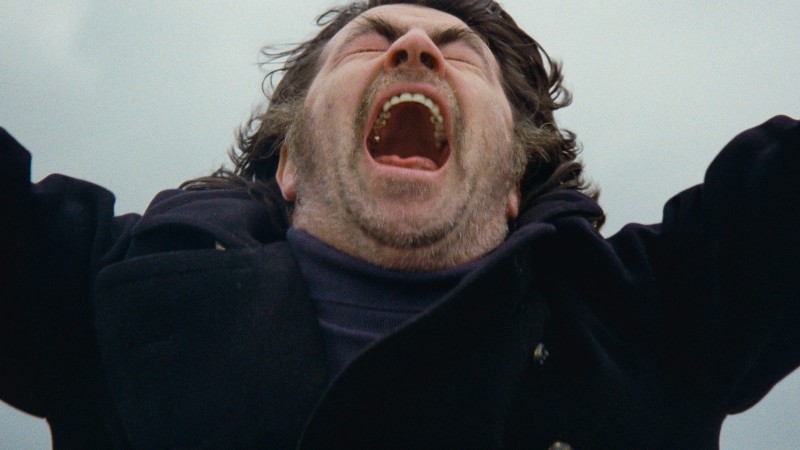
The Shout: Sound and Fury
Blending elements of psychological thriller, social satire, and psychedelic film, Jerzy Skolimowski’s Cannes-award-winning classic uses its audacious sound design to evoke the terror of English civilization.
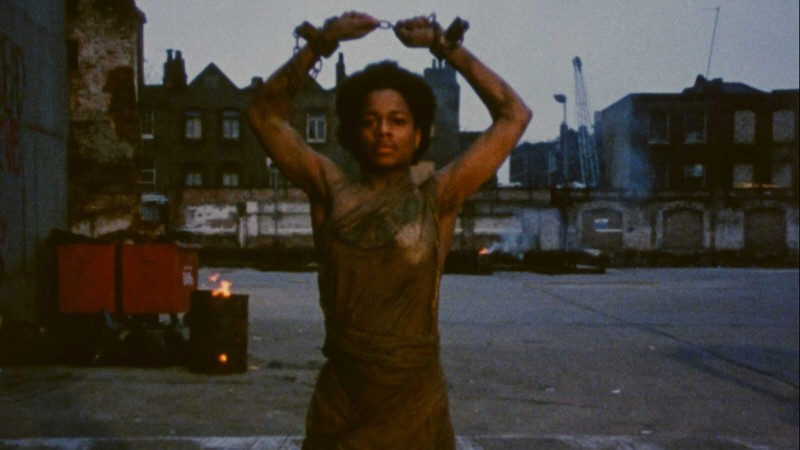
Welcome II the Terrordome: The Future Is Furious
A dystopian drama that draws on the influences of African mythology and hip-hop, Ngozi Onwurah’s debut feature uses a mix of speculative forms to expose anti-Blackness as a system that underpins the modern world.
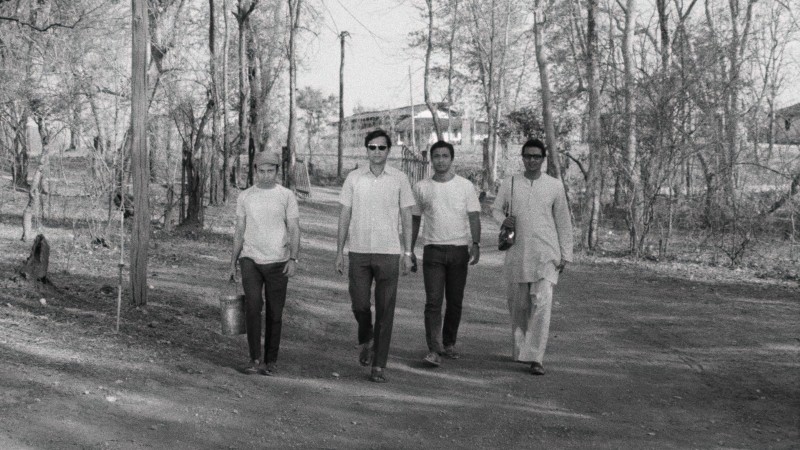
Days and Nights in the Forest: Into the Woods
In this tale of four privileged bachelors who embark on a trip to the Indian countryside, Satyajit Ray balances a biting critique of masculine fragility with splendid visual grace.
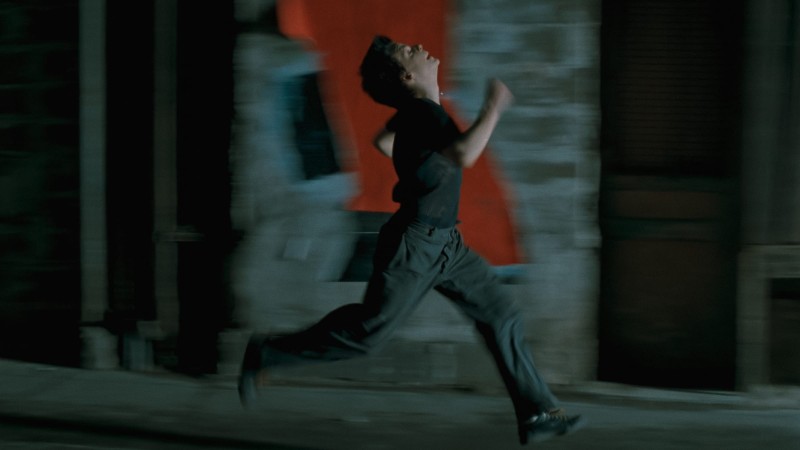
Three Films by Leos Carax: Vital Signs
With their mix of comedy, ecstasy, and aesthetic strangeness, the French auteur’s first three features grant us access to psychic states that we might not otherwise be able to enter.