Antoine and Colette: Young and In Love

On January 19, 1950, the seventeen- (going on eighteen-) year-old François Truffaut attended a 4 p.m. screening at the Cinémathèque française. He met a girl named Liliane Litvin. Truffaut was so smitten that he quit his job in the suburbs and moved back to Paris. According to his biographers Serge Toubiana and Antoine de Baecque, Liliane was an unconventionally beautiful young woman, so beautiful that Truffaut had to compete for her attention with his pals Jean Gruault (his future screenwriting partner) and Jean-Luc Godard. Liliane’s trio of suitors each individually tried to win her affection by spiking their conversation with literary references, but she promised herself to no man. Undeterred, Truffaut eventually installed himself in a hotel across the street from the Litvins’ apartment.
Toubiana and de Baecque reckon that it was with an eye to impressing Liliane that Truffaut began his dazzling rise to fame in the world of the Parisian intelligentsia. After winning an “eloquence competition” at the Club du Faubourg, he secured a plum job at Elle magazine (one of his assignments was a visit to the set of Robert Bresson’s Diary of a Country Priest). He was already a well-established journalist when he attended Liliane’s bacchanalian birthday party on July 4, also attended by Godard and Gruault, along with Eric Rohmer, Alexandre Astruc, Jacques Rivette, Claude Chabrol, and a host of others. For the frustrated Truffaut, the evening ended with a suicide attempt, and a few months later he decided to “forget” by joining the army. By the next July, he was a deserter, and he spent many months in and out of the military prison at Koblenz before he was released in 1951 (his discharge interview is chronicled, in humiliating detail, in 1968’s Stolen Kisses). Truffaut continued to carry a torch for Liliane—there were many, many other women in his life, but she was the only one for whom he cared. It was only when she became pregnant with another man’s child that Truffaut decided it was time to cut bait.
Eleven years later, Truffaut was the toast of the international film world. He had put the commercial disaster of his sophomore effort, Shoot the Piano Player (1960), behind him, and his third film, Jules and Jim (1962), was a rousing success. He had his own production company, and he was a force to be reckoned with. Without much enthusiasm, perhaps intending to keep his hand in while he was between projects, he accepted an invitation from producer Pierre Roustang to take part in an international omnibus film called Love at Twenty (1962). Truffaut recommended two youthful comrades with excellent cinematic pedigrees, Renzo Rossellini and the young Marcel Ophuls, to direct segments.
For his little story, Truffaut decided to revive Antoine Doinel, the hero of The 400 Blows (1959), and to turn to the epic frustration of his relationship with Liliane for subject matter. He placed the following ad in Cinémonde: “François Truffaut seeks fiancée for Jean-Pierre Léaud and for Love at Twenty. Jean-Pierre’s partner must be a real girl, not a Lolita, not a leather-jacket type, not a little young woman. She must be simple and cheerful, and have a good, average sense of culture. If too ‘sexy,’ please abstain.”
He eventually decided to cast an amateur teenage actress from Nice named Marie-France Pisier. With his erstwhile collaborators Raoul Coutard and Suzanne Schiffman, he shot for a week near Place Clichy and Batignolles. The more involved he became with his little project (call it 3½), the more he liked it. How much his increasing affection for Antoine and Colette corresponded to his increasing affection for his leading lady is open to question.
Along with passages of The 400 Blows, Two English Girls (1971), and The Woman Next Door (1981), the half-hour Antoine and Colette is among the most beautiful things Truffaut ever committed to film. There is something bracing about its swiftness alone, and about the way Truffaut slices so confidently through his material, both expository (Antoine’s modest living situation, his job, his determination to land Colette) and emotional (a love of Paris, a deep attachment to music, and a burning desire for women, all three traits shared by the director and his alter ego). An entire universe of male adolescent experience is set up in nothing flat: feigned worldliness (of Antoine and his pal René, played by Patrick Auffay, reviving his original role from The 400 Blows), the protocols of flirtation (definitively rendered in the quick exchange of glances and gestures between Antoine and Colette during a concert, every turn of the head and cross of the legs choreographed by Truffaut), the tantalizing but eventually debilitating enterprise of trying to bend the will of the woman you love, the disconcerting but oddly comforting realization that her parents like you more than she does.
It’s fascinating to consider the similarities and the differences between François and Antoine. Truffaut was making his living as a welder when he first met Liliane, but he gives Antoine a more interesting job as a record presser in a Philips plant (in a fascinating—and swift!—sequence where Truffaut indulges what Luc Moullet has identified as the director’s documentary impulse). He also shifts Antoine and Colette’s cultural meeting ground from the cinematheque to the concert hall, the first of many replacements Truffaut would find for his chosen art form: literature in many films, theater in The Last Metro (1980), pedagogy in The Wild Child (1970), the dead in The Green Room (1978)—interesting that Day for Night (1973), the one movie in which Truffaut takes the cinema itself as his subject, is one of his tamest.
More intriguing is Antoine himself. Léaud at all ages seems at once more manic and concentrated than Truffaut, enraptured by his own insights and deeply, almost stubbornly alone. This feeling of recessiveness in the actor and his character are quite far from the young Truffaut, a wildly ambitious figure who enjoyed a meteoric rise in the world of arts and letters. His compulsive drive didn’t go into his characters, who tend to become lost in the thrall of their own obsessions. The drive went into the filmmaking, in an effort to render an image of that fleeting apparition known as human experience. Which he manages in this little film with amazing fluency and delicacy.
Truffaut hones his perceptions down to a fine cinematic point—Antoine opening his windows onto a fine gray Parisian morning, an indifferent Colette greeting her would-be suitor at the door of her apartment by taking a bite out of an apple, the final image of Antoine sitting before the TV with Colette’s parents, like Marcel visiting Odette’s salon, are unforgettable. But Antoine’s blank, uncomprehending stare as he reads Colette’s response to his written declaration of love is priceless, and her opening gambit is for the ages:
“Dear Antoine, Your love letter was well-written . . .”
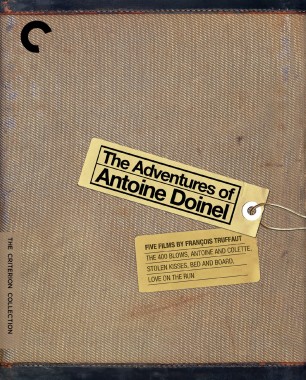
This essay was originally published in the Criterion Collection’s 2003 edition of The Adventures of Antoine Doinel.
More: Essays
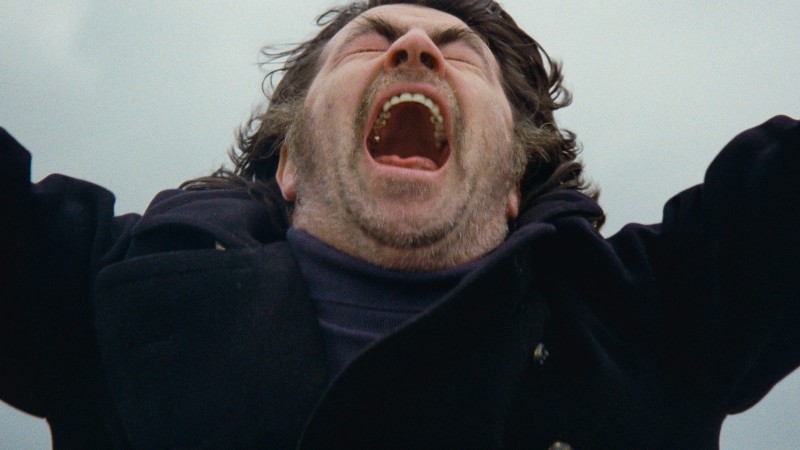
The Shout: Sound and Fury
Blending elements of psychological thriller, social satire, and psychedelic film, Jerzy Skolimowski’s Cannes-award-winning classic uses its audacious sound design to evoke the terror of English civilization.
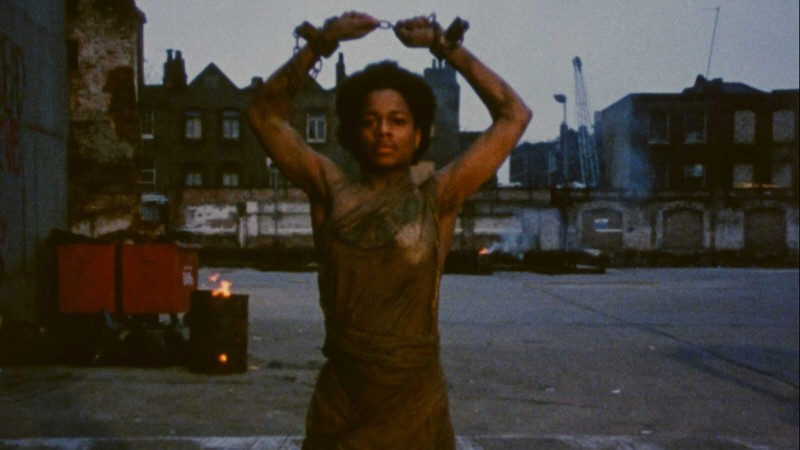
Welcome II the Terrordome: The Future Is Furious
A dystopian drama that draws on the influences of African mythology and hip-hop, Ngozi Onwurah’s debut feature uses a mix of speculative forms to expose anti-Blackness as a system that underpins the modern world.
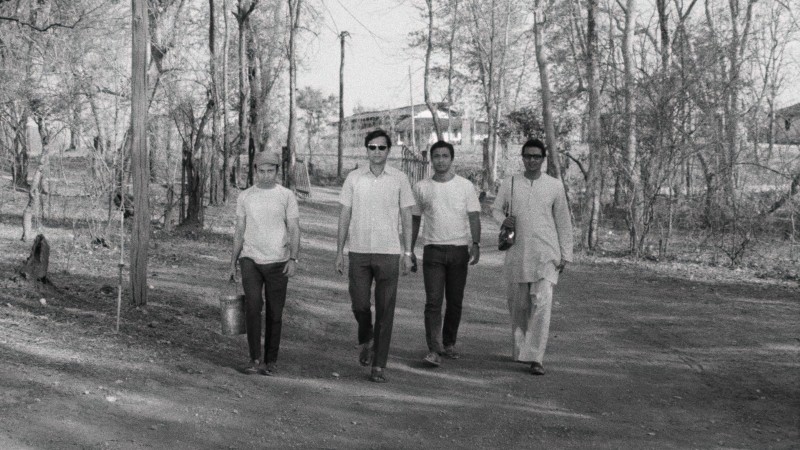
Days and Nights in the Forest: Into the Woods
In this tale of four privileged bachelors who embark on a trip to the Indian countryside, Satyajit Ray balances a biting critique of masculine fragility with splendid visual grace.
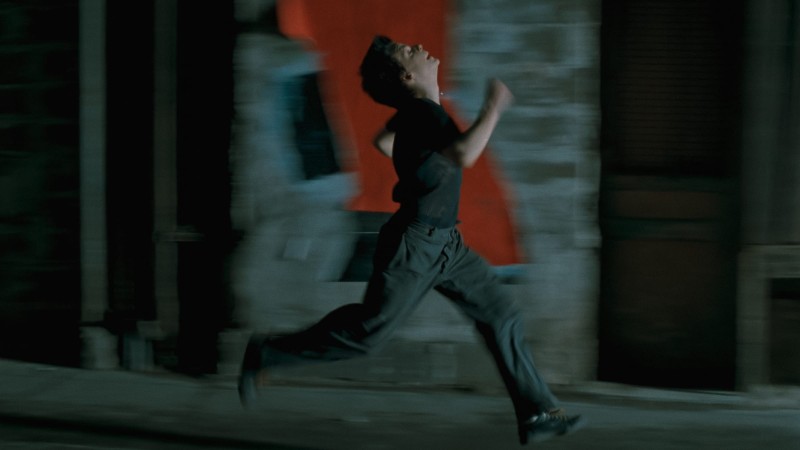
Three Films by Leos Carax: Vital Signs
With their mix of comedy, ecstasy, and aesthetic strangeness, the French auteur’s first three features grant us access to psychic states that we might not otherwise be able to enter.