The Lady Vanishes

In The Lady Vanishes, Alfred Hitchcock pushes the romantic comedy-thriller form to perfection. Endlessly imitated, the film remains unique, even in Hitchcock’s canon. In no other movie but North by Northwest was he able to blend these two genres so perfectly. In the other, similar hybrids, one element tends to dominate: the suspense in The 39 Steps, the romance in To Catch a Thief, or the comedy in The Trouble with Harry. Watching The Lady Vanishes, we’re as beguiled by the sparkling repartee of the lovers Iris and Gilbert and the daft by-play of cricket buffs Caldicott and Charters as we are riveted by the shocks and stunning plot turns. The central premise itself is wonderfully adroit: the unaccountably missing governess, Miss Froy, vanishes on a train where everyone denies she ever existed. This conundrum, which the intrepid lovers try to unravel, adds another spice; and even though Hitchcock often insists he was not a maker of mystery stories—that his concern was suspense, not surprise—this plot is a beauty, with an impossible crime and a gallery of colorful suspects worthy of Agatha Christie or Ellery Queen: an ingenious enigma that keeps us guessing right up to the moment of revelation. (Typically for Hitchcock, this occurs with almost a quarter of the movie, and the two most exciting sequences, still to come.)
Adapted by Sidney Gilliat and Frank Launder from Ethel Lina White’s novel The Wheel Spins, the film’s premise has a real-life antecedent: the disappearance of a young woman’s brother during the 1880 Paris Exposition, at a hotel where everyone denied his existence because he had died of plague. This story was filmed by Terence Fisher in 1950, as So Long at the Fair. The Lady Vanishes script, written in 1936, is a clear attack on Britain’s isolationist foreign policy under Chamberlain in the face of threats to Europe. (Indeed, the film’s official appeaser, Todhunter, is shot in the back while trying to surrender.) The villains are obvious Nazi surrogates. The whole element of international intrigue was added to White’s simple murder mystery by Gilliat and Launder, as well as some astonishingly irreverent political commentary and many of the characters. The dialogue has a wonderful snap and savor, a mixture of brash impudence and British understatement—and in many ways the triumph of The Lady Vanishes is as much Gilliat’s and Launder’s as Hitchcock’s. Ironically, despite its close identification with him, this is one of a handful of his scripts after 1934 that Hitchcock neither initiated nor worked on extensively. Indeed, it was intended for another director. Roy William Neill, later responsible for most of the Basil Rathbone-Nigel Bruce Sherlock Holmes series, was in overall charge when the second unit commenced location shooting in Yugoslavia in 1936; and he would have remained, but for a faux pas with the government that resulted in the company’s exile. Hitchcock revived, and recast, the project a year later—because he liked the script and because he had one film to go on his Gaumont British contract. The only major changes he requested were a speeded-up opening, and a new, more exciting, climax.
Characterization is crucial to the movie. As much as Stagecoach or Casablanca, this is a film full of people one remembers and loves. Where could you find a prettier, pluckier, more determined heroine than Margaret Lockwood’s Iris Henderson? Or a shrewder, more impertinently charming hero than Michael Redgrave’s wry young music scholar, Gilbert? Lockwood, in 1938, was a reigning British box office queen, and Redgrave was making his film debut; yet they play together with a delicious chemistry that suggests years of partnership. Where could one find a more suave, worldlier skeptic than Paul Lukas’ Dr. Hartz? Or a more eerily genial magician than Philip Leaver’s Signor Doppo? Or a more sublime pair of aging British public school boys than Naunton Wayne and Basil Radford’s ineffable Caldicott and Charters?
The Lady Vanishes is an illusionist’s trick in which one never really wants to outguess the trickery. François Truffaut, who claimed that he often caught it twice in a single week, told Hitchcock: “Since I know it by heart, I tell myself each time that I’m going to ignore the plot (and study the technique and effect). But each time, I become so absorbed by the characters and the story that I’ve yet to figure out the mechanics of the film.” Indeed, the film, which begins on an obvious model set, has some of the toy-like charm of a puppet film or cartoon; its setting is a fairytale land, a Balkan nation seemingly composed of equal parts of Yugoslavia, Czechoslovakia and even Switzerland (the landscapes were actually shot in the south of France), through which races a train which is a conjurer’s trick of studio sets, transparencies, miniatures and optical effects. One doesn’t question the train’s reality any more than one doubts the existence of Miss Froy.
The Lady Vanishes represents the acme of Hitchcock’s special brand of humor. Two years later, he was in America, and, though in the following decades his flair for suspense was heightened, the humor flourished only in odd segments and his acidulous TV show introductions. The Lady Vanishes remains the funniest film he ever made. The first time or the hundredth, the special alchemy of laughs, love and terror keeps its spell. The lady may vanish, but the movie stays with us always.
More: Essays
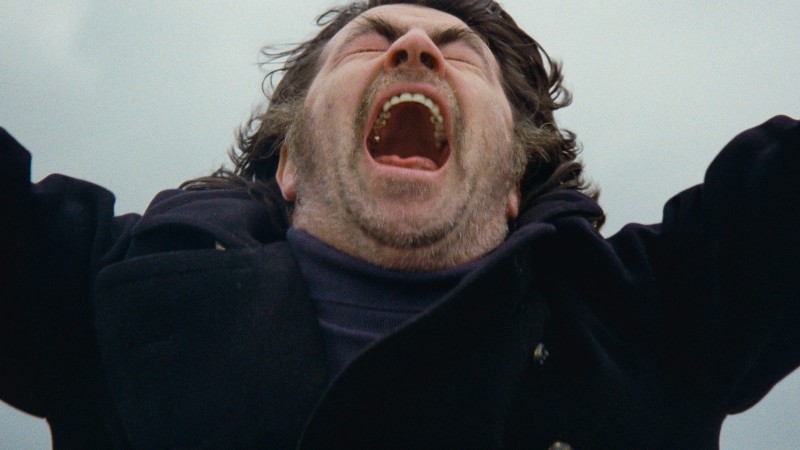
The Shout: Sound and Fury
Blending elements of psychological thriller, social satire, and psychedelic film, Jerzy Skolimowski’s Cannes-award-winning classic uses its audacious sound design to evoke the terror of English civilization.
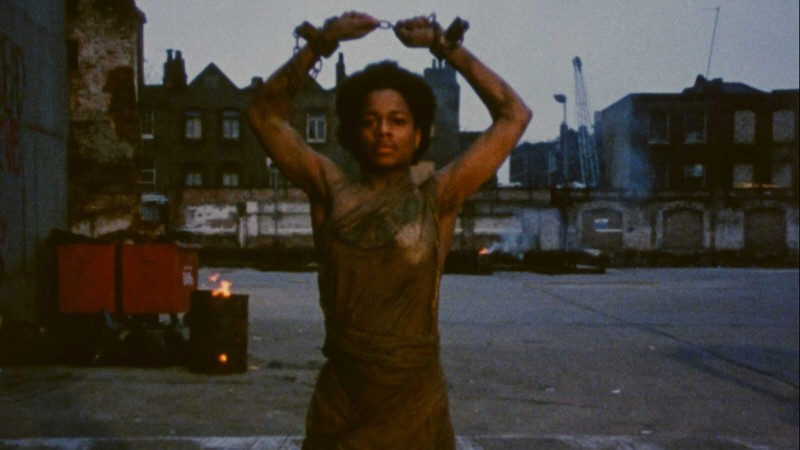
Welcome II the Terrordome: The Future Is Furious
A dystopian drama that draws on the influences of African mythology and hip-hop, Ngozi Onwurah’s debut feature uses a mix of speculative forms to expose anti-Blackness as a system that underpins the modern world.
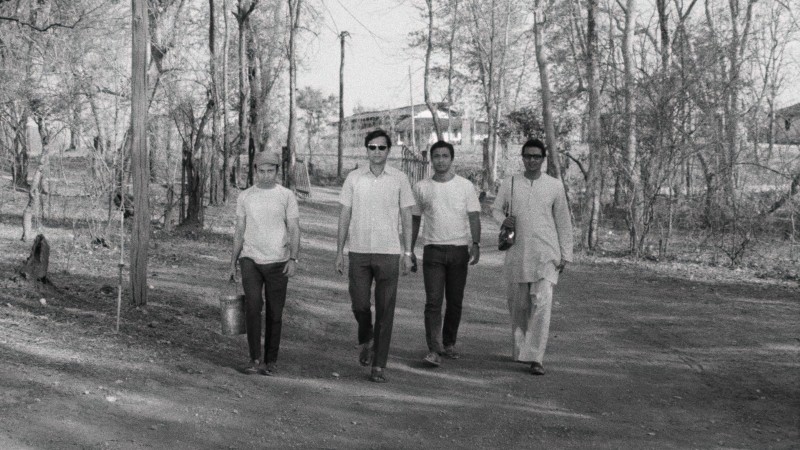
Days and Nights in the Forest: Into the Woods
In this tale of four privileged bachelors who embark on a trip to the Indian countryside, Satyajit Ray balances a biting critique of masculine fragility with splendid visual grace.
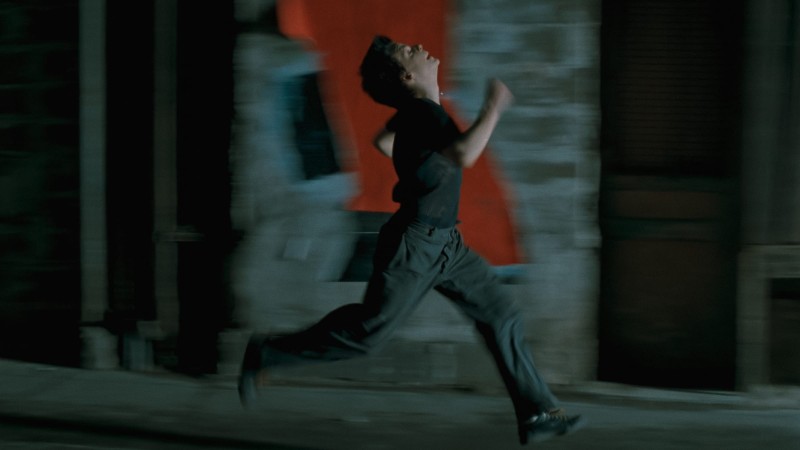
Three Films by Leos Carax: Vital Signs
With their mix of comedy, ecstasy, and aesthetic strangeness, the French auteur’s first three features grant us access to psychic states that we might not otherwise be able to enter.