Walkabout

For many years now, one legendary film has appeared on every list of fine movies that are missing from distribution and home video. That film is Nicolas Roeg’s Walkabout, the 1971 drama about a fourteen-year-old girl and her little brother, who are lost in the Australian outback and are saved by a young Aborigine who is, indeed, walking about as his rite of passage into manhood. No one who saw Walkabout has ever forgotten it, and now it has been restored with some additional scenes in a new director’s cut on this Criterion edition.
Roeg was a cinematographer before he was a director, and this is one of the best-photographed films ever. It’s also a meditation about living on earth, which finds beauty in the way mankind’s intelligence can adapt to harsh conditions while civilization just tries to wall them off or pave them over. Walkabout is one of the great films.
Is Walkabout only about what it seems to be about? Is it a parable about noble savages and the crushed spirits of city dwellers? That’s what the film’s surface suggests, but I think it’s about something deeper and more elusive: the mystery of communication. In the end, lives are destroyed, in one way or another, because two people could not invent a way to make their needs and dreams clear.
The movie takes its title from a custom among the Australian Aborigines: At the time of transition to young manhood, an adolescent went on a “walkabout” for six months in the outback, surviving (or not) depending on his skills at hunting, trapping, and finding water in the wilderness.
Aboriginal culture has a less linear sense of time than that of a clock-bound society, which the time-line of the movie suggests. Does everything happen exactly in the sequence it is shown? Does everything even happen at all? These questions lurk around the edges of the story, which is seemingly simple: The three young travelers survive in the outback because of the Aborigine’s skills. And communication is a problem, although more for the girl than for her little brother, who has a child’s ability to cut straight through the language to the message.
I think the film is neutral about each character’s goals. Like its lizards that sit unblinking in the sun, it has no agenda for them. The film sees the life of civilization as arid and unrewarding, but only easy idealism allows us to believe that the Aborigine is any happier, or that his life is more rewarding (the film makes a rather unpleasant point of the flies constantly buzzing around him).
Nicolas Roeg does not subscribe to pious sentimental values; he has made that clear in the quarter-century since Walkabout, in a series of films that have grown curiouser and curiouser: In Don’t Look Now, The Man Who Fell to Earth, Insignificance, Track 29, Bad Timing, and other films—many of them starring his wife, Theresa Russell—he has shown characters trapped inside their own obsessions, fatally unable to communicate with others; all sexual connections are perverse, damaging, or based on faulty understandings.
In Walkabout, the crucial detail is that the two teenagers never find a way to communicate, not even by using sign language. This is in part because the girl feels no need to do so: Throughout the film she remains implacably middle-class and conventional, and regards the Aborigine as more of a curiosity and convenience than as a fellow spirit, ignoring his sexual advances.
The movie is not the heartwarming story of how the girl and her brother are lost in the outback and survive because of the knowledge of the resourceful Aborigine. It is about how all three are still lost at the end of the film—more lost than before, because now they are lost inside themselves instead of merely adrift in the world.
The film suggests that all of us are the captives of environment and programming: There is a wide range of experiment and experience that remains forever invisible to us, because it falls in a spectrum we simply cannot see.
More: Essays
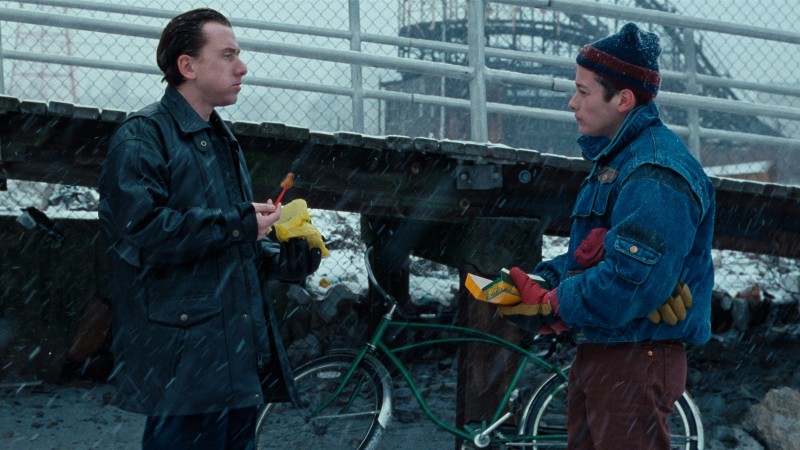
Little Odessa: He Ain’t Heavy, He’s My Brother
James Gray’s extraordinary debut feature is a painstakingly distilled tale of crime and family dysfunction, captured with a merciless gaze and a sharp attention to idiosyncratic detail.
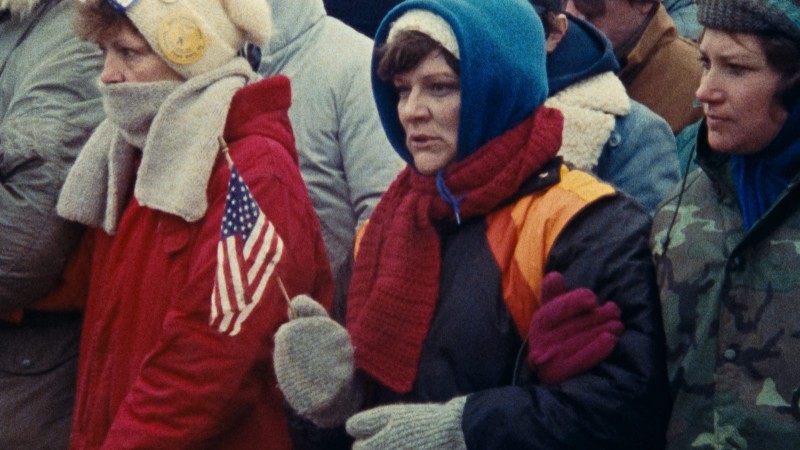
American Dream: The Time Is Right
In her second film, Oscar-winning documentarian Barbara Kopple captures the anguish and perils of disunity in the labor movement and the corrosion of union power during the Reagan era.
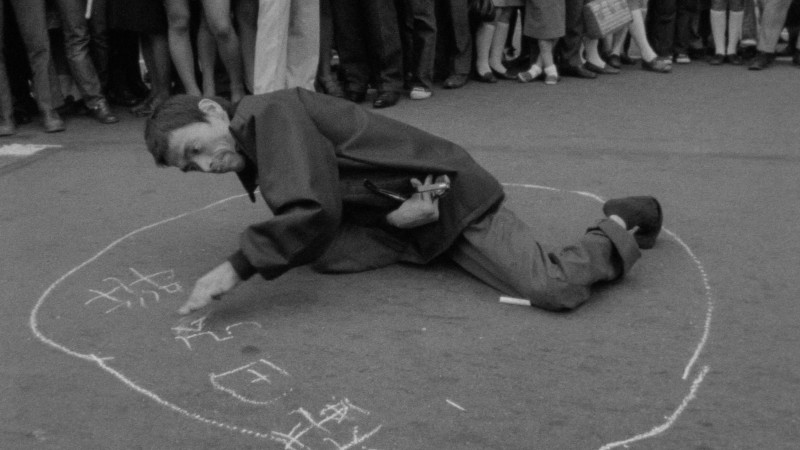
Five Radical Documentaries by Kazuo Hara and Sachiko Kobayashi: Restlessness Refusing Resolution
The pioneering husband-and-wife duo transformed the field of Japanese nonfiction cinema with their portraits of spectacular, edgy personalities and collectives under duress.
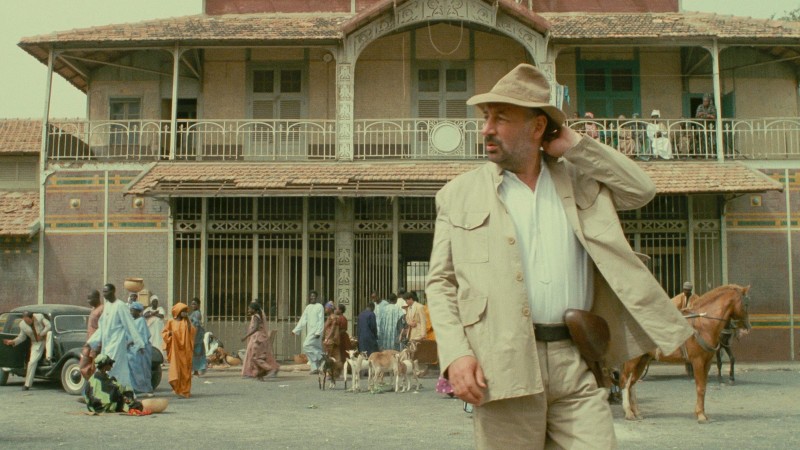
Coup de torchon: “All Crimes Are Collective”
Set in 1930s French West Africa, Bertrand Tavernier’s hard-to-classify adaptation of the Jim Thompson novel Pop. 1280 offers an apocalyptic vision of a society in which institutions have abdicated their moral authority.