M. Hulot’s Holiday

One of the most original—and hilarious—comedies ever made, M. Hulot’s Holiday has delighted and disarmed moviegoers the world over since its first appearance in 1953. There’s little in the way of plot or dialogue to this French-made farce about a group of vacationers at a small seaside hotel. But an unconventional form has not stood in the way of audience appreciation of the film’s comic content—good, old-fashioned slapstick fun. Writer-director Jacques Tati’s penchant for physical wit has prompted many to compare M. Hulot’s Holiday to the silent classics of Charlie Chaplin and Buster Keaton. And truth to tell, the temptation for comparison is just about irresistible in light of the film’s hero, the hilariously accident-prone M. Hulot—played by Jacques Tati himself.
With his tilted, loping walk, quirky physical mannerisms and self-absorbed air, the tall, gawky M. Hulot is something of a comic Everyman. Whether attempting to grapple with a heavy suitcase, a temperamental horse, or a faulty motor car, Hulot is plainly not the man for the job. But like all the great movie clowns, Hulot—for all the scrapes he gets into—still manages to land on his feet, unshaken by his experiences, and largely unaware of the comic havoc that he has inadvertently wreaked on those who’ve crossed his path.
Still, for all the lines that might be drawn connecting Tati’s Hulot with Chaplin’s Tramp or Keaton’s “Great Stoneface,” there are important differences as well. As Tati describes it, “What I wanted to present with the character of Hulot was a man you can meet in the street, not a music hall character. He does not know that he is being funny.” Hulot is indeed a perfectly ordinary fellow. Chaplin and Keaton are always the instigators of comic situations. Hulot grapples with circumstances set in motion by others. More important, unlike his comic predecessors, Hulot is not the whole show. In Tati’s eyes the antics of the other hotel guests are equally deserving of attention—and laughter.
Hulot’s comic comings and goings are part of a network of gags and situations woven together and unfolded simultaneously on screen. We may be following Hulot principally, but we are also tracking the movements of a small family, a young woman on holiday alone, a constantly strolling middle-aged couple, a constantly squabbling pair of hotel waiters, and any number of small children, pulling pranks or simply wandering about between the seashore and the hotel.
Tati keeps all this action in focus through a virtual mastery of comic film technique. He never uses close-ups. The camera is always placed mid-distance from the action—exactly where we’d be standing if we happened to be a casual passerby in real life. What he puts within each shot is equally realistic. In the world of Mack Sennett or Laurel and Hardy, the most unlikely people, places and things are continually brought together for the broadest possible comic effect. Tati, by contrast, takes the world pretty much as it is—only slightly exaggerating people and incidents for comic effect. As a result Tati finds humor in the most mundane of circumstances.
The sight of a group of guests waiting in a hotel lobby would not, to most minds, suggest a prime comic opportunity. But it does to Tati, as he underscores the situations with a fine—but gentle—satirical eye. Each guest has his or her own slightly eccentric manner or mode of dress. And each has a different reaction to the presence of the others. Hulot enters and immediately causes havoc by forgetting to close the hotel’s front door. The wind blowing through the door into the lobby has the force of a miniature tornado resulting in things being dropped and people bumping into one another—much like the stateroom scene in the Marx Brothers classic A Night at the Opera. But instead of the surreal extremes of the Marx Brothers, with Tati we see a scene we can “place” in real life.
Tati’s penchant for realism, combined with his taste and restraint, make M. Hulot’s Holiday the sort of comedy that one can enjoy again and again. A first viewing will have you laughing at the classic comedy scenes like Hulot’s tennis game, or the uproarious scene in which the hapless Hulot finds himself mistaken for a mourner at a country funeral—and that’s not to mention the bits with the muddy footprints, the raucous jazz record, or the runaway car.
But later viewings reveal something else, for Tati is the antithesis of the laughs-at-any-price gagman. He wants us to laugh, but he also wants something more. In the words of critic Pauline Kael, “Tati is sparse, eccentric, quick. It is not until afterward—with the sweet nostalgic music lingering—that these misadventures take on a certain poignancy and depth.” For film director Jean-Luc Godard it’s this subtle afterglow—a comic yet becalmed view of the world—that really counts. “This is what interests Tati. Everything and nothing. Blades of grass, a kite, children, a little old man, anything, everything which is at once real, bizarre, and charming.”
More: Essays

Sentimental Value: Between Trauma and the Sublime
In this powerful drama about family and memory, Joachim Trier explores how the past lives on in us, shapes us, and partly determines who we are and how we feel.
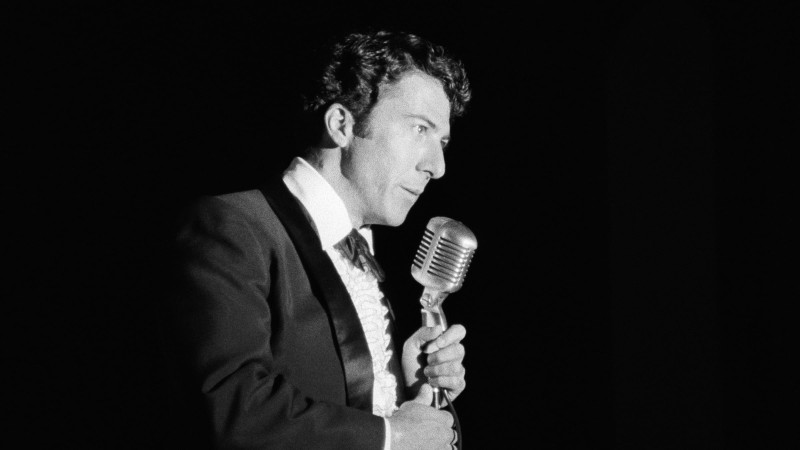
Lenny: High-Wire Act
Featuring a quasi-documentary format that was innovative for its time, Bob Fosse’s complex portrait of stand-up comedian Lenny Bruce is a gesture of postmortem outreach from one prickly, jagged-edged artist to another.

Fresh Kill: Fluid Transmission
New-media pioneer Shu Lea Cheang’s astonishingly prescient dystopian vision takes place in a world where technology feels sticky and bodily, and where networks seep into food, water, and flesh.
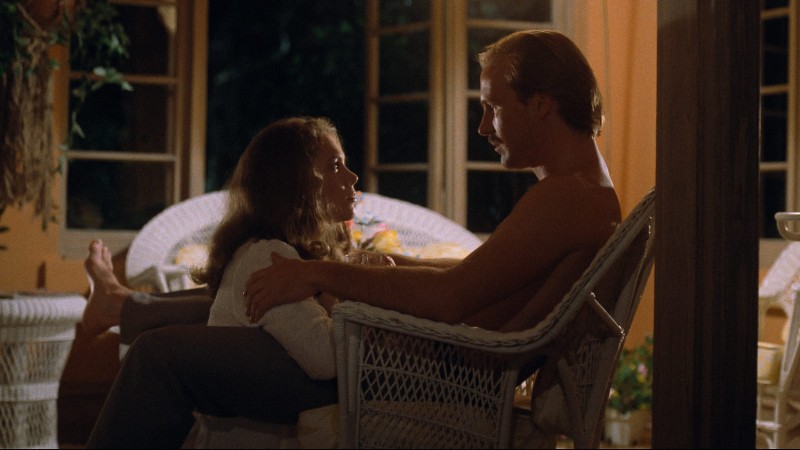
Body Heat: The Trap You Set for Yourself
In his stylish and provocative directorial debut, Lawrence Kasdan uses the vehicle of a sex-and-murder plot to explore the film’s historical moment, which gave rise to the greed and amorality of the Reagan era.