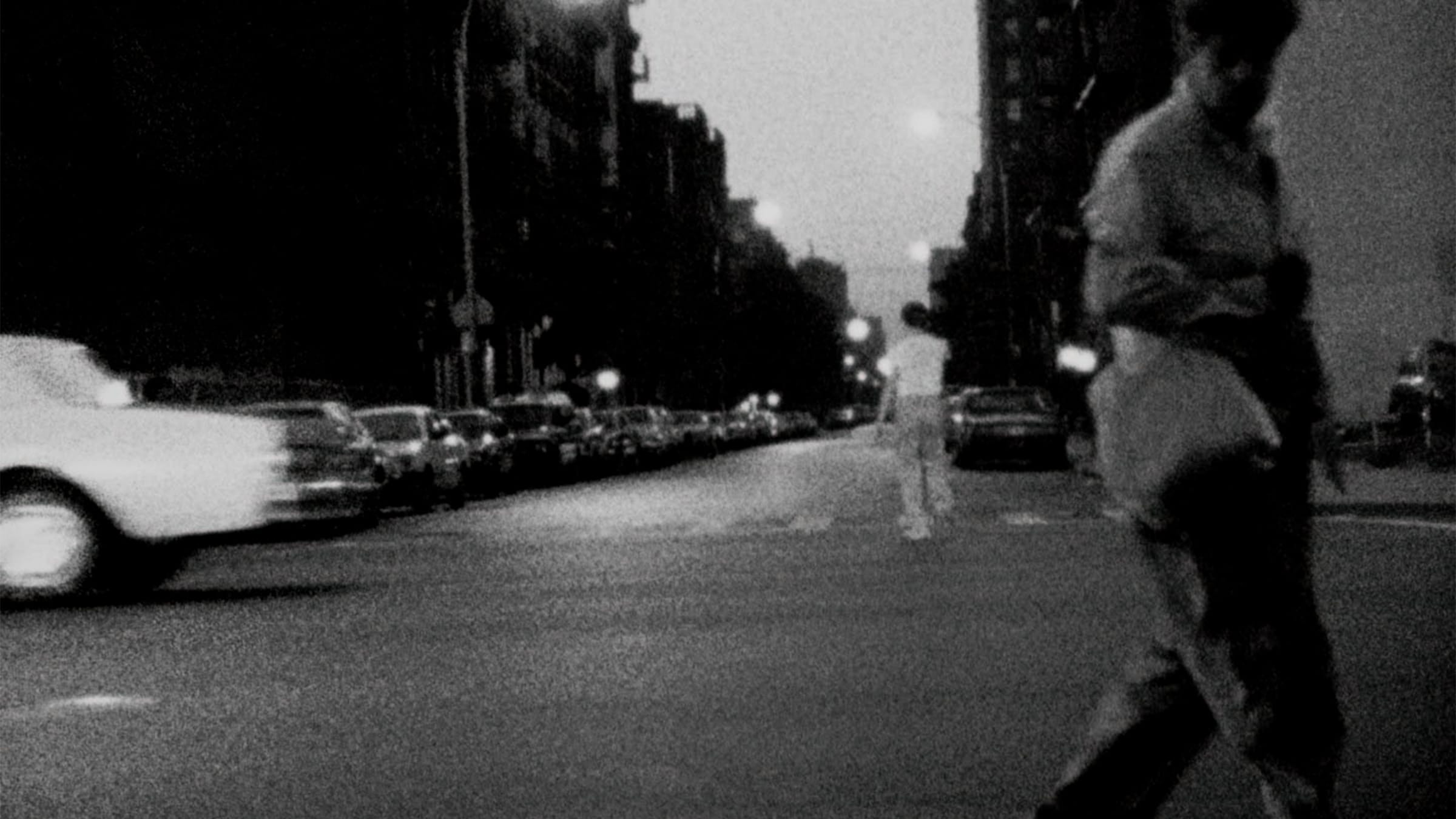
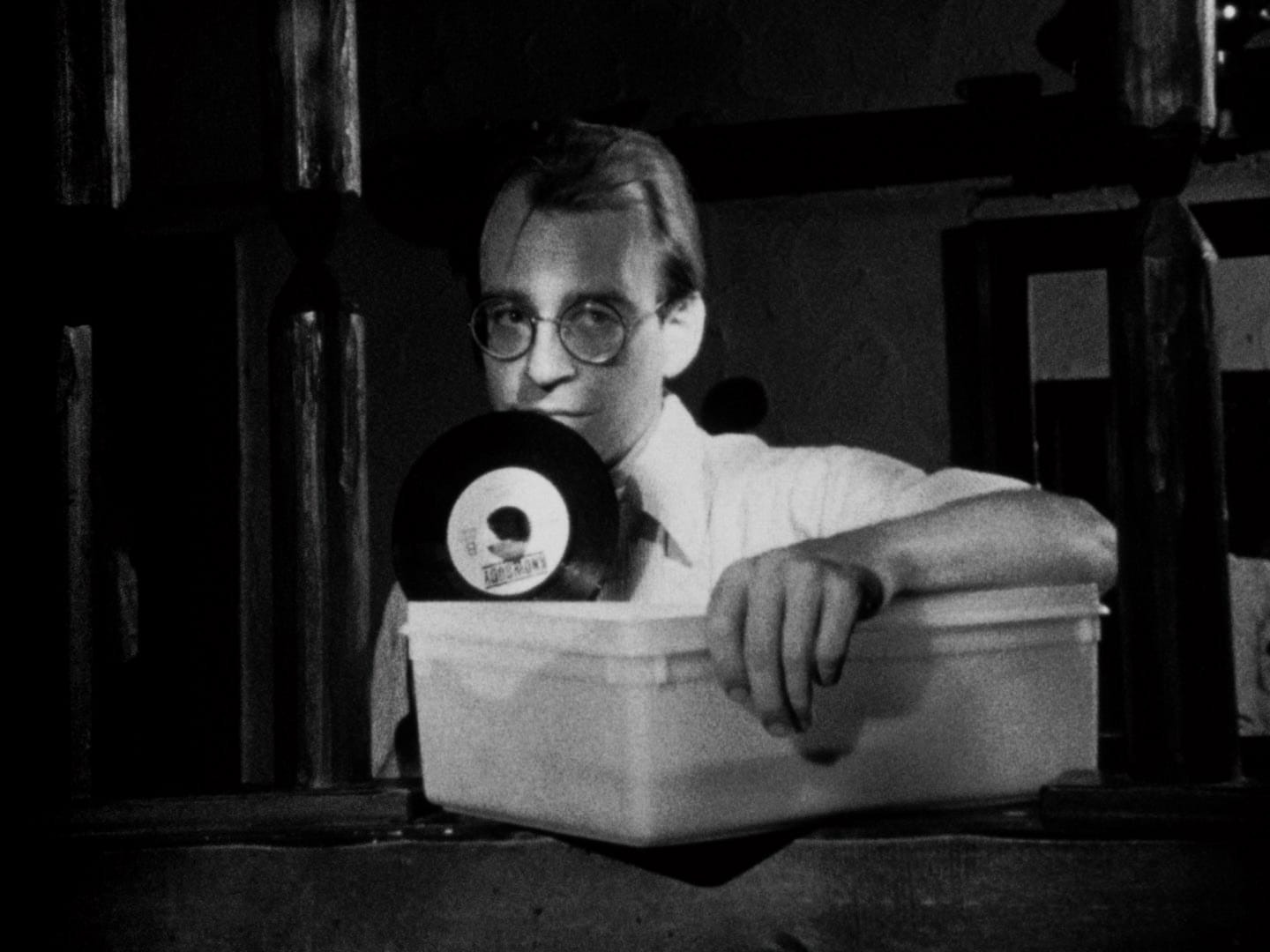
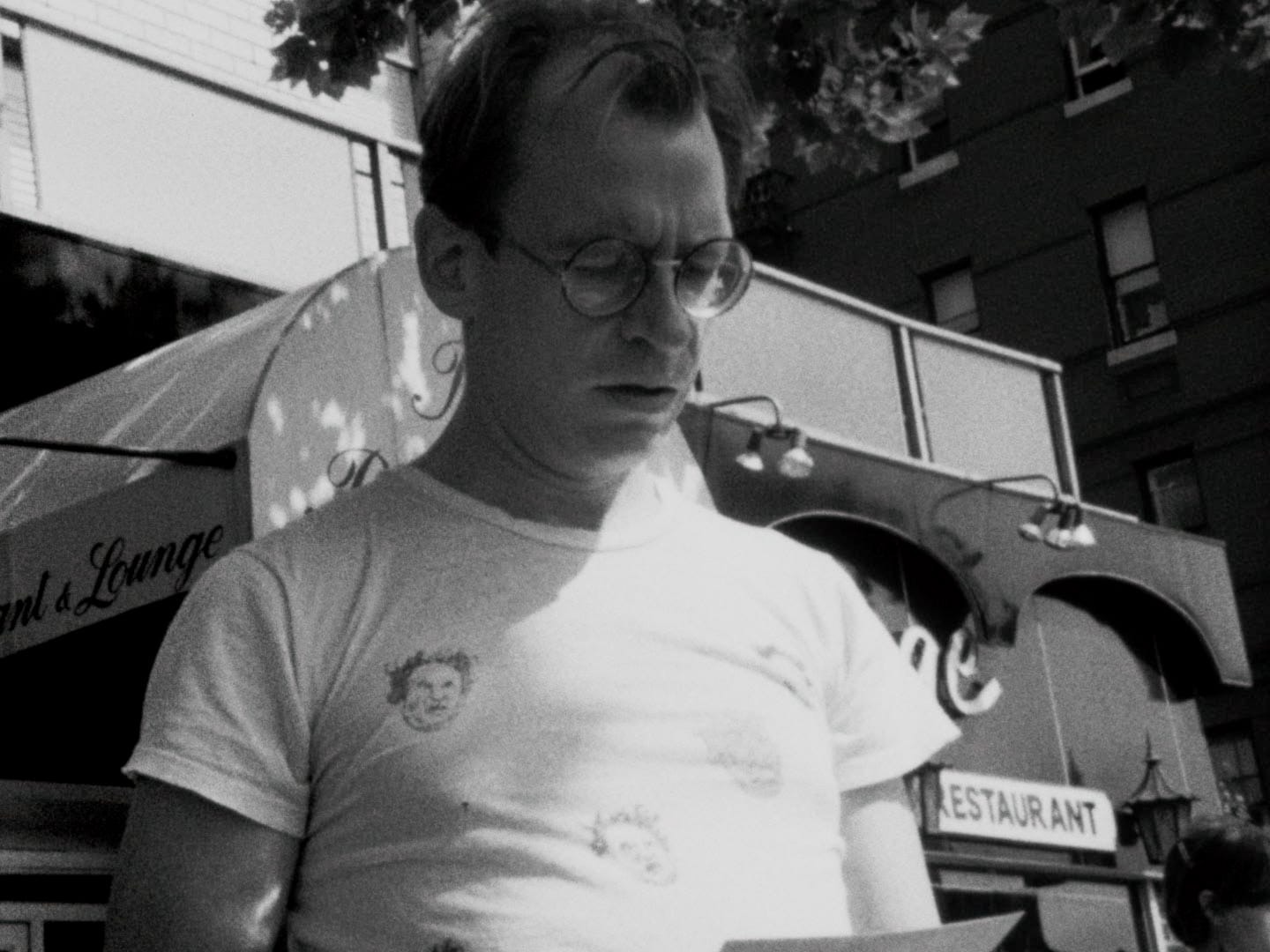
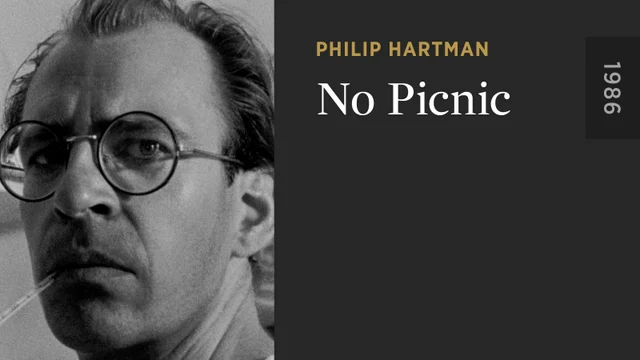
In the hearts of many kids who grow up in the hinterlands of the American suburbs, there can develop a persistent longing for New York City. Often, these kids are the weirdos and artists, the ones who find out early about alienation. Sometimes, they develop a fierce resistance to their given environment and, looking toward the city, eventually defect. Once they arrive, they might make art about New York, suffused with a sense of homesickness for a place that is always receding. Philip Hartman was one of those kids, and No Picnic is one of those works of art: a gritty portrait of longing and dislocation in the East Village of 1986. Recently restored, the film follows Mac, a mournful jukebox operator searching for a mysterious woman in a neighborhood coming apart at the seams.
Phil and I meet at my apartment in the East Village, the neighborhood that is not only the set, but the soul of No Picnic. He arrives in a trucker hat illustrated with Cleopatra Jones—eponymous heroine of the 1973 blaxploitation classic—and the slice of pizza named after her at Two Boots, Phil’s pizza joint. I tell him that’s my favorite Two Boots slice and he says, “That’s Tarantino’s favorite too.” Before I start the interview, he wants to know what drew me to New York, and I tell him about a childhood trip I took with my mother to Times Square in 1978, how the chaos and grit hooked me. We were both defectors, kids looking to the city and falling in love. Born in Brooklyn, Phil moved out to Long Island as a baby, eventually settling in Great Neck, which wasn’t so great. “There’s a lot to be alienated about there,” he says.
It sounds like it might have been a place you wanted to leave?
Luckily, it’s very easy to get to the city from there. One day in tenth grade, I got on a train with one of my artsy friends. The East Village was always kind of a mystery to me, and then that experience of walking across Eighth Street from the train—there it was—Astor Place.
It all opens up right there.
It all opened up. It was a gray drizzly day, but an utterly magical moment. Oh my god, it was like a whole world opening up to us. We went to St. Marks Cinema. This was the spring of ’71 and we still laugh about it because it was a triple bill for a dollar fifty—and we know we saw Putney Swope, and we know we saw Gimme Shelter, but we can’t remember the third film. For the last fifty-five years, we’ve been laughing about that.
By the time I made No Picnic in 1985, the St. Marks was struggling. My distributor, which was co-owned by Wim Wenders, their dream was to buy the theater and open No Picnic there. They thought that would be perfect. And it would have been. But they couldn’t pull it off. By the time No Picnic was done, the St. Marks had closed. I did get it in No Picnic. There’s a shot where it says “closed for renovations.” It was such an icon in the neighborhood. That’s where my East Village romance began.
After that first trip, what was your relationship to the city?
We came to the city a lot in high school to see movies. Then I went to Princeton and needed a job. I discovered a film bookstore called Cinemabilia. On Thirteenth Street between Fifth and Sixth, on the [same block as] the Quad Cinema. It was this magical place. Only film books, stills, posters, magazines. The owner was a soulful, good-hearted guy in love with old Hollywood. I came in every day from Long Island and started getting the sense I was surrounded by music people. Terry Ork, the manager, was putting out records on his own label. On one side of me was Richard Hell and on the other was Tom Verlaine of Television. Bob Quine worked there. Rob Duprey from the Mumps. David Bowler from the Marbles. Key figures in punk rock. At one point, Terry pulls me onto his lap and says, “Phil, when are you coming to CBs?” And I’m like, “What’s CBs?” And he starts explaining CBGB to me, weeks after the first show. I just stumbled into this scene. A lot of those early punks were film lovers, real cineastes, and the intersection of music and film is an important part of punk rock. When I shot No Picnic in ’85, all that music was still in my head. Punk rock infuses the film.
Do you think of No Picnic as a punk film?
I like to say it’s the only movie in history that has Charles Mingus, Fela Kuti, and the Raunch Hands on the same soundtrack. It’s pretty eclectic. It’s got afropop, it’s got bebop, it’s got punk rock, it’s got punkabilly. I’m really proud of the soundtrack. It’s a movie about a jukebox guy, so it better have a good soundtrack.

Great Jones Café, which you cofounded, had a legendary jukebox. The restaurant was a swerve on your film journey, but it enabled you to make No Picnic—and the jukebox informed the character of Mac.
I had been working as a screenwriter for Warner Bros., and I sold a bunch of things. I wasn’t living the high life. I was surviving, but very frustrated. I sold a punk-rock detective story that was based on Television. Warner Bros. called me in and said, we love this, but our vision is to use either Fleetwood Mac or the Doobie Brothers. I laugh now because Fleetwood Mac has become retro cool, but trust me, at the time, Fleetwood Mac was the enemy. At Warner Bros., I was what they called “the house weirdo.” I sold a comic horror film called The Beheader, which was about, well, a beheader on a college campus, who was disgruntled. Was Warner ever gonna make that? I don’t think so. I got the message that screenwriting for the studios was not gonna work out, so I told my buddy, I’ll help you open the Great Jones Café.
In your screenwriting, were there themes you were pursuing that finally saw the light of day in No Picnic?
I spent most of high school feeling like I’d been born too late. I missed the ’60s. I missed Woodstock. I missed the riots in Chicago. But in the summer of ’74, I stumbled into this whole other scene, and that was my entrée into the East Village. It was a world on the cusp of transition. In No Picnic, you see all these tubes sticking out of the tenement buildings. They were disemboweling the buildings. It was like a hundred years of history going down those tubes. So many generations, the Jews, the Irish, the Germans. It was all getting pulverized and shot out of these tubes into dumpsters. The tubes were such a vivid image for me. My grandparents had lived in the Lower East Side, so it felt very personal that there was this disemboweling of the neighborhood. We were frantic to capture it.
You had a sense of urgency, seeing and feeling this gutting, and you wanted to—
Capture it. You cannot believe what this neighborhood looked like. It was like postwar Italy. When you see Italian neorealism, the early Fellini films, De Sica, Pasolini, Rossellini, you see the abandoned buildings and rubble-strewn lots, and that’s what the East Village looked like. No Picnic has that feel. It was a combination of the places disappearing and the people. There was such a rich vein of eccentricity here. The porousness of our set let the real in. Film crews today defend the set, but we didn’t. The East Village was our set. We wanted to let the neighborhood in. Every person, every building. We were given this magnificent landscape and community and we wanted to do right by it.
In the film, there’s such a sense of looking, of a hungry eye that is taking in so much. You even have a character called the Watcher, who watches from her window and closes the action. How did you arrive at this eye with your cinematographer, Peter Hutton?
Peter shot in black and white, which is what I wanted, and he also shot with a stationary camera, on a tripod, and he rarely ever moved the camera. I think it’s part of what gives No Picnic this sense of observation, because the camera is staring at these things. It might move in and out, but there’s this stare from the camera, and it’s very evocative.

You knew at the time you were performing an act of preservation.
In some cases, we were just so enthralled with the people, we wove them into the texture of the film. Like Princess Pamela, who owns Billy’s topless bar in the movie—she had a soul-food restaurant on First Avenue. It was the craziest, most fun place. She would sing while you were eating because she was a chanteuse. There are a lot of local characters that we wove into the film. I think there are 125 characters.
Richard Hell plays the irate upstairs neighbor when Mac is playing loud music. He’s in a “Kiss the Cook” apron that I associate with the home gourmet trend in the ’80s. And he’s a strikebreaker in the building. He’s kind of a yuppie?
Talk about anti-type casting! Richard was just such a visionary. It also happened that he lived next door to my friend Greg, whose apartment we used in the film. Greg’s a poet and all those scenes were shot in his apartment on Twelfth Street in what’s known as the Poets’ Building, which is where Allen Ginsberg and many other poets lived. Richard shared a wall with Greg. And he consented to wear the apron. His delivery is just so perfect. He nailed it.
After Richard’s character complains, Mac turns the music up. As a downstairs sufferer from upstairs noise, that scene gave me, like—
Sort of PTSD? Oh no! I am absolutely nutty about sound. I’m so sound sensitive, I can only live in places where I don’t have upstairs neighbors. Hearing people walk upstairs drives me fucking crazy. Do you have a problem in this apartment?
We’re working on it. I’m in a special therapy to deal with noise.
There’s a name for people like us.
Yeah—crazy.
Crazy, but there’s another name.
Misophonia. In your New York youth, were you the kind of guy who would turn the music up to piss off the complaining neighbor?
No, never! I am the other guy. I’m Richard. Totally.
Is Judith Malina in the film? She’s credited on IMDb, but not in the film. I can’t find her.
Manohla Dargis was the Voice’s film critic then, and when No Picnic opened, Manohla wrote a rave review. She mentioned how nice it was to see a bunch of local heroes, including Judith Malina. I think she was mistaking my mother for Judith—my mom’s in the scene of the art tour. I thought it was so funny and wonderful, I never corrected it. So IMDb has it. And other people have said how nice it is to see Judith Malina. I’m running with it. I think Judith would find it funny.
She’s a shared hallucination, like the Mandela effect. That scene where the art tourists look at the outline of a murder victim and treat it like art is such a macabre, hilarious, and true moment about creativity and capitalism. It reminds me of the song in the film, “I’ve Got a Brand-New Haircut,” which also feels like a cheap capitalist invader.
That was supposed to be a quasi-MTV, Duran Duran kind of Britpop song. It was written by Ned Splett, who did the music for the film. It’s in like five or six scenes. Steve Buscemi is whistling it before he gets run over.
There’s a sense of comical torment in the movie—the song, the rats in the toilet. Mac says, “Some call it hell, we call it home.” What was hell for you then and what was home?
Probably the most hellish apartment I lived in was on St. Mark’s, because it was on the sixth floor of a walk-up, and it was like the hottest summer in New York history. There was a lot of trauma about getting up and down the stairs and battling the roaches and the heat. The toilet was in its own little closet, and the walls were covered in tinfoil; I don’t know why—it was a sublet. You’d sit on the throne, two steps up, surrounded by silver tinfoil. The posters on my walls, it was so hot, the tape couldn’t stick, so the corners of the posters would peel away so the masking tape on the back would be exposed, and then the roaches would crawl on the tape and get stuck. I’d have these posters with a corner peeled down and a roach stuck to the tape, sadly, for days, until it stopped moving. That’s my most vivid image of that summer.
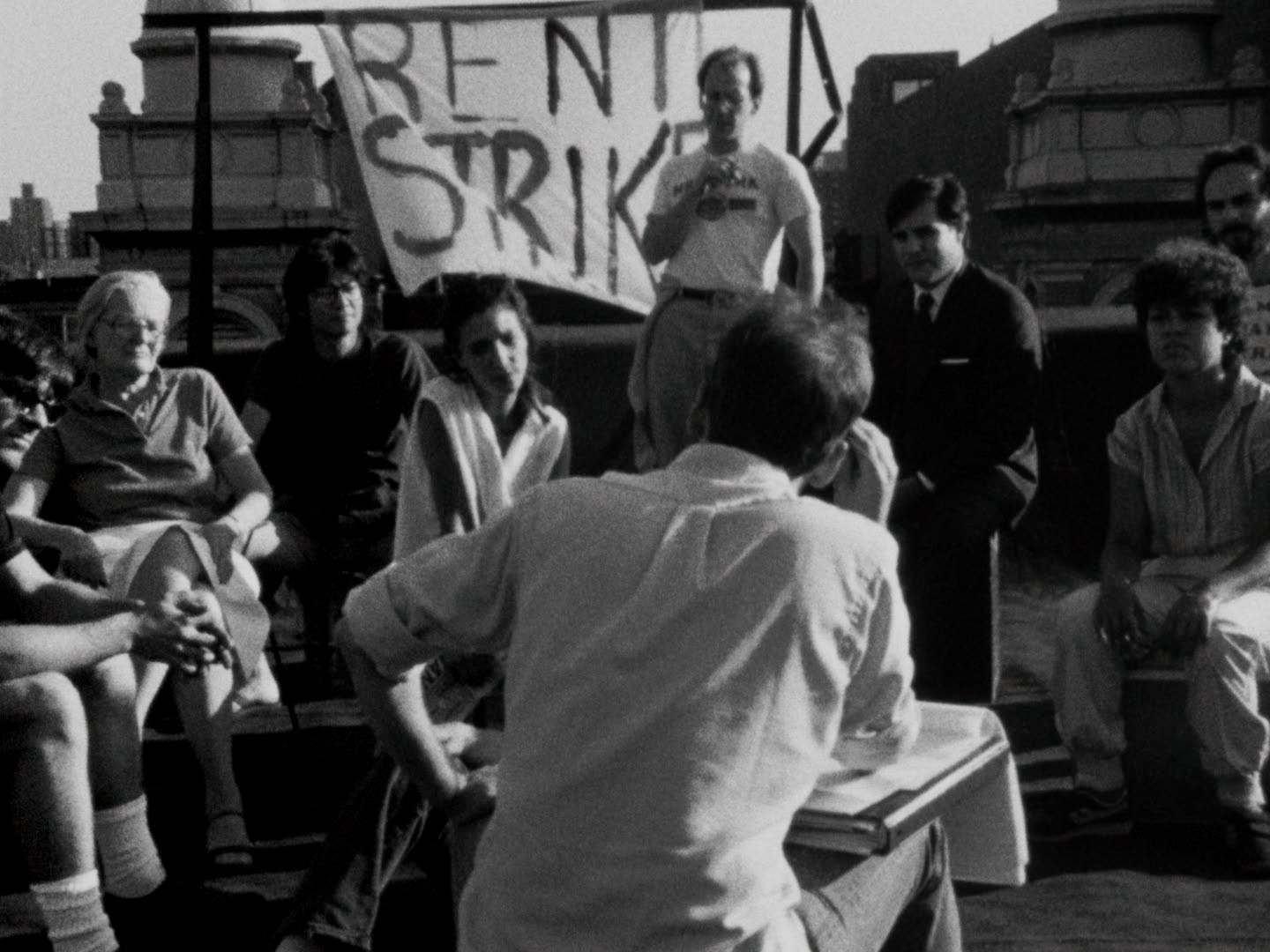
Were you ever on rent strike like the characters in the film?
No, but it was so common. When I started watching the film in preparation for this release, that was the thing I was most surprised about, how much activism I saw. There were a lot of shots of buildings on strike. And the signs: Speculators Keep Out, NYU Get Out, Save Our Gardens, We Demand Housing. That’s something young kids have really responded to when they see the film, the sense of engagement people had back then. A lot of kids come up to me after screenings and say, “How can we do that?” Everyone feels so defeated now. Maybe the film is going to inspire one or two people. Today, you walk around the East Village and you don’t see one single sign.

This neighborhood used to attract people who felt passionate about preserving its character.
There was a pizza restaurant called the Orchidia that all the poets from the St. Mark’s Poetry Project used to go to after readings. It was beloved. When it closed, Steve’s Ice Cream, a chain from Boston, moved in. The neighborhood went nuts. They picketed the landlord’s home on the Upper East Side.
They actually ventured north of Fourteenth Street?
Yes! To picket the landlord’s fucking house! Steve’s went out of business right away because no one would go there. I mean, can you imagine that happening now?
No, I can’t. In the film, Mac changes in his relationship to change. He starts off resistant, but by the end, he’s more resigned.
I went to college as an urban studies major, and that’s my subject in No Picnic. New York’s always been about change. But how are we going to manage it without losing our sense of self? I don’t think the East Village will lose its sense of self. There is no neighborhood in the world that has as much beautiful cultural history and integrity. It’s a spirit, a countercultural legacy that can’t be destroyed. I love the bones of the East Village. I love the five-story tenements. I love the cornices. I love the stoops. I love the masonry. There’s plenty to complain about, but I also want to advocate on behalf of the wonders that survive.
That’s what keeps me here. I cling to the wonders. So. Want to take a walk?
We head to St. Mark’s, past Stromboli pizza, which, Phil notes, “was known for its sweet sauce because the junkies needed their sugar rush.” He walks the streets like a restaurateur, tasting the possibilities—and looking for a spot for the next Two Boots. He’s still a movie guy, too, and just submitted a script called Man with a Shattered World, a story that takes place in Crown Heights. He also recently found the outtakes from No Picnic, stored in moldy boxes in his basement, and their forgotten scenes of vanished places are going into a book project called ’85 Shots. “It’s been really gratifying to see the response to the film,” he says on Twelfth Street. “Some people respond to it as a work of art, and some people respond to it as an artifact, but best of all are the people who respond to it as both.”
We stop at the building where Mac lives in No Picnic. Are any poets left in the Poets’ Building? Richard Hell is still there. Downstairs is Smør, serving Nordic-inspired cuisine to clean-looking people on laptops. “That’s where the junkies used to be,” Phil says. I ask if he prefers this new version. He shrugs, “I have mixed feelings.” He takes a photo. “The best of the old East Village is still here,” he says. “The fire escapes. They’re a big part of No Picnic. People would hang their banners on the fire escapes. They’d sleep out there when it was hot. Neighbors would come in through the window.” When young people see the movie, they tell Phil they wish they had a neighbor who’d come through the window. They long for the kind of connection that used to be possible here, before hyper-gentrification and digitization ushered in a new form of alienation.
On Second Avenue, we look at the marquee of the Village East. It’s a gorgeous analog marquee with plastic letters spelling out titles in tactile three dimensions. They’ve put up the movies for Hitchcocktober, and Phil and I agree we’d like to see Strangers on a Train. Maybe he’ll come in for it from Brooklyn, where he lives now, in the borough of his birth. I ask, “Do you miss being in the East Village?” He does, he says, then adds, “I’m an East Villager wherever I live.”
More: Interviews
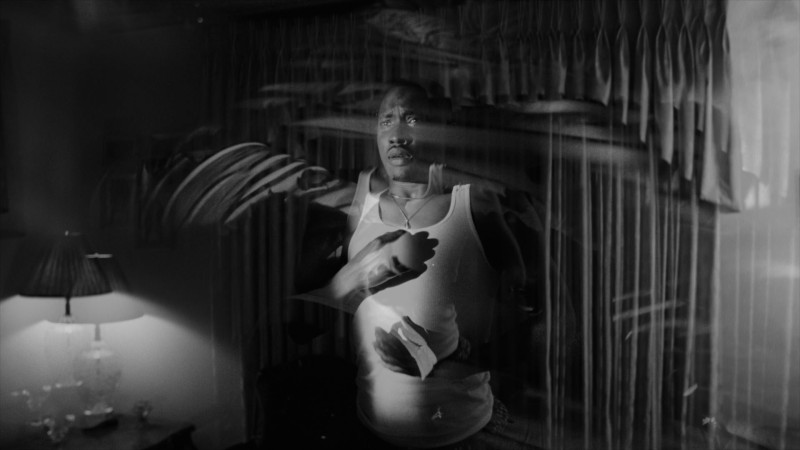
Total Action: A Conversation with Darol Olu Kae
Drawing on his global understanding of Black expressive culture, the director of I Ran from It and Was Still in It and Blur creates freewheeling narrative structures that explore the intricacies of time, loss, and collective memory.
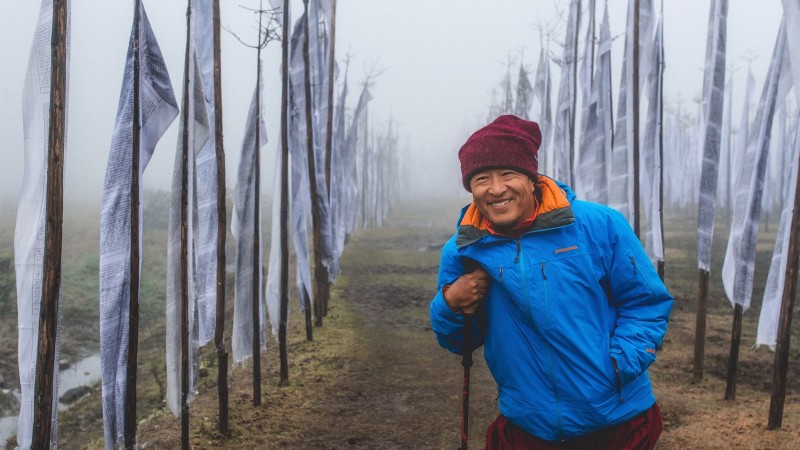
Cinema as a Buddhist Practice: A Conversation with Khyentse Norbu
The Bhutanese director and leading Tibetan Buddhist teacher talks about his wide range of aesthetic influences, his experience working with Bernardo Bertolucci, and film’s connection to meditation.
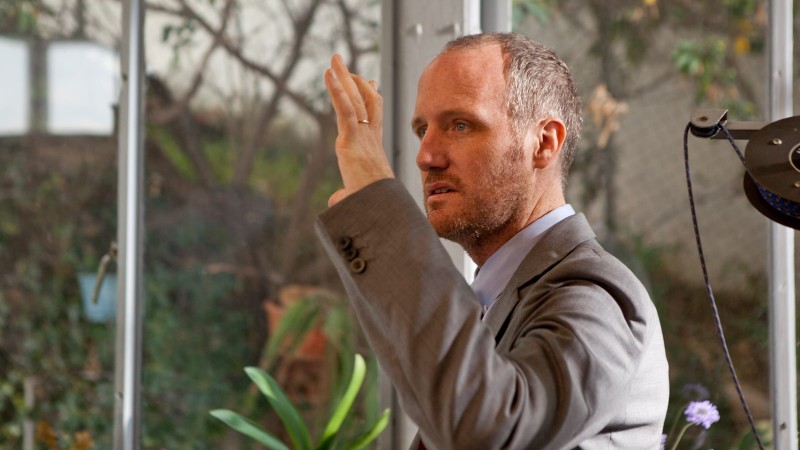
“A Radical Democracy of Images”: Mike Mills on His Work Outside of Feature Filmmaking
The filmmaker looks back on the experiences that have shaped his creative life, including his time in art school, his work as a graphic designer and music-video director, and his early interest in documentary cinema.
Courtney Love Looks Back on Her Life as a Movie Star
The beloved rock musician reflects on her formative experiences as an actor and her close collaborations with directors Miloš Forman and Alex Cox.