Rashomon

Three men seek shelter from the rain under the ruined gate of the ancient city of Kyoto. There is nothing to do but talk, about a topic which torments two of the wayfarers, who have just been witnesses in a police court inquiry. In the woods a woman was raped, a man killed. A notorious bandit, Tajomaru, was later found riding the dead man’s horse. The two witnesses describe the inquiry to the third man, a skeptical commoner.
From this slight material Hollywood might have fashioned a murder mystery or a courtroom drama. Akira Kurosawa, instead, created Rashomon, the best known, most widely shown Japanese film of all time, transforming the accounting of a sordid crime into a meditation on truth and human nature, affirming the possibility of human goodness while asserting the reality of destructive passion and self-deception. With a puzzling theme of unusual depth, presented in a distinctive style that owed more to Russian silent films than to Hollywood classic film of the ‘30s, Rashomon intrigued audiences worldwide and became one of the most influential films of the 1950s, even inspiring a lackadaisical remake, The Outrage, a dozen years later.
Two time strands, interwoven, create the meditation. Under the Rashomon gate time hangs heavily, dead, empty, idle; in the forest time is charged with passion and anxiety, with life and honor at stake. Kurosawa first breaches the distance between these two by a dazzling two minutes of pure cinema which combines both—the woodcutter’s walk into the forest, sixteen shots of continuous varied movement while the story waits in abeyance. Thus this scene, like those at the Rashomon gate, represents dead time, yet its energy and impulsion, created by movement and rhythm, links it to events in the woods. These two minutes do not advance the plot at all, still they are essential for our experience of the film. For the woodcutter’s progress into the heart of the forest, with its almost hypnotic flow of motion through surprising cuts and camera movements, becomes our progress into the heart of the film. When he stops, we are there and the forest has become the central setting of the film; the three men in the rain at the gate become a chorus commenting on the action in the clearing.
Their comments are mostly of incredulity; for the three participants in the crime each tell a completely different story of the husband’s death. Each claims to be guilty of the killing; each telling preserves the teller’s self-image of honor. Then the woodcutter gives a fourth account, similar in outline to the bandit’s version, but very different in detail. The commoner remarks, “I suppose that’s supposed to be true.” The woodcutter responds, “I don’t tell lies.” Yet, of the four tellers, the woodcutter is the only one we know has lied, for he told a different tale earlier.
Given all this, some viewers have treated Rashomon as a puzzle to be solved, insisting that there must be one true account of the killing which we can discover if we sort the clues carefully enough. For others, like Pauline Kael, Rashomon is “the classic film statement of the relativism, the unknowability of truth.” There is no truth, only subjective perception of events. Kurosawa, when asked by his assistants to explain his baffling script, replied, “Human beings are unable to be honest with themselves about themselves. They cannot talk about themselves without embellishing. This script portrays such human beings—the kind who cannot survive without lies to make them feel they are better people than they really are.”
This obscurity of literal meaning has prompted symbolic interpretations. The most plausible of these sees Rashomon as an allegory of Japanese history, with its recurrence of Japanese culture being destroyed by barbarians, with hope for the future of Japan seen in the appearance of the baby at the end, an interpretation supported, perhaps, by the fact that the western music dominant through the film is replaced by traditional Japanese music at the close.
But Rashomon‘s power and popularity derive not only from its meaning, but equally from fine performances by its principal actors and Kurosawa’s mastery of innovative film form. The first western showing of Rashomon at the 1951 Venice Film Festival, where it won the grand prize, the Golden Lion, and consequently became the work that broke the barrier and opened the western market to Japanese films, brought to world cinema a new top class director, Akira Kurosawa, and two new international stars: Machiko Kyo, the first Japanese actress to be advertised for her sexuality rather than her domestic virtues, and Toshiro Mifune, whose animal vitality and compelling presence would grace Kurosawa films for the next 15 years. In Rashomon these two each consummately play four roles, though only one character, who has a new personality each time a new speaker tells the tale.
The feeling of liberation Rashomon brought to young filmmakers was less a response to an enigmatic theme than to Kurosawa’s flouting of the established rules of narrative cinema, ten years before the French New Wave made it fashionable. Seeking to regain the freedom of silent film, Kurosawa breaks the 180-degree rule, thus reversing spatial relationships, juxtaposes long shots and close-ups and shots of contrary motion, displays a bold inventive use of camera movement as cinematic punctuation, and restores to respectability a mode of transition that had once flourished but almost disappeared with the development of the classic sound film, the wipe, which becomes and remains for Kurosawa an element of style.
We are still profiting from his audacity.

More: Essays
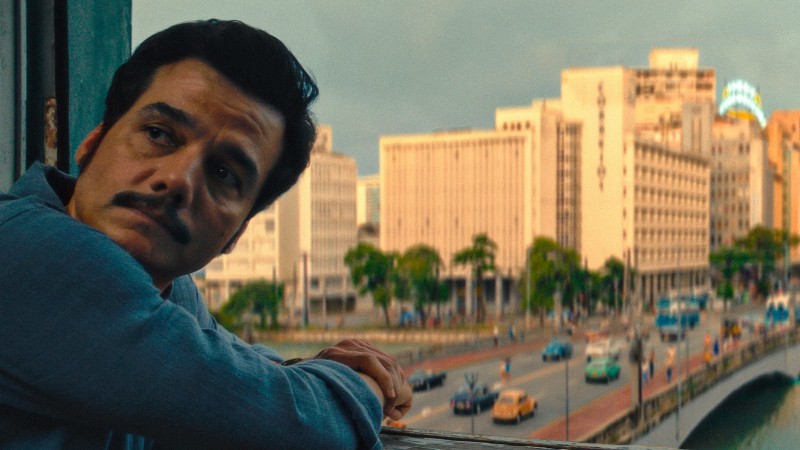
The Secret Agent: Left Out of History
Kleber Mendonça Filho explores the elisions of history and memory in this splendidly polymorphous thriller about a man on the run in 1977 Brazil.
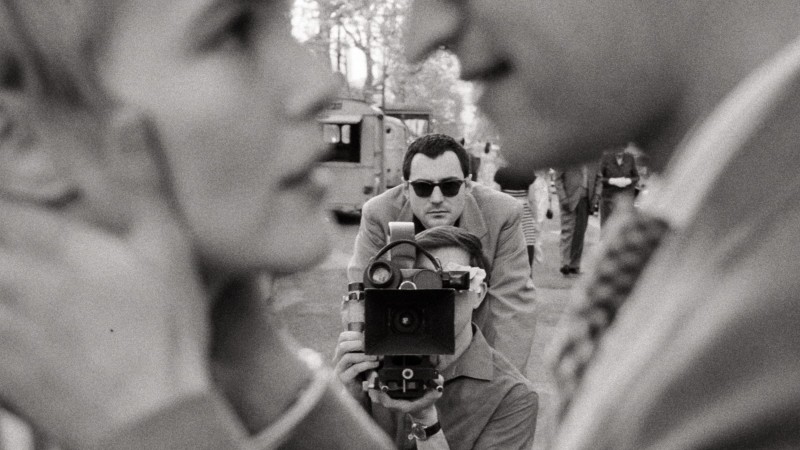
Nouvelle Vague: Insolent Like No One Else
In this exhilarating account of the making of Jean-Luc Godard’s Breathless, Richard Linklater lovingly reconstructs the vanished world of late-fifties Paris and the cinephilic culture surrounding the French New Wave.
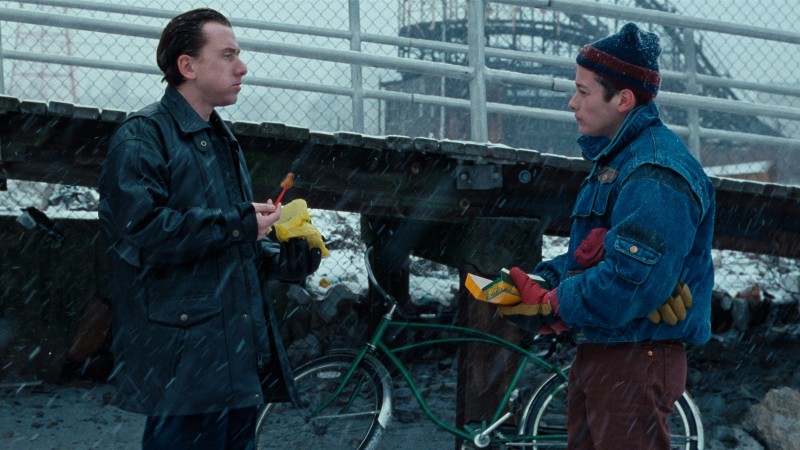
Little Odessa: He Ain’t Heavy, He’s My Brother
James Gray’s extraordinary debut feature is a painstakingly distilled tale of crime and family dysfunction, captured with a merciless gaze and a sharp attention to idiosyncratic detail.
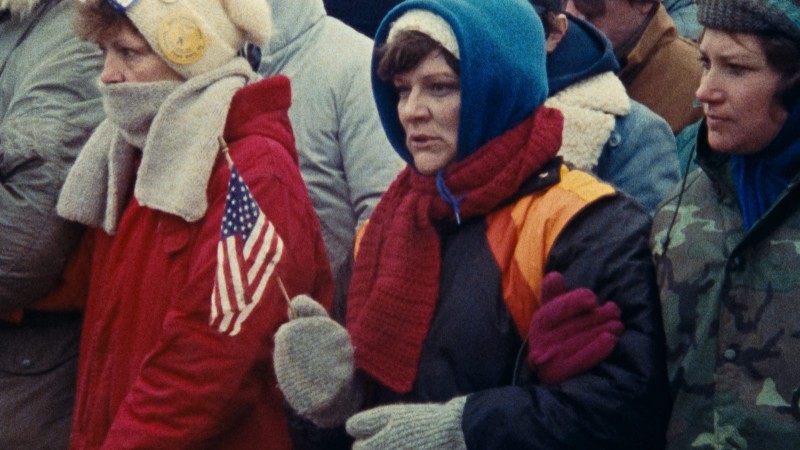
American Dream: The Time Is Right
In her second film, Oscar-winning documentarian Barbara Kopple captures the anguish and perils of disunity in the labor movement and the corrosion of union power during the Reagan era.