Brief Encounter
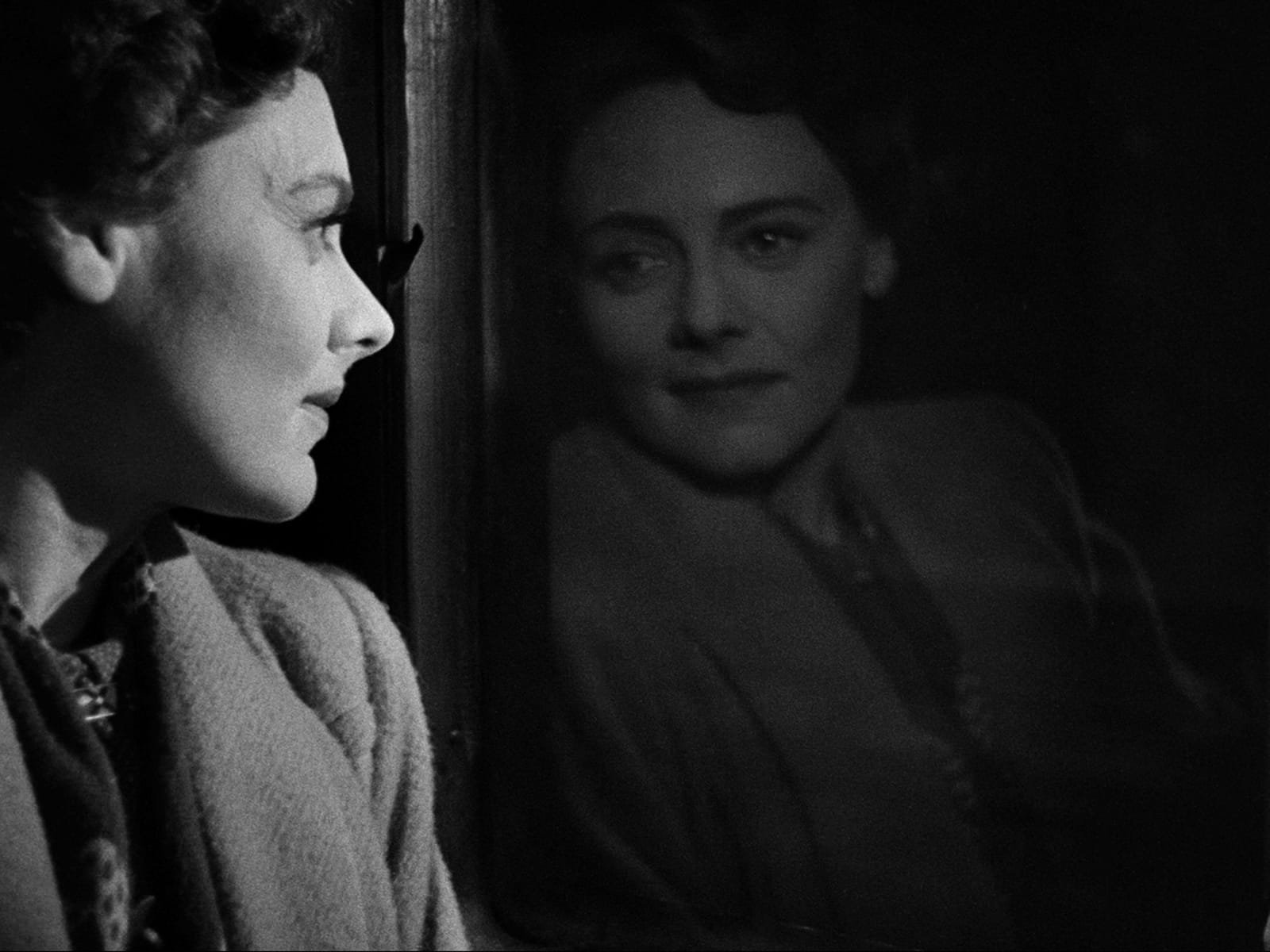
Brief Encounter was the fourth and final film that David Lean made in association with Noël Coward. Derived from Still Life, a one-act play which Coward included in the portmanteau Tonight 8:30, the story tells of a suburban housewife, Laura Jesson, who by chance meets a doctor, Alec Harvey, at the end of one of her weekly shopping trips to town. As she stands on the platform waiting for her train, an express roars past and throws a piece of grit into her eye, which Alec removes. They meet again the following week; they then go rowing on the lake, visit the cinema, and go driving in the country. They are obviously deeply in love, longing to consummate their relationship, but torn by guilt.
Lean begins at the end and slowly introduces an intricate series of flashbacks, which are narrated by Laura. It is her story, but what sort of story is it? On its initial release, Brief Encounter was hailed as a groundbreaking piece of realism and, to be sure, the performances by Trevor Howard (in his first starring role) and Celia Johnson are exquisitely judged, their actions entirely plausible. They are not “movie people,” and the world they live in is resolutely ordinary.
The emphasis on the “realism” of Brief Encounter caused it to go from success on release to an object of derision in the ’60s. Films such as Saturday Night and Sunday Morning regularly featured working-class adulterers, and a few years later, films such as Tom Jones, the 007 escapades, and The Knack espoused sexual liberation and casual sexual encounters. One critic defined the message of Brief Encounter as “Make tea, not love,” and recalled how an art-house audience in 1965 jeered at Alec and Laura’s middle-class torments.
In more recent years, the emergence of a less promiscuous sexual climate, together with a critical rehabilitation of Lean, has turned Brief Encounter into a much-loved classic. It is perhaps the British Casablanca, and has been similarly parodied. A long-running TV advertisement restaged the parting of Alec and Laura at the railway station; a film student made a short entitled Flames of Passion, the trailer of which Alec and Laura see at the cinema; and Rachmaninoff’s Second Piano Concerto can always be relied upon to evoke not only Lean’s film but an entire set of emotional values. In the northern town of Carnforth where the film was made (the wartime black-out made filming in Southern England impossible), there are even Brief Encounter tours. In America, Brief Encounter was the subject of a sketch by Mike Nichols and Elaine May, whilst Billy Wilder found Alec’s friend, who loans the flat, so interesting that he made an entire film about just such a character: The Apartment.
But perhaps a more fruitful approach is to assume that the film’s theme is not realism, but delirium—the word that fits with “romance” in Laura’s husband’s crossword. Laura’s house, the station buffet (where the manager and the guard indulge in an imagined affair of their own), and other interiors are oppressively dreary; the way Lean photographs meetings in the dark and shadowy station passageways, where Alec steals a furtive look, irresistibly conjures film noir and its associations with doomed love and characters trapped within a repressive social system.
Brief Encounter is also the principal link between the small-scale films of Lean’s early career with the widescreen epics of his final phase. The Bridge on the River Kwai, Lawrence of Arabia, Ryan’s Daughter, and A Passage to India each have central characters who are prone to a dreamy romanticism which borders on hysteria and hallucination. Look at Miss Quested (Judy Davis) at the end of A Passage to India, after her fantasy of rape in the Marabar Caves, and look at Laura at the end of Brief Encounter: they are the same person. As Laura’s husband does his crossword, Laura does her embroidery and conjures up this handsome doctor and overlays her fantasy with Rachmaninoff, the music coloring the inner life of this outwardly monochrome heroine.
“You’ve been a long way away,” says Laura’s husband at the end. And she has. “I believe we should all behave quite differently in a warm climate,” she says to Alec after he announces his intended move to Africa. Condemning Laura to a life of conformity and emotional suppression, Lean sets his own course towards the far horizon, where the English go out in the midday sun. Brief Encounter is not only Lean’s finest statement on the suffocating world into which he was born; it is also his train ticket out. Seen today, Brief Encounter is perhaps, quite literally, a dream of England long ago. And if aspects of it have entered the mythology and cliché of the British cinema, more than enough remains in this complex film to move and fascinate us still. Indeed, one famous British columnist and wit, Cyril Connolly, suggested that Alec was not a doctor at all but a mental patient who, allowed out of hospital once a week, preyed on solitary women. Now, there’s a thought!